
Introduction To Baking With Gluten-Free Flours
This post contains affiliate links. Please read my disclosures.

There is more to gluten-free baking than just reaching for the bag of all purpose gluten-free flour. A huge range of alternative flours can now be found at supermarkets and health food shops which can make your gluten-free baking so much more exciting.
Your baked goods and gluten-free recipes can have more flavour and a better texture than their wheat counterparts. You just need to choose the right flour and I’m here to teach you how. Goodbye to dry crumbly baked goods and hello to a world of truly delicious gluten-free bakes.

I can’t believe that’s gluten-free!
This is the best cake I have ever tasted!
These are regular comments I get from customers, friends, family or overhear at parties I have catered.
It’s true. Gluten-free baked goods should not be dry, crumbly, pasty or gummy. Those issues only occur when the wrong flour has been chosen or the gluten-free flour blend is not balanced.
There are so many different gluten-free and alternative flours which are now readily available at supermarkets, your local health shop or Amazon. The freedom to experiment is endless. If you are new to gluten-free baking or using alternative flours then this Introduction to Gluten-Free Flours is a perfect place to start.

The Different Types of Gluten-Free Flours
The different types of alternative flours can be split into four different categories:
- Wholegrain flours – e.g. sorghum flour, teff flour, buckwheat flour.
- Starchy flours (also known as starches) – e.g. sweet rice flour, tapioca flour, arrowroot starch.
- Nut and seed flours - e.g. almond flour, sesame seed flour.
- Legume flours - e.g. chickpea flour (gram/garbanzo flour), soy flour.
Each of these different categories of flours have similar personality traits - so they behave in similar ways within their categories. Although all these flours have different flavours so they can still be quite different within their categories.
Get to know your available flours and decide which are the ones you are keen to learn more about. Some may not be available where you live, vary wildly in cost or may not be suitable due to your dietary requirements. Rest assured there will always be a selection of flours you will find work for you and in most cases the selection will be wide enough that you can cook or bake the same kind of varied recipes you have always been used to.

Function Of Flour In Baking
At its core principal 'flour' is a fine powder, ground from a larger source like grains, plants, nuts or seeds and is used in baked goods to provide structure.
The most common flour used in baking is ground from wheat which has a relatively neutral taste, meaning it can be used in sweet or savoury recipes and across many cuisines. You'll know it as either plain flour or all-purpose flour (AP flour).
However, the true function of wheat flour in traditional recipes lies in a powerful group of proteins found within its structure. When this group of proteins is introduced to a liquid they form gluten – a network of strong interlocking bonds which are highly elastic.
Due to the strength of these bonds gluten gives excellent structure to all manner of baked goods. The elasticity between the bonds mean the end results also have a wonderful soft and bouncy texture.

Gluten-Free Baking
So what happens if we want to remove gluten from all our baked goods? In many cases we will still need some sort of flour in our recipe to give our bakes the right structure, texture and flavour.
The gluten-free flours we choose need to mimic the same basic functions that gluten and regular flour provides in our baked goods:
- Structure
- Texture
- Flavour
Baker’s Tip: There are other ways to replicate gluten in baked goods, not just the choice of flour. For more information please read this Ultimate Guide to Gluten-Free Cakes which gives even more expert tips for successful gluten-free baking.
Structure
The gluten in wheat based flours binds baked goods together using strong interlocking bonds so they don’t fall apart in some big crumbly mess.
Best gluten-free flours for binding
The most effective flours to help bind and hold our bakes together are the starchy flours:
- Tapioca flour (also called tapioca starch)
- Arrowroot
- Cornflour (corn starch)
- Sweet rice flour (glutinous rice flour)
- Potato starch
High protein flours
However, high protein flours, in particular almond flour, are also great at providing a great structure in gluten-free baked goods. The protein bonds, although not as strong as gluten, can provide a weaker facsimile. Since it is also high in moisture content that helps avoid the crumbliness which some gluten-free flours are prone to.
Leavening
When the strong interlocking elastic gluten bonds are formed they react with the leavening agent in your recipe (yeast, baking powder or bicarbonate of soda) to cause gas bubbles which inflate these elastic bonds, making your cake or dough rise.
It's not all good news though as gluten-free flours simply cannot fulfil this same function of leavening which is why you might have experienced flatter and denser bakes when using these flours. Higher protein gluten-free flours which can lock in some air bubbles do help with leavening but you may find you need to turn to other sources to help your gluten-free baked goods to rise. There are some excellent tips in my Ultimate Guide to Gluten-Free Cakes.
Texture
Gluten gives cakes and bread a soft bouncy quality thanks to the elasticity of the gluten proteins.
Some bakers add xanthan gum (or guar gum) to their gluten-free recipes which does an excellent job of assisting gluten-free flours with both elasticity and binding. However, using xanthan gum is not essential and in fact I have never used it in my gluten-free recipes. READ MORE >>> Why I Don’t Bake With Xanthan Gum
Instead different gluten-free flours can provide a variety of textures. The trick is matching the correctly textured flour to the cake you want to bake.
- Buckwheat is a dense flour and great for strong flavoured cakes like these Blood Orange Hazelnut Friands
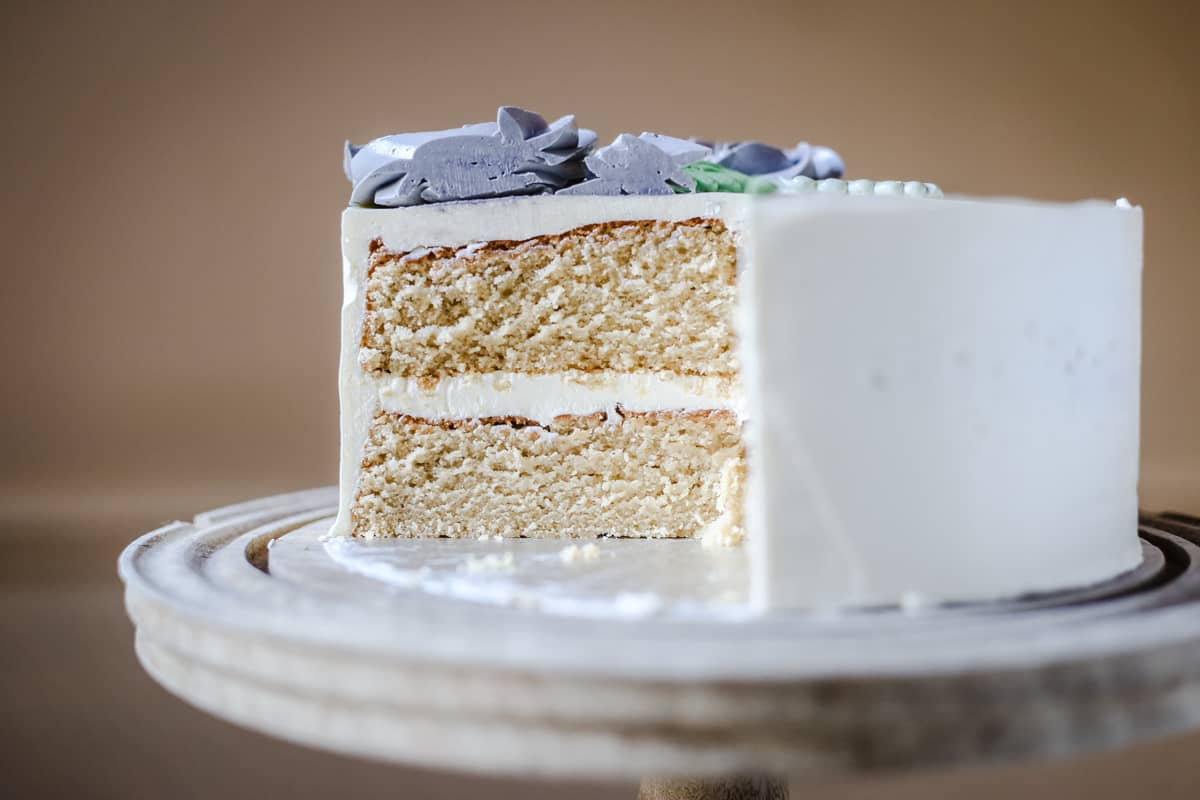
- Oat flour is light and fluffy so perfect for a layer cake like this Gluten-Free Vanilla Cake.
- White rice flour is delicate and wonderful in English-style pancakes
- Cornflour (corn starch) is creamy – excellent for buttery shortbread.
- Starchy flours (like tapioca flour or potato starch) have might lighter textures so are great at adding lightness and air to your bakes. Although too much starch can lead to gumminess.
- High protein flours like the nut flours and legume flours are often great at retaining moisture which gives baked goods a great moist texture. Too much though can create a dense texture.
⭐️An obstacle in gluten-free baking is often a imbalance of texture. Bakes can be gummy, pasty or gritty and sandy. I've got many tips and tricks on how to avoid these common texture mistakes in my free Troubleshooting Guide To Gluten-Free Baking which I highly recommend you download if you are experiencing something similar.
Flavour
The beauty of plain white flour (AP flour) is that it tastes completely neutral. This is an advantage in any bake as you can use the flour universally.
On the other hand a huge boon in using alternative flours is that many of them have unique and delicious flavours which can enhance recipes and add depth especially to baked goods.
- Teff flour has a malty molasses taste so excellent in this Gluten-Free Caramel Cake.
- Sorghum flour is beautifully earthy and goes deliciously with this Banana Rum Caramel Cake.
- Pistachio flour adds so much unique flavour to this Raspberry Pistachio Cake.
A common complaint of gluten-free baking is that is can taste weird. In these cases I can assure you that it is probably a case that the wrong gluten-free flour has been used in the recipe. To avoid this happening in your recipes visit my guide on How To Make Gluten-Free Food Taste Amazing which will help you navigate how to harness the flavour of these gluten-free flour for incredible results. Or how to replicate the same kind of flavour neutrality that AP flour has.
What Is The Best Gluten-Free Flour To Use?
So, now we know that alternative flours can fulfil almost the same roles as gluten. Plus, they taste better and they don’t make us sick. So what’s the catch?
I’m sorry, yes there is a catch and I’m sure you’ve noticed it.
There is not one gluten-free flour which can substitute regular all-purpose flour.
We need to use more than one gluten-free flour to do the same job as regular all-purpose flour.
If we put all our confidence in just one alternative flour then we might get some unpleasant results.
- Sweet rice flour - too stodgy
- White rice flour - too grainy
- Coconut flour – too dry
- Oat flour – too crumbly
- Almond flour – too dense
If you want a balanced taste but also a chance to retain the right texture and binding qualities of wheat flour, this is where you will need to start blending flours.
"Hey, but don’t some brands like Bob’s Red Mill and Doves Farm do that for us already. That’s what ‘gluten-free flour’ in the supermarket is, right?"
Can I Just Replace Regular Flour With Gluten-Free Flour?
All-purpose gluten-free flour (or a cup for cup gluten-free flour blend) which you buy in the supermarket is a great option when you are starting out with gluten-free baking. However, results can be variable. Each brand of gluten-free flour is made from a different blend of flours.

Some contain more starches, some contain bean flours, and some even include oat flour which many coeliac sufferers just can’t tolerate. So always check the ingredients list to see which flours are included within the blend in case there are any which aren't suitable for you.
It isn't usually recommended to use these flours in a straight 1:1 swap as most recipes which use these branded flours will suggest you supplement the flour with additional thickeners like xanthan gum for a better texture and structure.
There are some occasions where you can certainly just do a straight swap and use one of these gluten-free flour blends instead of regular flour. In these instances I would stick to recipes where there isn’t a lot of flour to begin with, like in a brownie or friand recipe.
Expert Tip: That said, you can have great success using these gluten-free flours in conjunction with a high protein flour like almond flour which helps to stabilise the gluten-free flour rather than using thickeners. It's an easy way to convert cake recipes from a non gluten-free recipe. I discuss how to do this in my guide to Nut Flours.
How To Create Your Own Gluten-Free Flour Blend
The most common gluten-free flour blends include a combination of wholegrain flours and starchy flours. The wholegrains will give your bake excellent texture and flavour and the starches will help bind your bake together and give it structure.
I recommend the following rule to create the simplest blend:
70% wholegrain flours (1-2 different flours) : 30% starch (1-2 different flours)
By including more than one flour from each category you are ensuring a more balanced blend as too much of one flour can lead to textural issues e.g. gumminess. I like using 3-4 flours within my gluten-free flour blends.
Adding More Protein
Many nut, seed and legume flours are very high in protein and so create excellent structure and moist texture if included in the blend. If allergies and intolerances are not an issue then I highly recommend also including one of these flours (almond flour and chickpea flour are favourites of mine) in your blend as well for even better results, especially in bread and pastry recipes where you need a bit of extra help.
How To Start Experimenting
So now you are armed with some basic information.
- Gluten is what gives cakes and bakes structure and texture.
- You can’t always replace regular flour with gluten-free flour.
- Different gluten-free and alternative flours provide different functions.
- You often have to use more than 1 gluten-free flour in a recipe to achieve a similar result to using regular flour.
- You have a solid ratio to start mixing your own gluten-free flour blend.
If you are keen to start experimenting with gluten-free flour then I suggest starting with some easy cake recipes. You can start swapping out a little flour in your branded gluten-free flour blends with whatever flour peaks your interest. This Introduction To Gluten-Free Cakes is an excellent place to start practising with these exciting flours.

Get To Know Your Gluten-Free Flours
And if you would like some in-depth information on some of the most frequently used flours which I use in my recipes then these gluten-free flour guides are the best place to start:
Here's More Gluten-Free Baking Advice You'll Love

Hi !
Would love to know more about chickpea flour. I had tempura made with it and it had a nice earthy flavor. Is it light in texture? How do you use it? Do you considerate it a protein flour?
Love your website!!
Lee
Yes it is definitely a protein packed flour and I use it a lot in my pastry recipes and some biscuit recipes. I'm currently developing a flatbread recipe with it. I do like it in savoury recipes as it gives depth of flavour. Sometimes in sweet recipes it can impart too much of its flavour so use it judiciously there. It gives stability to a bake and binding. I love the idea of doing a separate post on it as I've been using it more and more lately.
Hi Georgina,
I'm grain free and dairy free and just tried a great recipe for Paleo bagels; but the recipe called for 3 cups tapioca flour and a 1/2 cup almond flour and 1/2 cup flaxseed meal and yeast. My bagels turned out flat. Somehow the yeast didn't activate and they taste great; but wondering if you have suggestions on the ratio of tapioca to almond flour so I get fluffy bagels on my next attempt?
It's hard to say without testing the recipe. Was the problem with the yeast?
Georgina-
I'm looking for a good flour blend for yeast breads. I recently made a buckwheat yeast bread and wound up with bread that was too dense.I know it was because I overworked the dough excuse the moisture wasn't enough. Anyway, I need a flour blend for bread making specifically.
Marcia
I'll point you in the direction of my White Sandwich Loaf recipe so you can see the blend of flours I use in that. I don't have a particular blend that I use for all of my bread recipes as it depends on the bread I am baking to which flours I want to use.
Georgina,
I stumbled upon your website. It is truly remarkable in information.
I am trying to find whole grain flours for baking bread, but almost all flours are mixtures that start with refined flours that have had about half the nutrients removed with the bran, and nearly all of the fiber.
Not even bread flour is whole grain. I compare the labels. Enriched flour has SOME of the nutrients from the bran restored, but not all. Some flours are FORTIFIED with nutrients no found in that food naturally.
The nutrients in flours do not match the nutrients in the grain itself.
Do you know of gluten free grain flours that are also whole grain, with all their natural bran?
Again, thanks for organizing the information for the flours. It is a big help.
My best advice for you is to grind your own flours if you want to make sure all the nutrients are kept in tact. It's true that many flours are very refined so that they mimic the textures of flour that we are all used to. I haven't started grinding my own flours yet but so many people in my facebook gluten-free flour community do and are sure to share their advice.
I want to add a note for the baker who got arsenic poisoning from eating rice.
Across the Southern US, about a hundred years ago, we farmed cotton. The USDA remedy for the Boll weevil that ruined the crops was an arsenic pesticide. After it became known that the pesticide was dangerous, we could not plant cotton anymore. What we did not know at the time was that the land had been poisoned with arsenic. Subsequent crops absorb the arsenic, despite all efforts to restore the land to production. My family was lucky, in that not all of our land was planted to cotton. We have some land free of arsenic that we still farm.
As for the purpose of this note, rice grown in California is arsenic free, as is rice grown in other countries. You may therefore be able to find arsenic free rice.
What's best to mix with teff flour to make cookies?
Would potato or tapioca starch make cookies more soft?
I like to use almond flour along with teff flour to make cookies as it gives them a little more bite. Yes, more starch will make them softer.
Hi Georgina,
I'd like to make a fish batter. I've been given some lovely snapper fillets, my husband would like me to batter them, but unfortunately I don't seem to have a good mix. First lot was too thin and runny, made a real mess......still ate the fish though.
Next time I tried your ap flour mix (sorghum, sweet rice, buckwheat and tapioca). Mmm this was a little too much...too heavy. Should I have added an egg? More water or even soda water......too many guesses. Got any suggestions. Thank you.
I would stick to a blend of starchy flours and protein packed flours to give lightness to the batter. Tapioca starch and potato starch would work very well with maybe some almond flour to balance it out. It's a great recipe suggestion for the website and I will work on it.
This blog post is awesome!! I've been doing my own research on all this gluten free baking, especially after an epic GF sub roll fail with a 1:1 flour. Basically I baked bricks! Ha! Thank you so much for putting it all together in one place so we can all better understand gluten free baking. I'm going to tag this post in one of my own blog posts, if that's ok with you? Keep being amazing!
You are so welcome!! I'm happy you found the information useful!
Hello,
I was just wondering about cookies. A lot of the suggestions are for cakes and breads. I’ve mixed white rice flour, tapioca flour and potato starch along with xanthan gum. I get a crispy outside and a little bit of a doughy consistency on the inside. Was just wondering if I need to add a whole grain flour to the mix and which one would you recommend.
Regards
Melinda
White rice flour isn't my favourite for cookies as it's a little bit gritty. I tend to just use 2-3 flours in my cookie mixes. My favourite blends are oat flour and almond flour with sometimes a little tapioca flour if I think the cookies need to be a little more golden (as tapioca browns well). So as you can see I tend to stick to the wholegrain and protein flour with a little starch thrown in if necessary. You can use any wholegrain you fancy like teff / buckwheat or sorghum. I don't use xanthan gum in any of my recipes.
Hello,
How does sweet potato flour affect the gluten free baking with regards to bread and cake making,
Also when you say 70% whole grain flour and 30% Starch, do you mean starch from roots crops or the flour?
Thanks for information.
Hi Abel, you can use sweet potato flour in many recipes. I like it in cookie recipes but I have also used it in health bars and cakes. For the baked good I find it works better in a blend. I can't comment on breads as I have never baked bread with it (unless you are counting banana bread which I have used it for). When I talk about 30% starch this is referring to starchy flours.
Hi. Thanks for the Yorkshire Pud recipe. I’ve been told to avoid rice, including gluten free for health reasons. so I’m guessing the rice flour is not a sensible option for me. Any suggestions for alternative please? Thanks.
Hi Sonia, on this occasion I do not have a substitute for the sweet rice flour I'm afraid.
Hi. I’m having a nightmare with Yorkshire Puddings. I can make great ones with regular flour but dense horrible ones with gluten free. I use Dove free from with cornflour without cornflour; with baking powder and without and no joy. Any tips please?
Hi Sonia, yes - here's a link to my Yorkshire Pudding recipe. They are delicious!!
Do you have any experience with Cassava flour? I'm brand new to this way of baking and the information provided here is a tremendous help. One flour that comes up repeatedly is Cassava. I know the basics of the flour but I'm interested in actual working experience. I can't have Rice, so many of the lighter recipes I can not use.
Kelly I love that you've asked this question as I'm currently working on some cassava flour recipes. Currently I use it in a few bakes published on this website (like this Gluten-Free Naan Bread) but I have been using it more and more. Hopefully I'll have some more recipes up very soon!
Hi, do you have a flour blend recommendation for bread? I'm looking into mixing my own, I do what it to be more on the whole grain side. I like the idea of using starchier flours instead of gums. Does this work for sandwich breads?
Hi Kelsie. You do not need to use gums to make bread. I'm currently working on my bread recipes so watch this space. However, chia and flaxseeds and psyllium husk are great to add in the mix. Have you seen this recipe for Irish Soda Bread?
I am wondering if you have a suggestion for egg substitutes that work in gluten free bread. I am getting a good crust and gummy insides.
I use flaxseed in my bread recipes when I want to avoid egg. View this Irish Soda Bread recipe.
Hello Georgina,
Thanks for this information, I took notes from all your website.
I have a Question ¿Any favorite mix of gf flours that you feel work the best in most of the cakes and muffins? I´ve been trying few mixes but I haven´t gotten the point.
Thank you so much. 🙂
Juli
Hi Juli, my favourite flours to use are sweet rice flour, oat flour, almond flour and tapioca starch. A combination of these flours will usually create a great neutral tasting flour blend for cakes and muffins. Use the ratio 70% wholegrain : 30% starch and start experimenting from there.
How do there flours work in high altitudes. I’m at 4700ft above sea level.
Hi Karen, I don't know about the individual flours but I haven't seen anything to suggest they would act differently to wheat flour. So I guess just the normal adjustments you would make on any recipe in high altitudes for the leavening agents and sugars.
What specifically is the Gluten-Free Plain Flour that you call for in your Lemon Rasberry Sponge Cake? Is this something you've mixed? Or is it something you've bought off the shelf at Waitrose? Or is it Bob's 1-to-1 gluten free flour mix? The recipe looks delicious, but I don't want to make it until I know exactly what to put in it.
Thanks!
Hi Mary! Whenever a general gluten-free flour is called for I use Doves Farm Free From Gluten Plain White Flour as that is what is easily stocked in UK supermarkets. It doesn't contain xanthan gum so is also a good choice for those that are intolerant to xanthan gum. Bob's 1-to-1 is harder to get hold of - only really found in specialist health food shops or on Amazon plus it contains xanthan gum which is worth noting. Actually the point is that it really doesn't matter which plain gluten-free flour blend you use for the Lemon Raspberry Cake. Anything will work. However, the flour I used is the Doves Farm brand and is the one I specifically recommend. I will amend in my notes so thank you for your comment.
Hi -
I enjoy your approach to gluten free flours.
Is there a function 3 in this article? It seems to have been skipped.
I tried to leave a message on your Contact page, but the page isn't working correctly.
I
Ah, the mysterious function 3!! Sorry, it was a typo, now amended. There are 4 functions in total. Thanks for the eagle eye!!
Hello! I am making an olive oil cake for my book club where one of the gals is gf. There is one cup of flour in the recipe. My question is, if I just use a gf flour mix, would I leave the baking powder the same? Thanks for the great information.
Hi Molly, every brand of gf flour mix has a variety of different flours so a straight swap doesn't always work. It depends on which brand you are using and the other ingredients in the cake. It shouldn't affect the rise though unless your gf flour has a rising agent in it already. If it doesn't then the baking powder should remain the same.