Creamiest Cheesiest Gluten-Free Macaroni Cheese
This post contains affiliate links. Please read my disclosures.
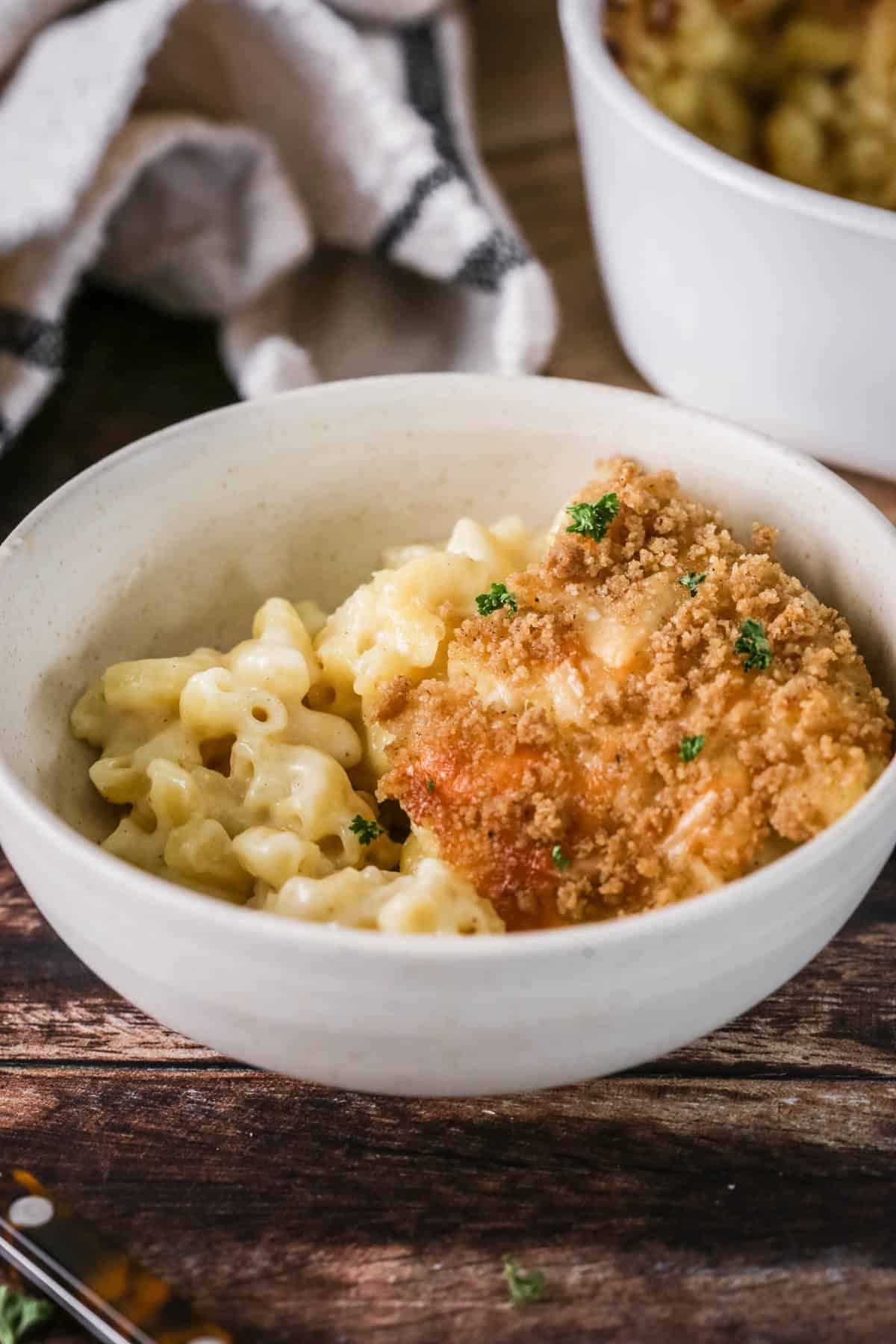
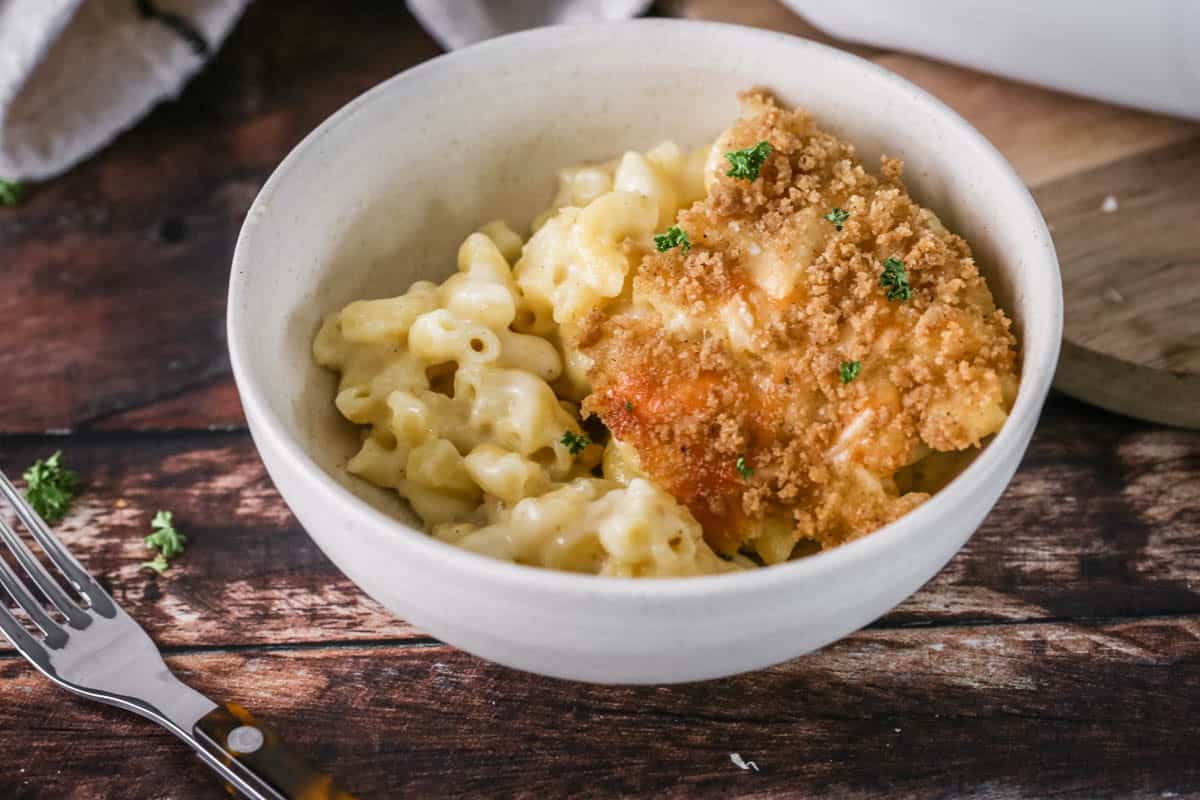
This Gluten-Free Macaroni Cheese is creamy, comforting and easy to make for weeknight dinners.
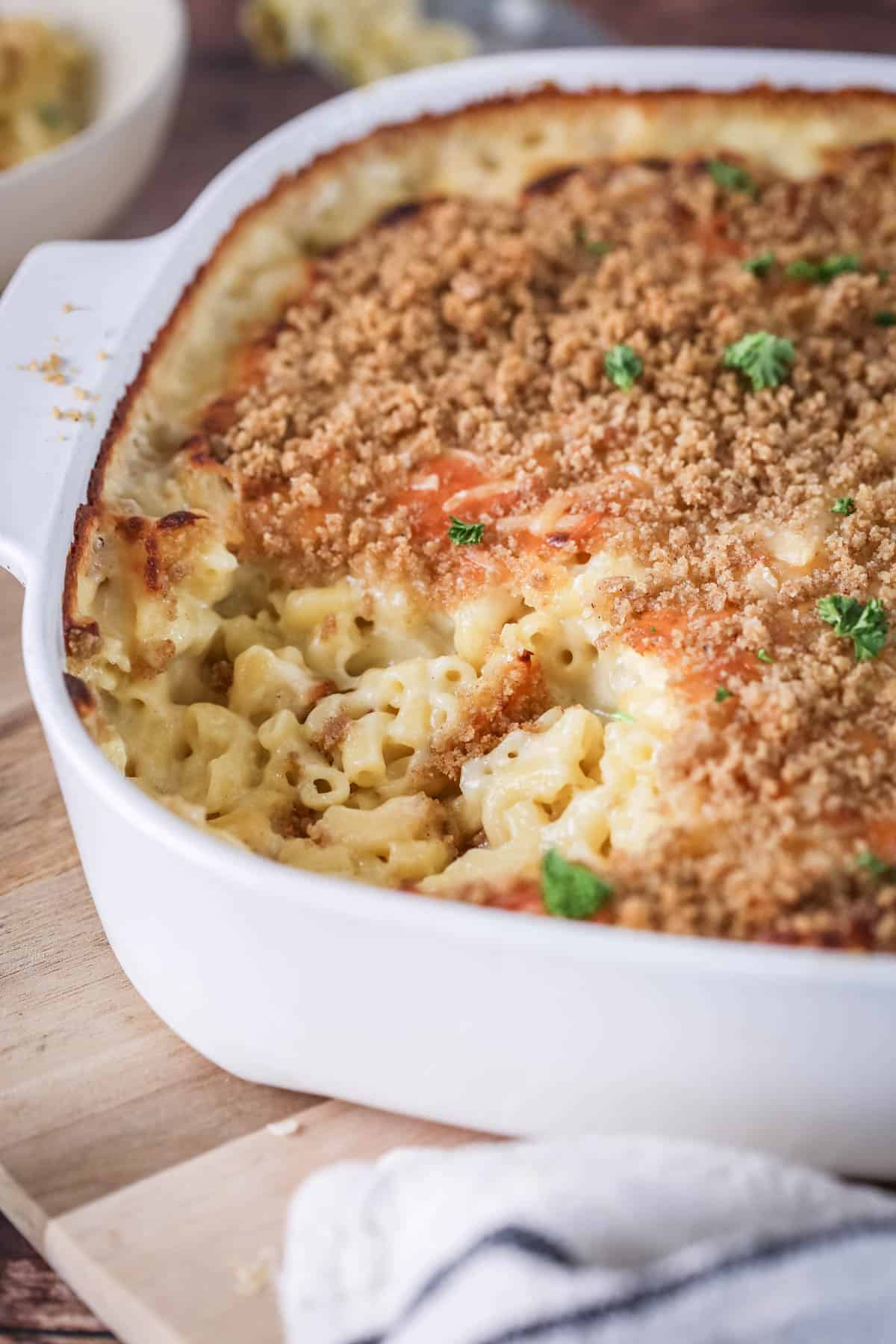
This is a simple classic recipe which you might have found in the past can go wrong when you switch to gluten-free ingredients.
The key to a great gluten-free mac and cheese is the right choice of ingredients, meaning you won’t be saddled with mushy pasta or a watery grainy cheese sauce.
We’ll go through how to choose the right supermarket pasta and which flour to use to make a velvety smooth creamy cheese sauce.
If you want to make your macaroni cheese ahead to cut down on kitchen time mid-week then I’ve got lots of tips to make sure it comes out perfectly every time.
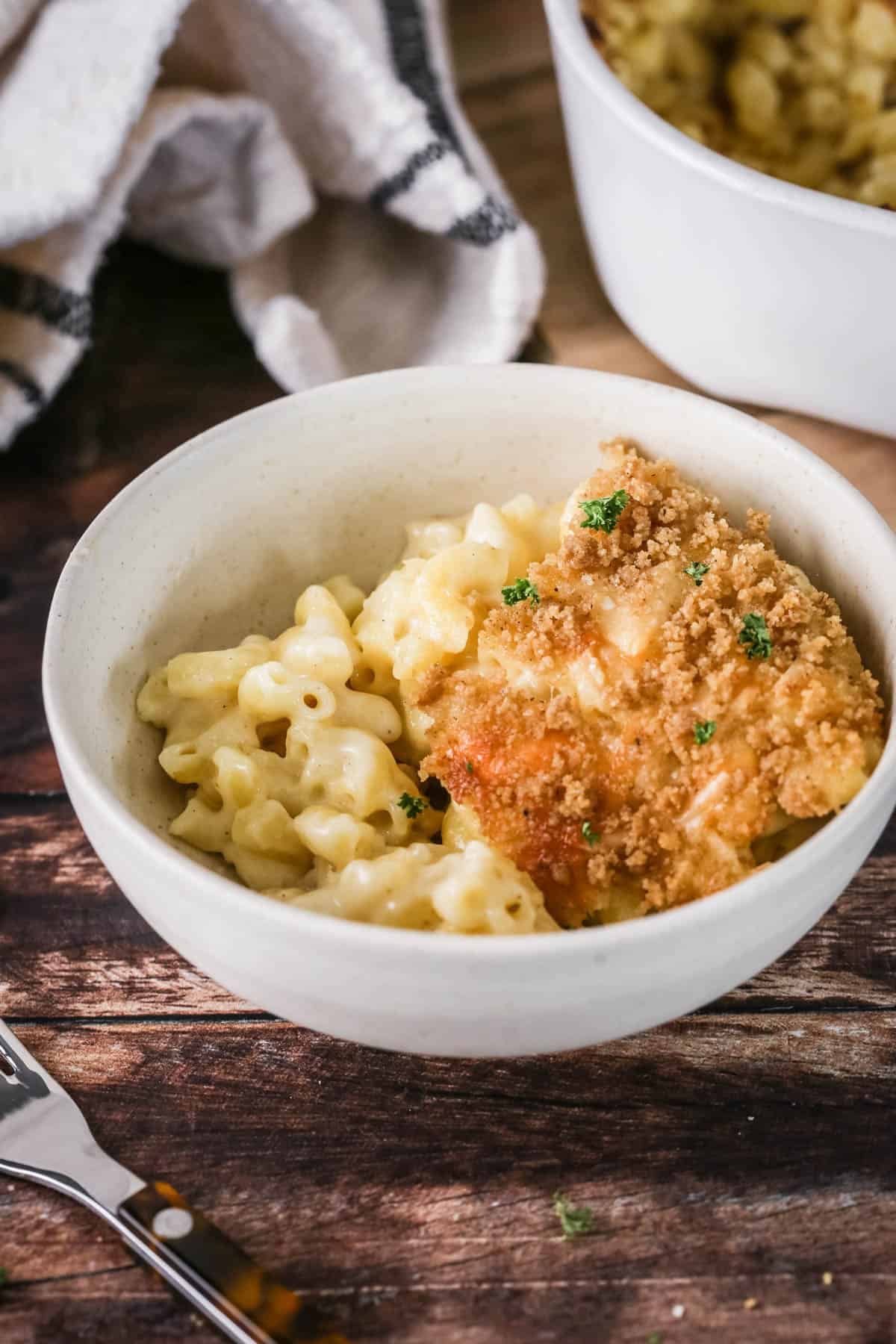
Why You’ll Love This Gluten-Free Macaroni Cheese
- Full of layered rich cheesy flavour. Nothing bland about this dinner.
- Roux-based sauce. I use a butter and flour roux base to build the sauce which enriches the dish with a deeper flavour.
- Gluten-free pasta bake which retains perfect texture.
- Crisp topping which is a lovely contrast to the smooth creamy sauce.
- Familiar home comfort that the whole family will love.
Watch the Video
Sometimes it helps to see a visual of what I'm talking about. So watch the video to see what it looks like to make your Gluten-Free Mac n'Cheese.
What Makes Macaroni Cheese Gluten-Free?
There are three major swaps you need to do when making a gluten-free version of mac and cheese:
- Pasta. This is obvious (hopefully!) but you need to make sure to use a certified gluten-free macaroni pasta. You don’t have to use macaroni but most major supermarkets do stock it and if you can’t get it then any pasta will do (although cooking times will increase for larger pasta).
- Flour. This recipe uses a gluten-free roux based sauce with flour and butter to thicken the sauce. Some recipes may choose to use cornflour at the end to thicken (in fact I use that quick and easy method for my Cauliflower Cheese) which I certainly don’t decry. However making a roux builds into the sauce a richer more buttery layered flavour. The key here though is choosing the right flour – using a regular shop bought gluten-free flour isn’t the best method (see below for my recommendation).
- Breadcrumbs. Maybe you don’t use breadcrumbs to create that golden crisp topping but I really appreciate the texture contrast here to the unctuous pasta blanketed underneath. So if you do like a crisp topping then you will need to use gluten-free breadcrumbs.
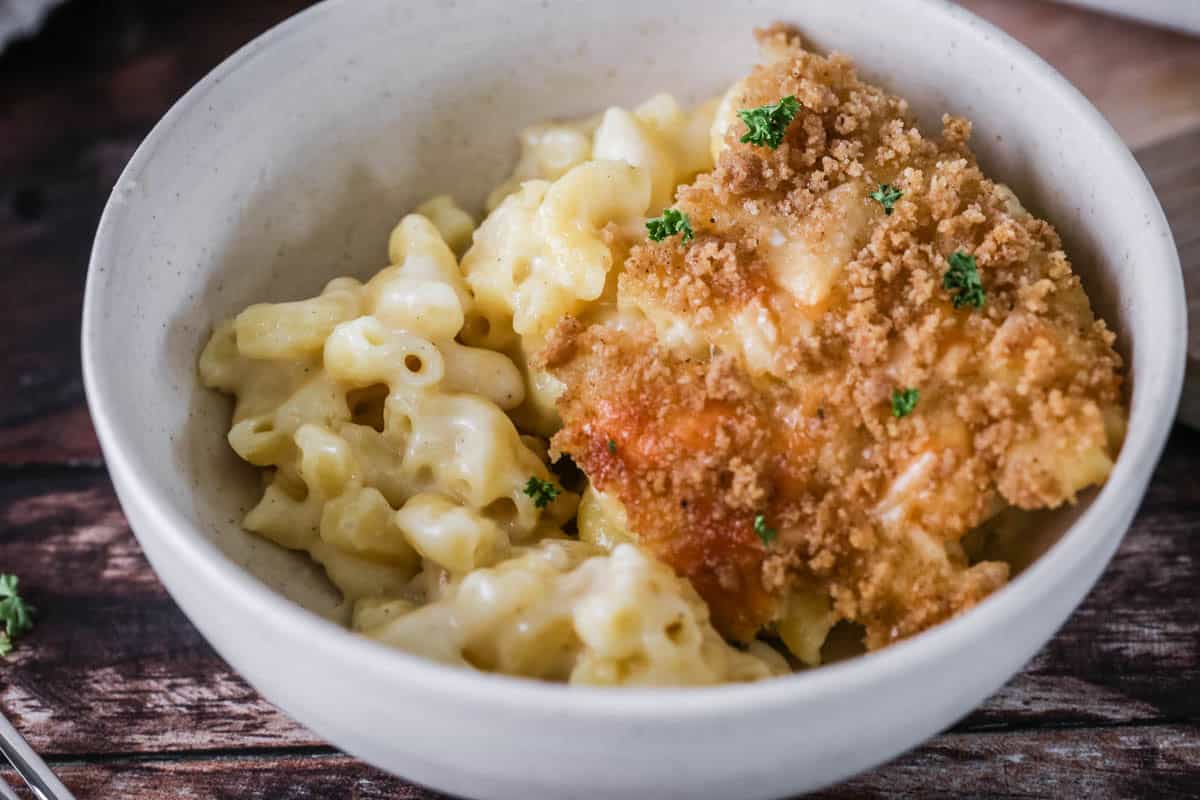
The Best Gluten-Free Pasta for Macaroni Cheese
Of course we may not be so lucky as to have a choice when selecting our gluten-free pasta, some supermarkets have more choice than others. However, if you have your pick of the bunch then I recommend to read the ingredients list so you know which flours your pasta includes.
Rice vs Corn vs Lentil Pasta
I approach choosing gluten-free pasta in the same way I approach making gluten-free flour blends in my baking recipes. It’s all about the balance of flours in the blend. Let's go through the flours that seem to appear the most often in a gluten-free pasta ingredients list:
- Lentil flour. This is a protein packed flour which is great for the structure of the pasta but using just lentil flour can be an overpowering flavour.
- Rice flour. This is a great economical wholegrain flour (which is why it appears in a lot of supermarket blends) and has a subtle flavour but it can lead to soggy pasta which loses its shape.
- Corn flour. Another economical flour which is often paired with rice flour in pasta blends to help with the structure. However, I still think this pairing isn’t enough for perfect al dente pasta. If you can be more discerning about your choice then using a combination of all three of these flours (or flours that do similar roles) will give you a better balance.
UK Gluten-Free Pasta Brand Recommendations
M&S Made Without, Tesco Free From, Waitrose Free From, Aldi Free From, Lidl Just Free all use just a blend of rice flour and corn in their pastas. I think we need more balance and more protein.
For a supermarket choice I personally recommend Sainsburys Free From Macaroni, which I used to recipe test in this macaroni cheese, and includes rice, corn and also quinoa in the blend. Including quinoa which is protein packed flour gives the end result more stability.
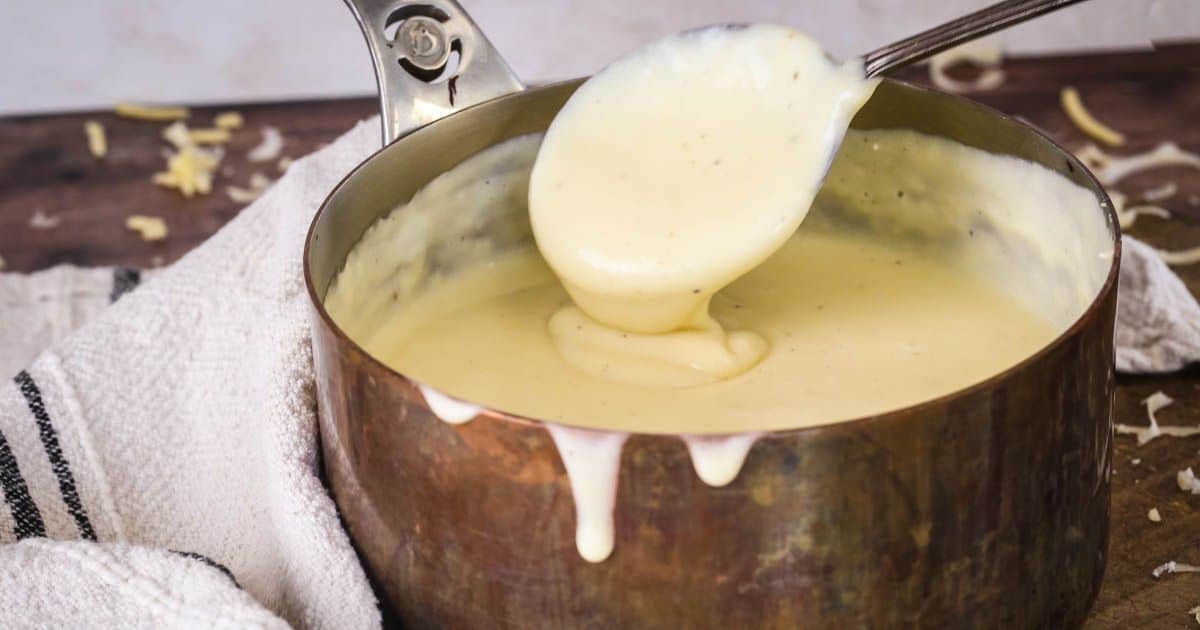
The Best Flour for making the Cheese Sauce
I use my Best Gluten-Free Cheese Sauce for this recipe which is a roux-based sauce.
Making a gluten-free roux requires a starchy flour for ultra smooth and foolproof thickening.
The best starch choices are either cassava flour or sweet rice flour (glutinous rice flour). These can be used interchangeably in a 1:1 roux recipe. You can use either but here I have used cassava flour.
Ingredients Needed
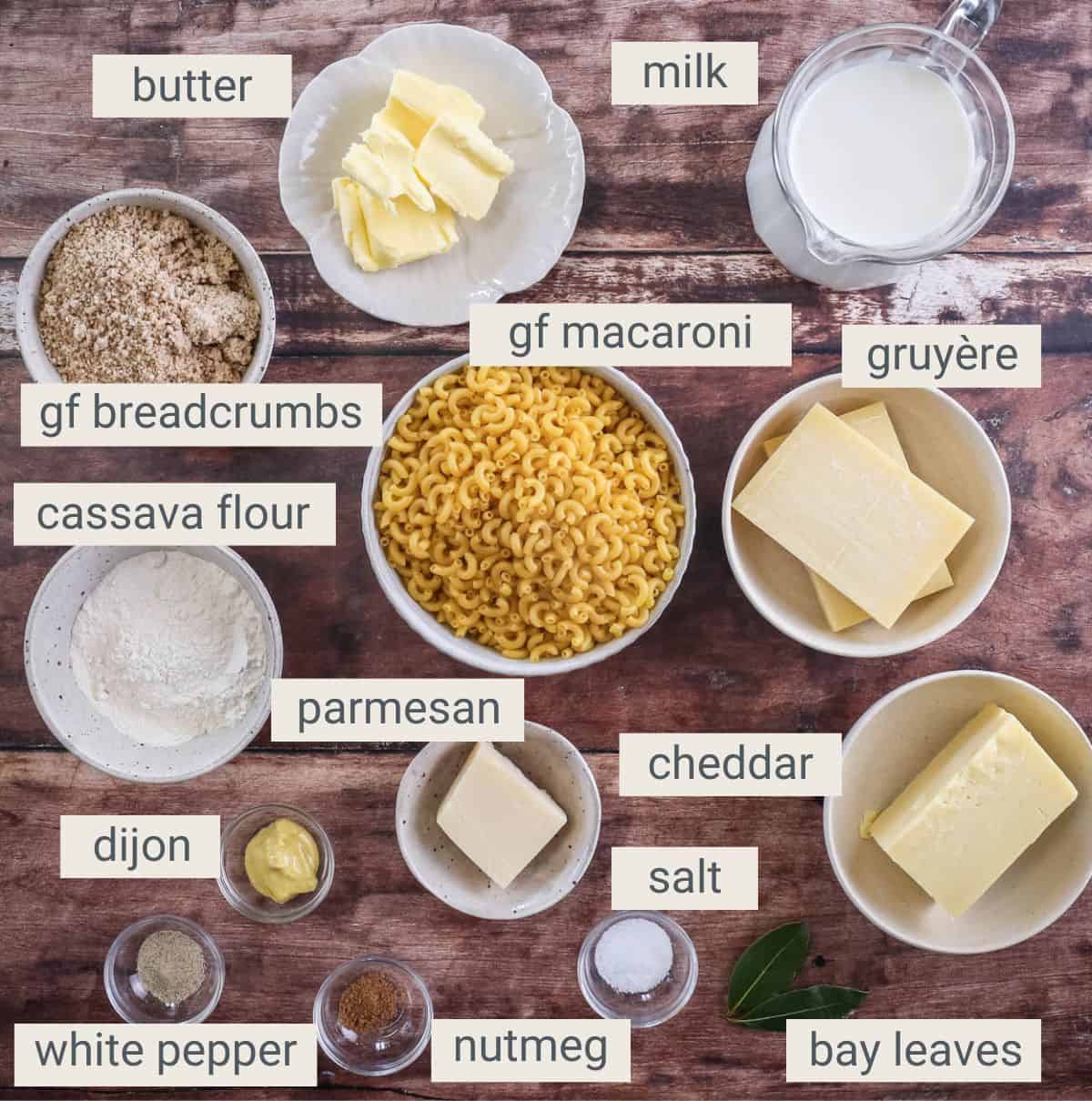
Butter. If you can use unsalted butter here then you can control the salt content of the sauce but if you only have salted butter then you can omit the salt – and taste for seasoning.
Cassava flour. This is such a versatile naturally gluten-free flour which a neutral flavour and gives a gorgeously smooth and creamy result to our sauce, similar to that of regular wheat flour. Sweet rice flour can be used instead (not regular rice flour).
Milk. Use whole milk over semi-skimmed. You need the richness to give the sauce body and flavour. If you want to use dairy-free milk then I like oat milk or almond milk the best. Oat milk gives a richer result but obviously oats are not suitable for everyone so almond milk is a sound swap.
Gruyère. I love using super melty gruyère which has a great depth of flavour. Teaming it with cheddar, which we usually have in our fridge and a little parmesan helps give flavour layers to the cheese sauce.
Cheddar cheese. Use your favourite mature cheddar cheese and grate it fresh rather than anything pre-grated.
Parmesan. We just use a little parmesan in the sauce and in the topping for a greater depth of flavour. Freshly grated parmesan does have more flavour than the pre-grated.
Dijon mustard. This deepens the cheese flavour and adds dimension. You can swap for English mustard powder for a stronger flavour (English mustard in its liquid form is often not gluten-free).
Bay leaves. I do like the flavour of bay in our cheese sauce to give a little herbal element.
Seasoning. We season our cheese sauce with white pepper (you can use black pepper), salt and ground nutmeg.
Gluten-free macaroni pasta. You might need to shop at a larger UK supermarket for gluten-free macaroni, or purchase online. You can substitute for any kind of gluten-free pasta but then you will need to increase the initial pre-boiling time for the pasta. A larger pasta shape needs to be cooked for 3 minutes less time than the packet states.
Breadcrumbs. I always use homemade gluten-free breadcrumbs as I keep a huge batch in my freezer at all times which I always top up with the whizzed up ends of my stale loaves of gluten-free bread hanging around. My breadcrumb topping here looks especially golden brown as I used the whizzed up crumbs of my leftover yeast-free bread rolls.
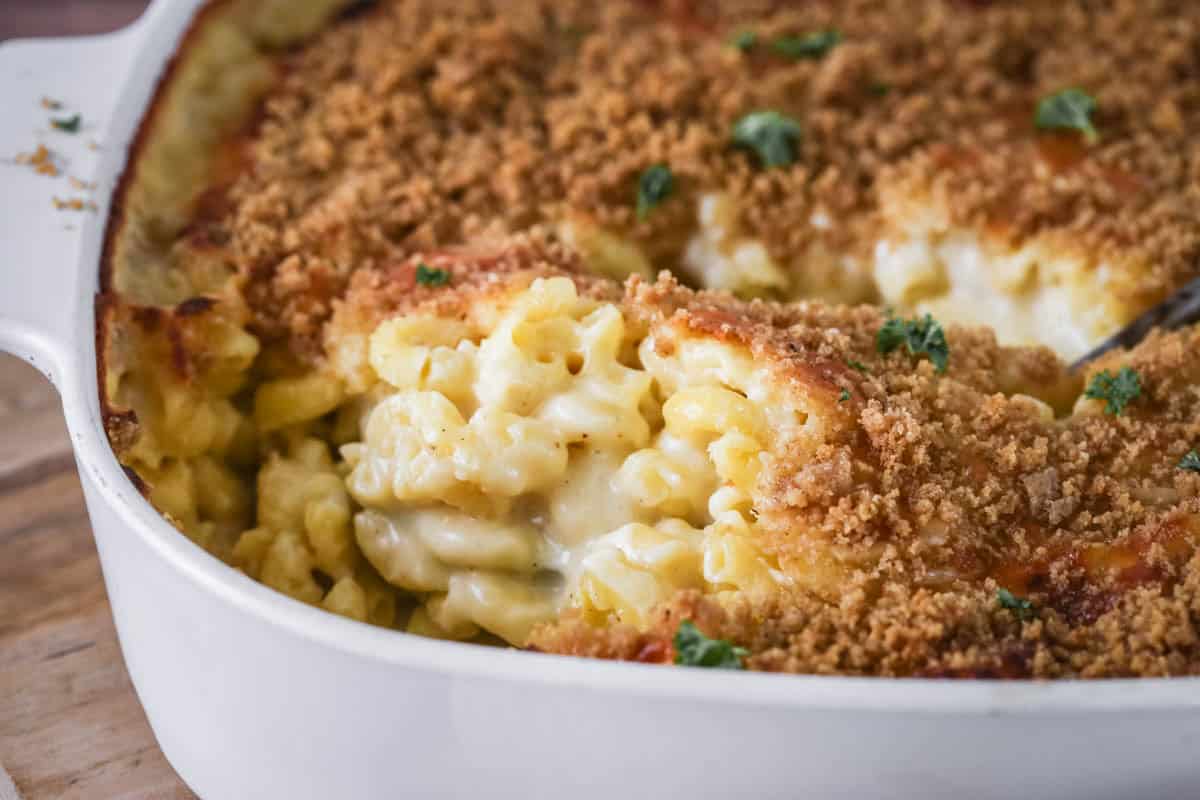
How To Make Gluten-Free Macaroni Cheese
For full recipe instructions go to the recipe card at the end of this post.
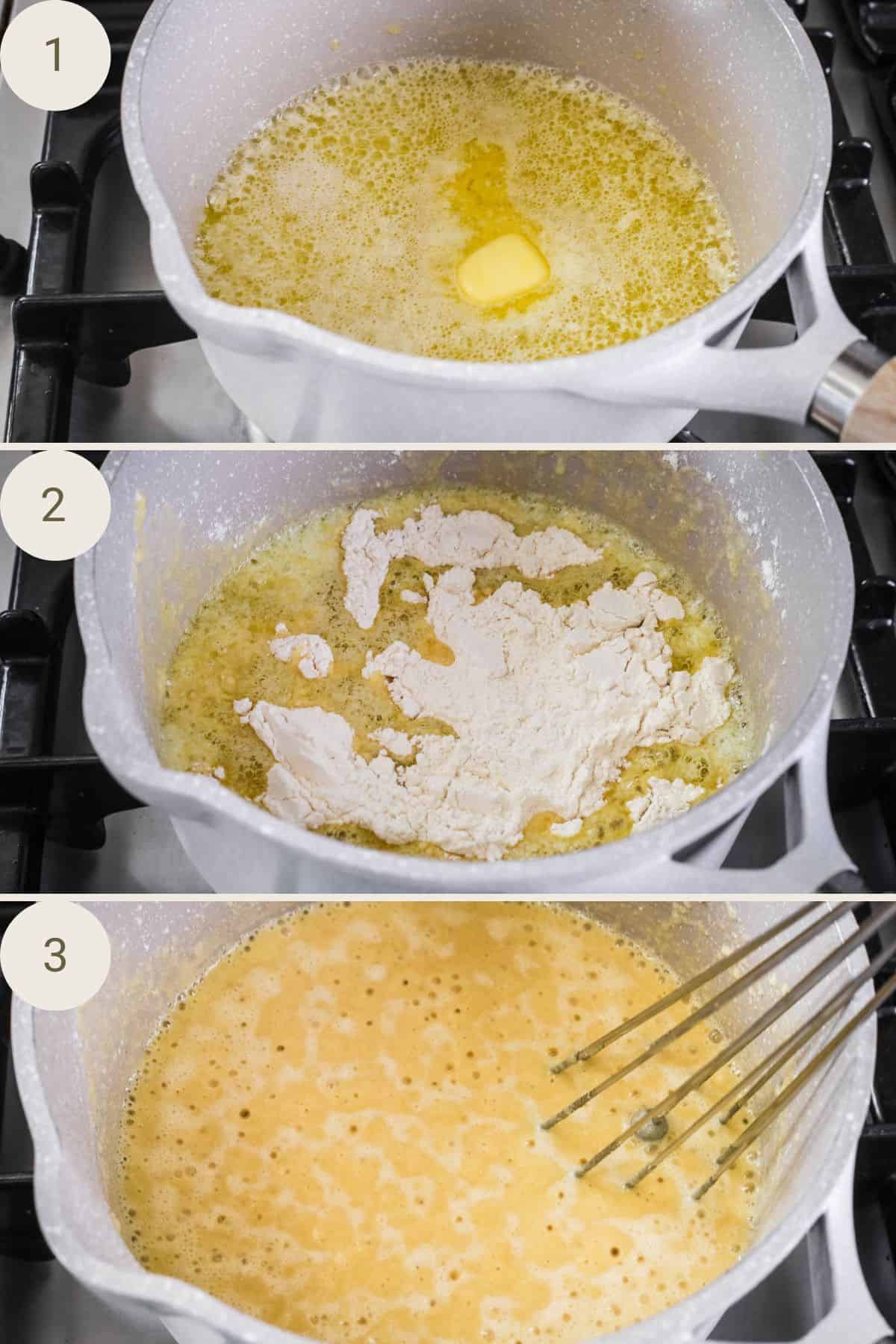
Melt the butter in a saucepan and add the cassava flour. Mix together until a smooth roux has formed.
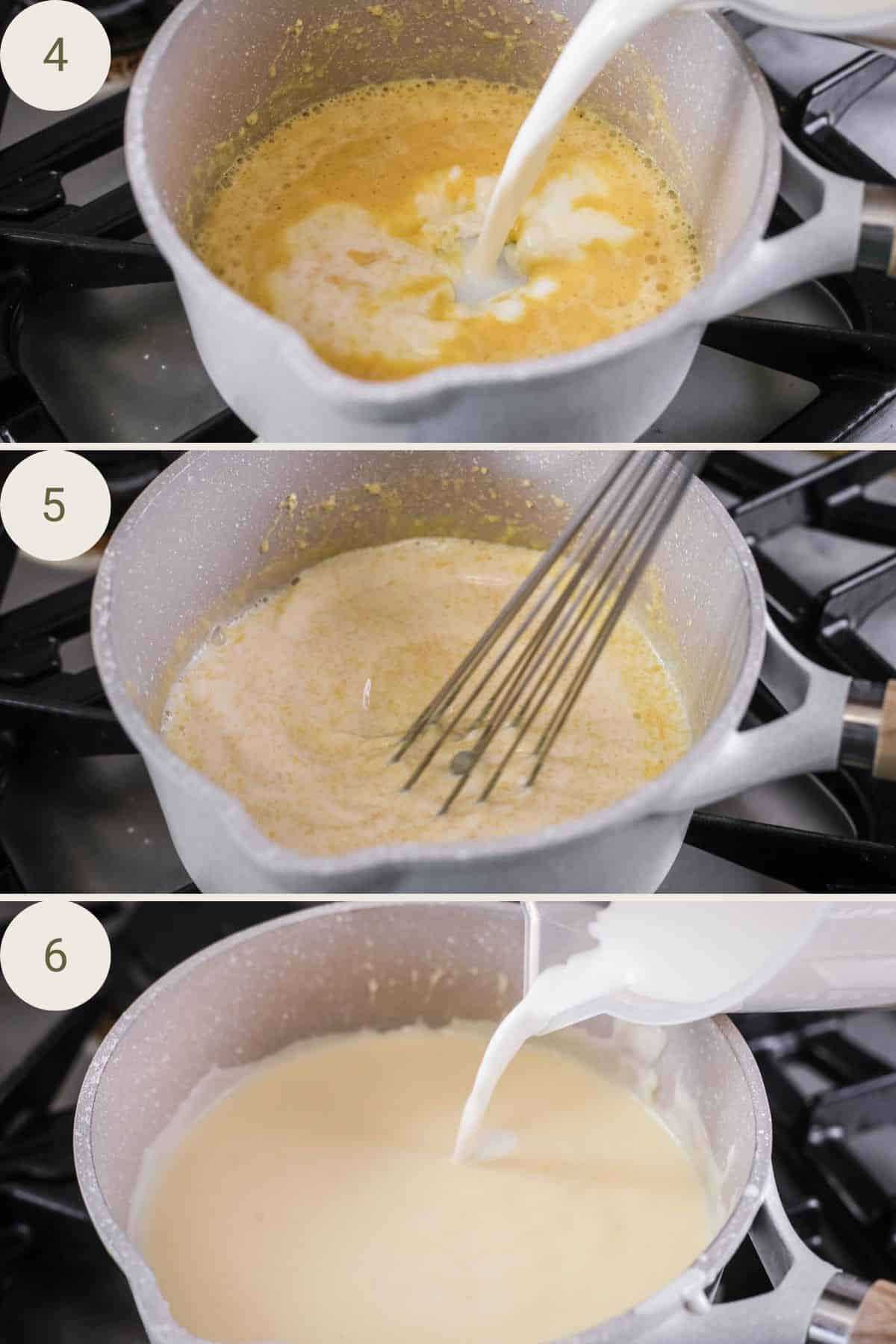
Gradually pour the whole milk into the roux, stirring all the time until all the milk has been added and the sauce is thick and smooth.
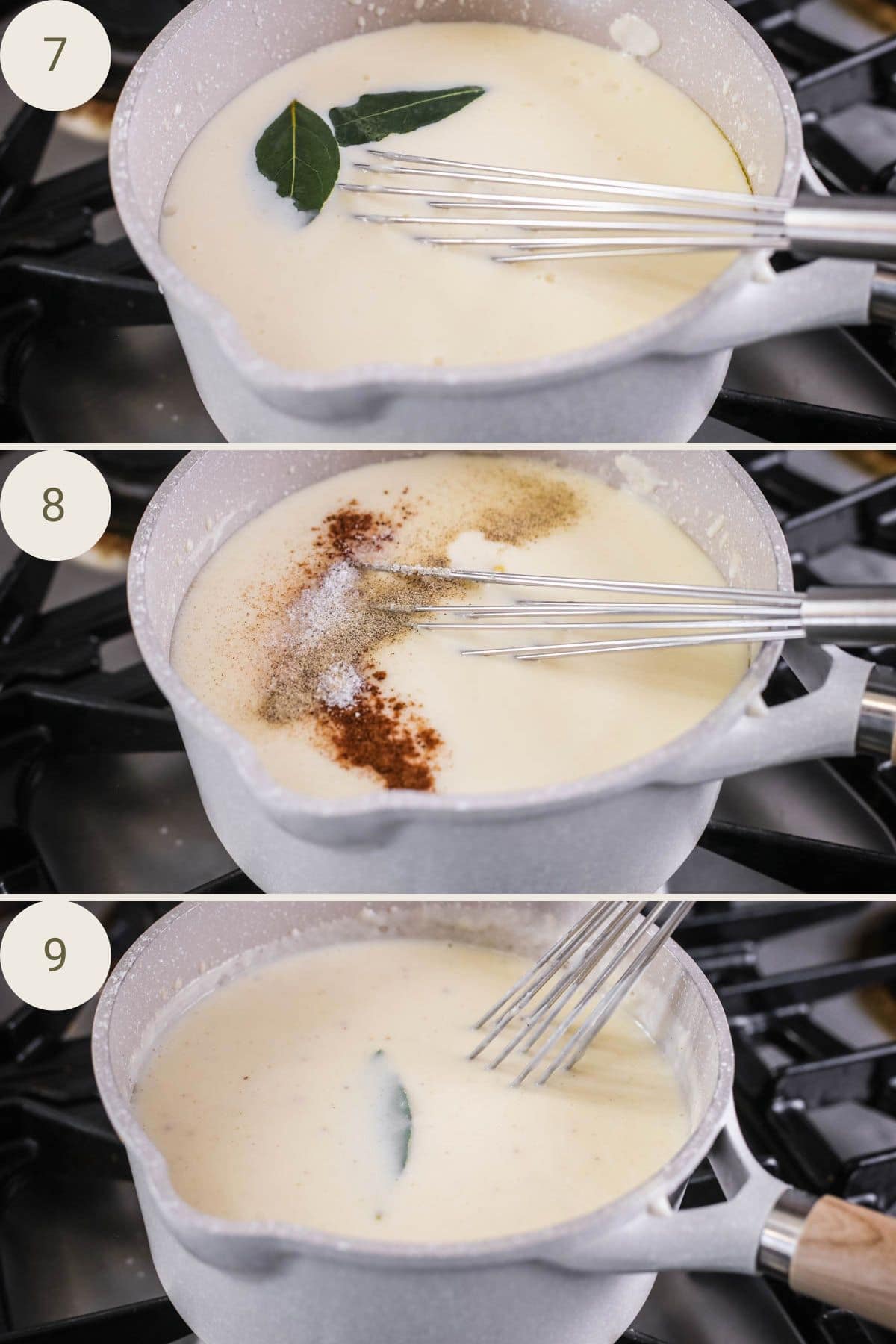
Add the bay leaves, white pepper, salt, nutmeg and Dijon mustard. Stir these ingredients in then keep on stirring until the sauce gently starts to bubble.
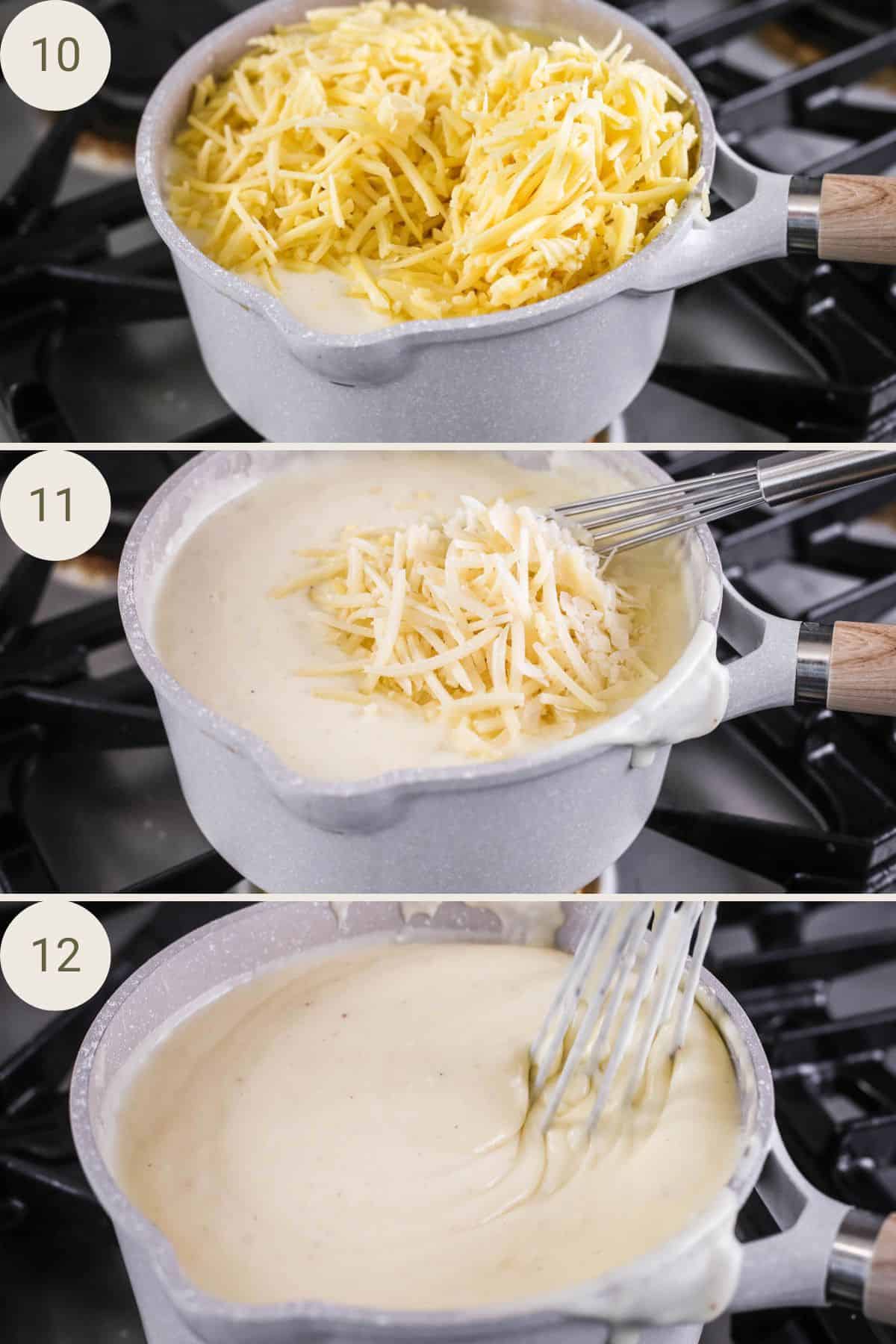
Finally add in the gruyere and cheddar, followed by the parmesan and stir in until melted, thick, very smooth and gently bubbling. Remove from the heat.
Boil a large pan of salted water then add the macaroni. Allow it to come to a boil again and simmer for 1 minute. Remove from the heat, drain, then pour into a large mixing bowl.
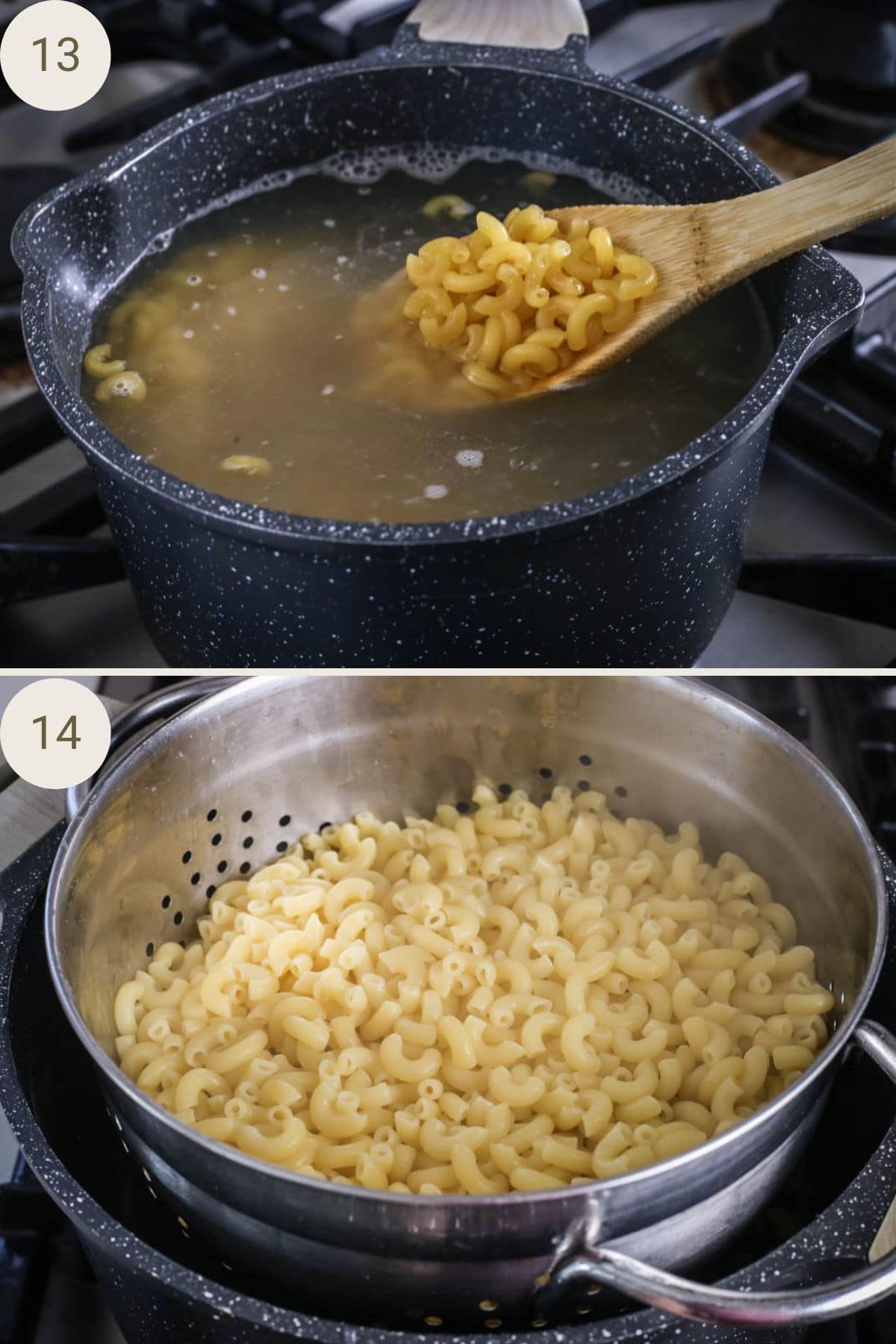
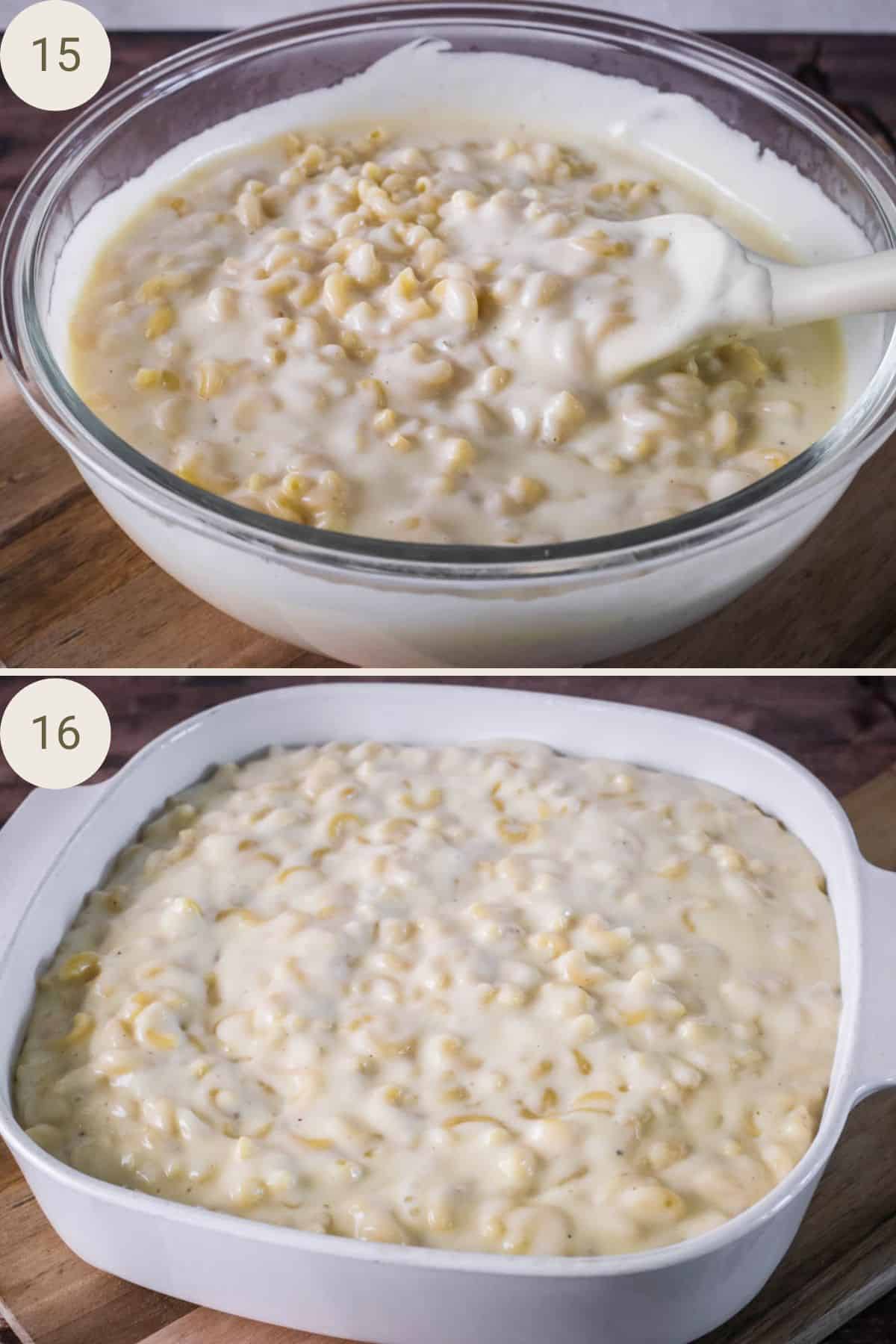
Pour the cheese sauce over the macaroni pasta and stir to combine them. Pour the macaroni cheese into a large baking dish.
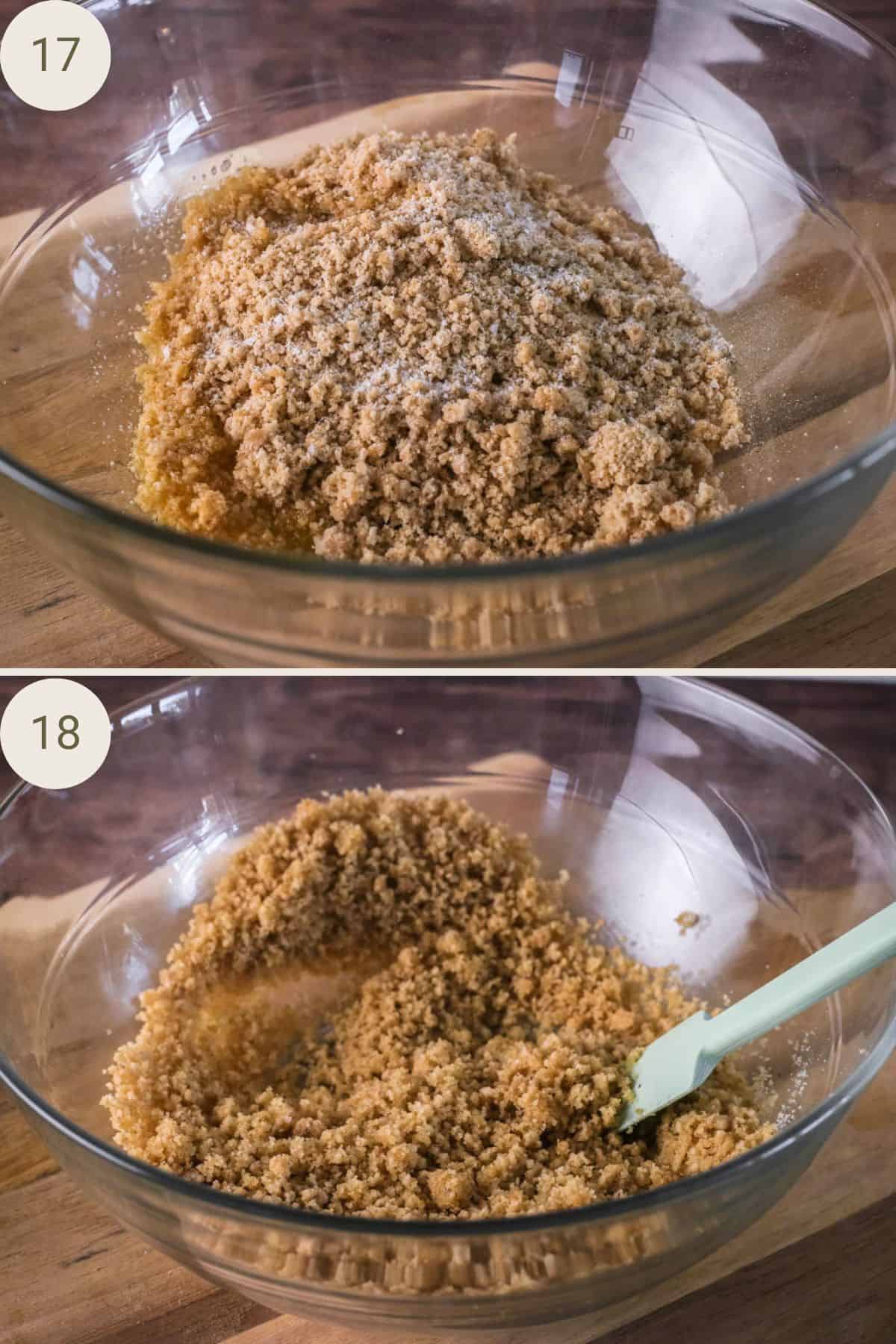
In a small bowl combine the gluten-free breadcrumbs, melted butter, salt and pepper until the butter has coated the breadcrumbs evenly.
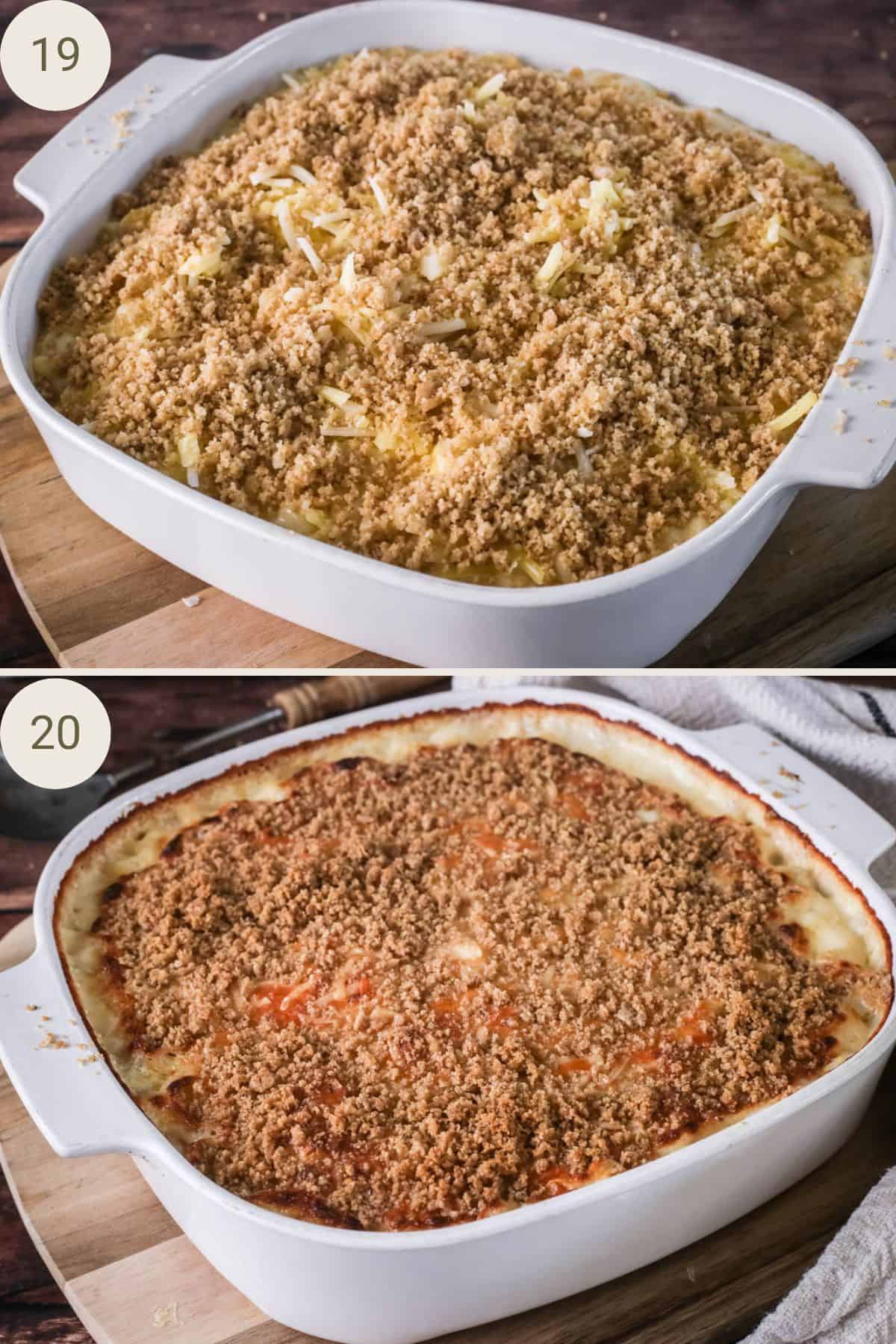
Sprinkle the extra grated cheese topping over the macaroni cheese. Sprinkle the buttery breadcrumbs evenly over the top of the macaroni cheese. Place in the oven and bake for 25 minutes. Finish under a grill for a final 5-10 minutes for ultra golden topping.
Tips & Troubleshooting
Cover the surface of the cheese sauce with cling film or baking parchment whilst you are preparing the pasta which avoids a skin from forming.
Before adding the pasta into the sauce, give the sauce a good whisk to get rid of any lumps which may have formed from the resting period. If the lumps are proving stubborn to decrease then you can re-heat the sauce briefly.
To avoid soggy or overcooked pasta then undercook it. It only needs to cook for about 2 minutes in the boiling water before draining.
I recommend adding the pasta to the sauce directly after cooking. However, if by any chance, it’s hanging around then the pasta can stick together. You can add 1-2 teaspoons of butter to the pasta after cooking to coat the tubes then lay them out onto a single layer of a baking tray on parchment to avoid this.
Make Ahead
I don’t actually recommend making this whole dish as written ahead of time. This is because the longer the pasta sits in the sauce the more it takes on and the soggier the pasta gets and the drier the sauce.
If you wanted to do it this way then reduce the amount of pasta so that there is a lot more sauce than
Here’s my alternate advice:
Make all the components of the dish ahead of time and keep separate until the day of cooking and serving. However, since the tiny pasta tubes only take a couple of minutes to cook I normally only bother making the cheese sauce ahead of time. The rest is a pretty simple assembly job.
The cheese sauce can be made up to 3 days ahead of time, stored in an airtight container in the fridge with baking parchment or cling film pressed to the surface of the sauce.
Freezing
This recipe can be frozen (for instance if you have leftovers) but I don’t recommend making it to freeze as the results will be inferior.
If you want to freeze leftovers then freeze in portions in an airtight container. Allow to thaw overnight in the fridge and you can either re-heat in the microwave (for 4 minutes) or in the air-fryer (for 7 minutes in a small baking dish).
To avoid the dish from drying out you can add a splash of milk to the macaroni cheese before re-heating which makes it more saucy. I will often add 1-2 tablespoons per portion.
FAQs
A cheese sauce can be grainy if the wrong gluten-free flour is used. I recommend using cassava flour or sweet rice flour (glutinous rice flour) for smooth velvety sauces. Gluten-free flour blends contain wholegrain flour – rice flour can especially be a culprit of this.
I recommend using a single origin flour like cassava flour or sweet rice flour (glutinous rice flour) for the best results in a cheese sauce as a base for macaroni cheese. However, you could also use cornflour which will require a different method to your cheese sauce – similar to this Cauliflower Cheese.
Gluten-free pasta easily absorbs liquid, much more so than regular pasta. This is because gluten-free flours are highly absorbent. Therefore if the pasta is overcooked in the par-boil stage then once it’s added to the sauce and heated in the oven then the pasta will have taken on too much liquid and lead to mushy results. I recommend undercooking the gluten-free pasta in the first stage so that it finishes cooking in the oven.
You need to have a lot more sauce than macaroni to ensure you dish is lovely and saucy when it comes out of the oven. If you have tried this recipe and you don’t think it’s saucy enough then it could be that the pasta is overcooked and taken on too much sauce. However, if you don’t feel that’s the case as your pasta still has a light bite then you can choose to reduce the amount of pasta next time and keep the sauce as it is.
Recipe Variations
Seasoned topping. Add 1 teaspoon Everyday Seasoning to the buttery breadcrumb topping.
Chorizo or bacon. Dice a handful of chorizo or bacon and fry off in a small saucepan before adding in.
Egg slices. I have it on good authority (my mum) that my cousin layers slices of boiled egg within the macaroni cheese before baking.
Serving Suggestions
Accompaniments
- Garlic bread
- Simple green salad
- Roasted broccoli
- Grilled tomatoes
- Brown sauce. I wonder if this is an ‘our household’ kind of thing but I grew up with having an accompaniment of deeply flavoured and slightly spicy brown sauce slathered over the pasta.
- Serving the macaroni cheese with a drizzle of hot sauce or crispy chilli oil is also essential for some of the adults in our household.
Macaroni Cheese as a Side Dish
The great thing about mac and cheese is that it works as a main meal with the above possible sides. Or the pasta can be the side itself. I often serve it alongside:
- Sausages
- Homemade Chicken Nuggets
- BBQ Spare Ribs
- Oven Baked Pulled Pork
- Chicken Schnitzel
- Juiciest Burgers
- Chilli Con Carne
More Gluten-Free Comfort Food Dinners You’ll Love
This Creamy Tuna Pasta Bake is an easy family recipe which is perfect for midweek meals. I’ll show you how to make perfect al dente gluten-free pasta smothered in a flavourful cheesy tuna tomato sauce
Gluten-Free Shepherd’s Pie is a deeply flavourful homely recipe that is a favourite with the whole family. Delicious lamb mince cooked in a rich gravy with plenty of vegetables and a crisp buttery potato topping
Meatloaf is a great economical alternative to a joint of meat for your Sunday roast dinner and happily serves a huge crowd. This juicy gluten-free meatloaf is moist and incredibly flavourful whilst being packed with vegetables.
Enter your email below to get this recipe sent to your inbox plus get new recipes, baking tips, and updates.
Gluten-Free Macaroni Cheese
Ingredients
- 100 g unsalted butter
- 50 g cassava flour
- 1000 g whole milk
- 2 bay leaves
- 2 teaspoons Dijon mustard
- ¾ teaspoon salt
- ⅛ teaspoon ground white pepper
- ⅛ teaspoon freshly ground nutmeg
- 200 g gruyère - grated
- 200 g mature cheddar cheese - grated
- 50 g parmesan - grated
- 350 g gluten-free macaroni pasta
Extra Cheese Topping
- 20 g parmesan - grated
- 50 g cheddar cheese - grated
Breadcrumb Topping
- 100 g gluten-free breadcrumbs
- 30 g unsalted butter - melted
- ¼ teaspoon salt
- ⅛ teaspoon ground black pepper
Instructions
- Pre-heat oven to 190°C / 170°C fan assisted / gas mark 5 / 375°F.
- To make the cheese sauce melt the butter in a saucepan then turn the heat to low and add the cassava flour. Mix together until a smooth roux has formed and keep on cooking for about two minutes.
- Turn the heat up to low/medium then gradually pour the whole milk into the roux, stirring all the time until all the milk has been added and the sauce is thick and smooth.
- Add the bay leaves, white pepper, salt, nutmeg and Dijon mustard. Stir these ingredients in then keep on stirring until the sauce gently starts to bubble.
- Finally add in all of the cheese and stir in until melted, thick, very smooth and gently bubbling.
- Remove from the heat, cover the surface of the sauce with cling film or baking parchment, then allow to rest whilst you prepare the pasta.
- Bring a large saucepan of water up to a boil with ¼ teaspoon salt.
- Once boiling, add the macaroni. Allow it to come to a boil again and simmer for 1 minute.
- Remove from the heat, drain, then pour into a large mixing bowl.
- Remove the cling film / baking parchment from the cheese sauce and whisk it well to remove any lumps which have formed during the resting time.
- Pour the cheese sauce over the macaroni pasta and stir to combine them. Pour the macaroni cheese into a large baking dish.
- Sprinkle the extra grated cheese topping over the macaroni cheese.
- In a small bowl combine the gluten-free breadcrumbs, melted butter, salt and pepper until the butter has coated the breadcrumbs evenly.
- Sprinkle the buttery breadcrumbs evenly over the top of the macaroni cheese.
- Place in the oven and bake for 25 minutes.
- During this time turn your grill on to pre-heat. After the macaroni cheese has finished cooking, place the dish under the grill for 5-10 minutes until the cheese and breadcrumbs have turned beautifully golden.
Video
Notes
- To avoid soggy or overcooked pasta then undercook it on it par-boil. It only needs to cook for about 2 minutes before draining.
- I recommend adding the pasta to the sauce directly after cooking. However, if by any chance, it’s hanging around then the pasta can stick together. You can add 1-2 teaspoons of butter to the pasta after cooking to coat the tubes then lay them out onto a single layer of a baking tray on parchment to avoid this.
- Here's a guide to making your own gluten-free breadcrumbs.