Guide To Perfect Jam Setting Point
This post contains affiliate links. Please read my disclosures.

This guide will help you achieve the perfect jam setting point so you can have soft but nicely set preserves that you can spread on toast, scones or use to fill cakes and tarts.
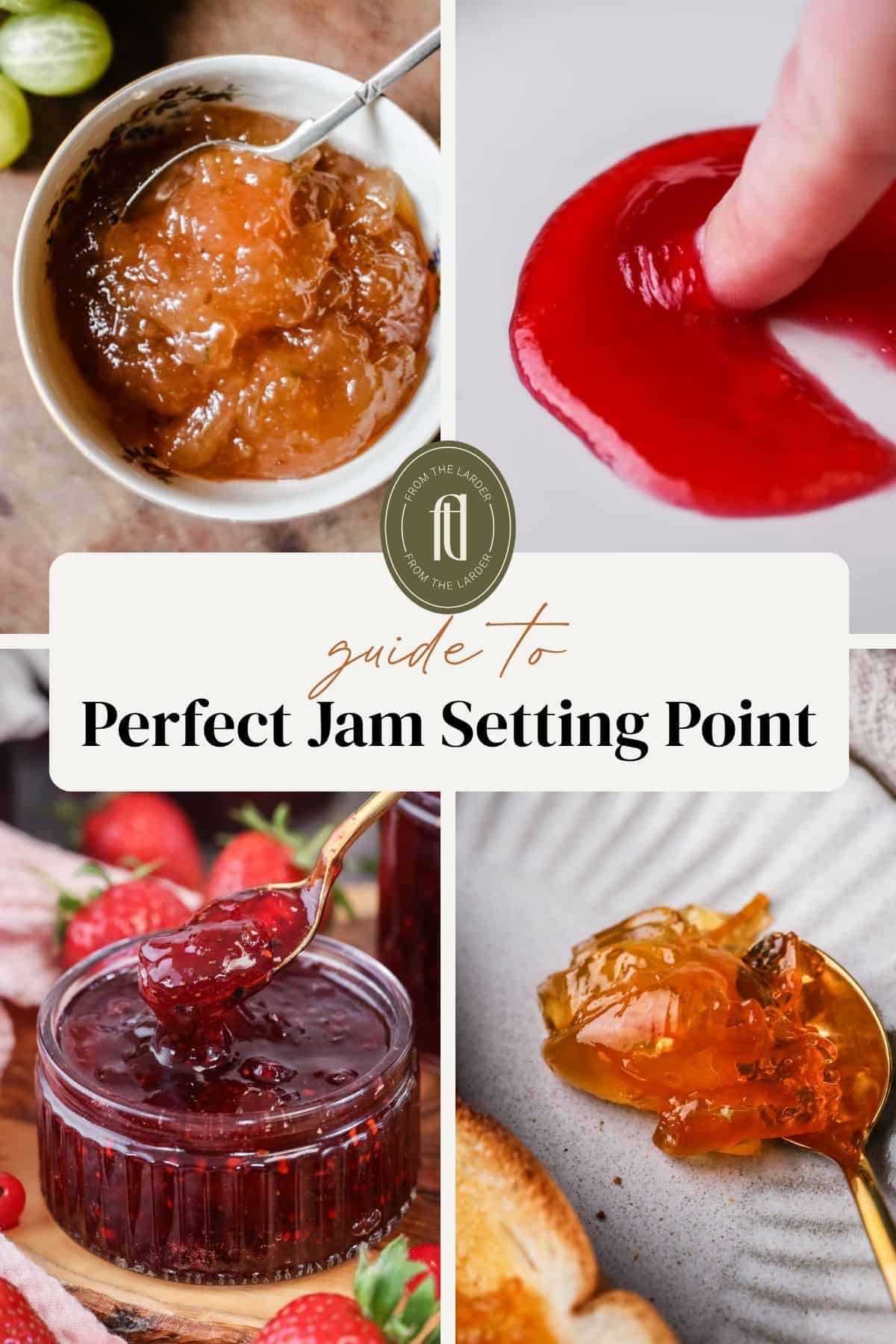
Making pots of jam every week for my stall at the local farmers' markets means I had jam making down to a fine art. In time you get the feel for the jam in the pot and as you get to know the recipes it will become second nature as to when to take your preserves off the boil.
But this can be a bit of a learning curve, and for me, it certainly time and many pots of jam to get to grips with. In the meantime there are some simple techniques and tests to ensure even beginners can easily achieve a perfectly set pot of homemade jam.
So, let’s avoid every jam maker’s nightmare: a bubbling pan of hot fruit that’s refusing to set and is so runny it’s beating Olympic records to escape your pot. In this guide, we’ll start from the very beginning of the process as you’ll learn..
- how jam sets
- how to ensure your ingredients are properly balanced for a reliable set
- the ideal jam setting temperature to aim for
- how long jam really takes to set
- the key tests to check for setting point
- exactly how to troubleshoot so you end up with perfectly set jars every time.
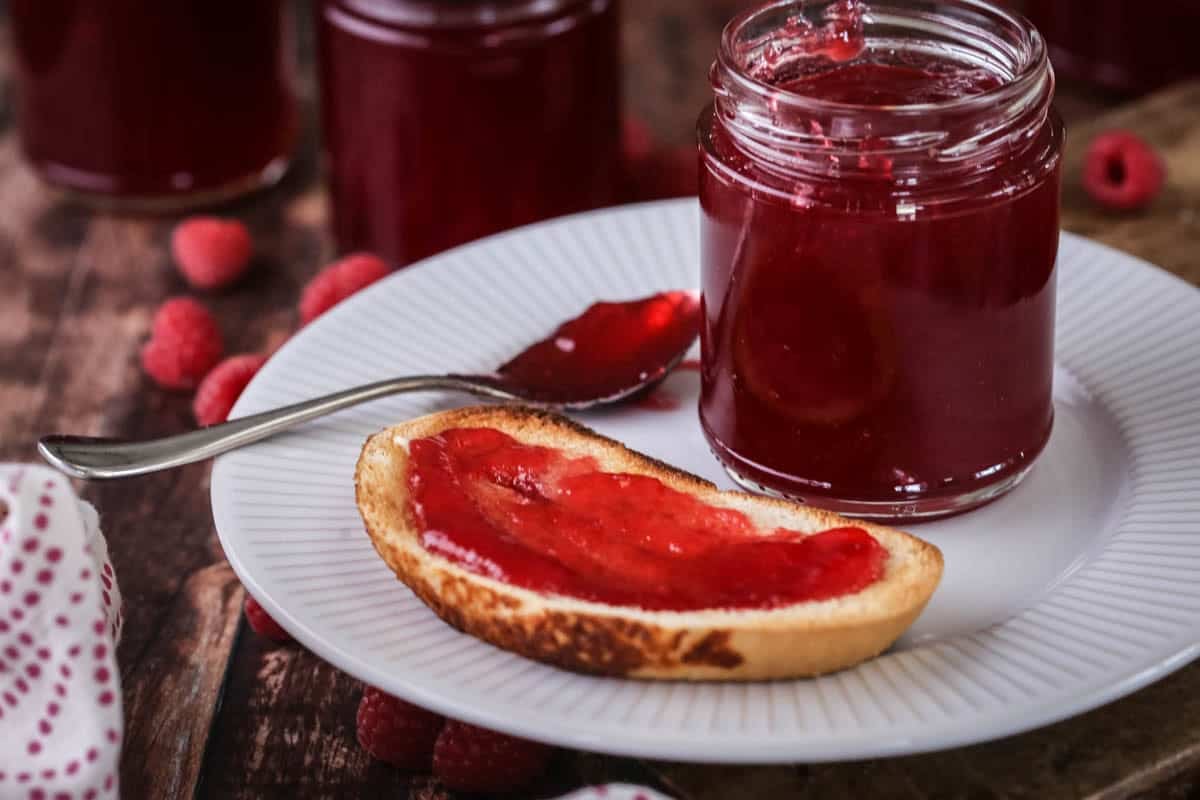
How Do You Make Jam?
Jam is a sweet preserve made from boiling together fruit and sugar to create a thick sticky conserve perfect for spreading on crumpets, stirring into porridge or filling a Victoria Sponge.
The basic stages of jam making are to:
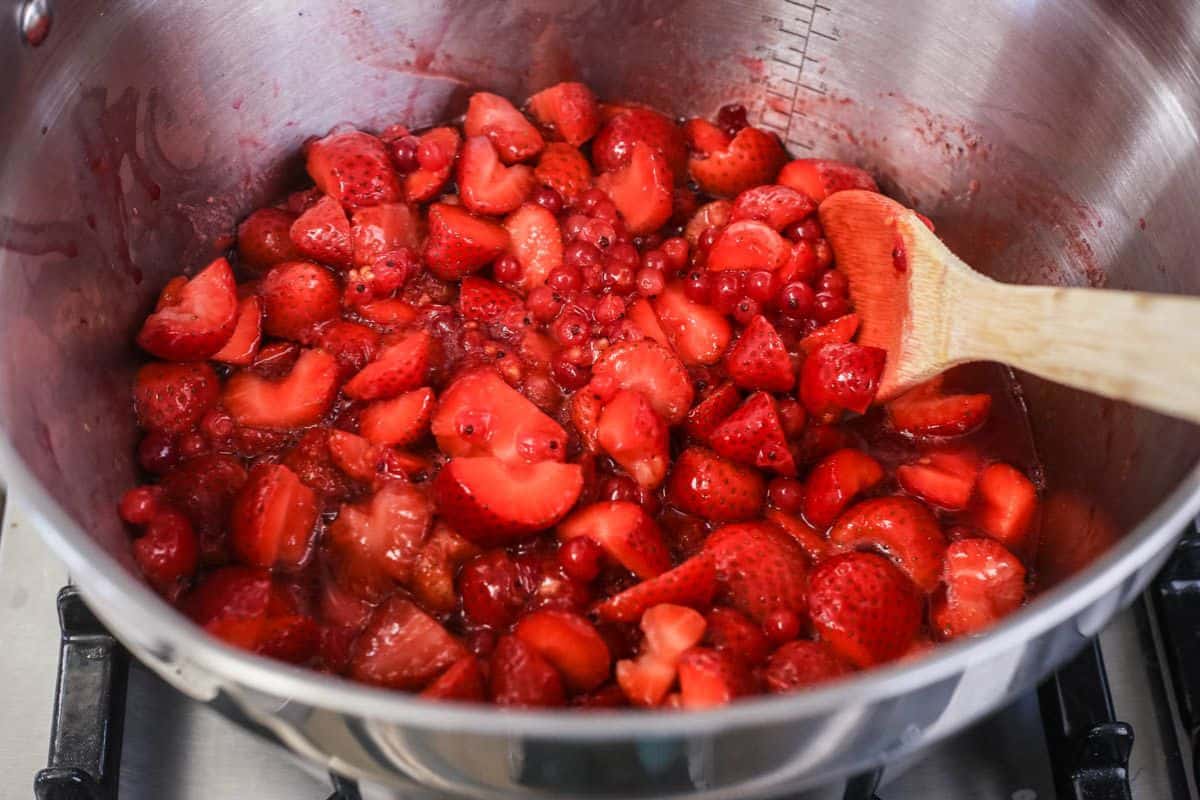
Soften your fruit over a gentle heat until it releases its juices.
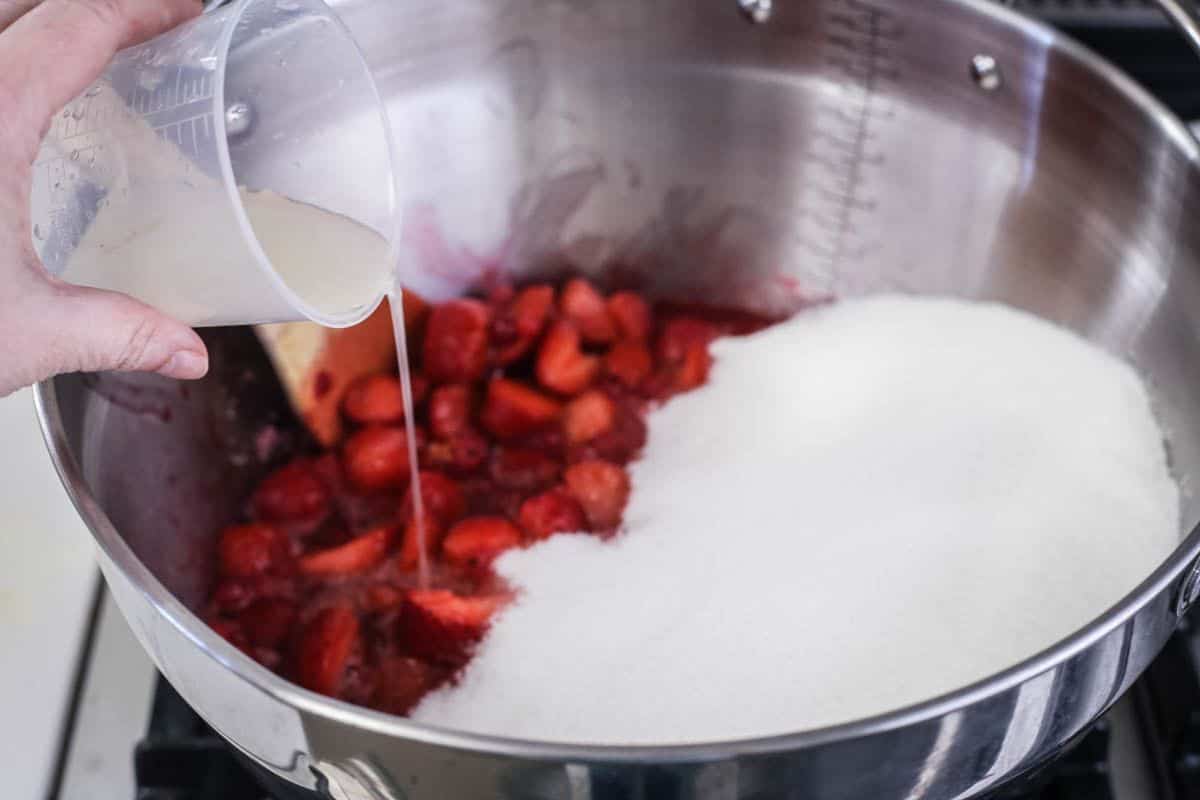
Add the sugar, and lemon juice if using, heat gently until it has completely dissolved.
Once the sugar has dissolved, then increase the heat and bring the mixture to a rolling boil.
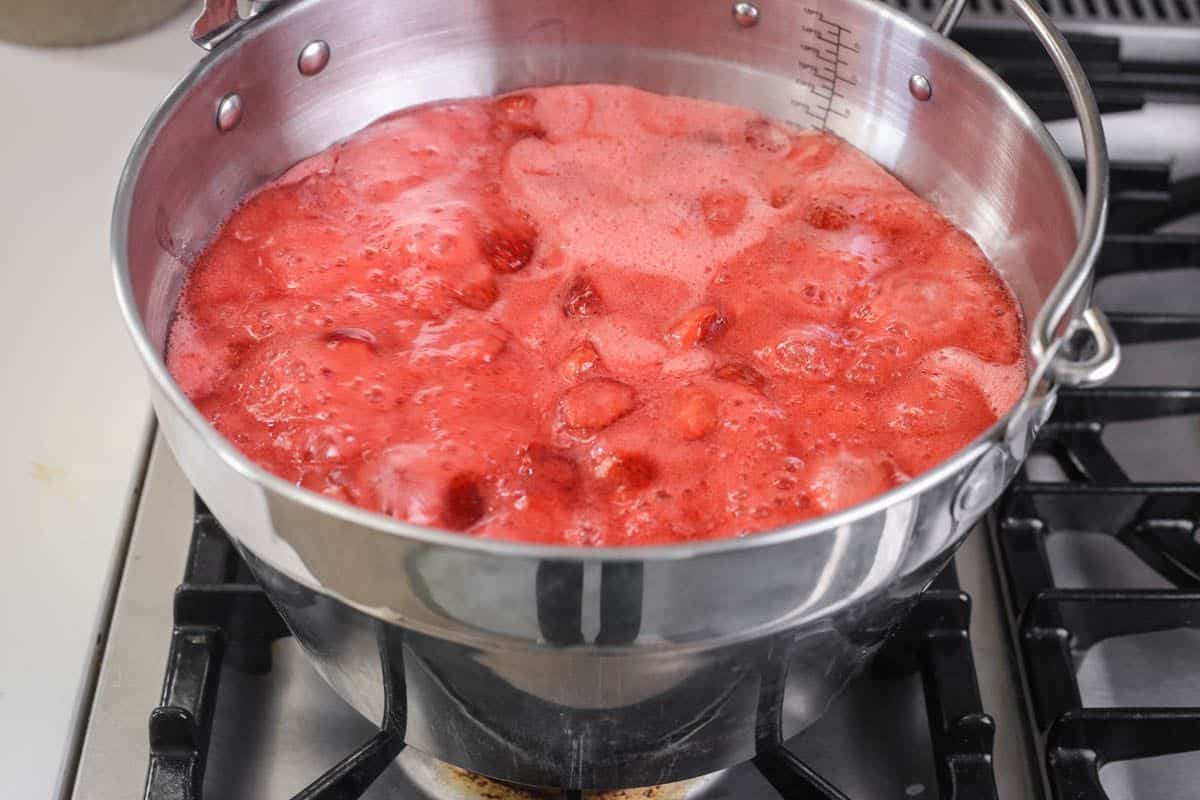
After sufficient boiling the jam reach its setting point and can be potted.
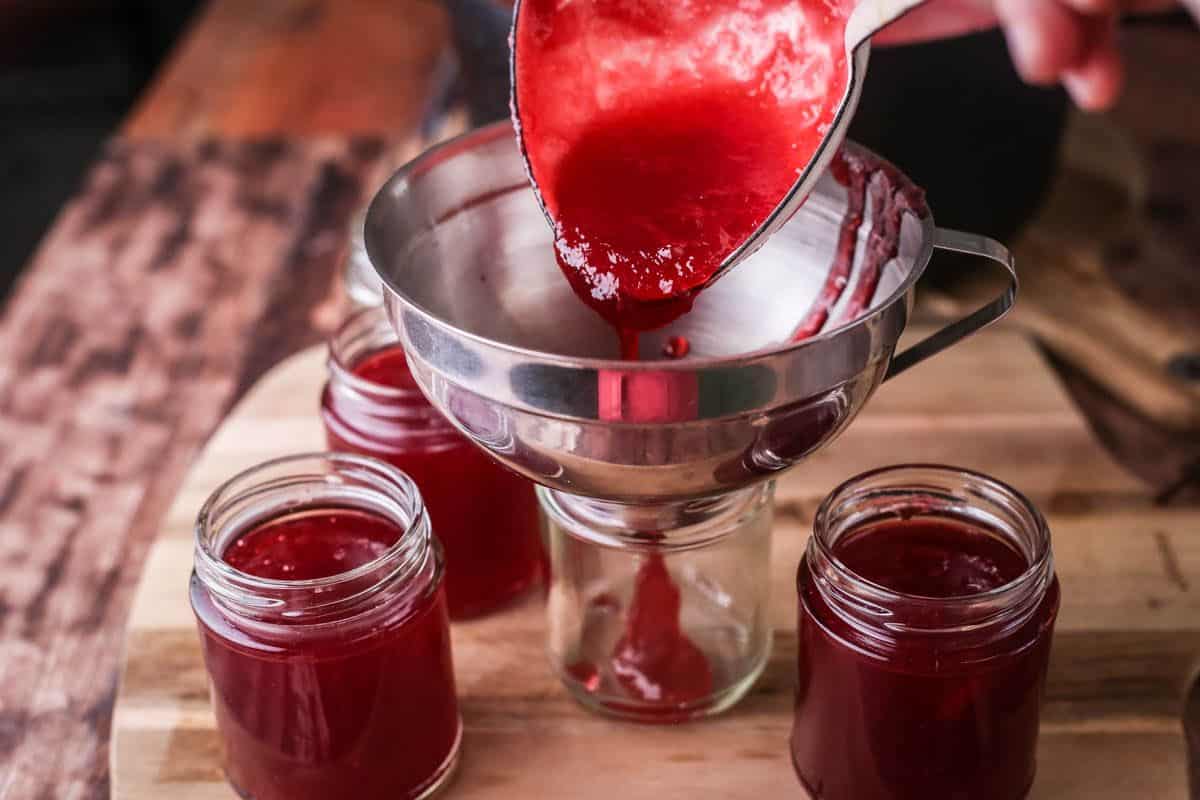
However, this is very rudimentary and you’ll achieve more reliable results if you understand the conditions you need to meet for a setting point.
What Makes Jam Set?
Jam making is a kind of alchemy, bringing together the key roles of pectin, sugar and acid when heat is added, to form a sticky gel which will suspend the liquid and hold your fruit together to form a well-set jam.
Pectin. This is a natural gelling agent most commonly found in the cell walls of plants. Certain fruits have higher pectin than others and they are often included in jam recipes alongside those lower in pectin for effective setting.
Acid. It’s essential to have some sort of acid present in your jam which lowers the pH to create the right conditions for pectin to bond with itself and form a stable gel.
Sugar. As the sugar dissolves it binds with the water from the fruit which reduces the amount of free water in the mixture. This allows pectin molecules to come together and form a stable gel (otherwise the pectin gets interrupted by the presence of water).
Heat. When heat is added to the ingredients, it breaks down the fruit allowing the pectin to be released. At the same time, the sugar dissolves and helps draw water out of the fruit. When the heat is turned up the excess water is evaporated and hopefully the pectin, sugar and acid are in balance, enabling the pectin to form a stable gel, enabling the jam to set.
What’s the Best Sugar to Use for Jam?
You can make jam with any kind of sugar but some varieties are more reliable than others.
Granulated white sugar. This is the classic choice for making jam. It’s the most widely available and economical. Plus it provides sweetness without extra flavour so will let your fruit shine and take centre stage.
Caster sugar. You can use caster sugar which is more finely ground than granulated so will dissolve more quickly in the fruit. This actually isn’t ideal as it can create more foaming plus it’s more expensive than granulated and no more effective.
Jam sugar. This is granulated white sugar which has been formulated with added pectin so will provide a stable environment for your jam to set. It’s a great choice for some fruits like strawberries which are lower in pectin. However, it can be trickier to find except in larger supermarkets or ordering online. It’s a more expensive option than regular granulated sugar and you could get by with adding in extra pectin into the recipe in other ways. Plus some fruits simply don’t need added pectin since they are already naturally high in pectin as it is (like gooseberries). Whether you want to use jam sugar will depend on which fruit/s you are using.
Brown sugar. You can use brown sugar but it contains more moisture so can take longer to reach setting point. Plus it will add its molasses flavour so you want to make sure it’s a good taste match for your recipe.
Honey. It’s possible to use honey as it has some natural acidity but for the amount you need in recipes the flavour can become overpowering. It’s not quite as effective as white sugar so your set will be much softer. It can also lead to a shorter shelf life for your preserve.
Maple syrup. It doesn’t help with set at all and acts more like a sweetener in your jam recipe than a contribution to the structure of your jam. You are best to pair it with regular sugar.
Coconut sugar. It’s not a suitable swap for white sugar as it doesn’t contribute to the set in the same way and so will produce a softly set jam. It’s also got a stronger more caramelised flavour.
Ideal Jam Setting Temperature
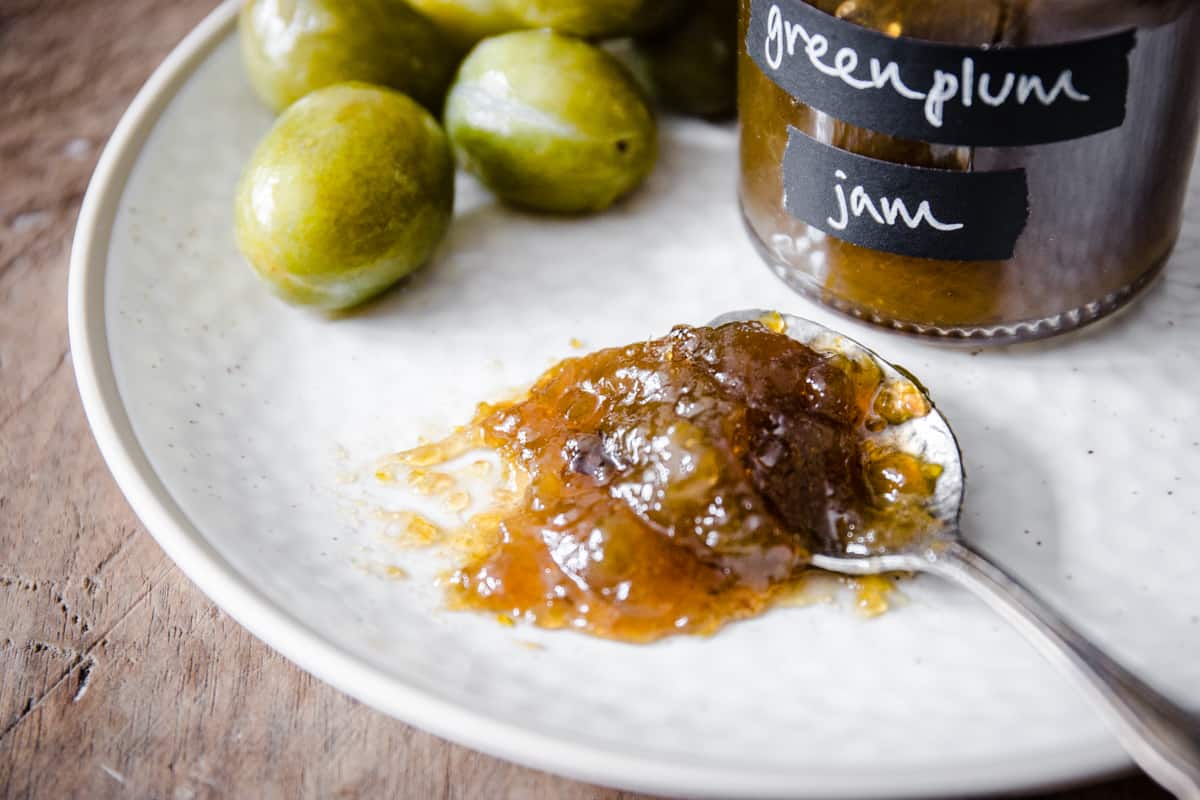
The temperature jam sets at is 104-105.5°C (220°F). The quickest way of checking this temperature, to ensure that jam alchemy has taken place between the pectin, acid and sugar, is to use a digital thermometer.
Check your recipe for timings but once your fruit and sugar have been at a continuous rolling boil for at least 5-10 minutes then you can test for temperature. Stick your thermometer probe right in the centre of your jam, without touching the base of the pan. Hold it there until a secure number has been reached to read the accurate temperature.
Why Reaching the Right Temperature Doesn’t Always Mean Jam Is Set
Life would be too easy if your jam reaching the right temperature always guaranteed a perfectly structured set.
Actually you need to ensure the following right conditions have also been met:
- Enough pectin is in the recipe to form a gel.
- There is a high enough sugar concentration.
- Sufficient water has evaporated during the rolling boil.
How can you test this?
The only reliable way to know if your jam will set properly is to see how it behaves once it has cooled, as this is when the gel structure fully forms.
However, waiting for the entire batch to cool isn’t practical as by then it would be too late to adjust anything. Instead of guessing, you can test a small spoonful of jam at a time.
The Saucer or ‘Wrinkle’ Test
Once the correct temperature has been reached, 104-105.5°C (220°F), this is an ideal time to carry out the saucer or ‘wrinkle’ test. It’s simple to do and will give you confidence that your jam is ready, set, and can be potted.
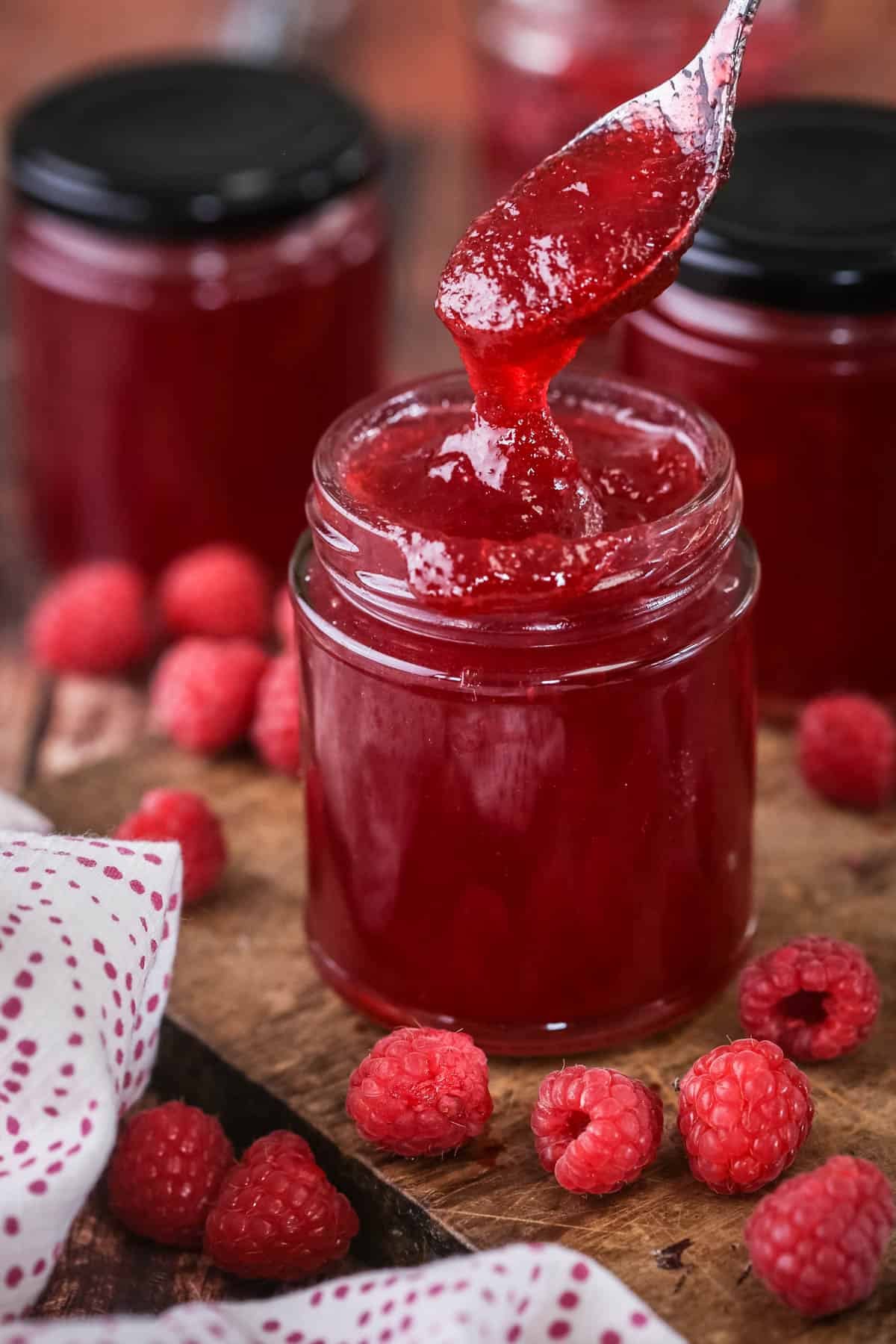
At the beginning of your jam making process place 5-7 clean white saucers in the freezer.
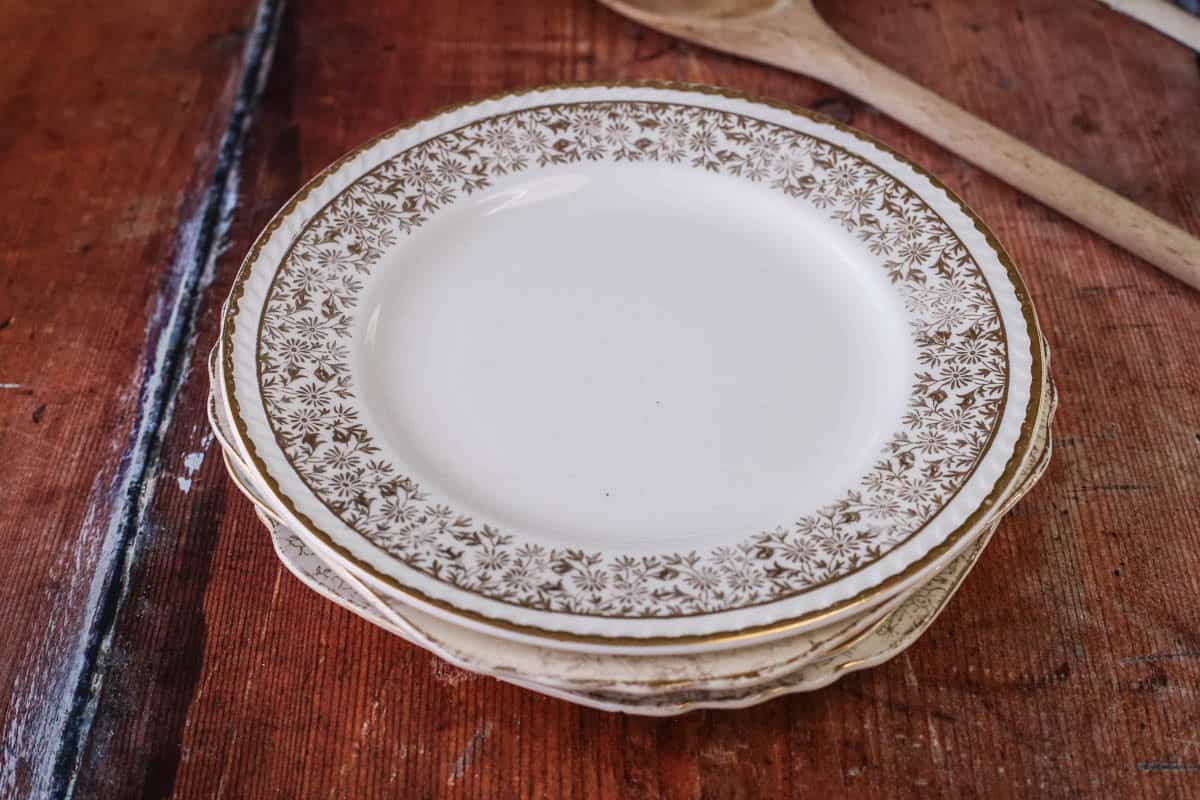
Once the jam has been at a rolling boil for a suitable amount of time (your recipe will indicate this – anywhere between 5-20 minutes) or the temperature reaches 104-105.5°C (220°F) then turn off the heat.
Remove a cold saucer from the freezer and drop about a teaspoon of jam onto it.
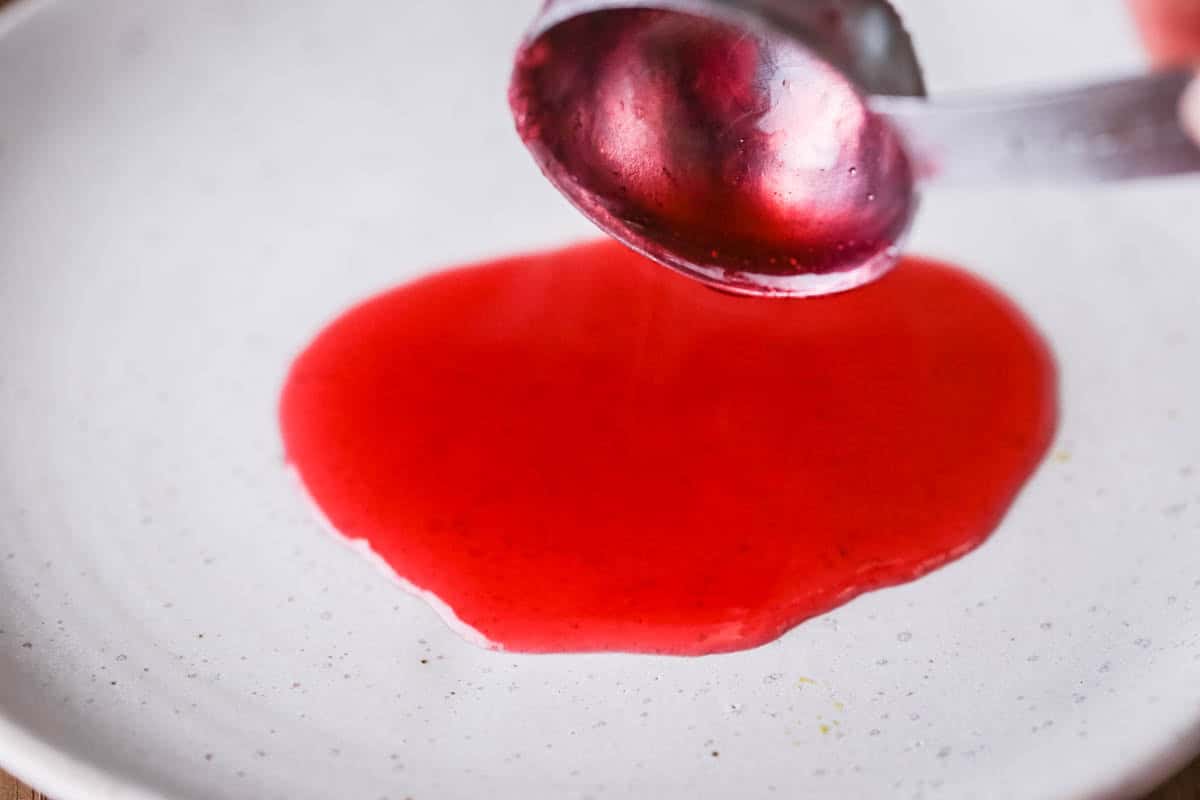
If the jam seems very runny and immediately spreads out as soon as it touches the saucer then that is the first indication that the jam isn’t ready.
Wait 60 seconds which allows the jam to cool on the plate. Then push into the jam with your fingertip. If the jam wrinkles up and a clear path is created by your finger then the jam has reached a good setting point. You want a little bit of a jam flow, it should move sluggishly back together once you’ve pushed it with your finger.
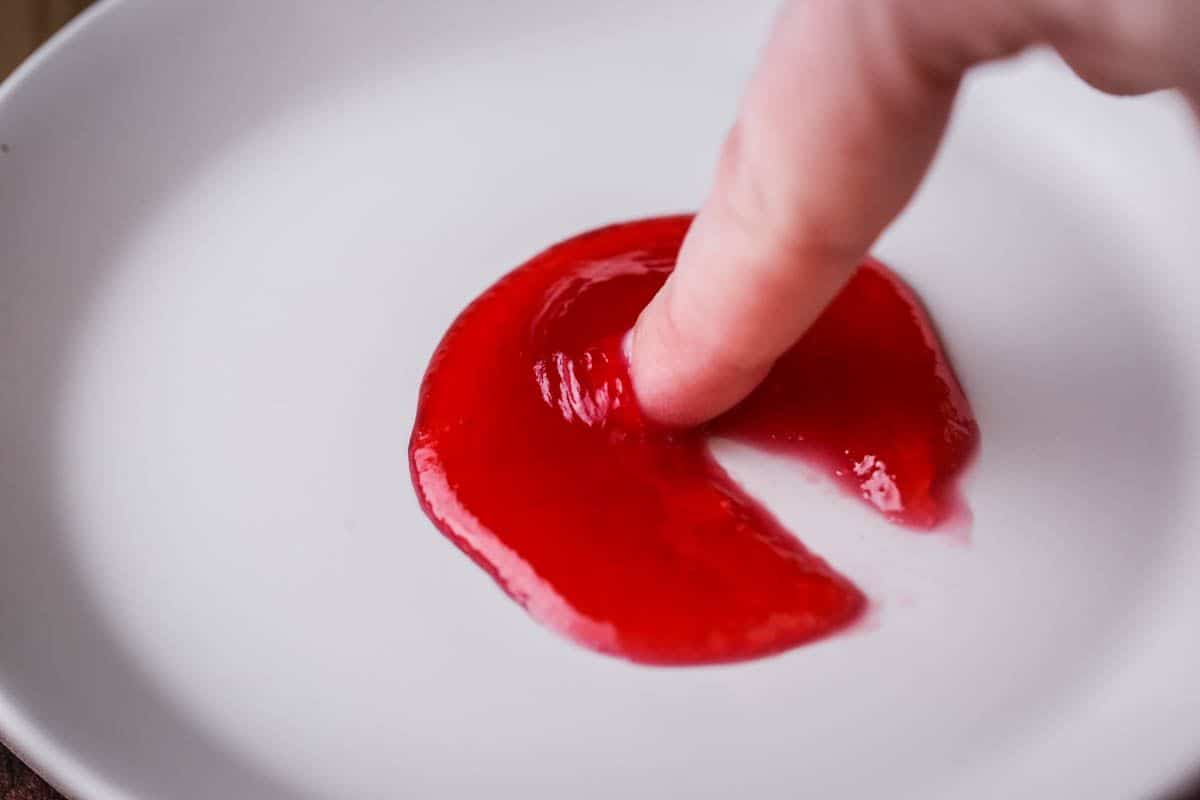
Under-set jam
If the jam is runny when you push it and the jam pools immediately back behind your finger then it needs longer to cook.
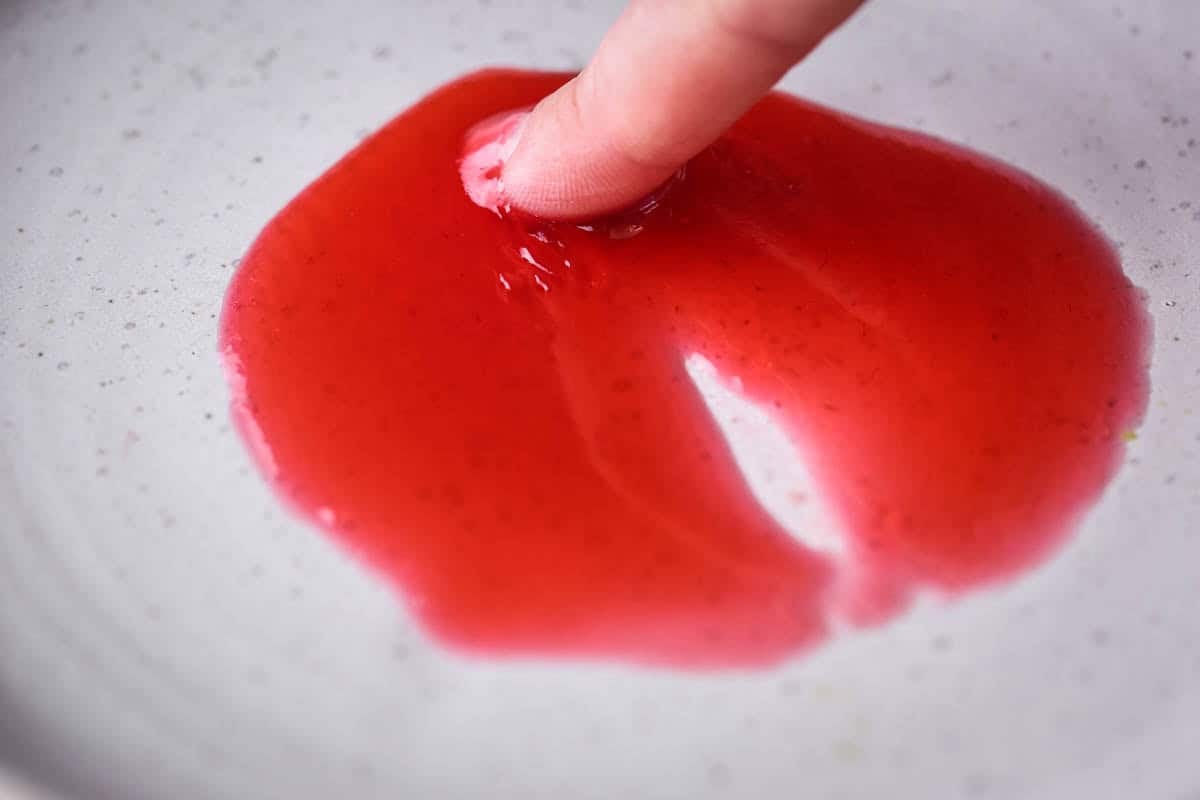
Over-set jam
If the jam is very stiff without any flow at all then this indicates the jam has reached a very firm set. This may be overset to your liking and often a soft set is the preferred option.
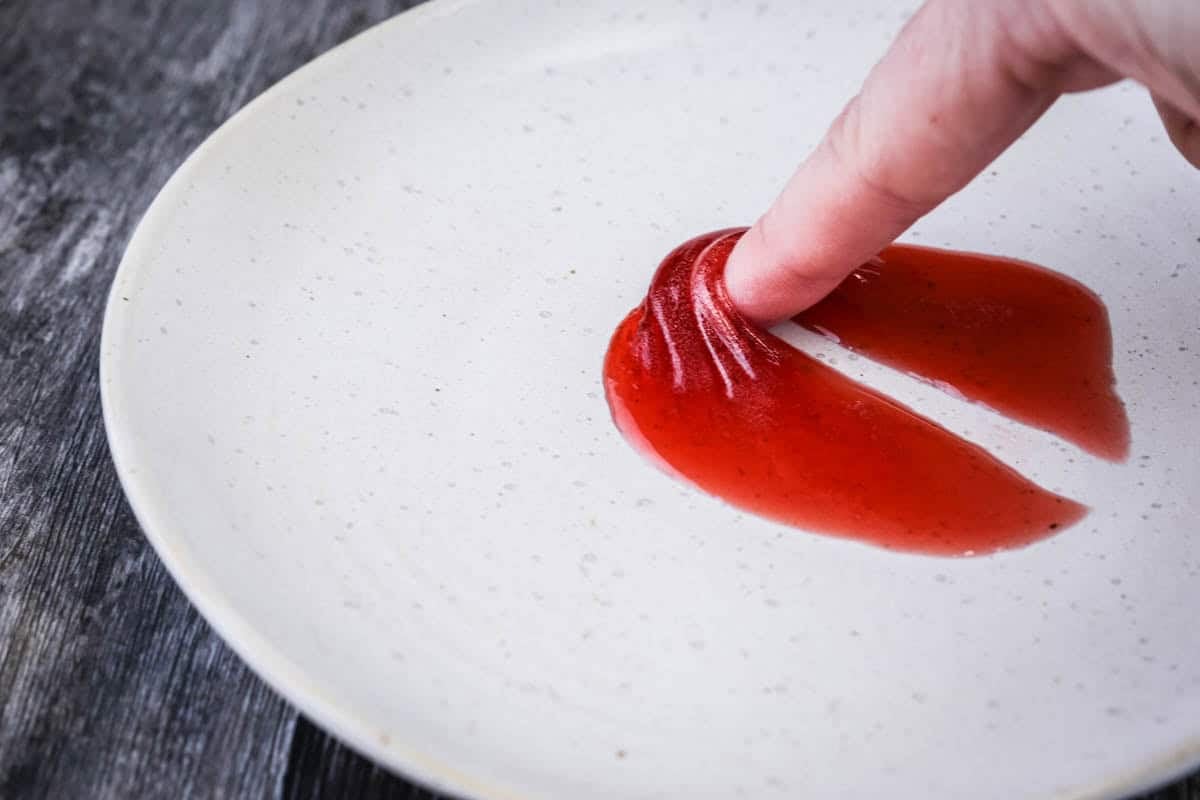
If your jam is not ready then turn the heat back on and bring the jam back to a rolling boil. Boil hard for 2-3 minutes then turn it off and repeat the test again. You can repeat the test as many times as you need until you have achieved a set you are happy with.
However, if you are going through these motions for a few times and you have reached over 20 minutes at a rolling boil, this indicates you might have a more fundamental problem with the setting ability of your jam (see below – why is my jam not setting).
Final Set Check
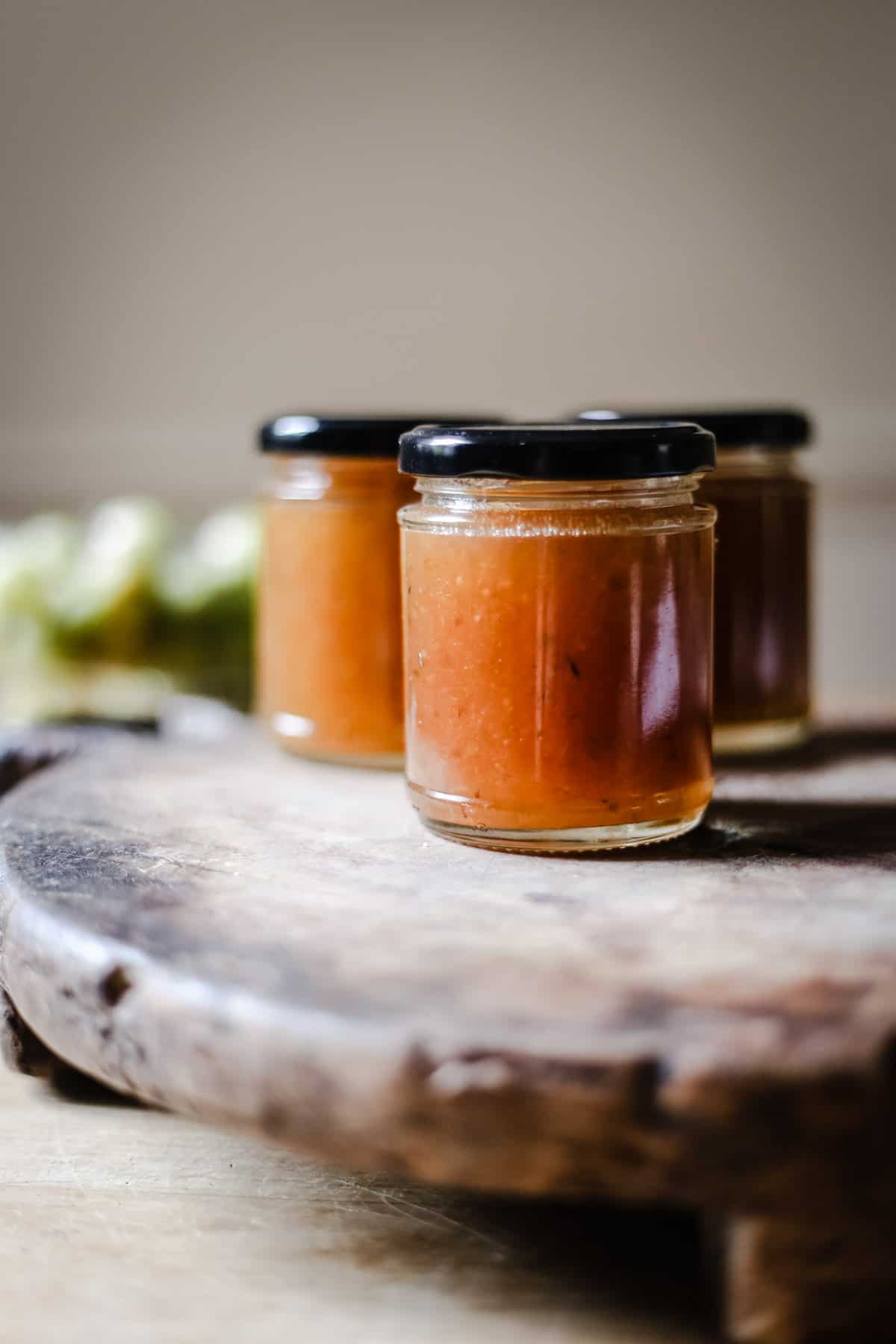
Once you’ve bottled the jam leave the jam to cool for a few hours but preferably overnight. When you go back to the jam, just tilting the jar should tell you whether the jam has successfully set as it should stay relatively in place. If, when you tilt the jar, the jam moves loosely around then you probably haven’t achieved the set you want. The good news is at this point you can just pour all your jam back into your preserving pan and try and reach the correct set again.
How To Make Jam That Always Sets
To achieve a foolproof jam then firstly follow a reputable recipe. This recipe should contain:
- Fruit which is high in pectin
- Acid; either from acidic fruit or underripe fruit
- Enough sugar: fruit ratio. An equal ratio of sugar and fruit is a good way to start for a beginner.
If your recipe doesn’t check these boxes then you might want to:
- Include some extra pectin either by including apples, lemons, jam sugar, liquid pectin or powdered pectin.
- Add acid like lemon juice (the natural choice for a fruit jam).
- Increase the sugar.
Why Is My Jam Not Setting?
There are several factors which can contribute to jam not setting including:
- undercooking
- low pectin ingredients
- low acidity
- not enough sugar
- too much liquid
Another thing to be cautious of is to not make jam in too large a quantity. It is best to make jam in small batches using about 1-1.5kg of fruit at a time. Your jam sets quicker and better when there is only a small amount of it in the pan. Otherwise you can be standing over your hob for hours waiting for your jam to set and by the time it does most of it has boiled away anyway.
How To Fix a Jam Which Isn’t Setting
If your ingredients are slightly off and your jam isn’t setting don’t worry you can fix it.
- Re-heat jam and boil longer. This may result in a darker jam but it will help evaporate the excess liquid.
- It’s not too late to add these extra ingredients. Add a cooking apple in there or some extra lemon juice.
If all else fails and your jam still isn’t setting you can buy commercial pectin which is added at the end of the recipe so you can still save your jam. It doesn’t affect the taste at all and no-one will be any the wiser.
FAQs
The natural setting agent present in the cell walls of plants. Some fruit have a lot of pectin like apples and lemons. Some fruit have hardly any pectin.
Fruit naturally low in pectin can benefit from the inclusion of high pectin fruit in your recipe. It is not uncommon to see a blackberry jam recipe featuring apples. These apples add to the flavour, of course, but if you use in the right quantity it should not overpower it and the jam should happily still be a blackcurrant jam. Adding acidic ingredients like citrus fruit also helps encourage pectin to form a stable gel.
If your jam has a good balance of sugar and fruit, contains pectin and includes an acid then your jam should take anywhere between 5-15 minutes to set once it has reached a rolling boil.
If you have potted your jam, it has cooled and it’s too runny for your liking then you can pour all the jam back into a preserving pan and re-boil to try and achieve a better set.
To check whether your jam is set you can check that it has reached the correct setting temperature of 104-105.5°C (220°F). Once it has you can test for the set using the saucer or ‘wrinkle’ test (see above).
You can make jam without the use of a digital thermometer. Once the jam has been at a rolling boil for the requisite time stipulated in your recipe then you can just move directly to the saucer test.
You might choose to use jam sugar in your recipe if your fruit ingredients are low in natural pectin. Jam sugar includes added pectin to strengthen the set of your jam. However, you don't have to use jam sugar, you can increase natural pectin by including naturally high pectin ingredients or increasing the acidic ingredients to promote pectin bonding. You can even use commercial liquid pectin instead.
Jam Recipes You May Enjoy
A beautiful Strawberry Redcurrant Jam, for those that don't like their strawberry jam too sweet the redcurrants add extra vibrancy and tartness.
This Easy Raspberry Jam has a smart and simple method and can be achieved in under an hour. Ideal for beginners and since we are removing the seeds it’s also perfect if you prefer a smooth and softly set fruity preserve.
Seville Orange Marmalade has the bones of a traditional recipe, richly sweet and slightly bitter with a zesty sweetness but we are also enhancing the flavour with a little grapefruit in the mix and a gentle grounding of rosemary.