Seville Orange Marmalade
This post contains affiliate links. Please read my disclosures.

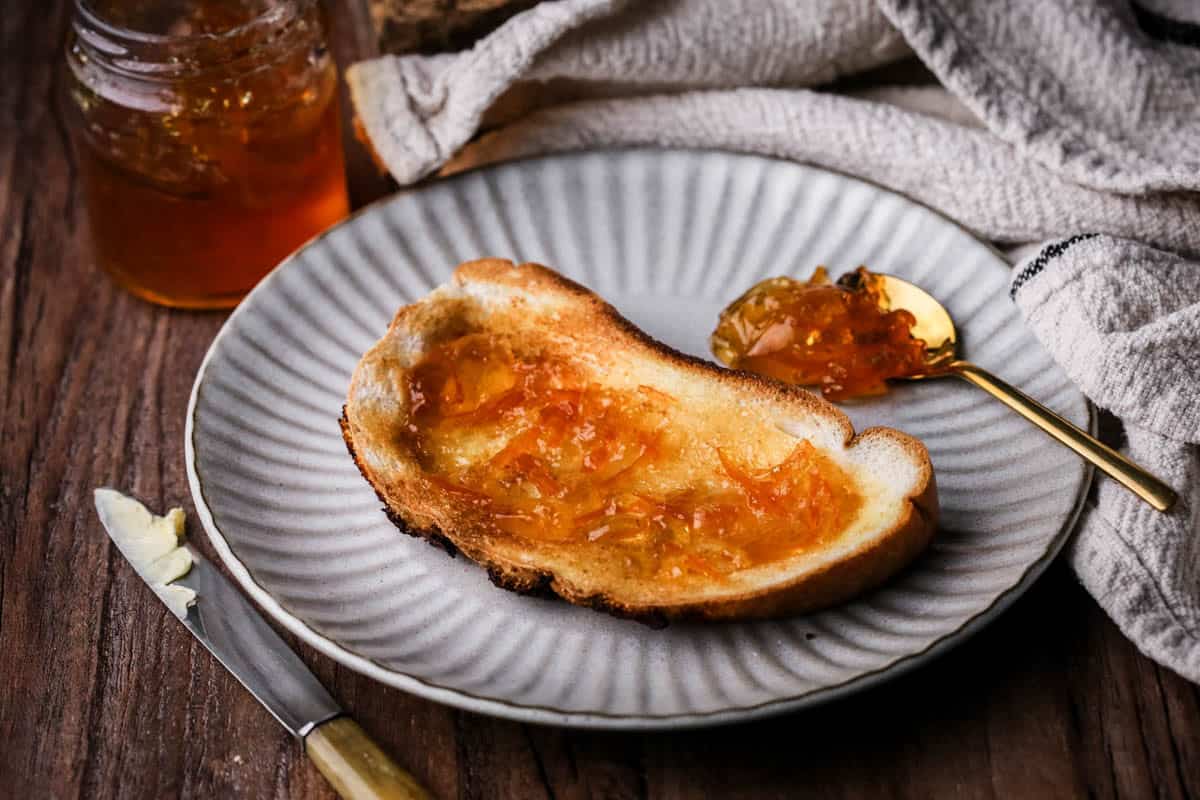
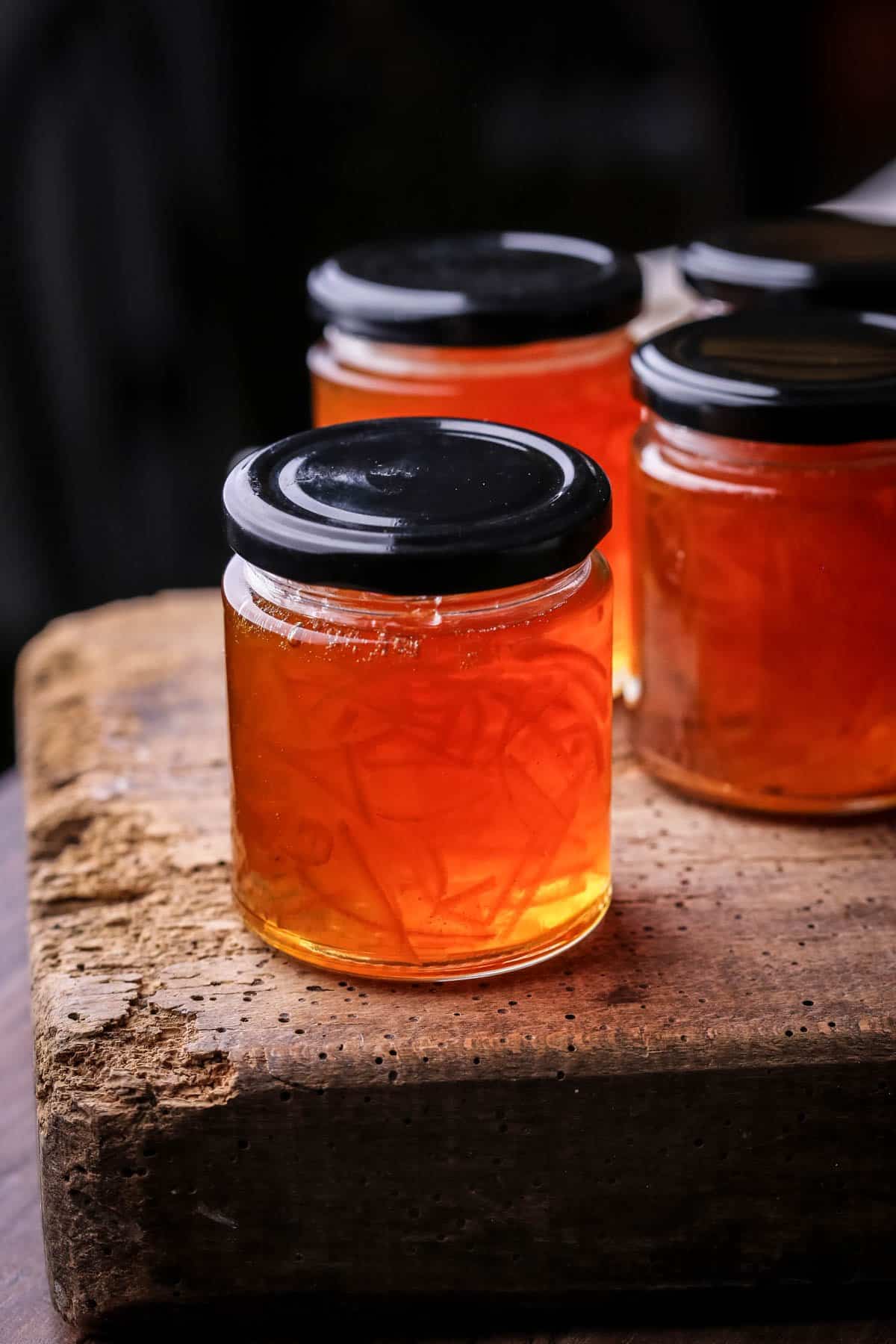
Seville Orange Marmalade has the bones of a traditional recipe, richly sweet and slightly bitter with a zesty sweetness but we are also enhancing the flavour with a little grapefruit in the mix and a gentle grounding of rosemary. This bright and uplifting preserve was made for slow winter mornings and although it is at its best smothered on buttery toast, you’ll also appreciate its versatility as a baking ingredient or used in sticky marinades. Your annual supply begins here.
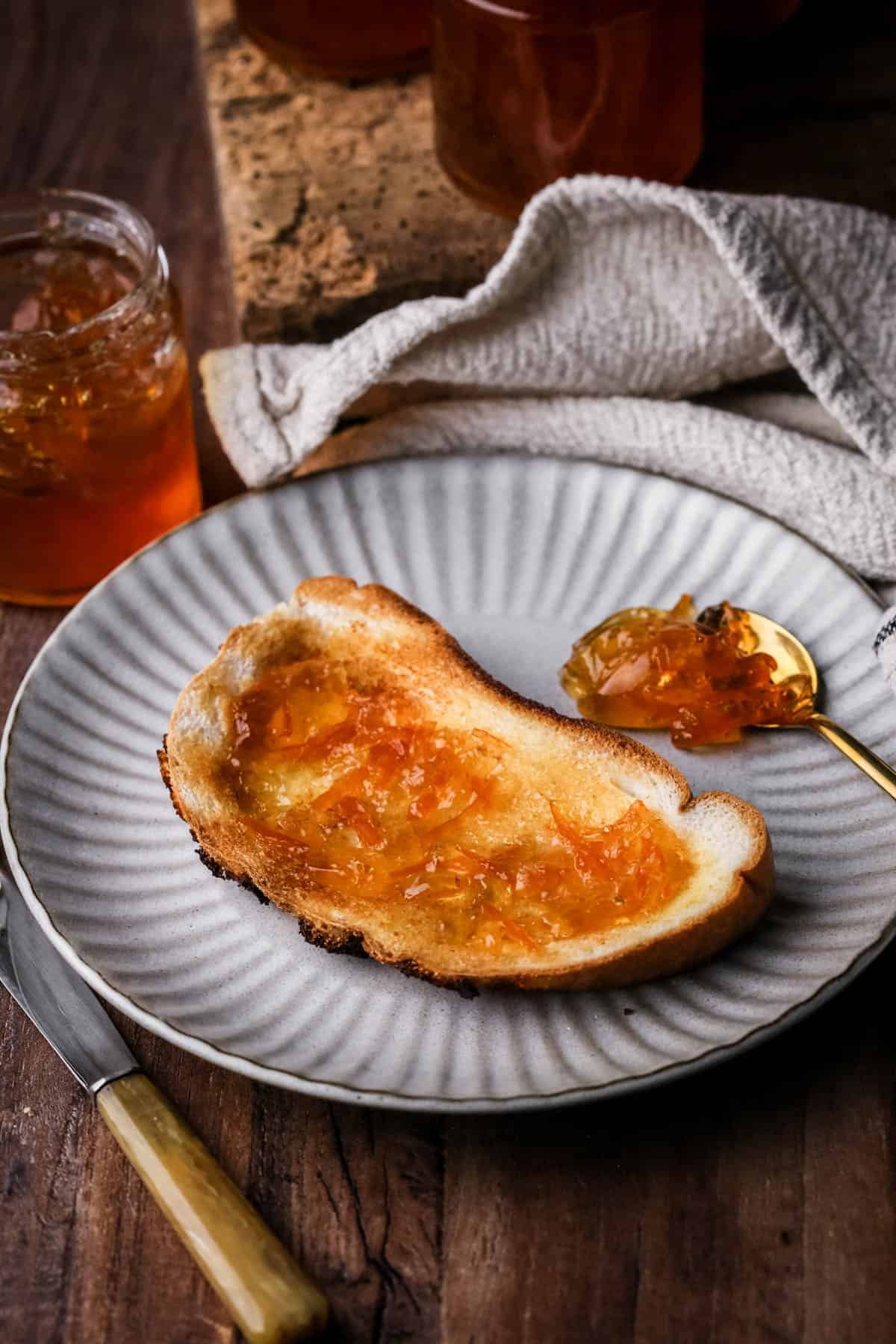
I sold homemade preserves alongside my gluten-free cakes at my market stall and hands down marmalade was the preserve that was most requested, even in the haziest of summer days. There is a bit more effort involved in marmalade due to all the peel preparation which makes it more time consuming than the other jams I sold. I also restricted my marmalade production to the Seville Orange season which is so short that I would usually sell out by the end of February, but that is what makes it so deliciously elusive.
This is the same recipe I sold on my market stall. I’m rarely content to just do a straightforward jam so I used grapefruit here where one might add lemons which lends another bitter profile to the proceedings. I think grapefruit and Sevilles pair up beautifully, there is a sharper and more interesting edge to the marmalade when using grapefruit which I love.
Rosemary is also gently included for an earthy grounding. I actually don’t use as much as I did back then and the notes it provides is so subtle you might miss it. Actually on my stall I used to include the rosemary chopped within the jar which looked beautiful. However, in hindsight this tasted too bitty and so these days I just scent the juice with the rosemary stalks and remove before boiling up with the sugar. If you are adventurous then by all means add larger stalks of rosemary and make it more of a key flavour. If you are just starting out with the recipe though then include it judiciously.
For marmalade lovers there is no kitchen task more satisfying than potting your own jars to brighten up a snowy January. Do set aside a weekend for your endeavour though as you’ll need to leave your pith and peel soaking overnight to soften. It’s a perfect job for these gloomy days when even looking out the window chills you to the bone.
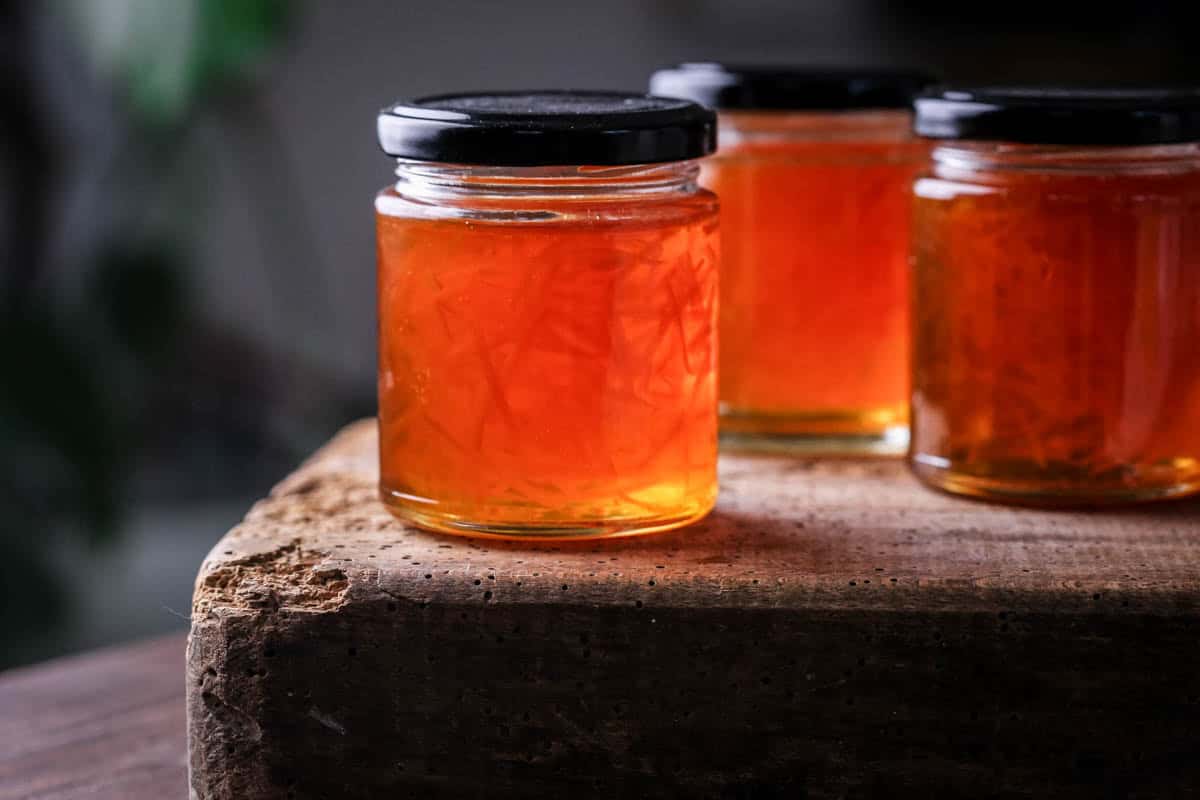
Why You’ll Love This Marmalade Recipe
- A classic recipe made with seasonal Seville Oranges with the subtle inclusion of grapefruit and rosemary to ring the changes.
- Soft tasty peel so it becomes the highlight of the marmalade, not something you feel compelled to pick out.
- Perfect balance of sweet comfort and sophisticated sourness.
- Straightforward method to follow with clear instructions about testing for the correct set.
- 8 small jars produced so you have enough marmalade for you and a couple of jars to share with loved ones.
Where To Buy Seville Oranges in UK
The most reliable source for buying Seville Oranges is from your local greengrocers. They are imported from Spain so you can check with your local shop from late December when they are expected in so you can leap on them.
You don’t see them very often in supermarkets, even the larger ones. However, Ocado which is an online delivery supermarket service stocks them every year.
Throughout January they are also available from specialist online suppliers and farm shops such as Riverford and Abel & Cole. British Frozen Fruits will sell frozen organic Seville oranges which you can also use for this recipe.
Ingredients Needed
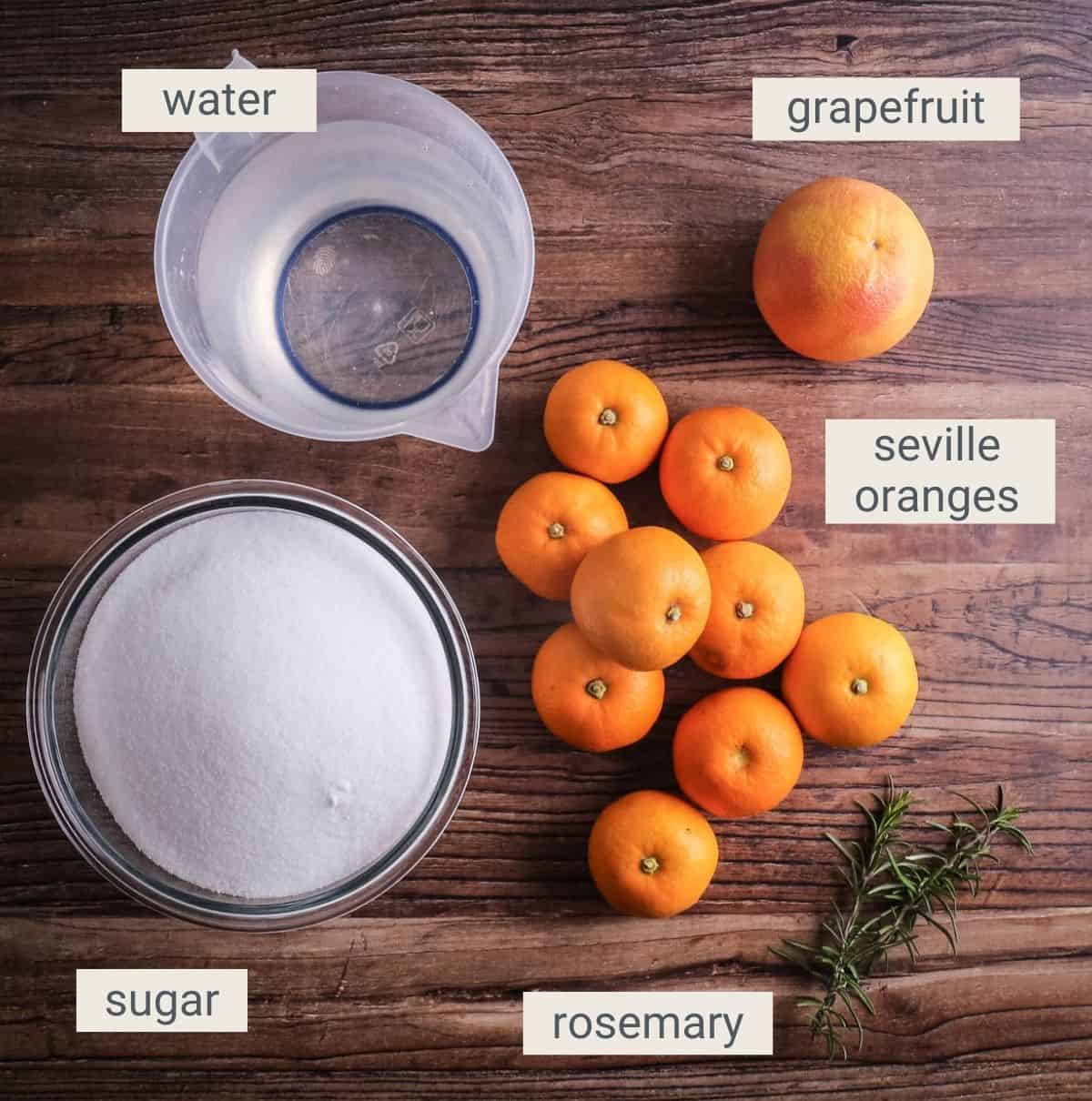
Seville oranges. Seville orange season is from early January to February, so it is short with only a few weeks at best to secure your bounty. However, don’t be afraid to grab your oranges whilst you can and store them in the freezer for future use. The best place to buy Seville oranges in the UK is your local greengrocer, this is a lot more reliable than the supermarket. You need a kilo which is about 9 oranges, depending on their size. They usually come unwaxed but still give them a decent wash beforehand nevertheless.
Grapefruit. Use a sweeter red or pink grapefruit. These usually do come waxed so make sure to scrub off that wax before using. If you want to give the grapefruit a miss then you can substitute for two lemons instead.
Fresh rosemary. You can omit the rosemary entirely but why make something yourself if you’re not going to add a little flair to it. This earthy herbiness is a like a soft bed to the bitterness of the Sevilles. It’s not too strong just a gentle scenting, you can add more if you want to make sure you taste it.
Granulated white sugar. We don’t need any pectin powered sugar, just regular white sugar as Seville oranges have plenty of natural pectin for a good set.
This recipe also needs 1.5 litres water. Regular tap water is fine (if you are in the UK), it doesn’t need to be filtered.
Equipment Needed
For a full list of essential equipment which I recommend when making preserves, including my tried-and-tested favourites which I used in my small preserves business, you can check out my complete guide (coming February 2026).
The two pieces of equipment which revolutionised my marmalade making was a decent juicer and an excellent knife.
Orange Squeezer. I have had many a juicer in my time but the one I currently use is the Mexican elbow which juices quickly, doesn’t take up much room in your kitchen and is easy to clean. I bought a lime, lemon and orange one before realising that the only one you really need is the orange one as it makes short shrift of all citrus, including the larger grapefruit. A good tip is to cut the fruit into quarters first so you can extract as much juice as possible.
Knife. A truly sharp knife with a fine blade, I recommend a good Japanese knife, is one of my essential kitchen tools and here it is non negotiable as otherwise you simply can’t remove the pith from the peel as effectively. You need to run the knife between the pith and the peel at an almost horizontal angle so you can separate them.
Muslin. Huge swathes of kitchen grade muslin is relatively cheap to buy and very useful if you make a lot of your own preserves. We use it here to gather all your pips, pith and orange flesh into a muslin bag so you imbue your marmalade with the pectin from these sources but it can all be easily removed when its job is done.
Kitchen string. This is needed for tying up your muslin bag.
Digital thermometer. This isn’t essential but can be helpful in the setting stages. I use this tool to check on the temperature of the marmalade so I know when to start testing for set using the saucer test. I allow the jam to reach 104-105.5°C (220°F) and then I turn off the heat and check a teaspoon of the marmalade on a frozen saucer to ensure it’s ready (see my guide to setting jam for full instructions coming in February 2026).
How To Make Seville Orange Marmalade
This recipe is set over two days. We soak the sliced peel in all the juices overnight to create beautifully soft peel. Some recipes skip this step but I like a softer peel so I always soak it. For full recipe instructions go to the recipe card at the end of this post.
Day One
Juice the oranges and the grapefruit into a large preserving pan.
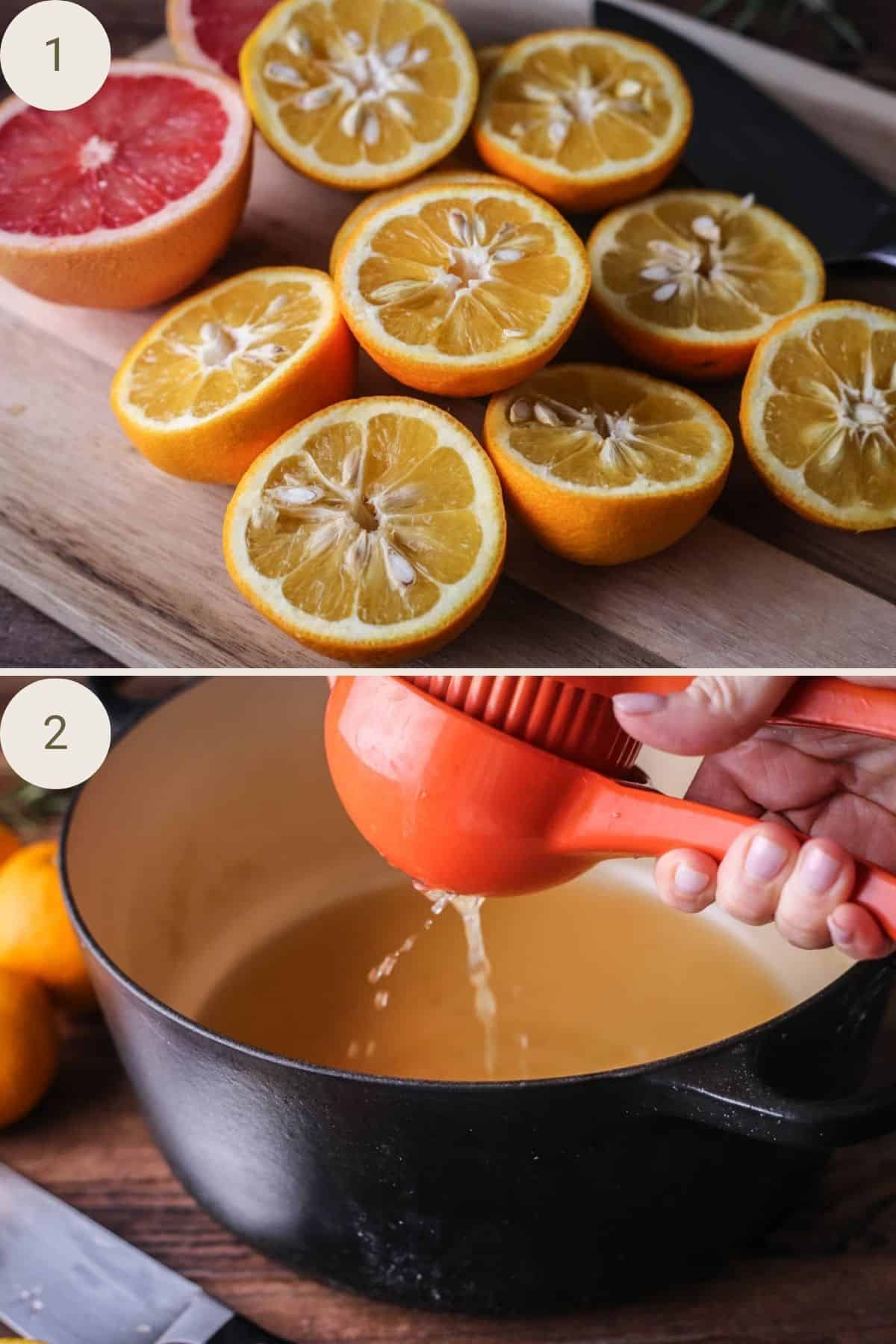
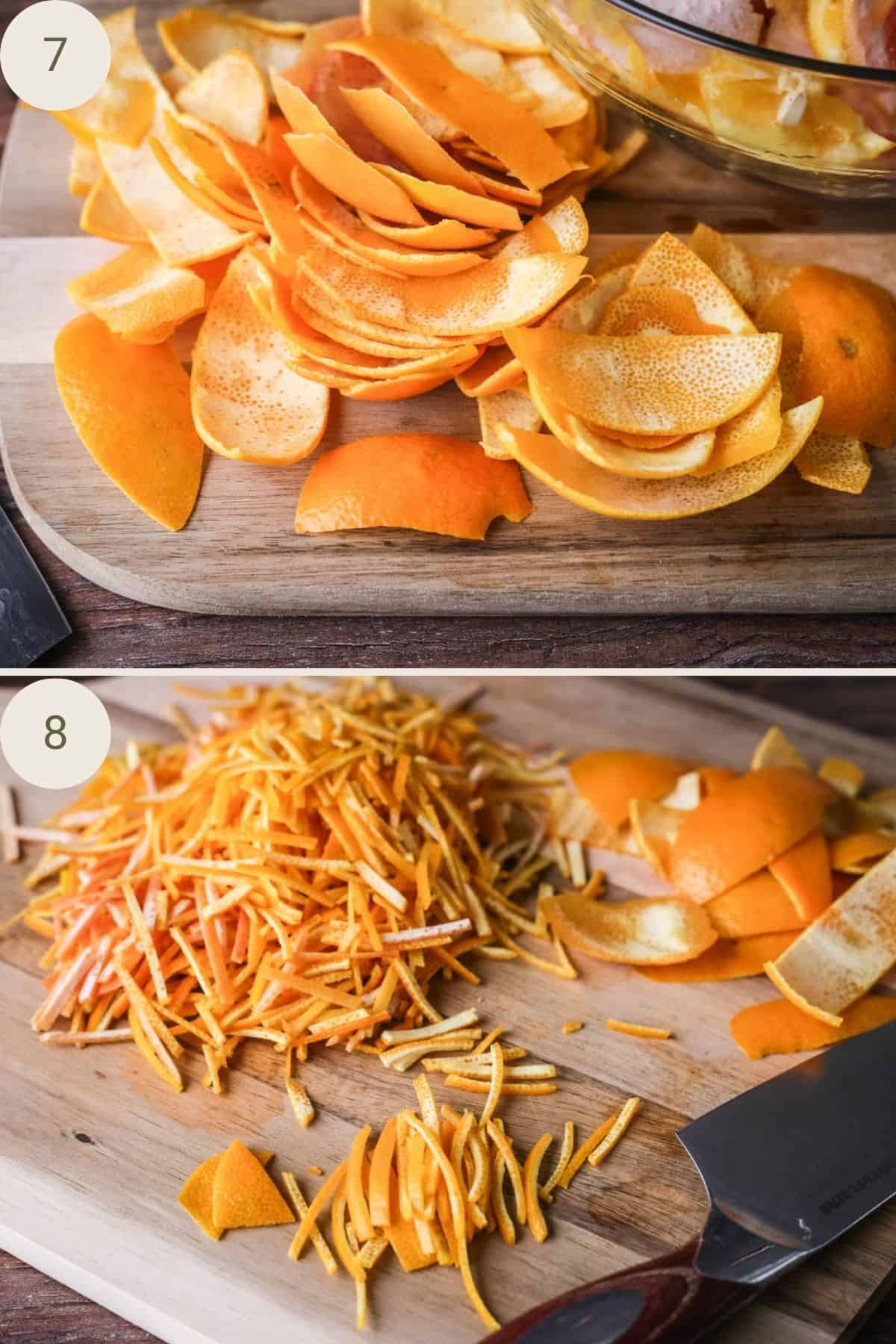
Cut the fruit into segments. Using a sharp knife slice away the flesh and pith from the peel. Thinly slice all the peel.
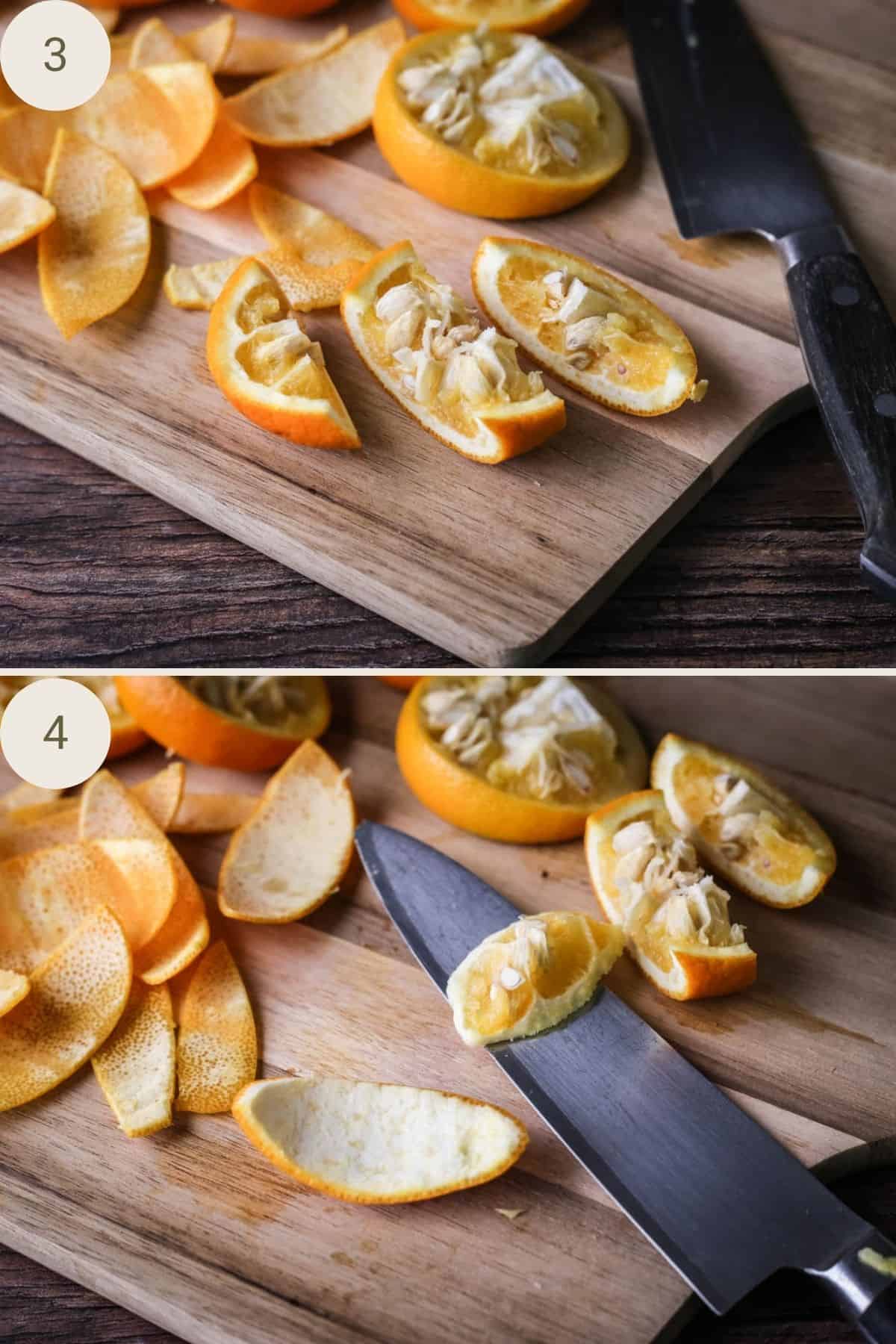
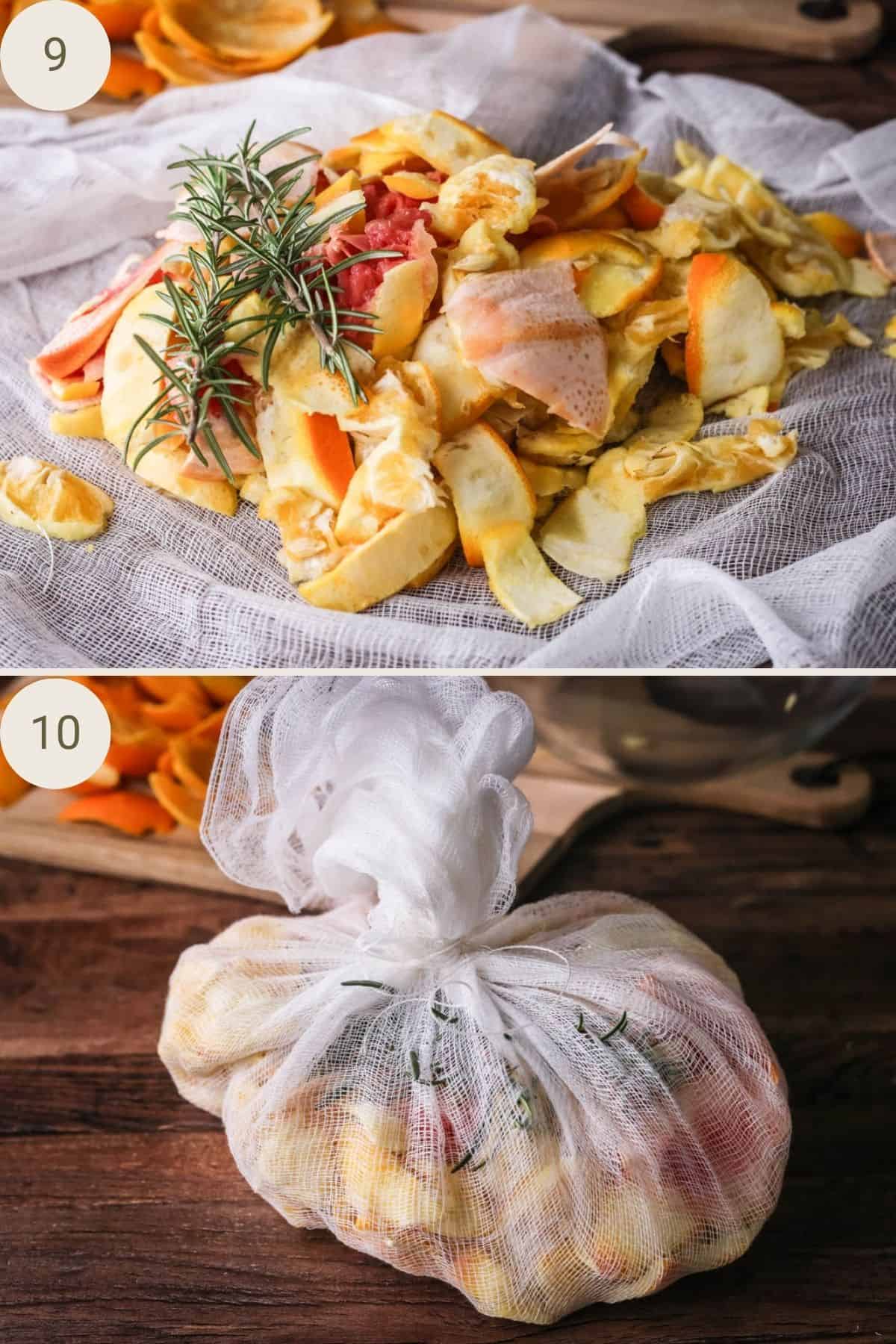
Gather the remains of the fruit, all the pips, pith, inner membrane and stray pulp and place, along with the rosemary stalks into a muslin bag.
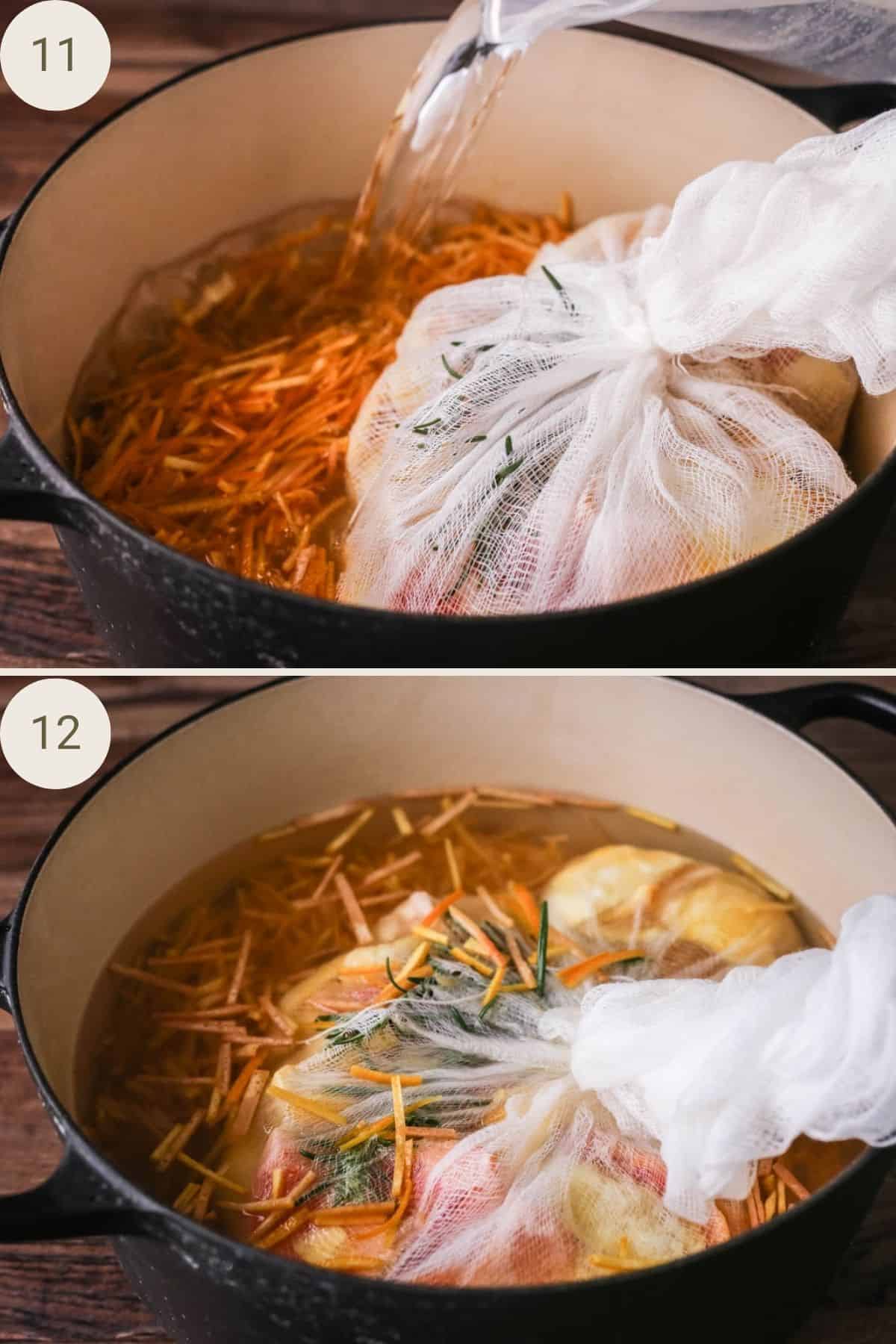
Place the sliced peel and the muslin bag into a large preserving pan with the citrus juice and add the water. Place a lid over the top of the pan and leave everything to soak overnight.
Day Two
Bring the contents of the preserving pan to the a gentle boil then place the lid on and simmer for 2 hours.
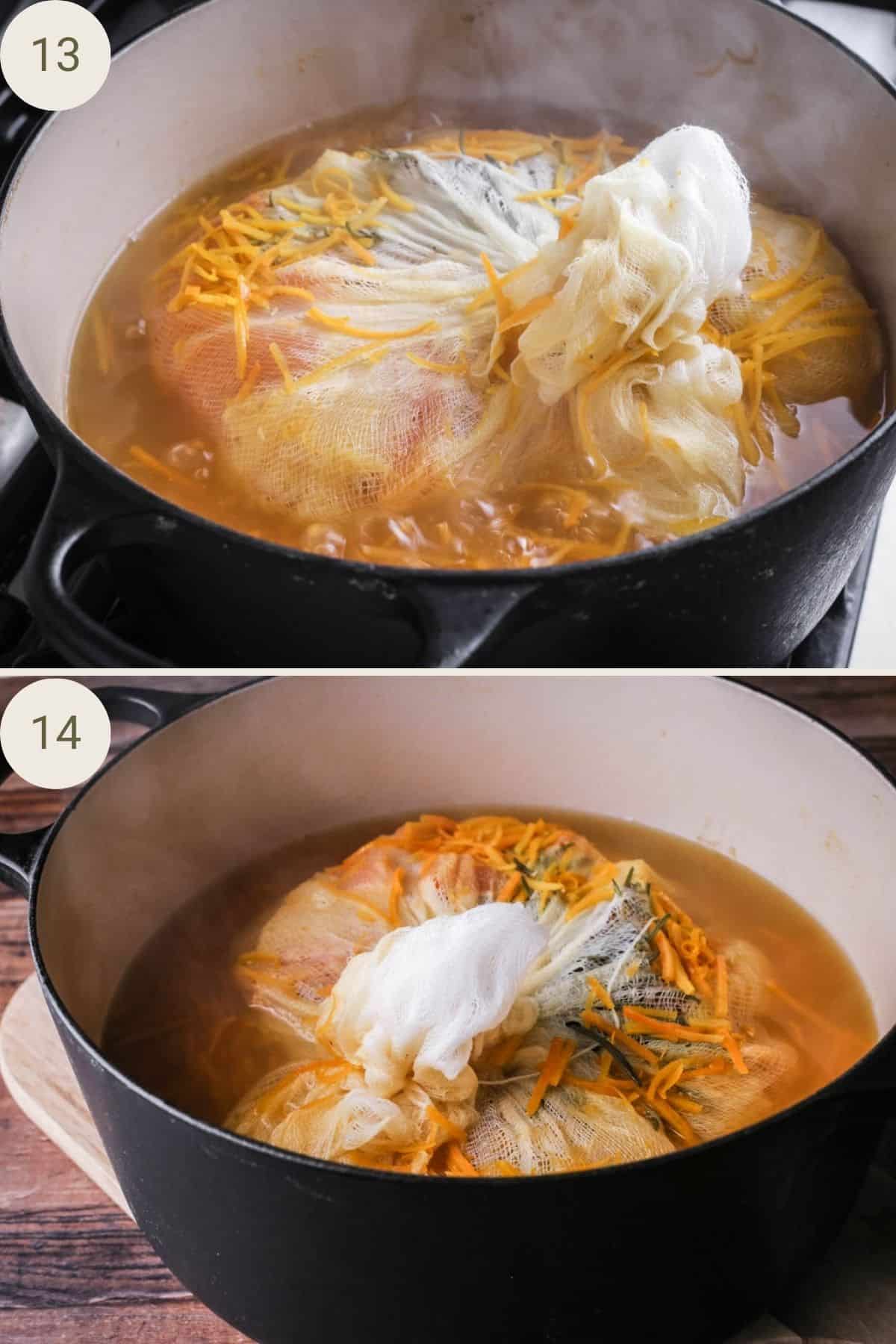
Remove the muslin bag from the preserving pan, squeezing out the excess liquid back into the pan. Strain all the marmalade liquid and measure it out without the peel. You need about 1.5 litres. Top up with extra water if there’s not enough.
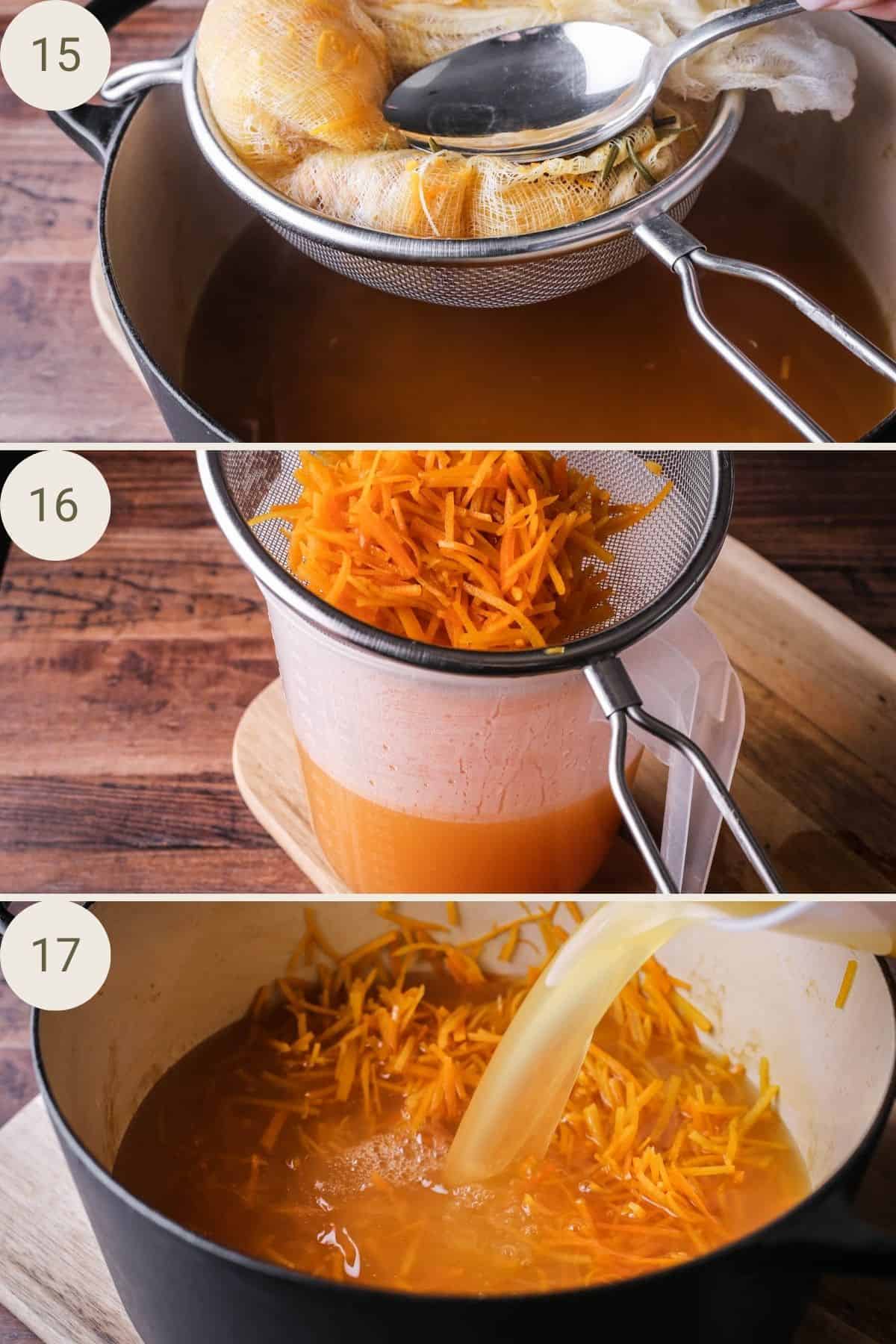
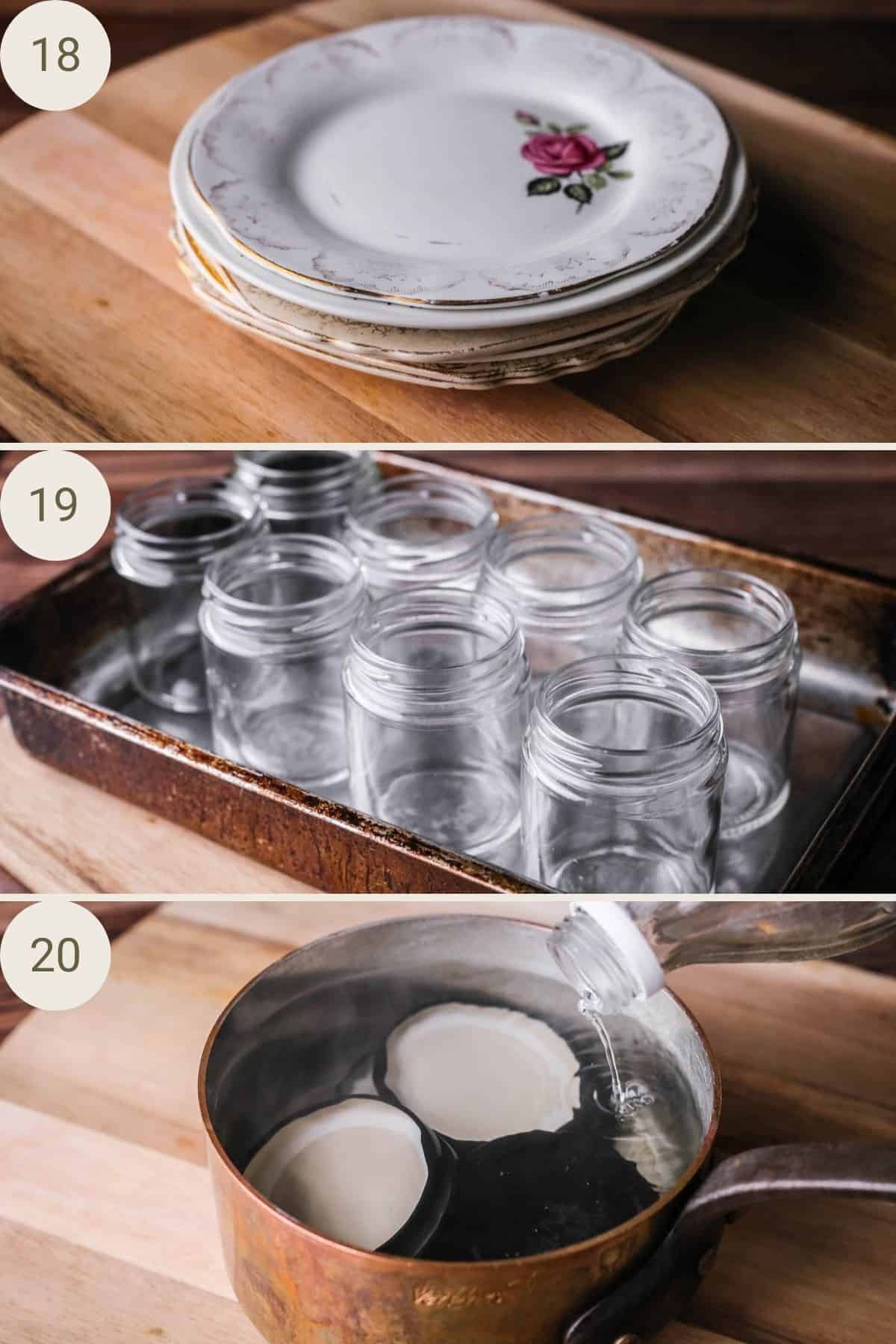
Sterilise your jars and lids and place your saucers into the freezer for your setting test later.
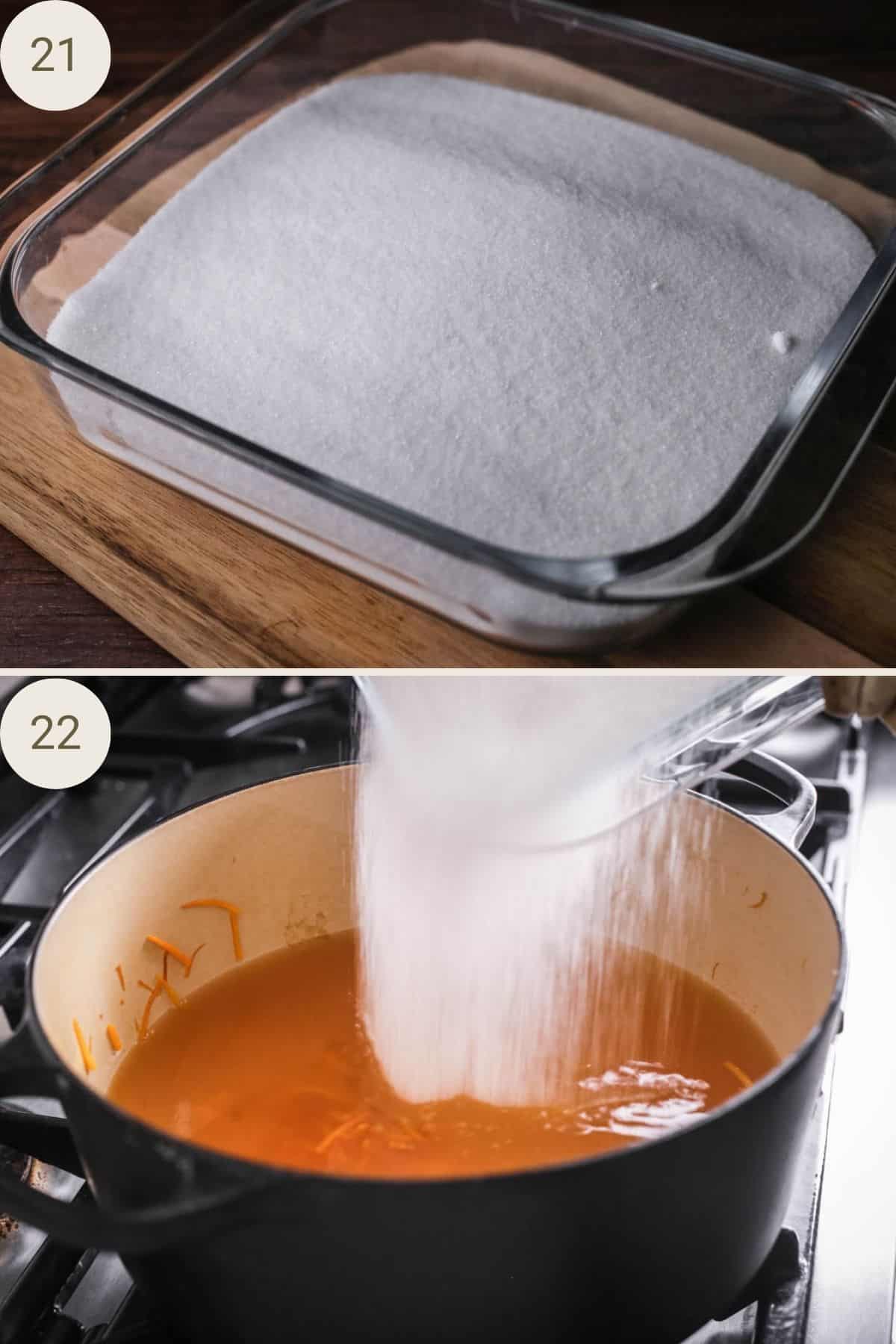
Warm the sugar in oven at for 10 minutes. Stir the warm sugar into the marmalade liquid.
Slowly heat up to a rolling boil. Boil hard for fifteen minutes.
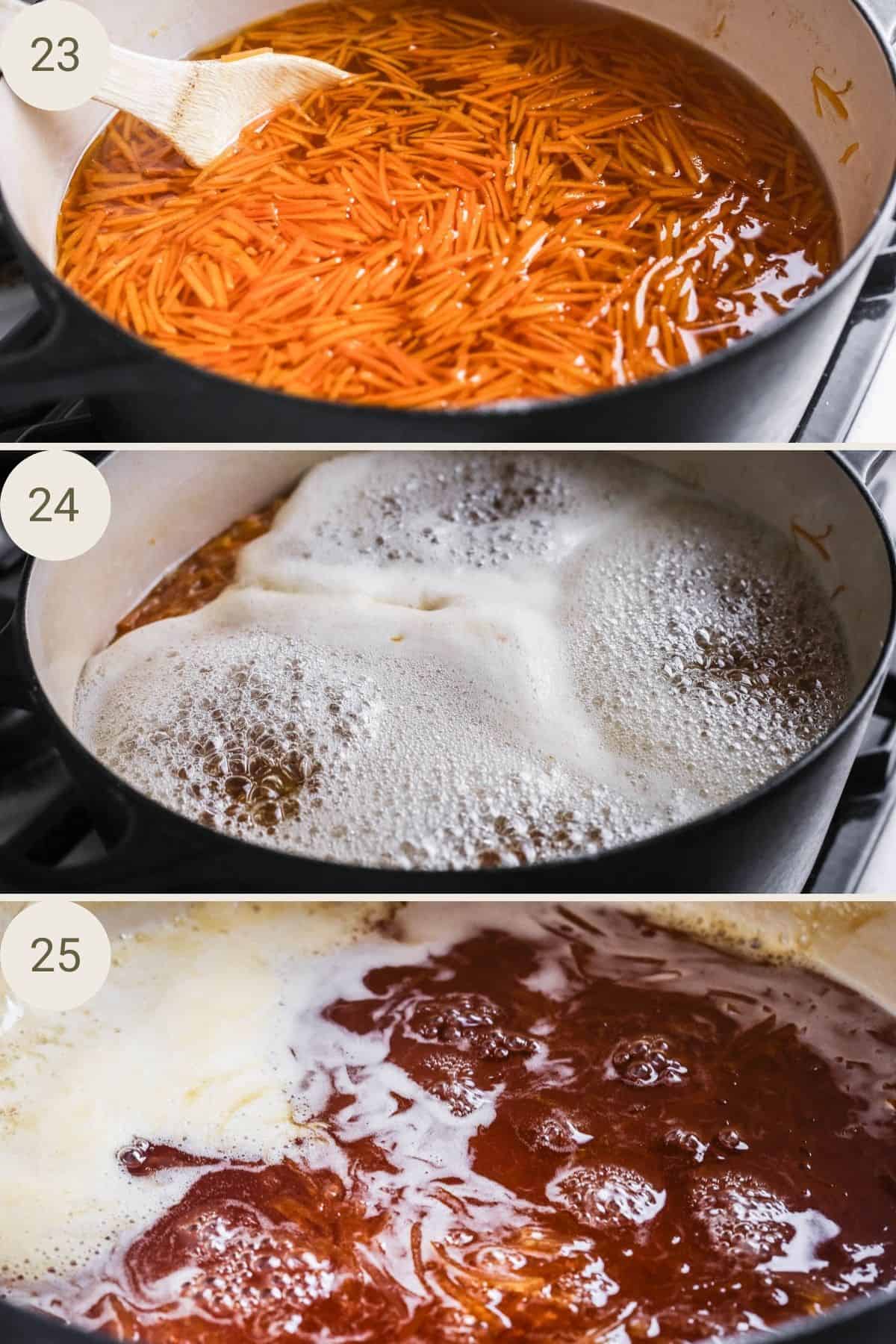
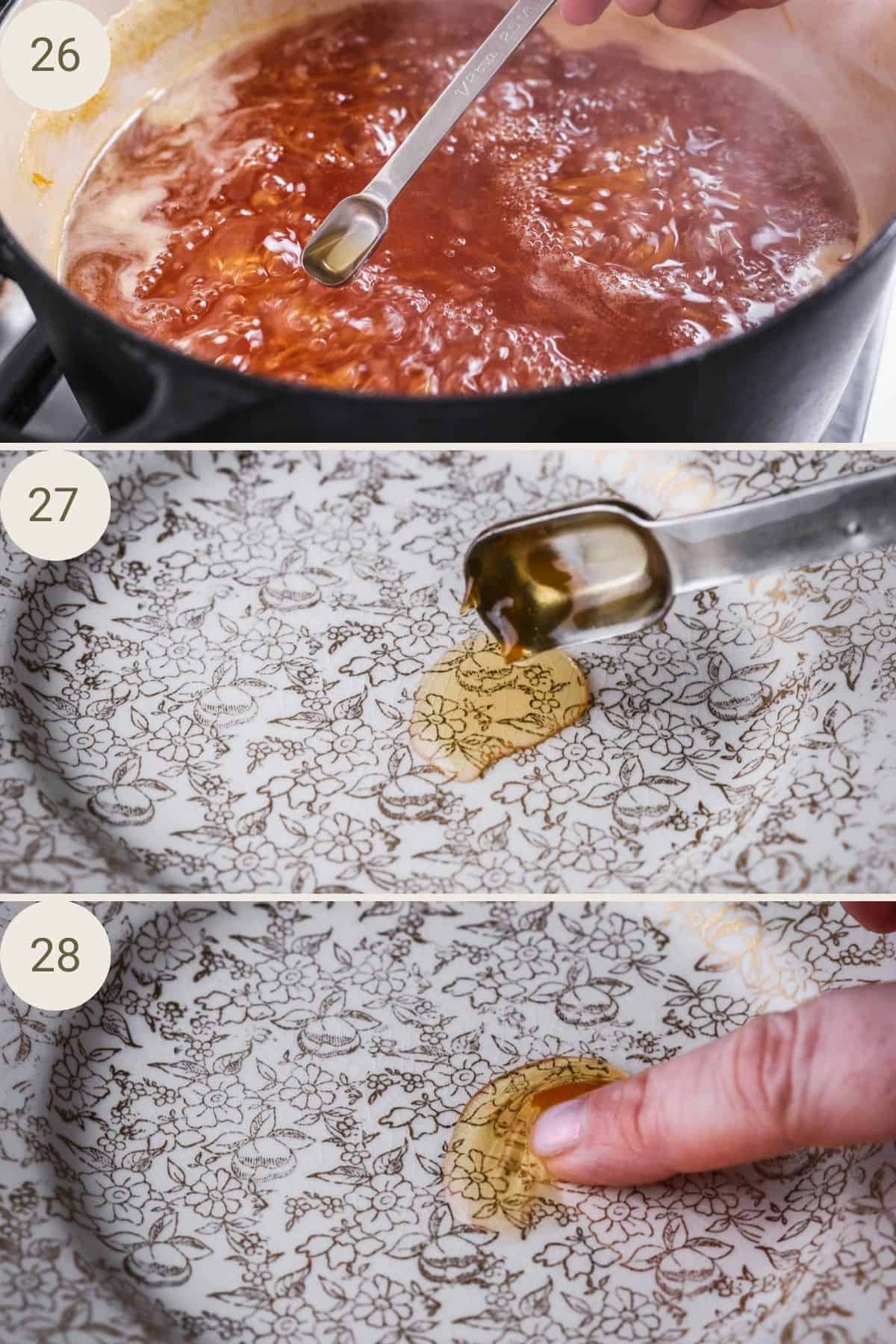
Start checking for the set using the saucer test (see below for exact instructions). As soon as the marmalade is wrinkling up on the saucer when tested then then marmalade is ready.
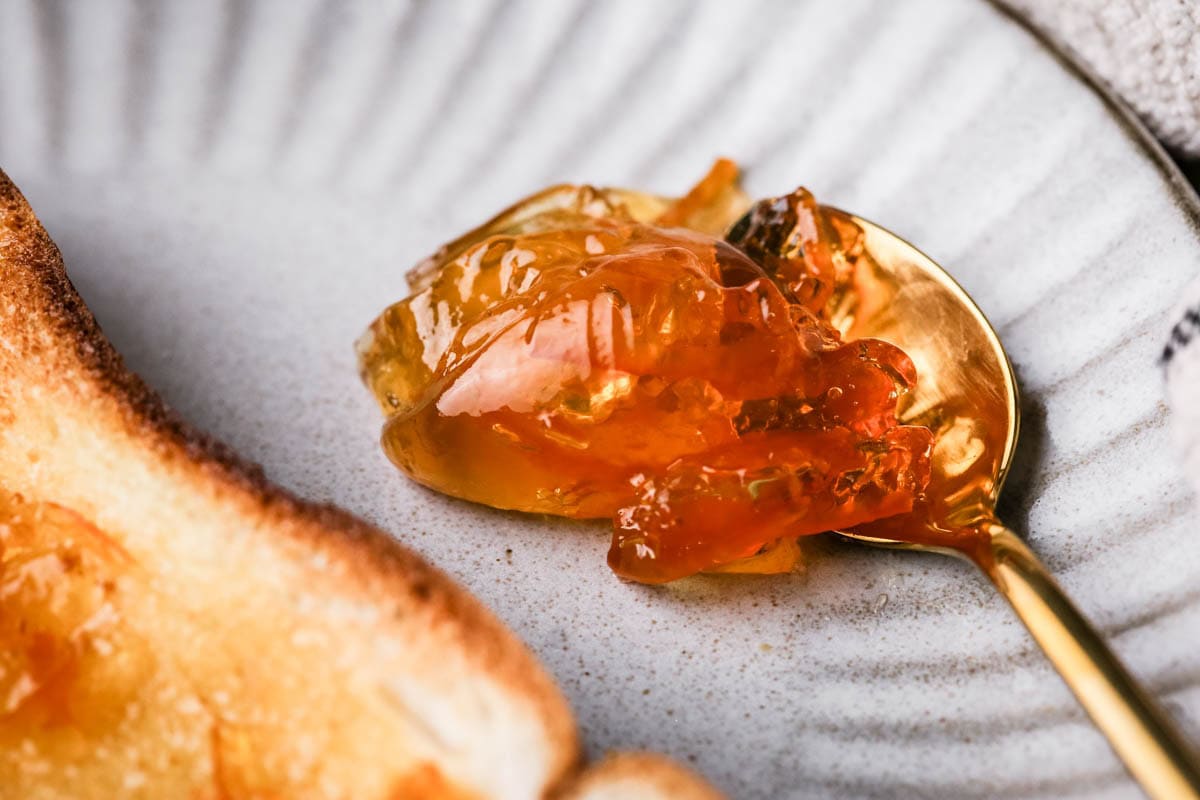
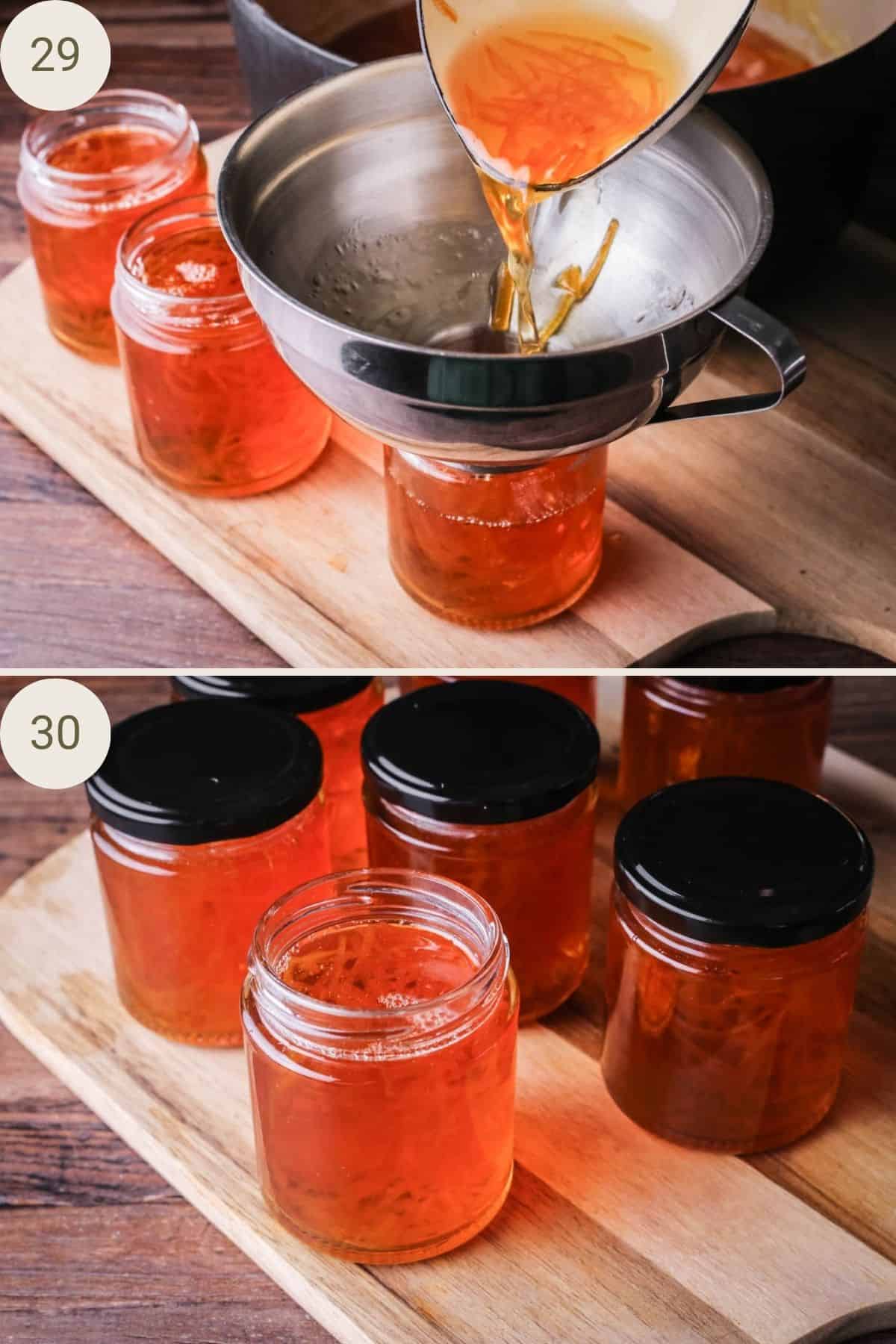
Once the marmalade is ready then remove from the heat, skim off the scum and decant into sterilised jars.
Expert Tips
To prepare the oranges after juicing I find it helpful to cut the orange halves into 3 segments.
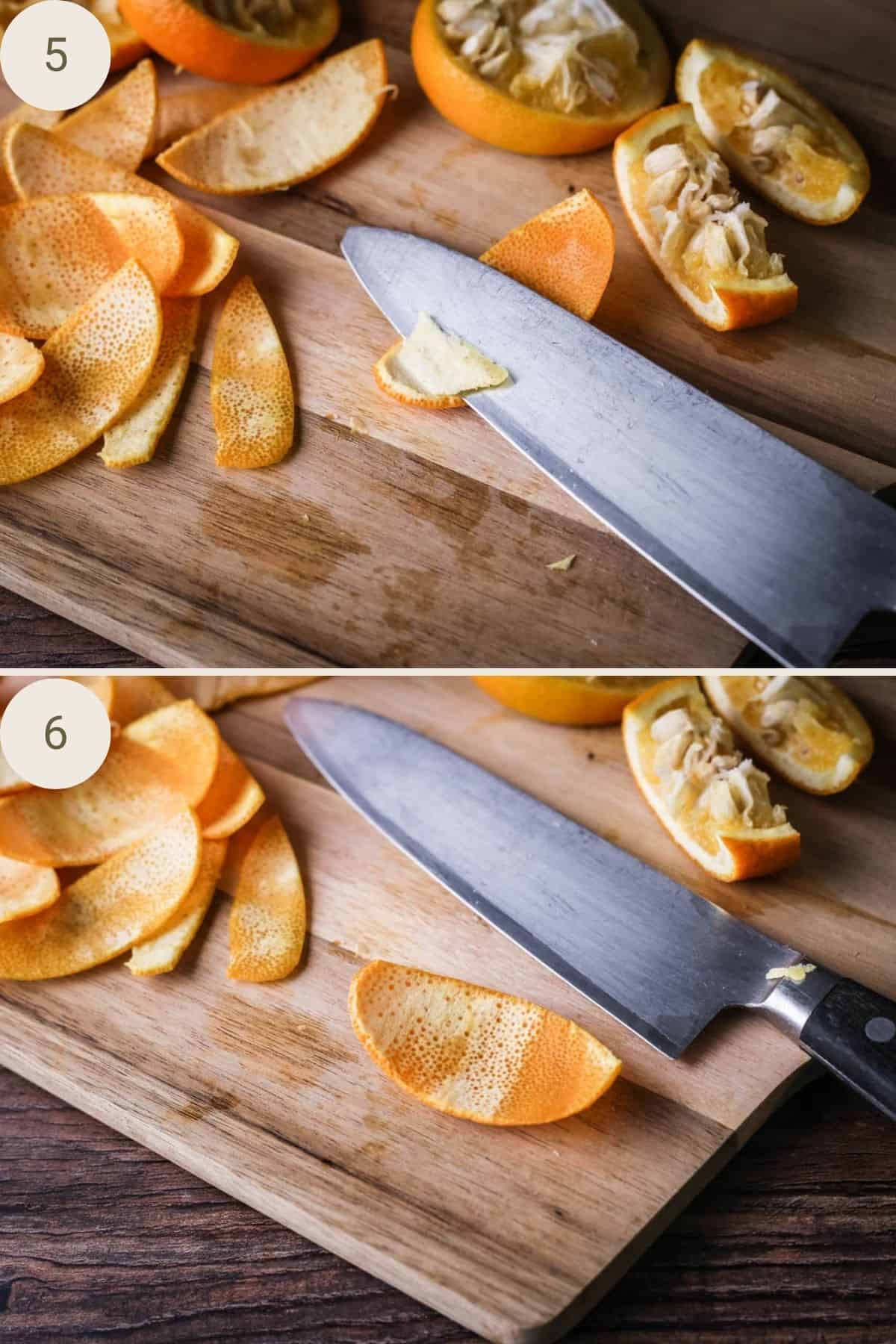
Make sure to have a very sharp and finely bladed knife for removing the pith and membrane from the peel. Hold the knife at a slight angle and slice them carefully away. You may need to do this twice on each segment to get all the membrane off.
The peel segments should now be the right width for slicing. Slice them very thinly across the width to create perfectly sized lengths of peel.
The reason this recipe is set over two days is that the peel is soaked in all the juices and water to soften which produces a nicer end results so the ‘bits’ in the marmalade are delicious to eat and not too chewy.
The sugar is warmed in the oven so it doesn’t cool down the marmalade when added and dissolves more efficiently.
Patience is key when you’re waiting for your marmalade to get to the setting point. Especially if you’ve had to add more water to the marmalade to reach the correct 1500g. More water will take the marmalade more time to set. It will seem like the marmalade is refusing to set and then suddenly it will be ready. Keep checking the temperature with your digital thermometer and after the 15 minute mark check for the set using the saucer test every 3 minutes. You may need a few saucers in your freezer (see below for instructions).
Sterilising Your Jars and Lids
To sterilise the jars place the very clean jars you would like to use in an oven pre-heated to 160°C / 140°C fan assisted / gas mark 3 / 320°F for 20 minutes.
Sterilise the lids by dropping them into a saucepan of boiling water for 10 minutes with a splash of vinegar. I don’t sterilise my lids in the oven as they tend to ruin.
The Saucer (or ‘Wrinkle’) Test
The saucer test is when you quickly cool a teaspoon of the jam and push the jam with your finger. If it wrinkles up then it’s reached the right setting point.
- Place a few saucers in the freezer before you start making your marmalade.
- When you think your marmalade should be ready, it’s been boiling hard for at least 15 minutes and the temperature is between 104-105.5°C (220°F), then you are ready to start testing.
- Turn the heat off the marmalade. Remove a saucer from the freezer and drop a small teaspoon of marmalade onto the saucer.
- The marmalade should not be too runny. Wait for 60 seconds to allow it to set.
- Push the marmalade with your finger, if it wrinkles up then it’s ready.
- If it doesn’t then turn the heat back on and boil your marmalade for a further 3-5 minutes before you test again.
For a full guide to ensuring the right set of your marmalade you can check out my guide to setting jam for coming in February 2026.
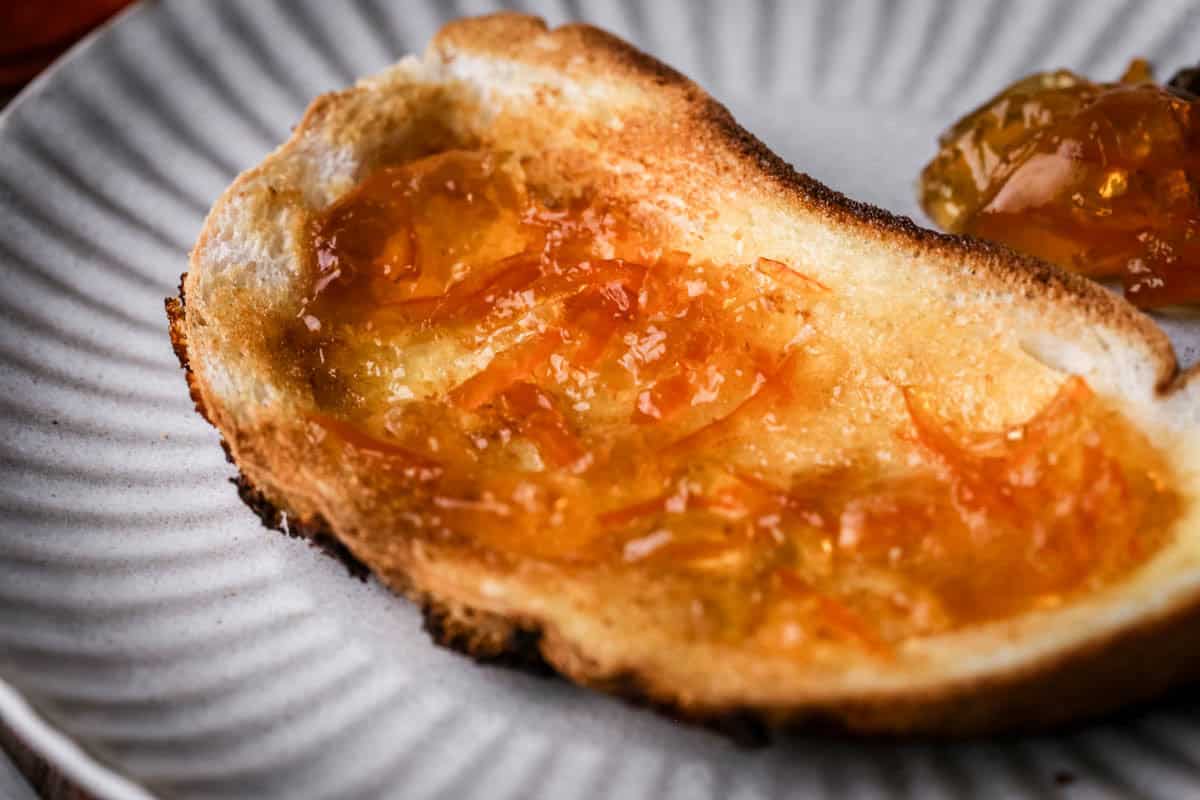
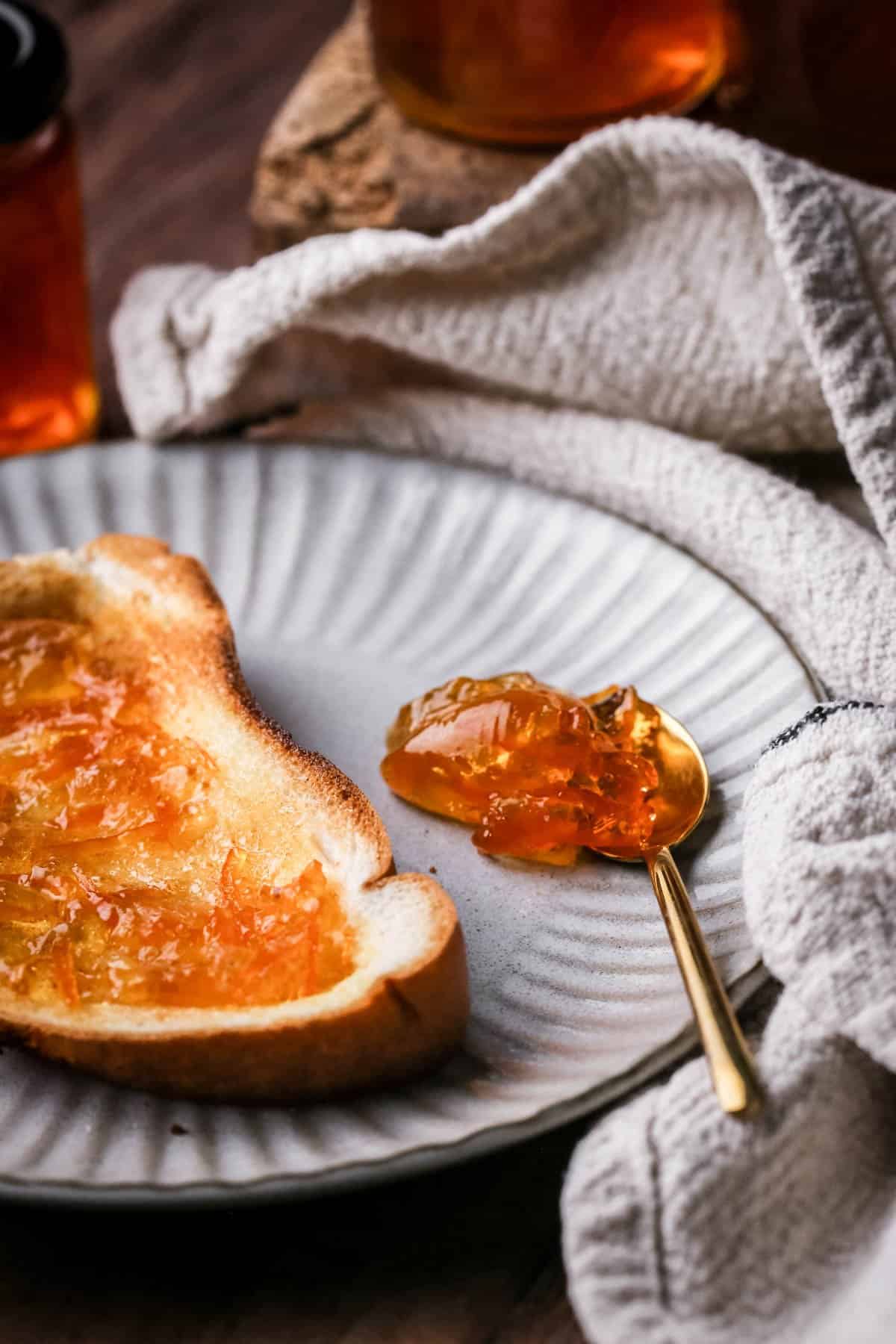
Marmalade Uses Beyond Toast
More Uses
Adding into baking recipes in lieu of mixed peel. This is a trick I have used over the years as my husband prefers this flavour profile.
Sauces and glazes for meat. Simple swap honey, maple syrup or sugar for the same amount of marmalade in recipes like Sticky Sausages, Glazed Chicken Wings, Grilled Pork Chops and it will adds its signature flavour.
FAQs
For a jam or marmalade to set then you need to make sure that your recipe has the right amount of pectin (it shouldn’t be a problem with Seville oranges which have high natural pectin), and that you have enough sugar in the recipe which should be fine if you are following the recipe. Where there may be issues is if a lot of liquid boiled away in the two hours cooking time (make sure it has a lid on to discourage excess evaporation). If you’ve had to add a lot more water to make up the difference then it will take longer to set. For example in one of the batches I recently made I had to add almost 500ml water to top up the liquid, this then took 30 minutes to reach setting point. However, it got there and the flavour was still delicious. For further information about how to achieve a foolproof set on jams and marmalades you can look at my Jam Setting Guide which is available on the website from February 2026.
If you prefer your marmalade on the mellower side then you can swap half of the Seville oranges for regular navel oranges which are naturally sweeter. I also recommend swapping out the grapefruit for two lemons if you don’t like that additional sour melody.
I don’t recommend reducing the sugar in this recipe as it will interfere with the set of the marmalade and the safety of long term storage.
You can use frozen oranges for this marmalade recipe. Thaw the oranges first slowly (overnight in the fridge is best) in a colander, set over a bowl to catch the juices which you should include in the initial juicing part of the recipe. The rest of the recipe remains the same.
If potted correctly in sterilised jars and lids and stored in a cool dark place then marmalade officially has a shelf life of up to 6 months. I find it can last happily up to a year when your next batch is due.
My favourite online supplier for out of season fruit is British Frozen Fruits which I use regularly since I’m often testing recipes outside of their natural season.
You can make delicious marmalade successfully without Sevilles at all so don’t feel restricted to making marmalade in January. You can use regular navel oranges which are what are usually available year round in supermarkets. Or you can use blood oranges, cara cara oranges or even other citrus fruits. You can stick to the method I outline below if you like but you’ll find a recipe better suited to your particular orange or citrus fruit if you use one specifically tailored for it.
More Orange Recipes You’ll Love
Bursting with citrus flavour this buttery Orange Curd is simply made in small batches to make the most of the season.
Caramelised Candied Orange Slices are so versatile and an easy recipe to make. These gorgeously chewy citrusy treats that are beautiful when used to decorate cakes and desserts and equally delicious diced up savoury dishes. You can also eat them just as they or dipped in melted chocolate to enjoy after dinner.
Homemade Mixed Peel is so much more flavourful than supermarket bought. It isn’t as bitter and has a more fully rounded flavour that captures the essence of citrus season.
Enter your email below to get this recipe sent to your inbox plus get new recipes, baking tips, and updates.
Seville Orange Marmalade
Ingredients
- 1 kg Seville oranges - about 7-9
- 1 grapefruit
- 2 rosemary stalks
- 1.5 litres water
- 1.2 kg granulated white sugar
Instructions
Day One
- Juice the oranges and the grapefruit into a large preserving pan
- Prepare the peel by cutting the remains of the fruit into segments. Take each segment and remove the pith and inner membrane using a very sharp knife at an almost horizontal angle cutting closely against the peel. This process is dependent on using a very sharp and finely bladed knife. You should be left with paper thin pieces of peel with barely any white attached. Set the peel aside.
- Gather all the pips, pith, inner membrane and stray pulp and place, along with the rosemary stalks, on top of a large muslin cloth, bringing the cloth together and tying together with string to make a bag.
- Thinly slice all the peel.
- Place the sliced peel and the muslin bag into the preserving pan with the citrus juice and add the water. Place a lid over the top of the pan and leave everything to soak overnight.
Day Two
- The next day bring the contents of the preserving pan to the a gentle boil. Turn the heat down, put the lid on and simmer for 2 hours until the peel is soft.
- Pre-heat the oven to 150°C / 130°C fan assisted / gas mark 2 / 300°F.
- Remove the muslin bag from the preserving pan and squeeze the excess liquid which contains all the pectin from the muslin and then discard the bag.
- Strain the liquid and measure it out without the peel. You need about 1.5 litres. If there is not enough then top up with water. The more water you are adding the longer your marmalade will take to set so just bear this in mind. Once you have the right amount of liquid then pour the liquid, along with the peel, back into the preserving pan.
- At this point sterilise your jars and lids and place your saucers into the freezer for your setting test later. (see notes)
- Warm the sugar in oven at for 10 minutes.
- Stir the warm sugar into the marmalade liquid until dissolved and slowly heat it up to a rolling boil.
- Boil hard for fifteen minutes then start checking for the set using the saucer test. If the marmalade isn’t setting then carry on cooking.
- Once the marmalade has reached the correct setting point then remove from the heat, skim off the scum and decant into sterilised jars.
Notes
- This recipe makes enough to fill 8 x 190ml jars.
- You can swap the grapefruit for 2 x lemons.
- You can omit the rosemary or amp it up if you prefer a more pronounced flavour.
- Make sure to have a very sharp and finely bladed knife for removing the pith and membrane from the peel. Hold the knife at a slight angle and slice them carefully away. You may need to do this twice on each segment to get all the membrane off.
- Patience is key when you’re waiting for your marmalade to get to the setting point. Especially if you’ve had to add more water to the marmalade to reach the correct 1500g. More water will take the marmalade more time to set.