
Homemade Mixed Peel
This post contains affiliate links. Please read my disclosures.

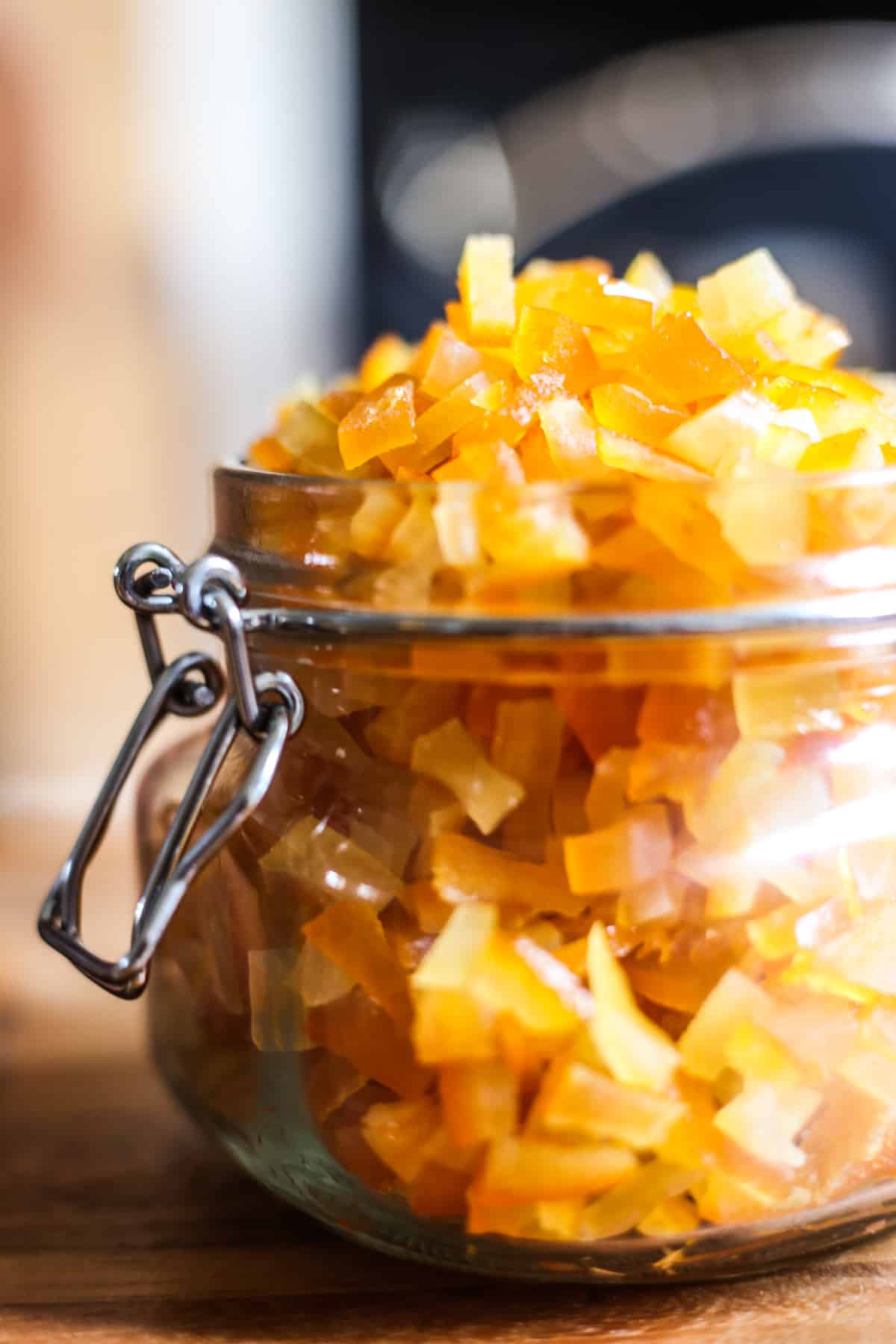
Homemade Mixed Peel is so much more flavourful than supermarket bought. It isn’t as bitter and has a more fully rounded flavour that captures the essence of citrus season.
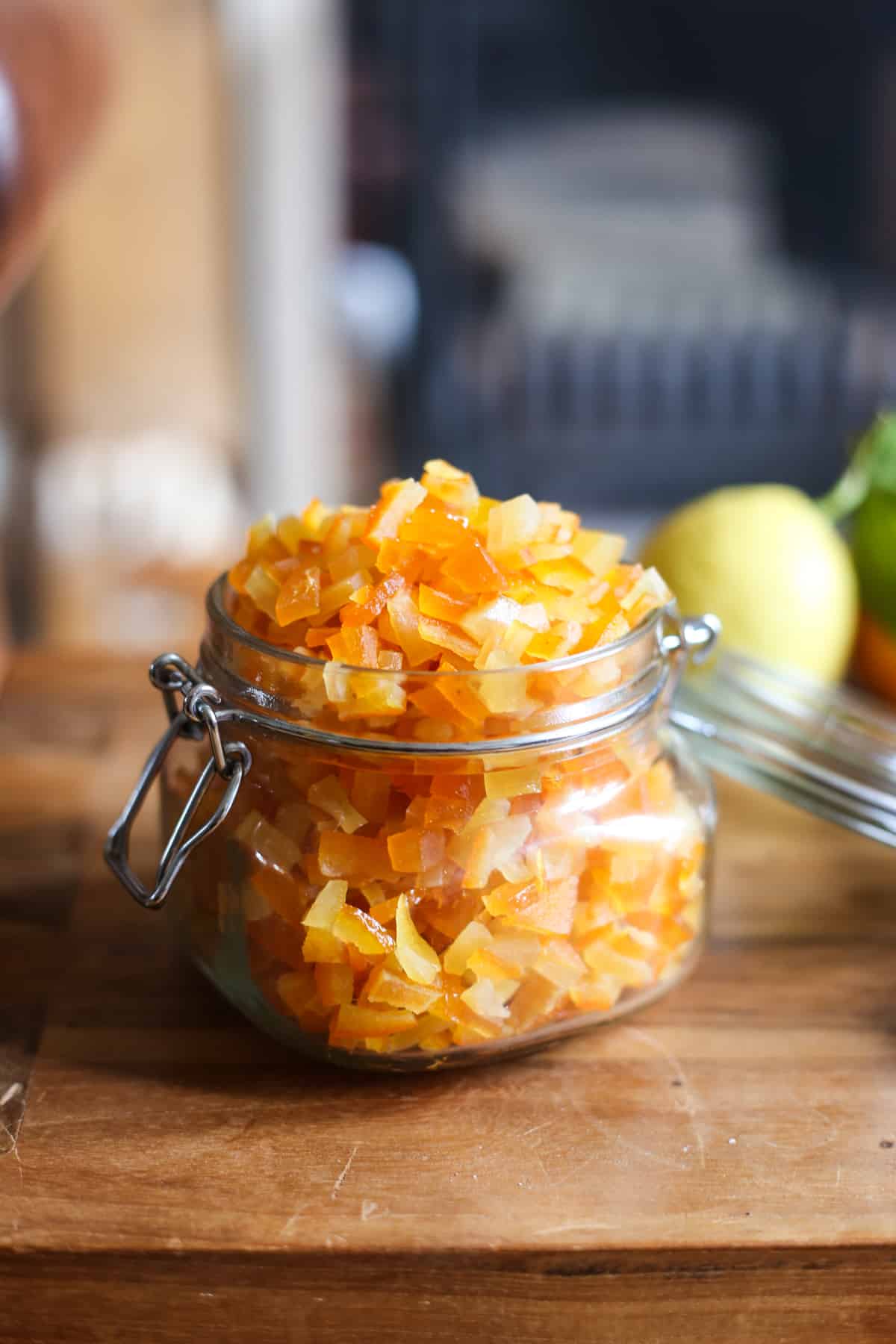
Until I began to make my own candied peel I didn't use a lot of mixed peel in my baking. Instead if a recipe called for it I simply swapped in the zest of an orange and lemon or perhaps even a tablespoon of marmalade. That's because I had always thought mixed peel was the pits.
But how could that be? I love citrus, I love the brightness of intense lemon and orange peel. There should be no reason why mixed peel doesn’t appeal too. But the supermarket stuff, when tasted by itself is just not that nice and can be very bland and bitter. So I set about making my own and I have never looked back.
Now this recipe is a labour of love as it takes a week to make this candied peel to fully absorb the sugar so it lasts as long as possible. But after Day 1, it's only a little hands-on time throughout the week. And believe me, if you love baking and you love the flavour of citrus then the results are totally worth it.
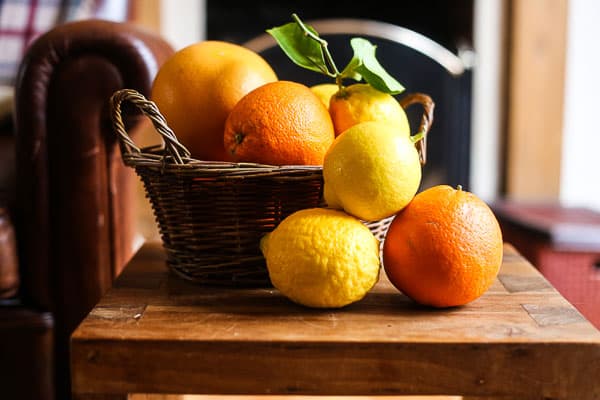
What is mixed peel?
Mixed peel is one of those ingredients that is featured in a lot of British baking, from traditional fruit cakes like Dundee Cake or Christmas Cake to tea time fare like the aforementioned Eccles Cakes or Hot Cross Buns.
Mixed peel is basically candied lemon and orange peel. Eighteenth century bakers knew that the most intense flavour of any citrus fruit is derived from the peel. So intent on capturing as much flavour as possible in their recipes and mindful of preserving since fresh fruit was scarce, the peel was candied, dried and stored until needed.
These traditional recipes are now the backbone of British baking so mixed peel has been handed down to us in our grandmothers’ and great great grandmothers’ recipes often when dried fruit is called for.
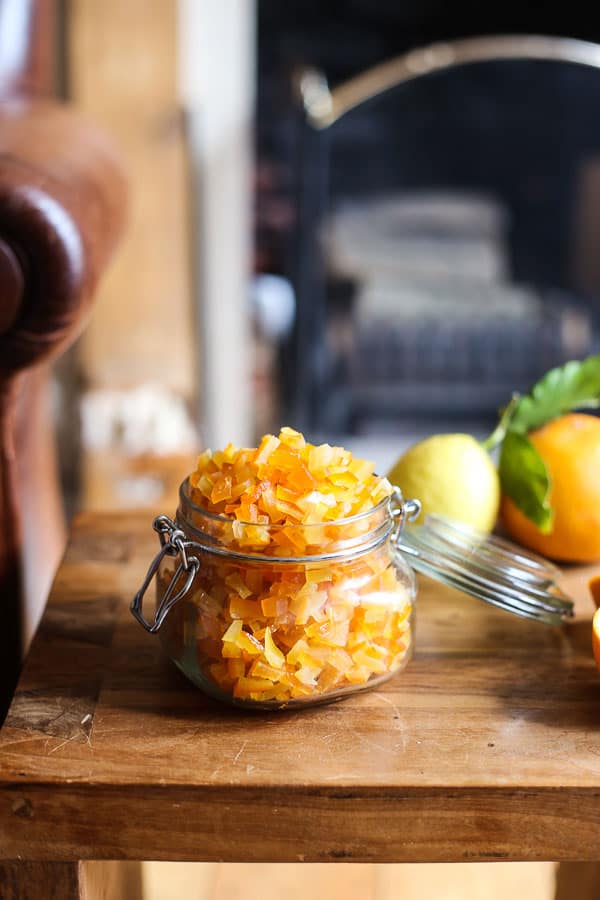
Why you'll love this recipe
- A totally different flavour from supermarket mixed peel - so much brighter and fresher
- Grapefruit peel. Since we have dominion over our candied peel, we can also add grapefruit to add a third dimension of citrus to the proceedings.
- Elevate your baked goods. Adding homemade mixed peel will really give your Christmas Cake or Hot Cross Buns a huge injection of sweet tangy flavour.
- Unlike the shop bought stuff you can eat Homemade Mixed Peel by the spoonful. Taking out small sticky handfuls as a cheeky snack is a total treat.
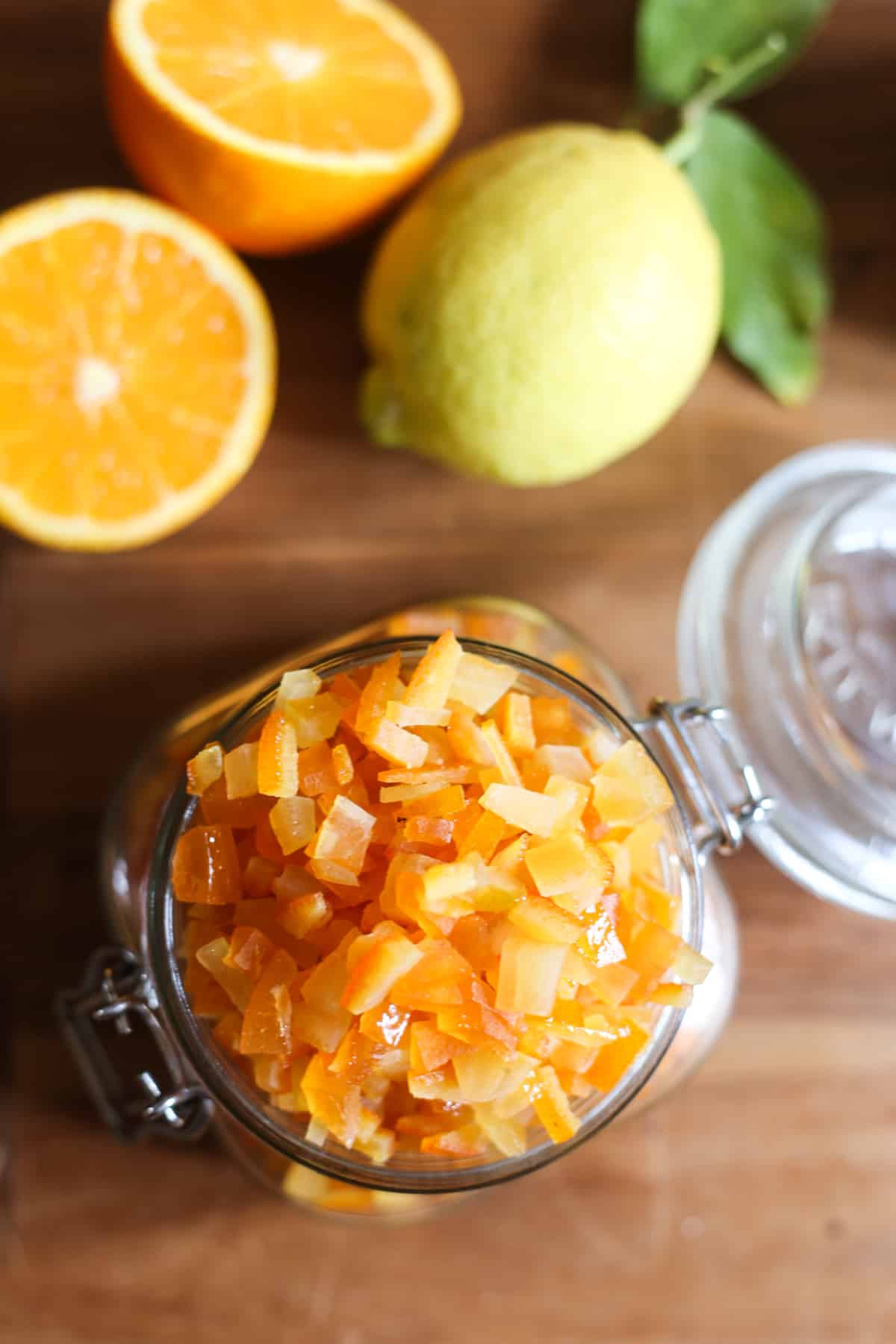
Ingredients needed
- Oranges
- Lemons
- Grapefruit
- Sugar
- Water
Step-by-step instructions
For full recipe instructions go to the recipe card at the end of this post.
Day 1
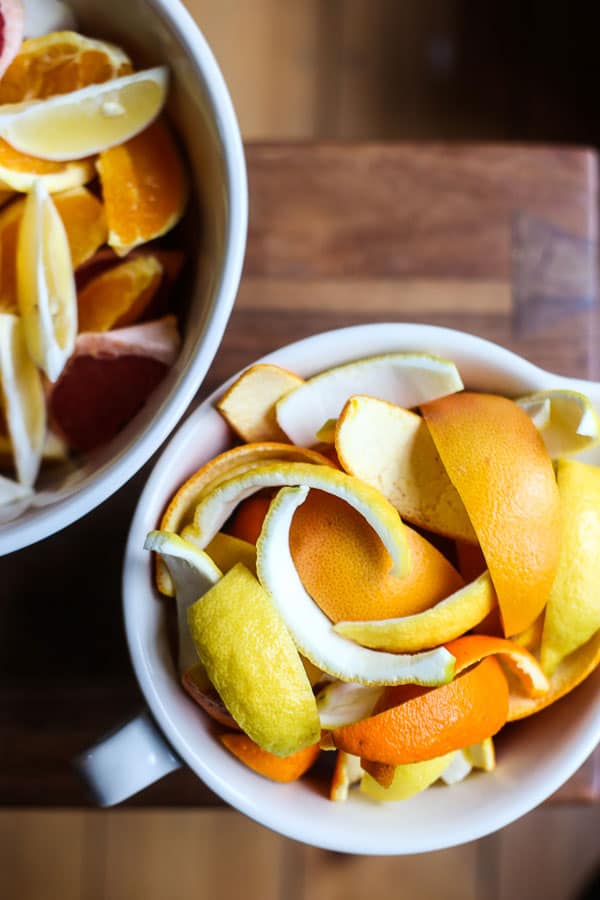
- Cut the citrus into quarters and remove the flesh using a sharp knife.
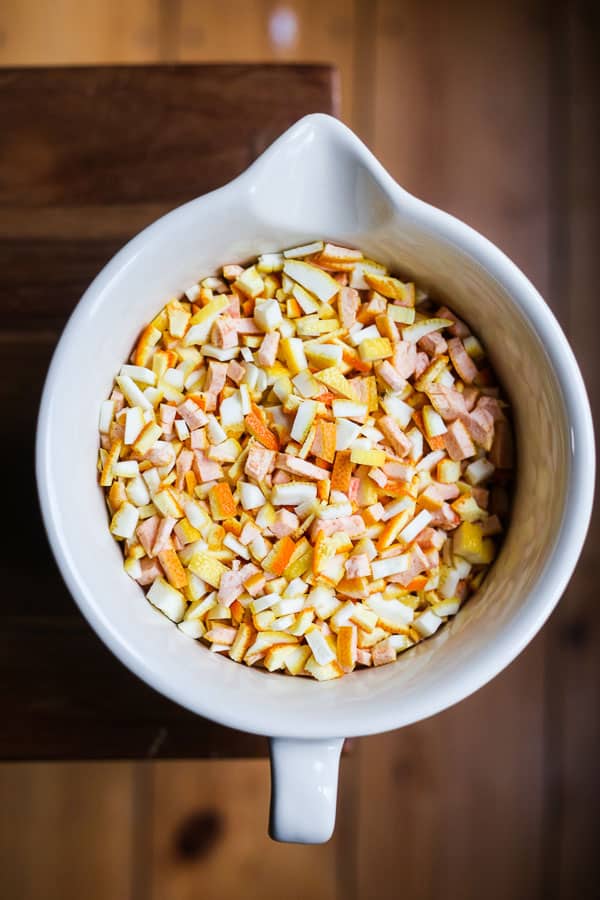
- Cut the peel into short thin strips.
- Place in a pan with the water and simmer for 1 hour.
- Drain and pour the cooking water back into the pan with some of the sugar. Simmer until the sugar has dissolved.
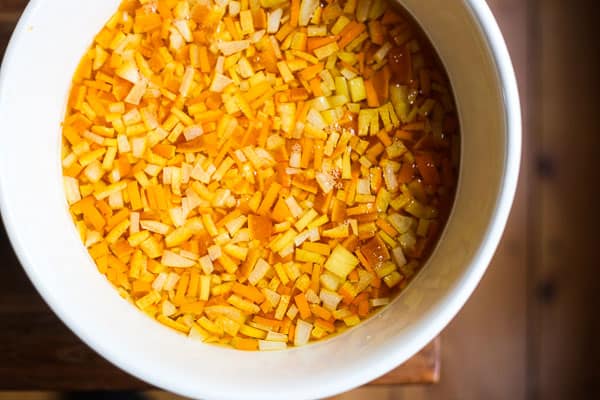
- Pour the sugar syrup over the peel, cover and soak overnight.
Day 2
- Strain the syrup into a large saucepan and return the peel to the bowl.
- Add the remaining sugar to the syrup. Simmer until the sugar has dissolved.
- Pour the syrup back over the peel, cover and leave overnight.
Day 3
- Pour the peel and syrup into a large saucepan. Bring to a boil, then turn the heat down to simmer for 30 minutes.
- Pour everything back into the bowl, cover and leave the peel to soak for 4 days.
Day 7
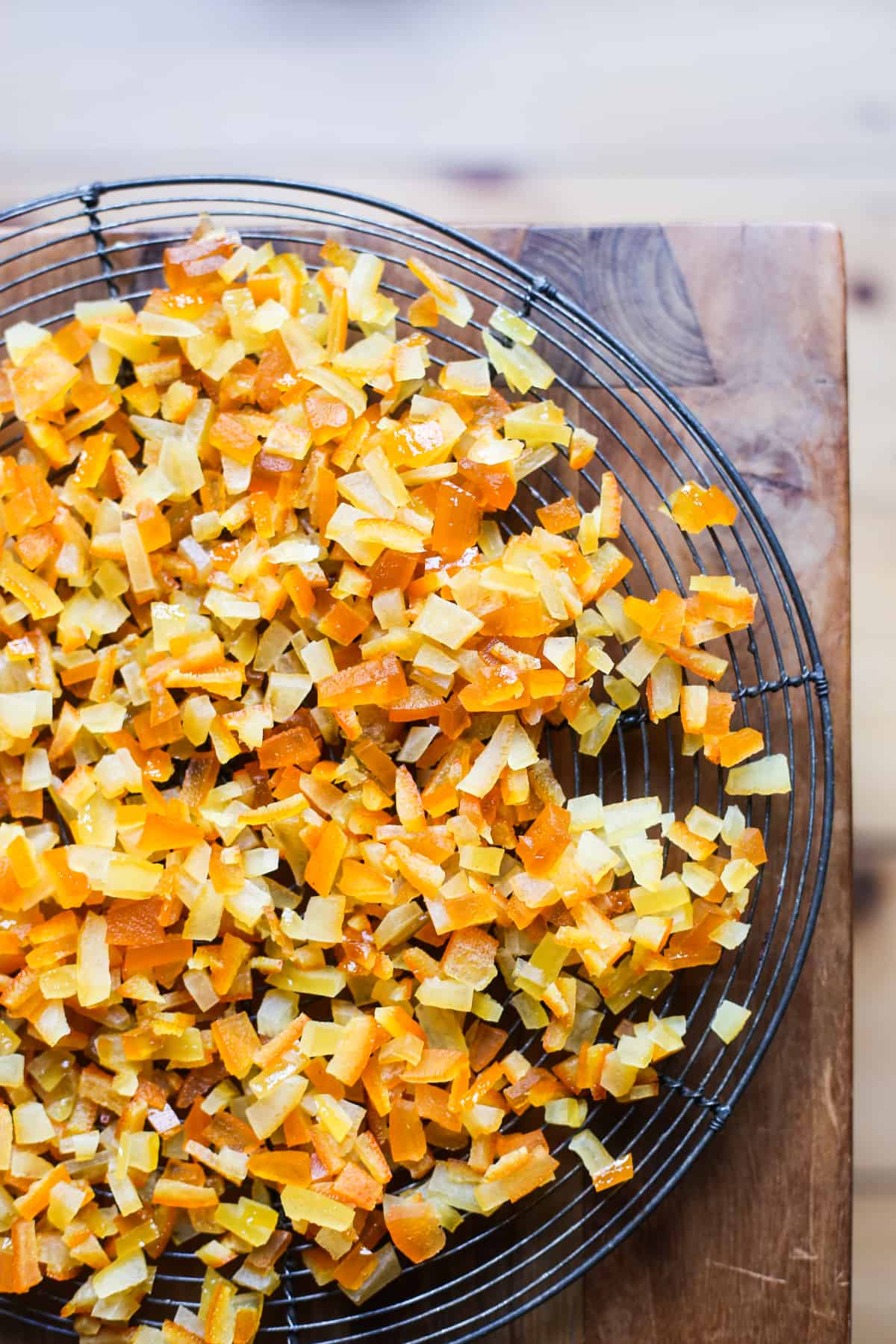
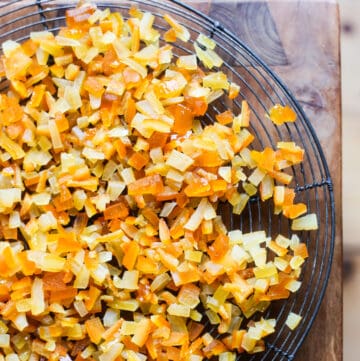
- Drain the citrus and dry on a wire rack in a sterile place until no longer sticky.
Important tips
- Use the best organic fruit you can get hold of as it does make a world of difference to the flavour. Unwaxed is best, otherwise you'll have to wash off the wax before you get started.
- It is a personal choice how much pith you leave on the citrus when you remove the flesh. If the pith is especially thick then you might like to cut some of it away. I like to leave a little pith on to give the mixed peel some substance.
- Always allow the peel + sugar syrup to cool before covering and leaving overnight.
- You can leave the peel to soak at room temperature if your environment is not too warm. However, you can leave to soak in the fridge in warmer climates.
- To dry the candied peel at the end of the process you have a number of options. You can use a dehydrator to dry the peel or you can leave in a place in your kitchen which you can be sure is totally sterile like a turned off oven. However, my current preference is to dry the peel in a very low oven, set at its lowest setting, for 1-2 hours which speeds up the process.
- The peel should be totally dry before storing. If not, just store the peel in the fridge in sterilised glass jars and it will keep well for a few weeks.
How to store
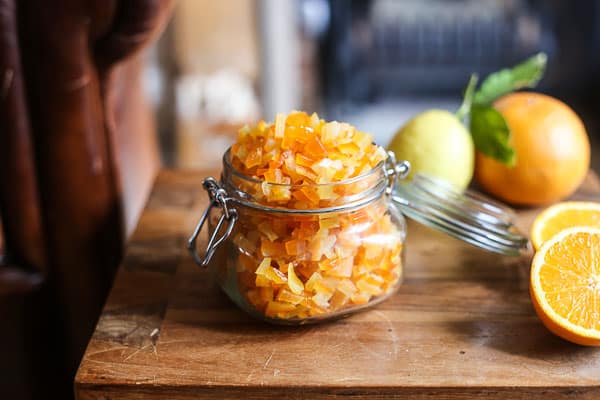
- The best way to store the mixed peel afterwards is in sterilised glass jars and should keep for at least a couple of months unopened in a cool dark place.
- Once opened store in the fridge.
Recipes to use homemade mixed peel
Mixed peel or candied peel is so often seen in British baking recipes since we use a lot of dried fruit. Try adding your mixed peel into the following recipes:
How to use the leftover citrus flesh
Do not throw away as you can juice it to make a homemade lemonade.
Or, for something a little different, why not try this Triple Citrus Shrub which uses the flesh to make a drinking vinegar. Diluted with water this is a lovely alternative if you don't like your drinks too sweet.
What to do with the leftover syrup
With this recipe you will be left with the most delicious citrus syrup which will really come into its own in your kitchen.
This is an amazing ingredient which can be used in a variety of ways in its own right, from creating a deliciously moist and flavourful Leftover Syrup Cake to salad dressings and marinades.
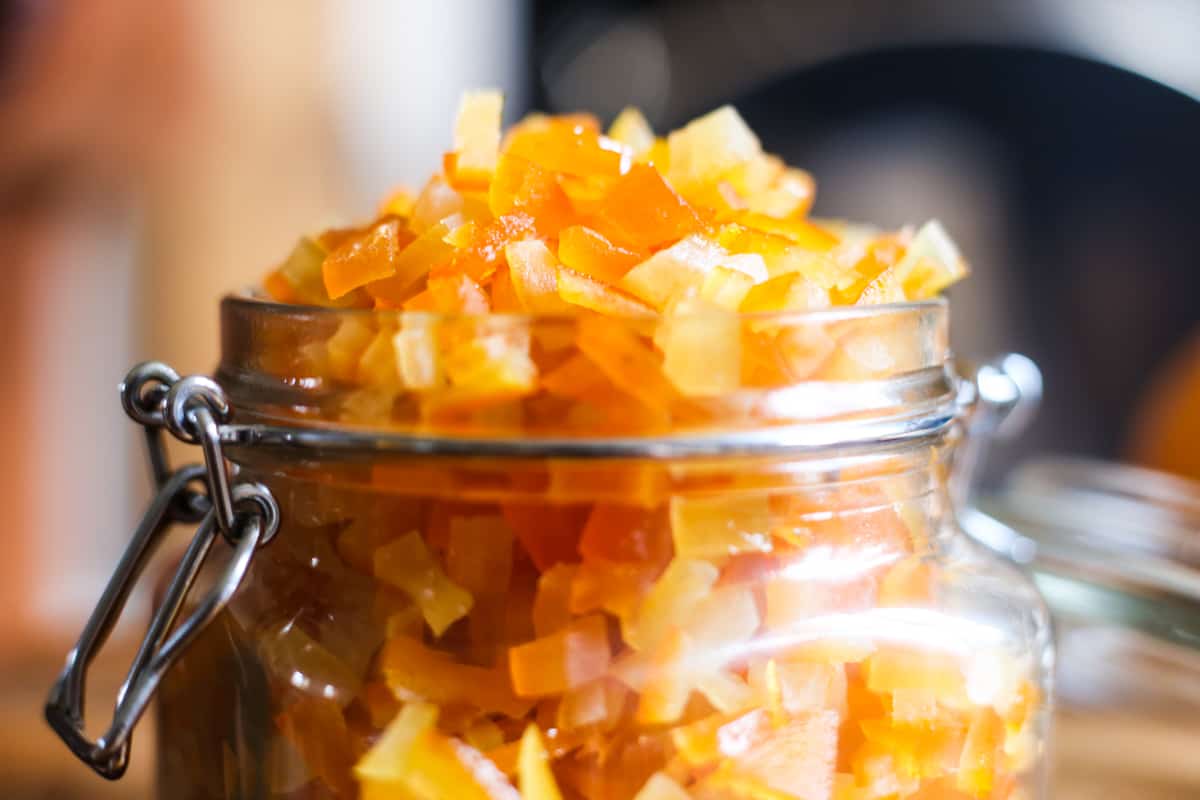
I urge you to give this Homemade Mixed Peel a try. If you do then please leave a comment below and give the recipe a rating which helps others find the recipe on Google. If you then go on to use this recipe as a launch pad for your own culinary creation then I’d also love it if you’d share it and tag me on Instagram. It is so lovely for me to see your versions and variations of my recipes.
Enter your email below to get this recipe sent to your inbox plus get new recipes, baking tips, and updates.
Homemade Mixed Peel
Ingredients
- 4 organic oranges - unwaxed if available
- 4 organic lemons - unwaxed if available
- 1 organic grapefruit - unwaxed if available
- 2300 ml cold water
- 1350 g granulated sugar
Instructions
Day 1
- If your fruit is waxed then you will need to wash off the wax from the skin of the fruit first by giving it a light scrub. Cut the oranges, lemons and grapefruit into quarters then with a very sharp knife remove the flesh from the skin and the pith.
- Cut into short thin strips. To achieve this, cut the peel lengthways again. You might need to cut the lemon peel once, the orange peel twice more and the grapefruit peel three times more to get even sized pieces. Then cut widthways into short thin strips.
- Weigh the peel, you should have around 450g.
- Place the peel into a large saucepan with the water then bring to the boil. Turn the heat down to low, cover and simmer for 1 hour.
- Remove from the heat and drain over a large bowl to reserve the cooking water. Weigh out the cooking water, you need 1140g (5 ¾ cups) and pour back into the saucepan. Top up with more water if you don't have enough.
- Add 900g (4 ½ cups) sugar to the water and bring to a gentle boil, simmer for 10 minutes until the sugar has dissolved.
- Place the peel in a large bowl and pour the sugar syrup over. Allow to cool then cover and leave to soak for 24 hours.
Day 2
- Strain the syrup into a large saucepan and return the peel to the bowl.
- Add the remaining 450g (2 ¼ cups) of sugar to the saucepan. Bring to a boil, then turn down to simmer for a couple of minutes making sure the sugar has completely dissolved.
- Pour the syrup back over the peel, cover and leave for another 24 hours.
Day 3
- Pour the peel and syrup into a large saucepan. Bring to a boil, then turn the heat down to simmer for 30 minutes.
- Pour everything back into the bowl, cover and leave the peel to soak for 4 final days.
Day 7
- Drain the fruit, place on a fine wire rack and leave in a sterile dry place until no longer sticky. See notes below for options on drying the peel.
- Store the mixed peel in sterilised glass jars in a cool dark place.
Notes
- Use the best organic fruit you can get hold of as it does make a world of difference to the flavour. Unwaxed is best, otherwise you'll have to wash off the wax before you get started.
- It is a personal choice how much pith you leave on the citrus when you remove the flesh. If the pith is especially thick then you might like to cut some of it away. I like to leave a little pith on to give the mixed peel some substance.
- Always allow the peel + sugar syrup to cool before covering and leaving overnight.
- You can leave the peel to soak at room temperature if your environment is not too warm. However, you can leave to soak in the fridge in warmer climates.
- To dry the candied peel at the end of the process you have a number of options. You can use a dehydrator to dry the peel or you can leave in a place in your kitchen which you can be sure is totally sterile like a turned off oven. However, my current preference is to dry the peel in a very low oven, set at its lowest setting, for 1-2 hours which speeds up the process.
- The peel should be totally dry before storing. If not, just store the peel in the fridge in sterilised glass jars and it will keep well for a few weeks.
- Please note when you see ‘grams’ listed as opposed to ‘millilitres,’ or any other term of measurement, that is not incorrect. I weigh all of my ingredients, including liquids, for accuracy.
- US customary measurements for the ingredients provided are based on a conversion calculator. This recipe was tested with metric measurements and I recommend using a digital scale to weigh ingredients for the most accurate results. READ MORE >>> Why you should always weigh vs measuring with cups

Why did my peel only weigh 285g from 4 oranges,4 lemons and 1 grapefruit?
Size can vary a lot in these citrus fruits. I used navel oranges to test this recipe which can be quite large. You can either make less or add more fruit to make up the difference - it's up to you. I'd leave the grapefruit as is and maybe add another orange and lemon.
Thank you for this great recipe. Nothing can beat the flavour of these little gems fresh from the pot. My Christmas cake was amazing using the homemade peel compared to store bought stuff. We eat organic or non GMO. I have yet to find candied peel in a store that is at least non GMO. I end up baking and cooking all of our food. Now I am able to make Christmas desserts
The 1st time I made some candied peel I added grapefruit peel to my lemon and lime peel. The syrup had an interesting flavour with the addition of pink grapefruit peel - not sour or bitter but the grapefruit flavour certainly dominated. This year I tried it with lemon, lime and orange peel from Navel oranges. I think I will be staying with the orange peel since the flavours blend better. I wonder if different types of oranges would make much of a difference.