Gluten-Free Rhubarb Crumble with Stem Ginger
This post contains affiliate links. Please read my disclosures.

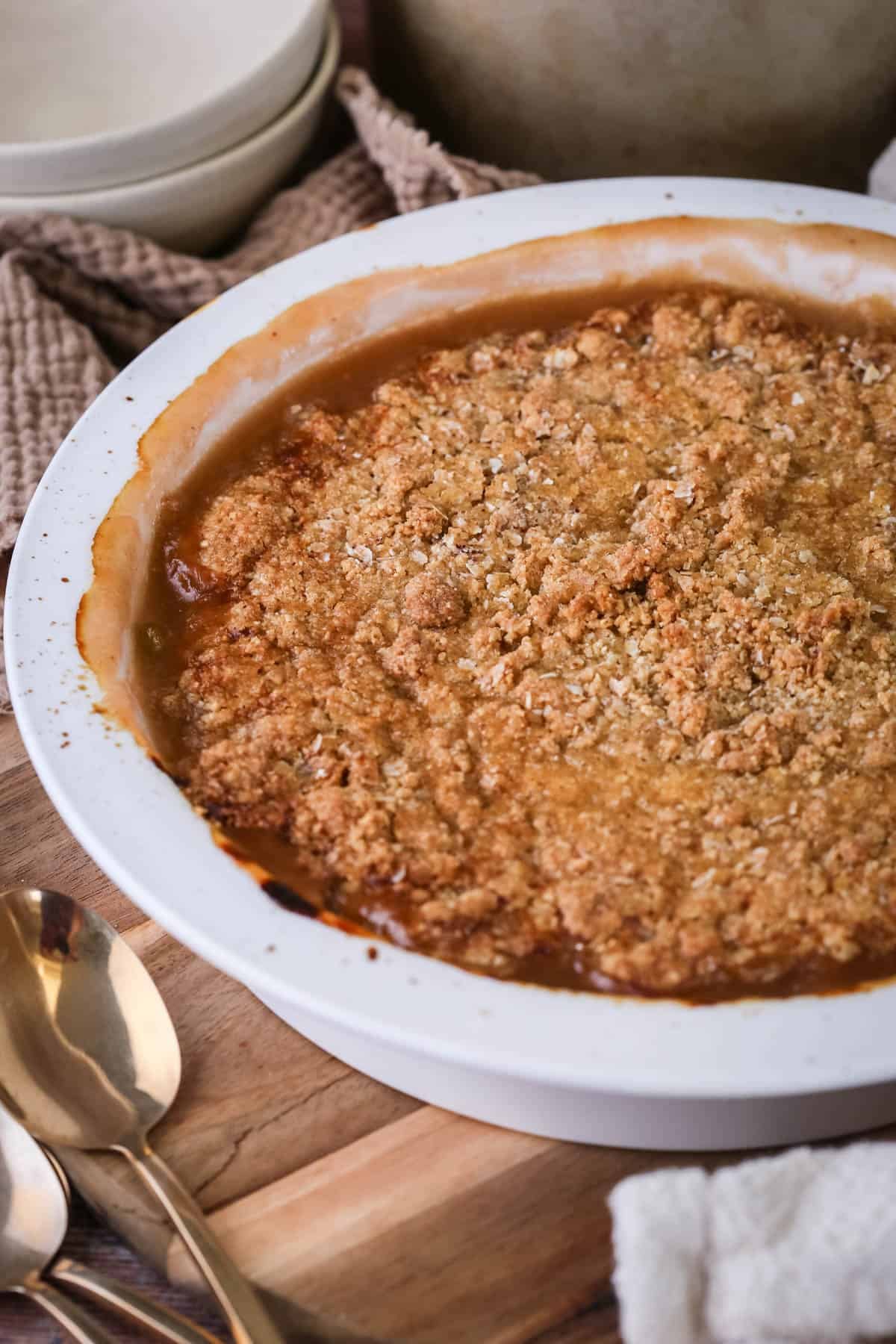
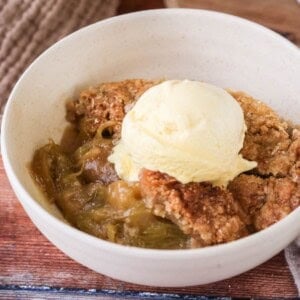
This Gluten-Free Rhubarb Crumble is a classic British dessert spiked with stem ginger. The crisp golden topping blankets a sweetly tart fruity filling. An easy gluten-free oat-free crumble recipe.
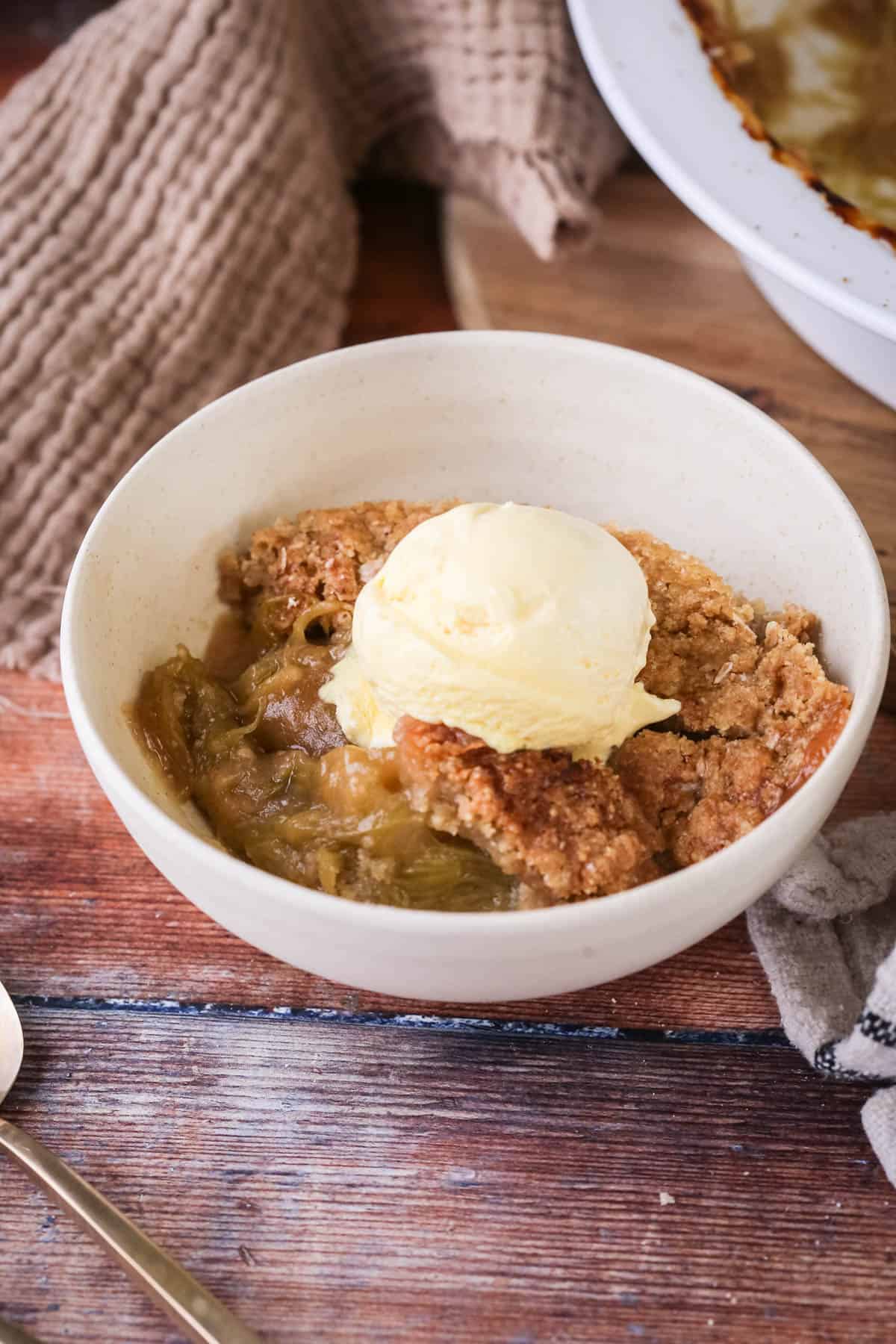
It's easy to make a Gluten-Free Rhubarb Crumble which is just as crisp as regular crumble. However, it’s not as easy as just swapping out the flour for a gluten-free flour which often creates a soggy sandy topping.
Gluten-free crumble often fails because supermarket gluten-free flour blends include starches which absorb more liquid that you want for your crumble which is why they often sink into the fruit base. Another issue can often be the inclusion of rice flour will often make the crumble sandy or gritty.
To make the best gluten-free crumble topping it’s best to stick to a softer wholegrain flour (buckwheat, sorghum or oat flour) blended with a protein packed topping (almond flour/ground almonds) which will give the crumble a robust structure.
This classic dessert is quick and easy to pull together and it blankets a perfectly sweetened rhubarb base spiked with a little spicy ginger.
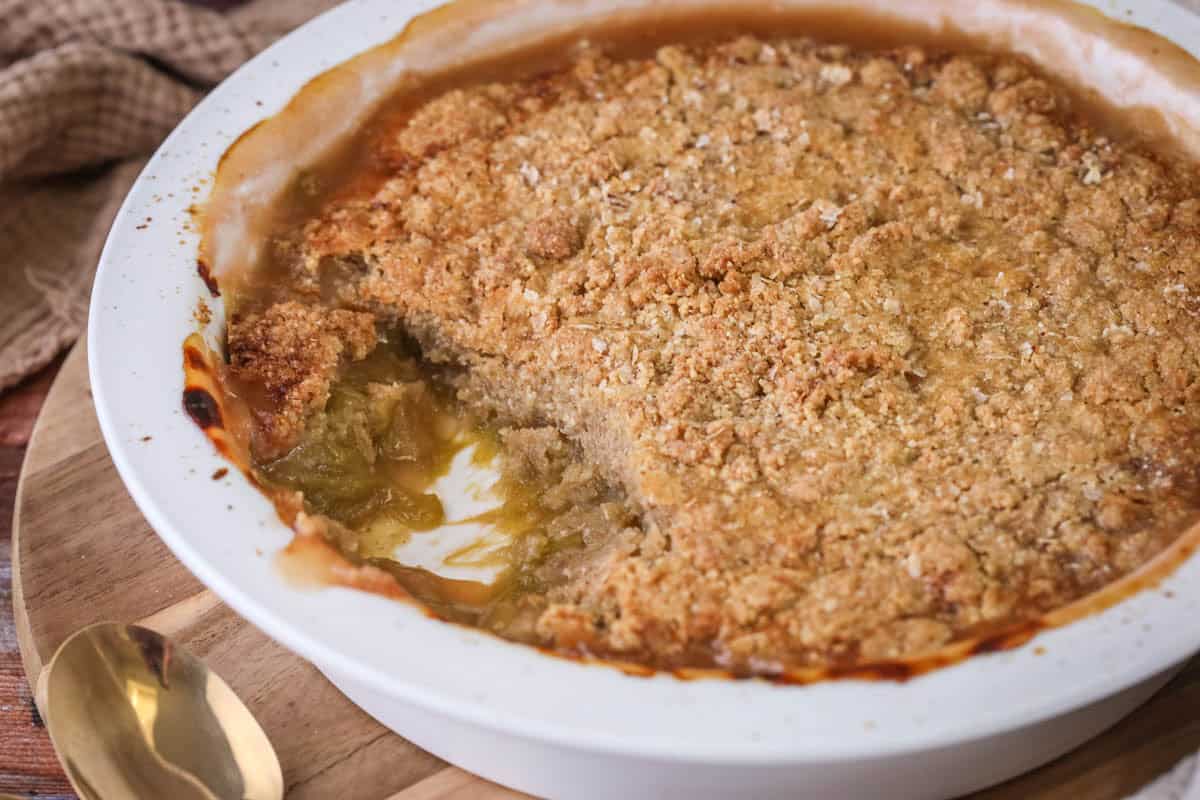
Why You’ll Love This Gluten-Free Rhubarb Crumble
- Correct balance of gluten-free flours so the topping is crisp and golden and not soggy or sandy.
- The rhubarb is cooked first for a jammier filling.
- A touch of warm and spicy ginger adds a lovely layer of flavour.
- No oats. A lot of my crumble recipes feature oats or oat flour. Not here.
- Quick and easy gluten-free dessert to make.
Watch the Video
Sometimes it helps to see a visual of what I'm talking about. So watch the video to see what it looks like to make your Gluten-Free Rhubarb Crumble.
Ingredients Needed
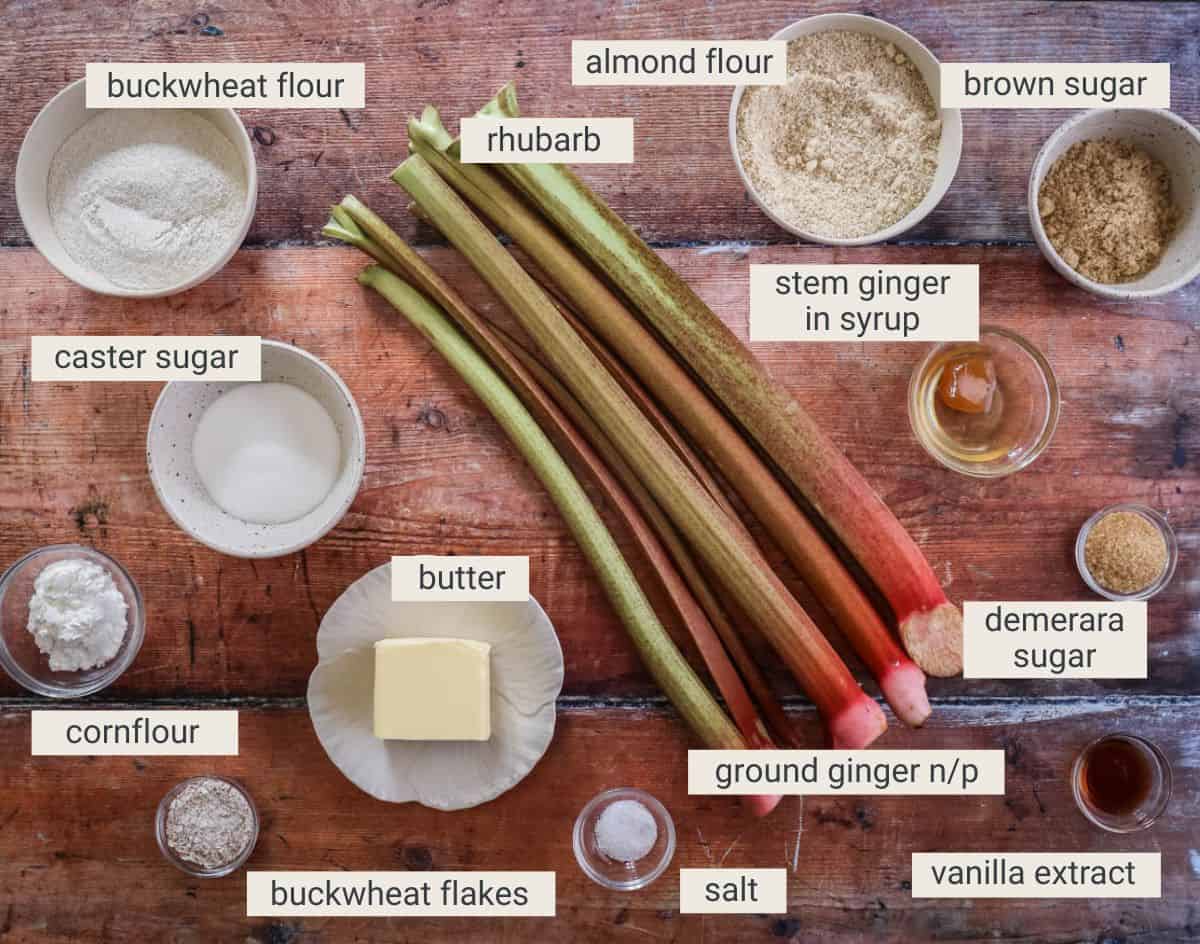
Rhubarb. There are two types of seasonal rhubarb you can buy in the UK:
- Forced rhubarb which is in season between January-March which is grown in the darkness and is tender and a little sweeter.
- Outdoor (maincrop) rhubarb which is in season between April-July and is grown outdoors and can have thicker stems and often needs more sugar.
You can use either kind of rhubarb for this recipe. It was tested with both types and for my tastes the sweetness level works for both. You could reduce the brown sugar by 20% in the forced rhubarb filling if you would like.
Stem ginger in syrup. We’re talking about the jars of stem ginger in syrup which are easy to get hold in the UK in larger supermarkets in the baking aisle. If you can’t get hold of it you can make your own stem ginger at home.
Almond flour. You are looking for blanched ground almonds. There is a bit of labelling confusion over almond flour which is sold as ‘ground almonds’ in most major UK supermarkets and found in the baking aisle. If you want to know what exactly you are looking for then check out this post >>> Is Almond Flour The Same As Ground Almonds.
Buckwheat flour. We choose this gluten-free flour for its hearty texture whilst its distinct nutty and earthy flavour is a great backdrop to the crumble and the rhubarb. It doesn’t have the same binding power of gluten though so we need to blend it with the almond flour to ensure a balanced mix.
Cornflour (cornstarch). We’re using cornflour not in the crumble but in the rhubarb crumble to thicken. You can swap with tapioca flour.
Brown sugar. Gives lovely gentle molasses flavour and moisture.
Caster sugar. It’s a fine white baking sugar available in the UK. Regular white granulated sugar can be substituted.
Unsalted butter. We need unsalted so we can control the salt content of the recipe. Make sure it is at room temperature.
Vanilla extract. You don’t need to use the best quality vanilla extract here as there's already a lot going on with the flavours and it won't make a difference. A supermarket brand is just fine.
Ground ginger. We’re just using a small amount in the crumble topping. If you want to amp up the ginger then you can use 1 teaspoon rather than the ½ teaspoon amount given.
Buckwheat flakes and demerara sugar. This is an optional topping for your crumble, but I do feel it makes a difference to the texture when sprinkled over at the end, just to add a little crunch. You don’t have to buy these ingredients specifically if you don’t have them in, unless you plan on making a lot of crumbles and will make use of them.
Salt. I like to use kosher salt in my baking as it has a round gentle flavour. Using salt in your baked goods lifts and sharpens all the other flavours.
How To Make Gluten-Free Rhubarb Crumble with Stem Ginger
For full recipe instructions go to the recipe card at the end of this post.
Slice the rhubarb into 3-5 cm (1-2 inches) slices. Place in a large saucepan and toss with the stem ginger, syrup, brown sugar and vanilla. Heat for about 10 minutes until the rhubarb starts to break down.
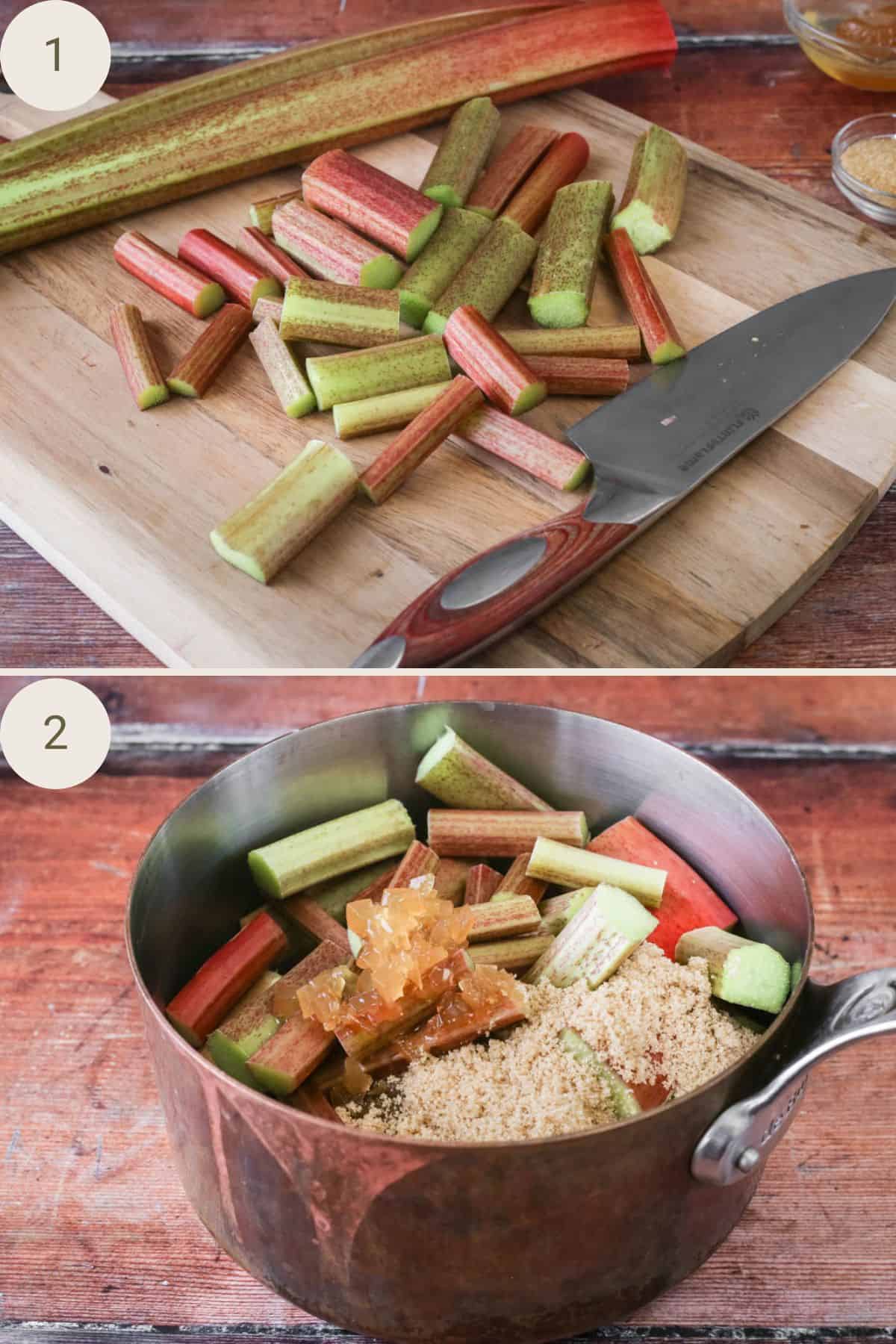
Remove from the heat, stir in the cornflour and set aside.
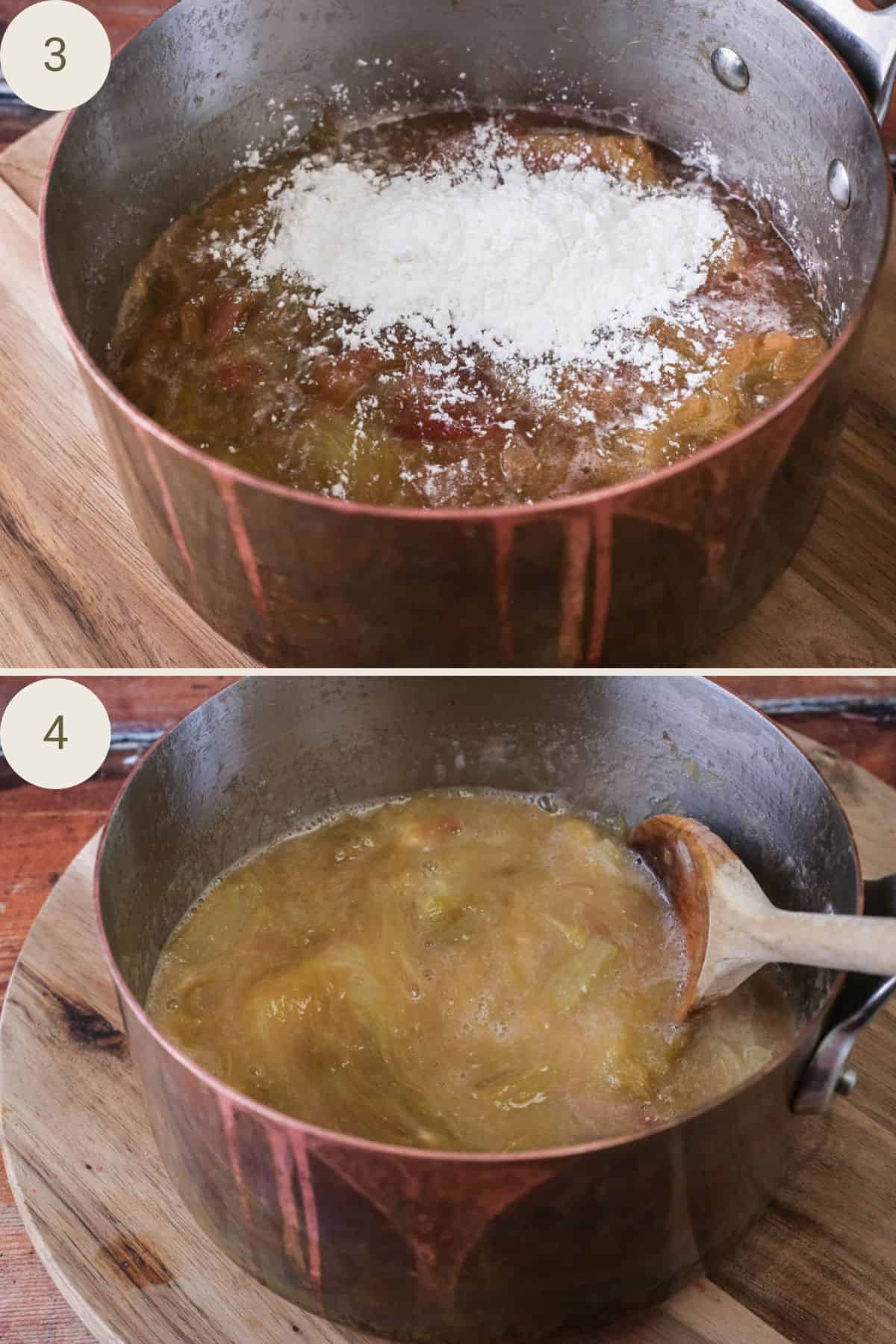
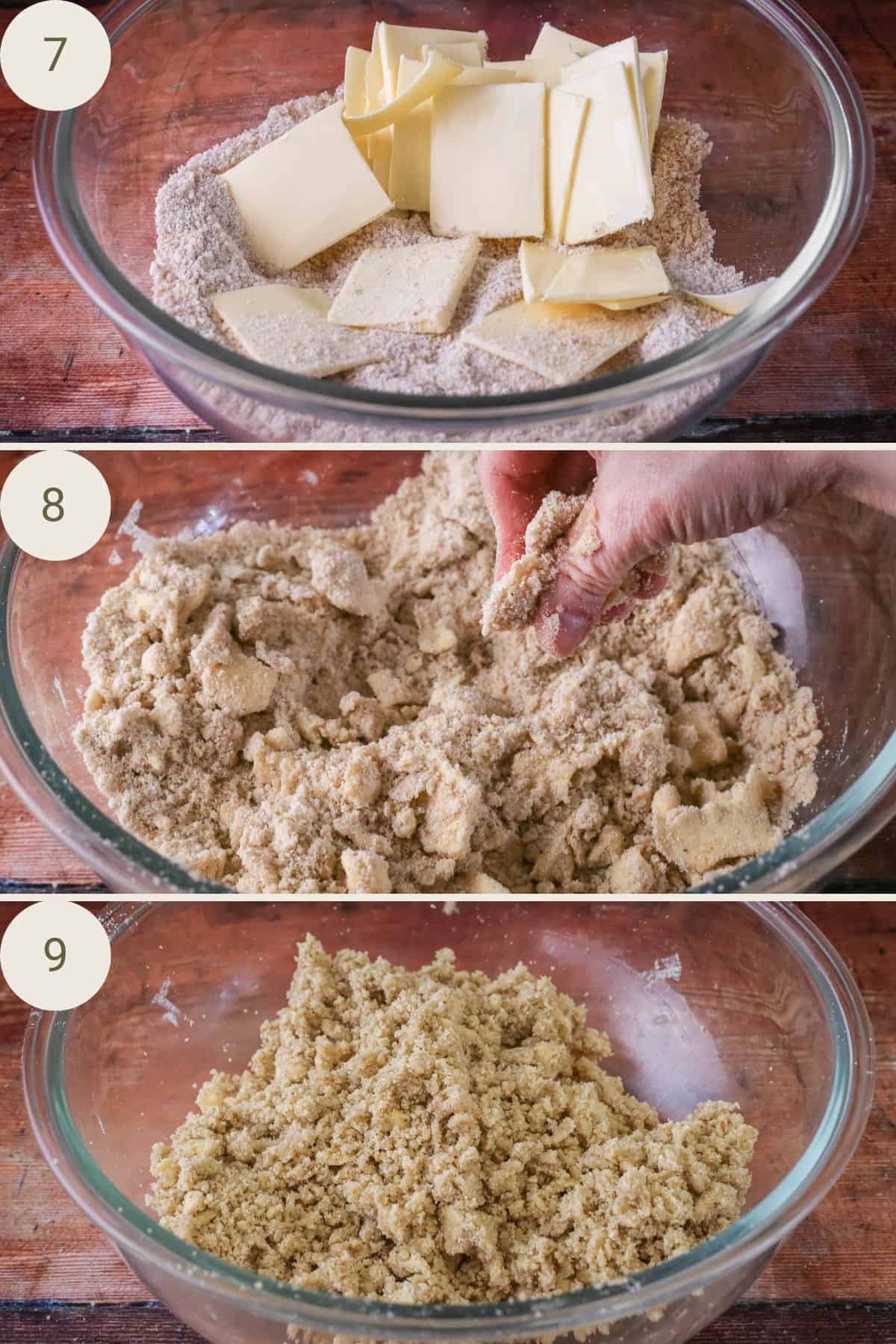
For the crumble topping whisk together the buckwheat flour, almond flour, brown sugar, ground ginger and salt until well combined.
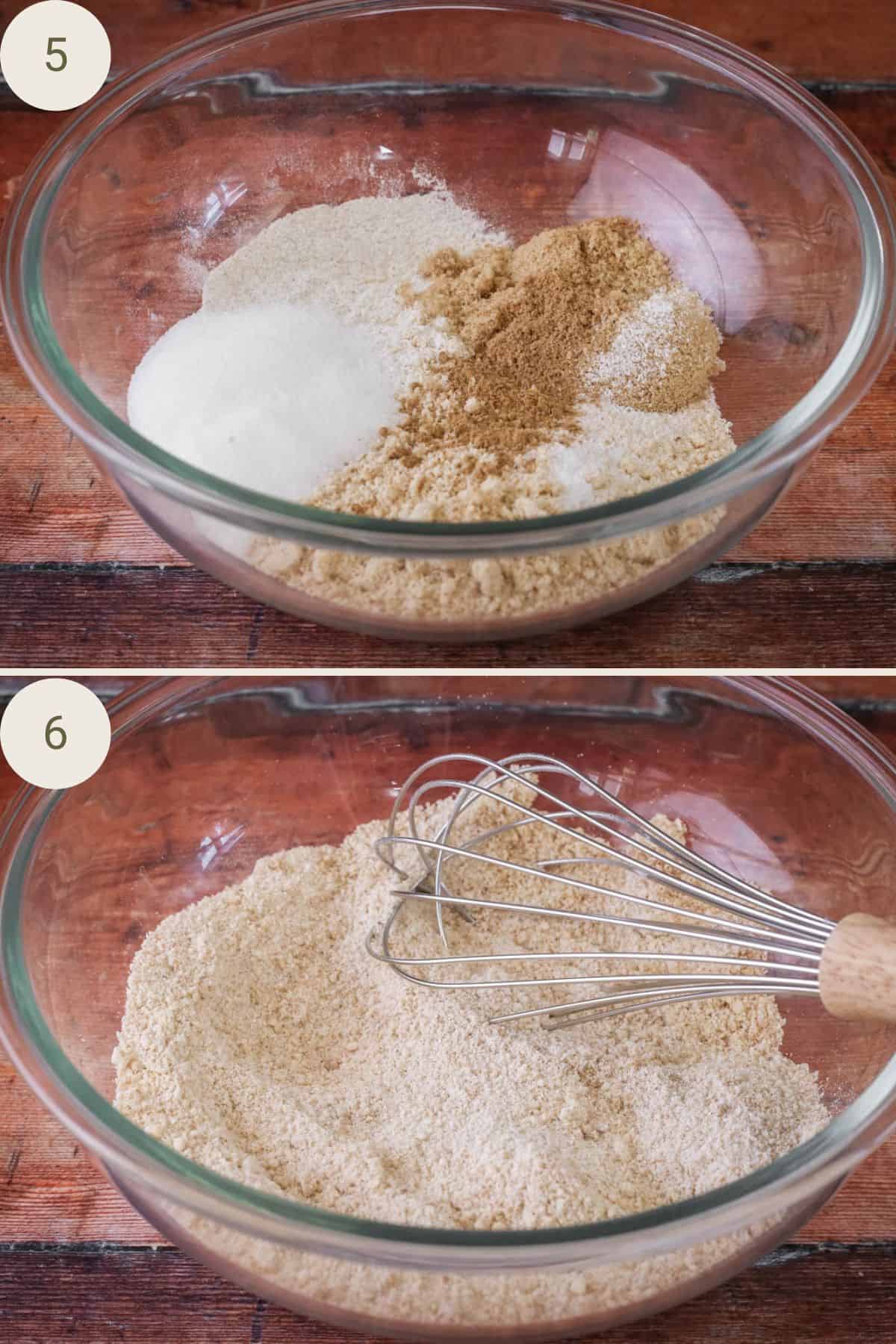
Add the cold butter and rub into the flour with your fingertips until it resembles coarse crumbs.
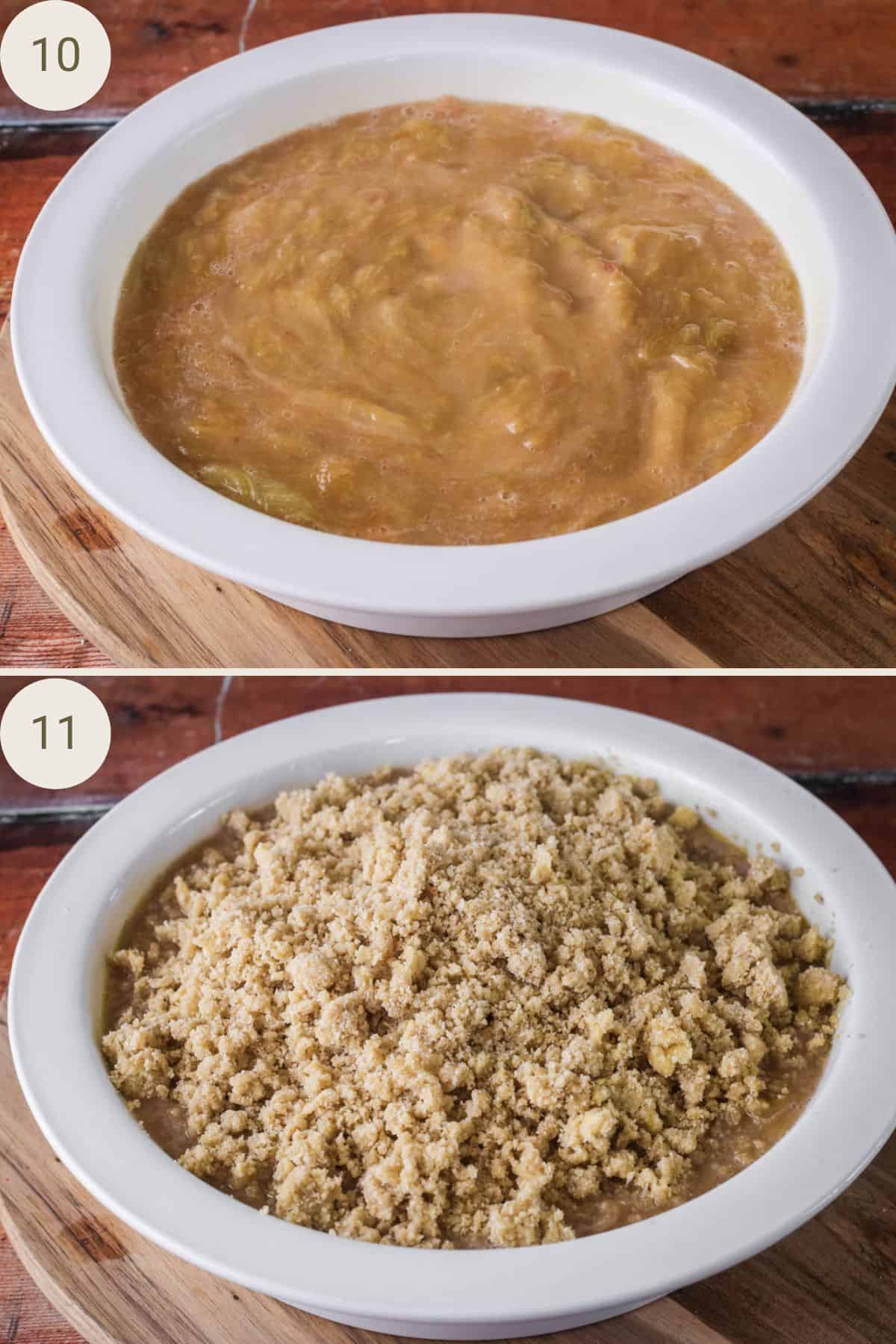
Transfer the rhubarb to a greased baking dish and spread it out evenly. Sprinkle the crumble topping evenly over the top.
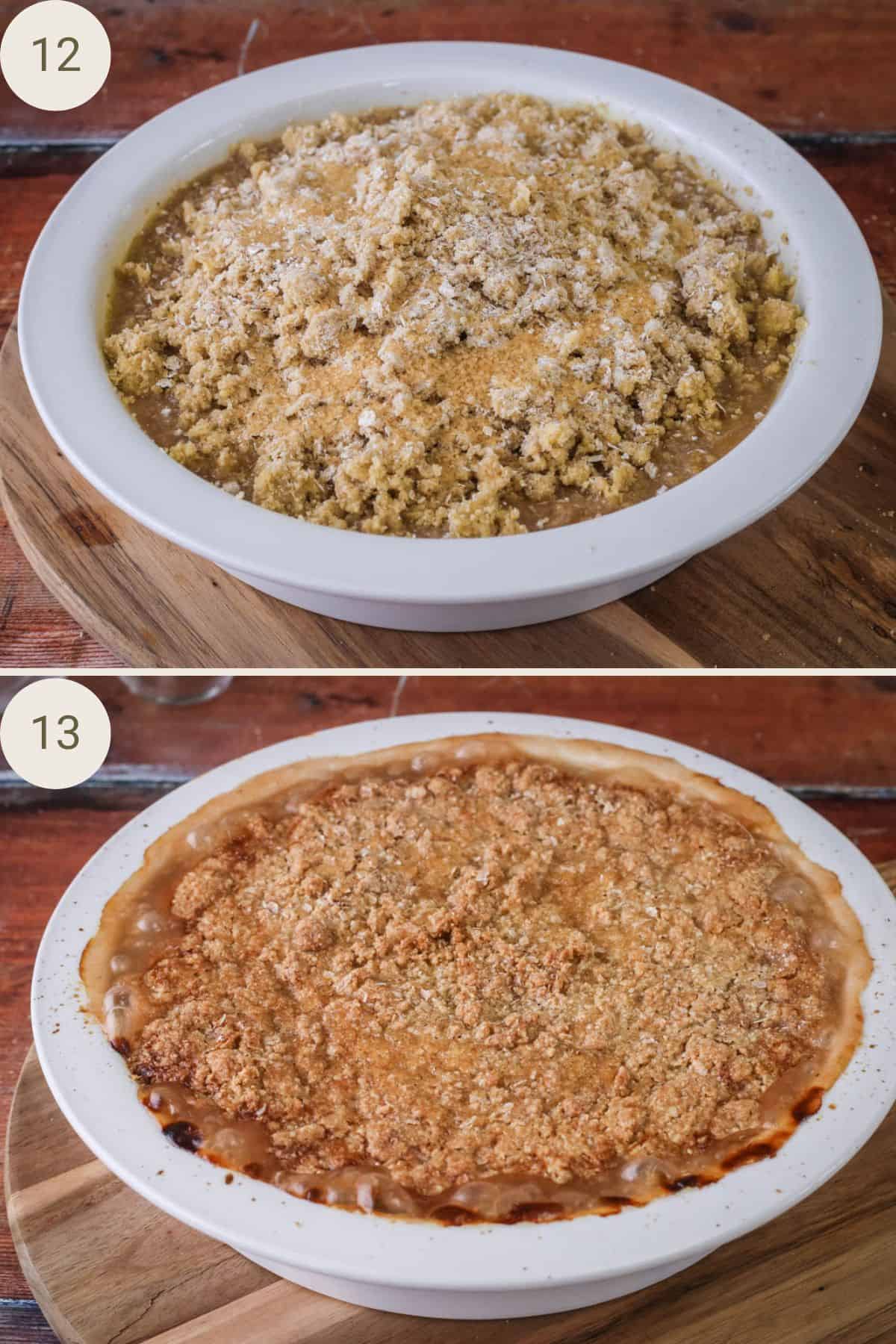
Top with a scattering of buckwheat flakes and demerara sugar for extra crunch. Bake for 40 minutes.
Tips & Troubleshooting
I like a soft rhubarb filling but if you want more body and to avoid the rhubarb collapsing fully then just soften it for 5 minutes in the saucepan rather than the full 10. If you are using forced rhubarb which is typically thinner then you also may only need the 5 minutes.
If you like things to be a bit spicier then you can add up to 2 balls of stem ginger.
You could also add some roughly chopped almonds for a more crunchy texture in your crumble topping.
You can use a food processor to make the crumble topping more easily but I do find then the crumble is in more of a uniform texture which isn’t as appealing once baked.
For extra crunch you can chill your crumble topping in the fridge for at least half an hour. This means the butter is nice and cold and won’t spread as much in the baking.
Pile the crumble topping up so it’s at a higher peak in the middle, if you distribute the topping right to the edges in an even layer then the crumble can sink too far into the rhubarb filling which will make it soggy.
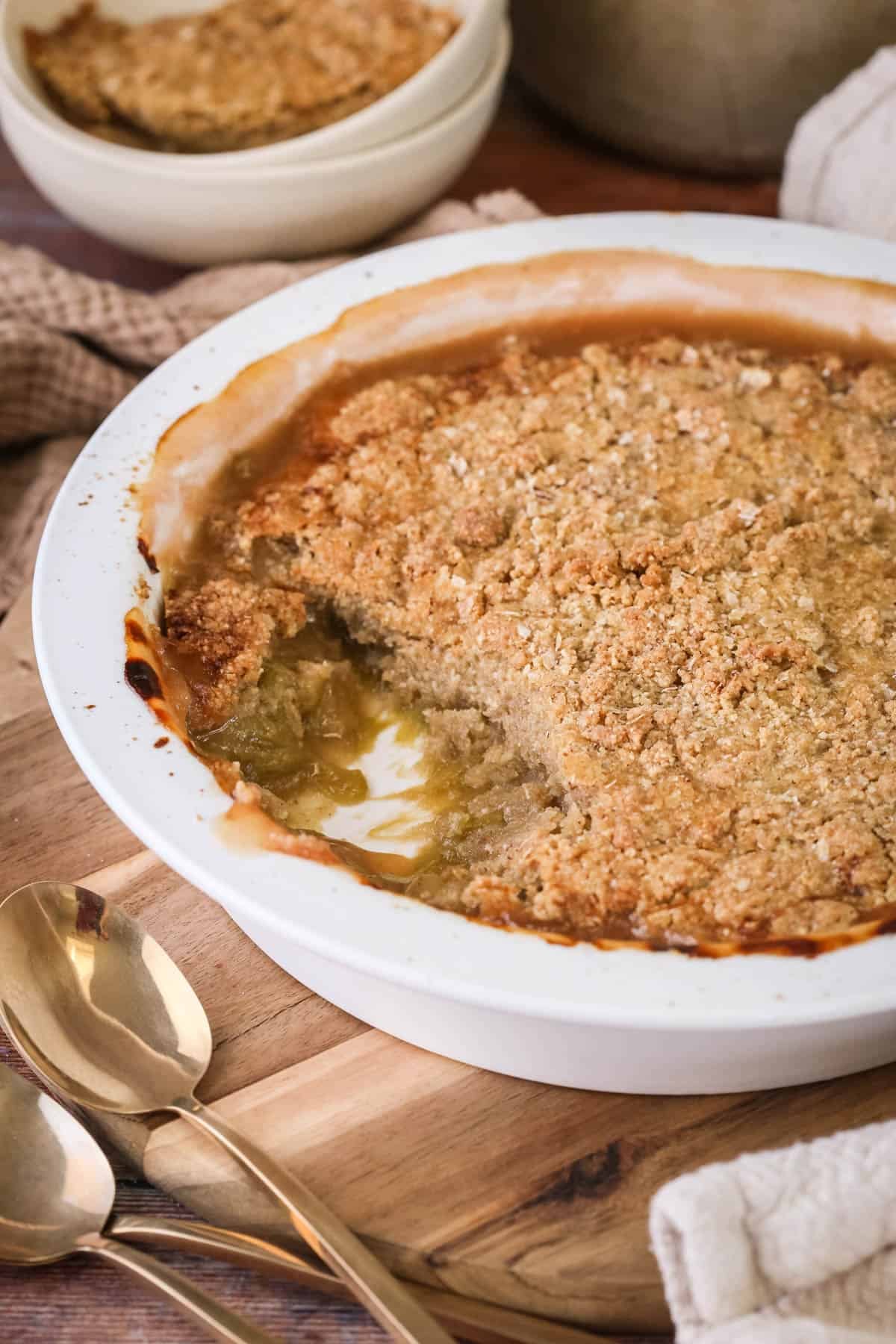
Allow the crumble to rest for at least 10 minutes before serving so it has time to settle and won't scorch mouths.
Make Ahead
If I am going to make this dessert ahead of time I will usually prepare the rhubarb filling and the crumble topping and then store separately (chilled for up to 3 days). Then you can assemble the crumble and bake on the day of serving.
Storing
Store any leftovers in the refrigerator in an airtight container for up to 3 days.
Re-heating
You can re-heat any leftovers in the microwave in individual servings. It only takes about 45 seconds to heat up, make sure it’s uncovered to reduce steam making the topping go too soft.
Freezing
If you want to freeze the components of this recipe before baking then store the crumble and the filling separately in airtight containers. Thaw each overnight in the fridge and then assemble and bake as per the recipe. They can store for up to 2 months in the freezer.
FAQs
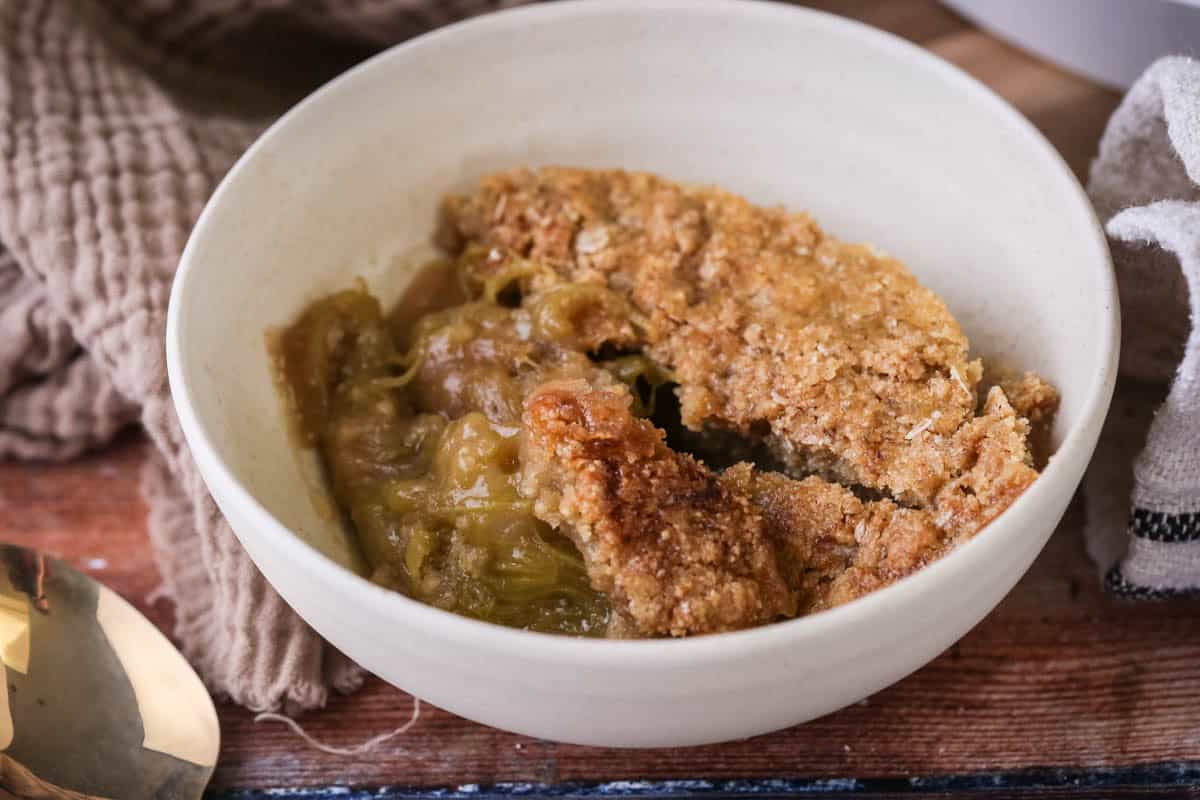
Frozen rhubarb is fine to use, thaw overnight in the fridge before preparing. It might produce a little more liquid than fresh rhubarb so you may need to add a touch more cornflour to the filling.
You need a flour blend which doesn’t have any starch in it as you don’t want the topping to be absorbing too much of the fruity base. This leads to soggy crumble. If you are unsure what gluten-free flours are starches then download my free gluten-free flour cheatsheet. The most successful crumble flour blend is to make your own with buckwheat flour (or oat flour or sorghum) teamed with almond flour (ground almonds).
Almond flour (ground almonds) really helps the crumble with its crisp topping. Using regular gluten-free flour will have too much starch and can take on too much of the fruit liquid which means it won’t crisp up as much.
Recipe Variations
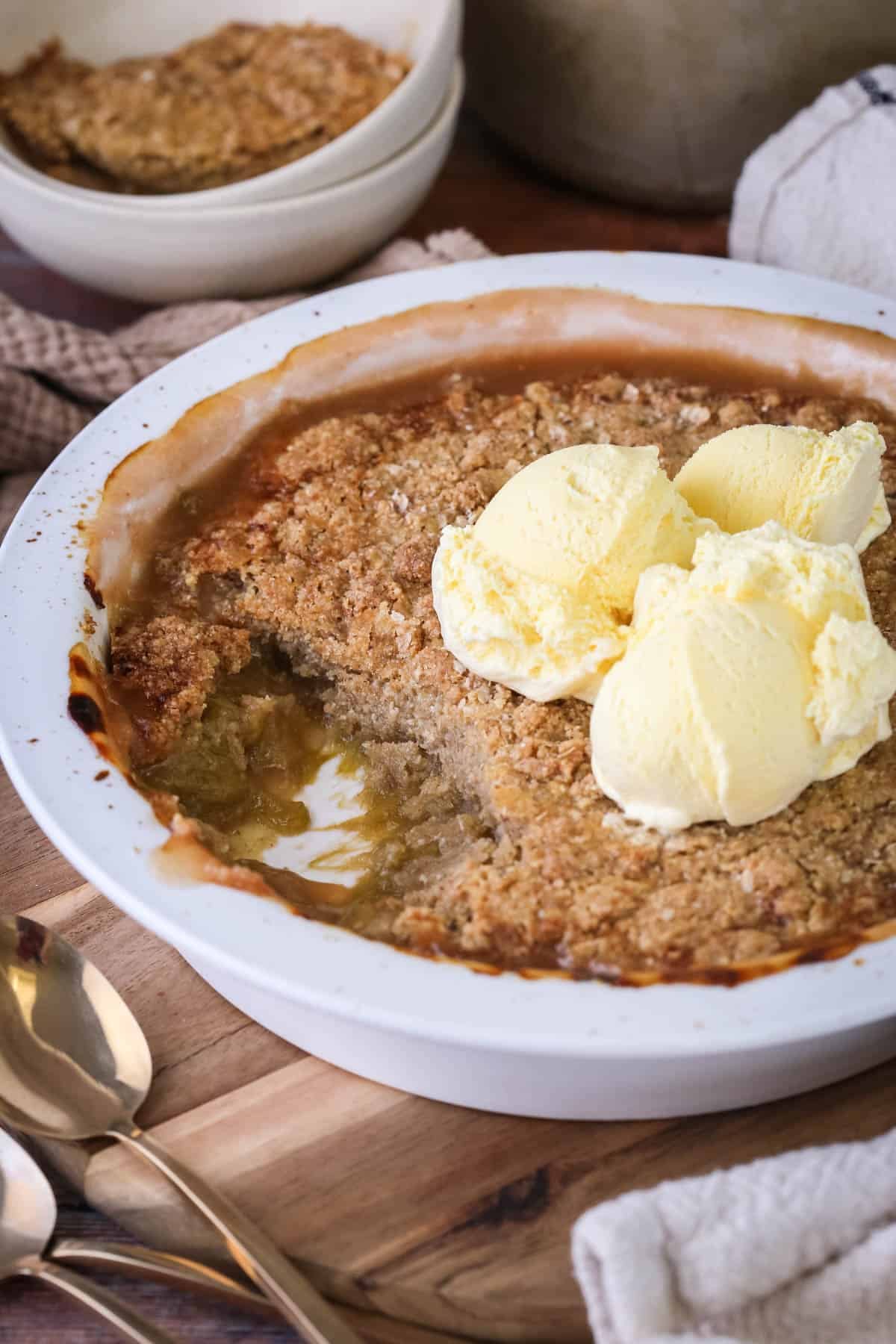
Orange. You can omit the ginger and instead use orange zest for a lovely citrus kick.
Vanilla. Or swap out the ginger and add in a little more vanilla – using a vanilla pods with the seeds included gives the filling a really cosy flavour.
Rhubarb and strawberry crumble. Swap out some rhubarb and tumble in some seasonal strawberries for a change of flavour. You don’t need to cook down the strawberries but I do think they will benefit from macerating in a little of the brown sugar to retain their shape.
Serving Suggestions
Custard. This Rhubarb Crumble is delicious with Homemade Vanilla Custard. If you want to push the boat out then Homemade Strawberry Custard is a perfect flavour fit.
Single or double pouring cream is always an easy accompaniment.
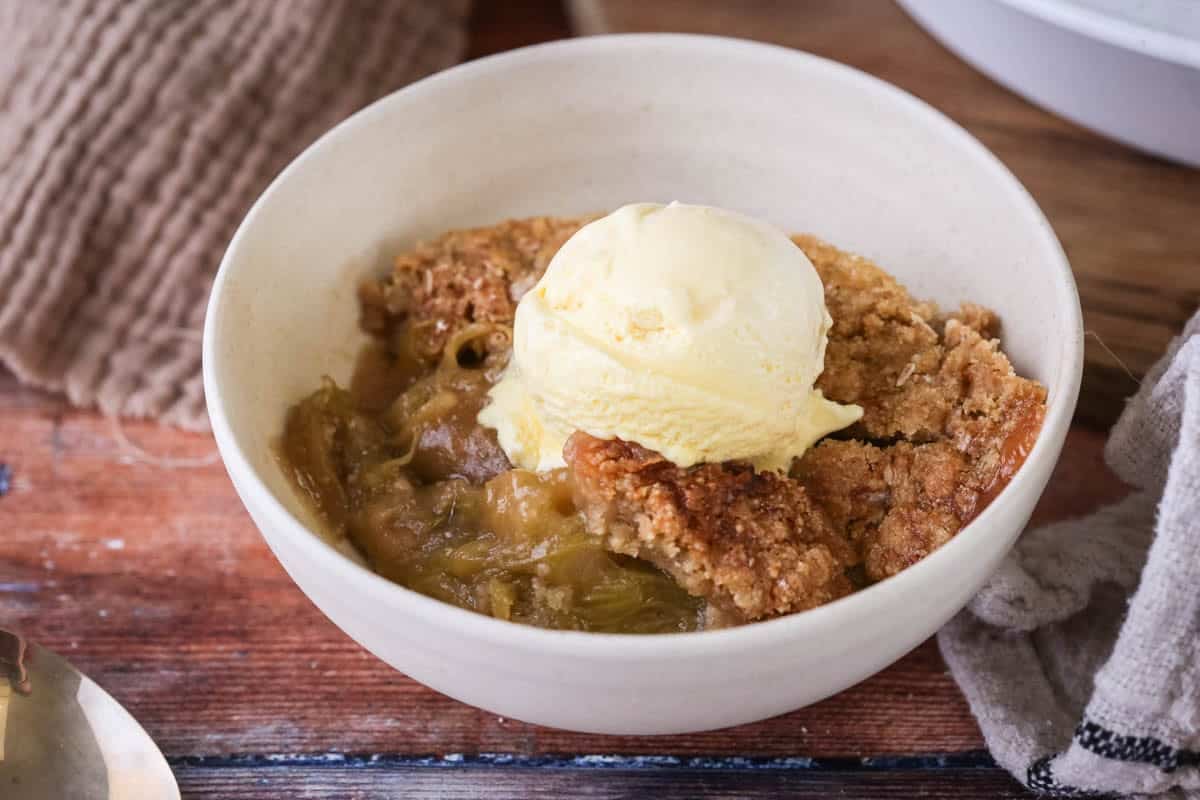
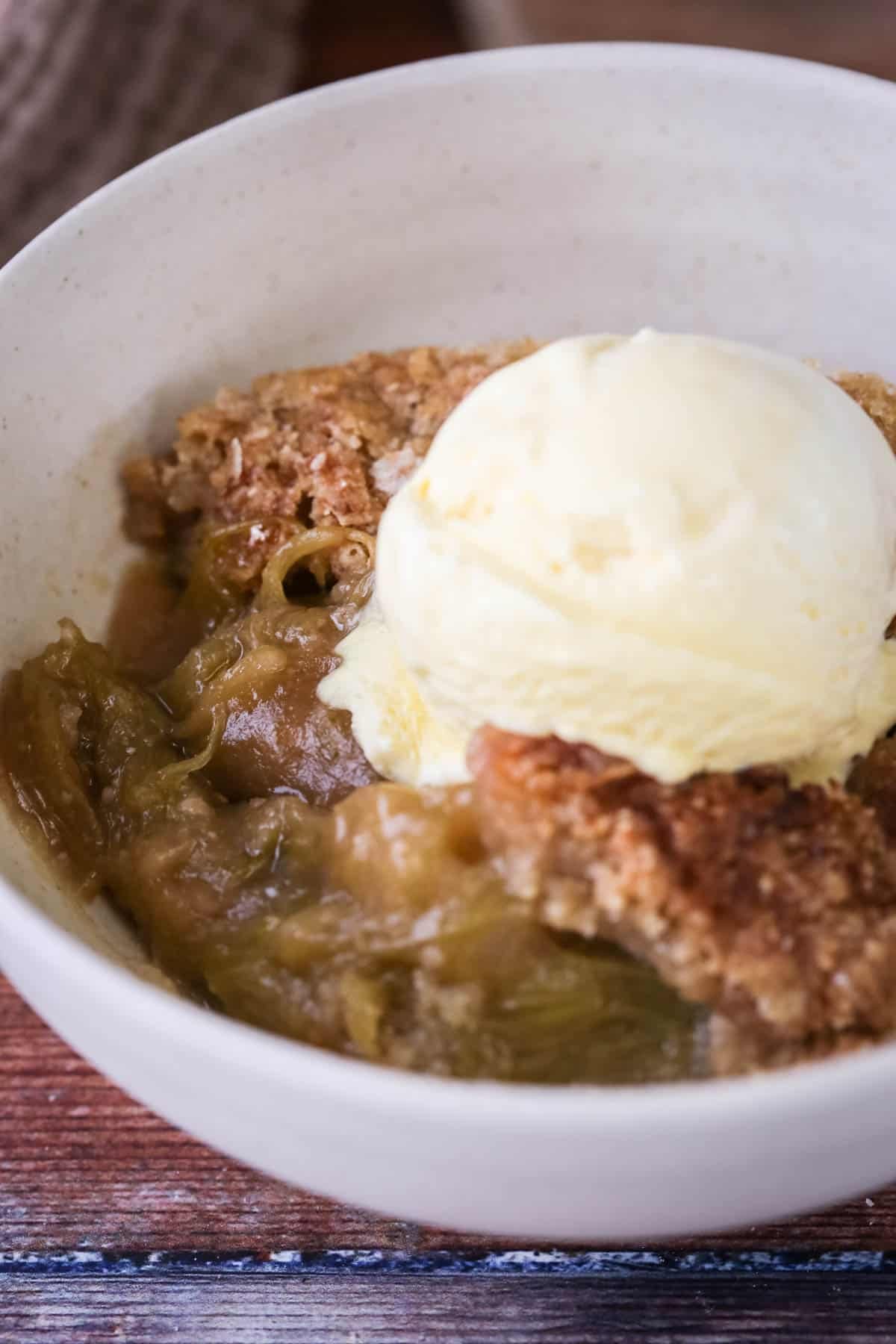
Vanilla Ice Cream. It’s a classic.
More Gluten-Free Crumble Recipes You’ll Love
Gluten-Free Apple Crumble is a classic dessert which is always a total crowd pleaser. This easy recipe combines a juicy and tender apple filling with a crisp topping that has a slight chew.
This Blueberry Coconut Crumble is a coconut extravaganza. This is an easy vegan crumble with fruity blueberries baked into a creamy coconut custard, blanketed with an irresistible oaty coconut crumble topping.
This Strawberry Gooseberry Crumble is a marriage of the best of this year’s sweet and tangy berries under a generous, crisp and slightly chewy crumble topping.
Enter your email below to get this recipe sent to your inbox plus get new recipes, baking tips, and updates.
Gluten-Free Rhubarb Crumble with Stem Ginger
Ingredients
- 800 g rhubarb - about 6 sticks
- 1 ball of stem ginger - diced (about 20g)
- 2 tablespoons ginger syrup - from the jar of stem ginger
- 60 g soft light brown sugar
- 1 teaspoon vanilla extract
- 2 tablespoons cornflour - cornstarch
Crumble Topping
- 100 g almond flour - labelled 'ground almonds' in UK
- 120 g buckwheat flour
- 60 g caster sugar
- 55 g soft light brown sugar
- ½ teaspoon ground ginger
- ½ teaspoon salt
- 150 g unsalted butter - cold and sliced
For the Crumble Topping (optional)
- 1 tablespoon buckwheat flakes
- 1 tablespoon demerara sugar
Instructions
- Pre-heat the oven to 190°C / 170°C fan oven / gas mark 5 / 375°F.
- Grease a 23cm (9 inch) round baking dish with butter.
- Wash and trim the rhubarb at both ends, cut into 3-5 cm (1-2 inches) slices.
- Place in a large saucepan and toss with the stem ginger, syrup, brown sugar and vanilla. Heat on a medium setting with the lid on for 10 minutes until the rhubarb starts to break down.
- Remove the rhubarb from the heat, stir in the cornflour and set aside.
- Transfer the rhubarb into the greased baking dish and spread it out evenly.
- Prepare the crumble topping in a large mixing bowl. Whisk together the buckwheat flour, almond flour, brown sugar, ground ginger and salt until well combined.
- Add the sliced cold butter. Using your fingertips to work the butter into the flour mixture until it resembles coarse crumbs. Some larger and smaller clumps are ideal for texture.
- Sprinkle the crumble topping evenly over the rhubarb filling in the baking dish.
- Top with a scattering of buckwheat flakes and demerara sugar for extra crunch.
- Place the baking dish in the pre-heated oven and bake for 40 minutes or until the topping is golden brown and the rhubarb bubbling underneath.
- Once baked, remove the rhubarb crumble from the oven and allow it to cool for ten minutes. Serve warm with ice cream or vanilla custard.
Video
Notes
- I like a soft rhubarb filling but if you want more body and to avoid the rhubarb collapsing fully then just soften it for 5 minutes in the saucepan rather than the full 10. If you are using forced rhubarb which is typically thinner then you also may only need the 5 minutes.
- If you like things to be a bit spicier then you can add up to 2 balls of stem ginger. If you can't find a jar of stem ginger in syrup in the supermarket then you can make your own stem ginger which is a task but is delicious and can be used for so many different recipes.
- I don’t recommend using another flour instead of the almond flour (ground almonds).
- You can substitute the buckwheat flour for oat flour or sorghum flour.