Cornflour vs Cornstarch vs Cornmeal
This post contains affiliate links. Please read my disclosures.
If you have ever been confused as to whether cornstarch and cornflour is the same thing and where exactly cornmeal or polenta fits in then you’ve come to the right place. We’re breaking down how you can use these corn-based ingredients and if you can substitute one for another in your baking and everyday cooking.
The grinding of corn can produce a wealth of different ingredients which are used for all types of recipes all around the world. It doesn’t help that other countries call these ingredients by different names so depending on whether we’re using US or UK recipes the terminology can be confusing.
So let’s get it straight, clearing up first and foremost the cornstarch vs cornflour debate and demystifying which cornmeal to use in our polenta cakes and cornbread.
You will finally understand what the differences are between all these corn-based ingredients and whether we can we swap one for another. Basically do we have a worthy substitute in our larder or is a trip to the shops is needed?
What I will say before we get started is that labelling on all these corn-based products is not universal and some brands can be fast and loose with their naming so it can be a bit confusing at first. I’ll introduce you to the different names and what the product should be. This will help you translate the back of the packets and cross reference what the ingredient looks like so you can understand what corn-based product it is you are buying and if it’s the right one for your recipe. As soon as you’ve read everything here it will make total sense.
Corn
Corn (often called maize) is a cereal grain and one of the most important crops grown throughout in the world. Field corn, (which is not the same variety of plant as the juicy sweetcorn we eat on the cob) is dried and ground through a variety of processes to produce cornflours and cornmeals which can be used in a multitude of recipes. Let’s start with cornflour.
Cornstarch vs Cornflour
If you’ve wondered whether cornflour is the same as cornstarch then let me reassure you that cornflour and cornstarch are the same ingredient. It’s called cornflour in the UK/Australia and cornstarch in the US.
What is Cornflour?
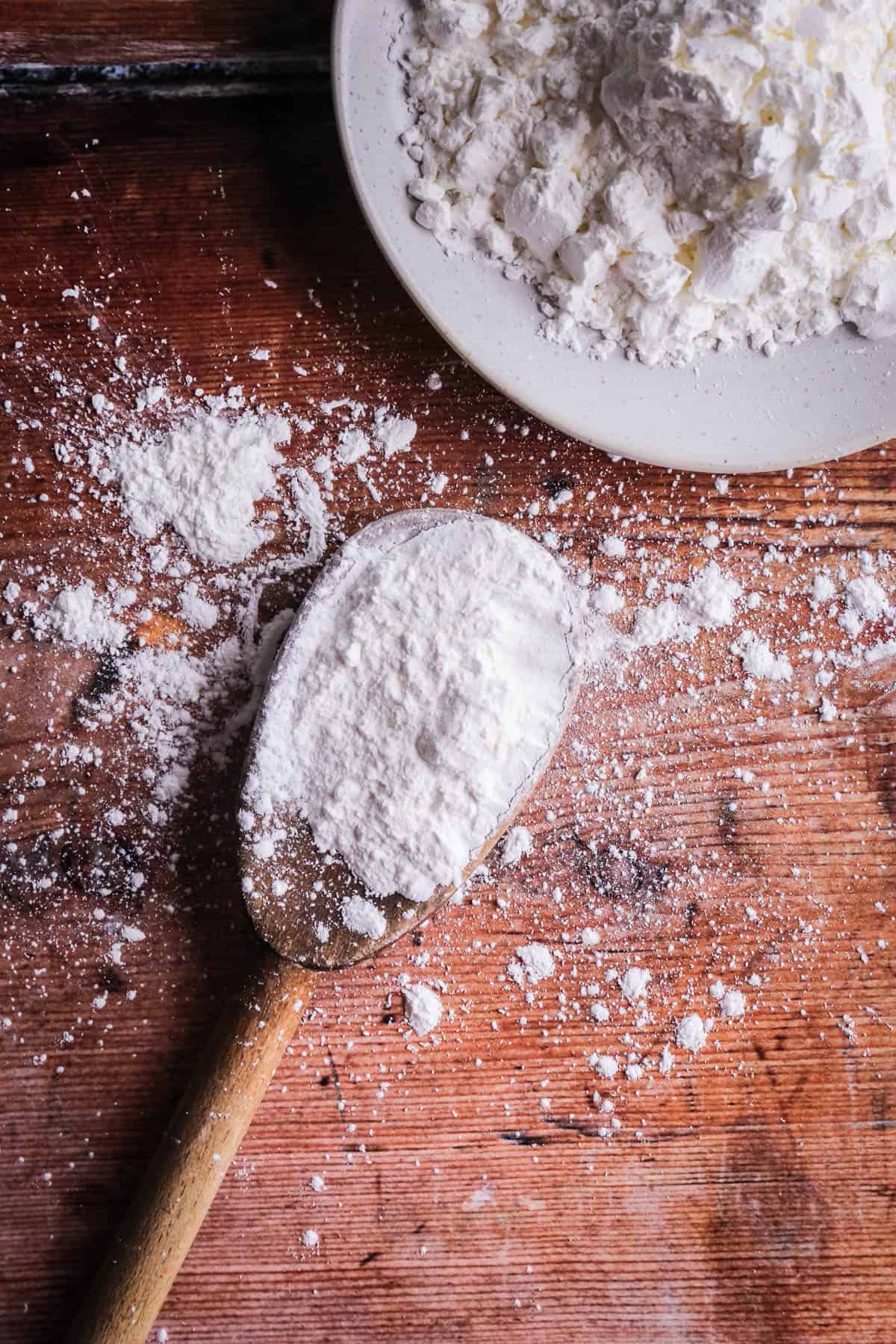
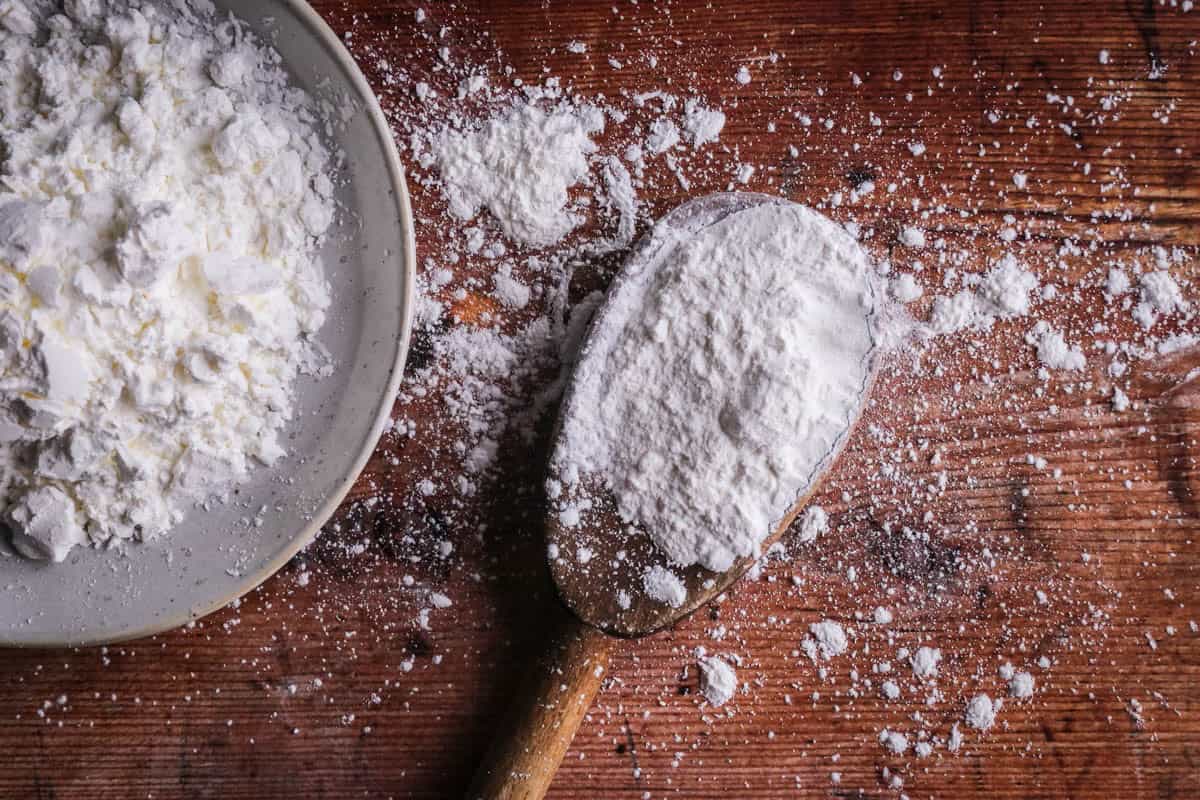
Cornflour looks like a white powdery flour and is actually the starch extracted from the centre of the corn kernel (hence in the US being called cornstarch). It is commonly used to thicken or stabilise sauces and can be used in baking whether to soften all-purpose flours or included in gluten-free flour blends.
Is Cornflour Gluten-Free?
Cornflour, cornstarch, cornmeal are all essentially ground from corn (maize) which is a cereal grain and naturally gluten-free. However, depending on the specific product or brand some cross contamination may occur in the processing so always check your labelling and stick to certified gluten-free cornflour if you are unsure.
How To Use Cornflour in Cooking and Baking
Thickening Sauces, Gravies and Custards
A small amount of cornflour can be whisked into a slurry and added to thin sauces, stews and soups to create a thick velvety sauce. Try adding it to cooked meat juices to create a light and easy gravy. It’s also a very useful technique to use at the end of Instant Pot recipes which often need to be cooked with a high proportion of liquid.
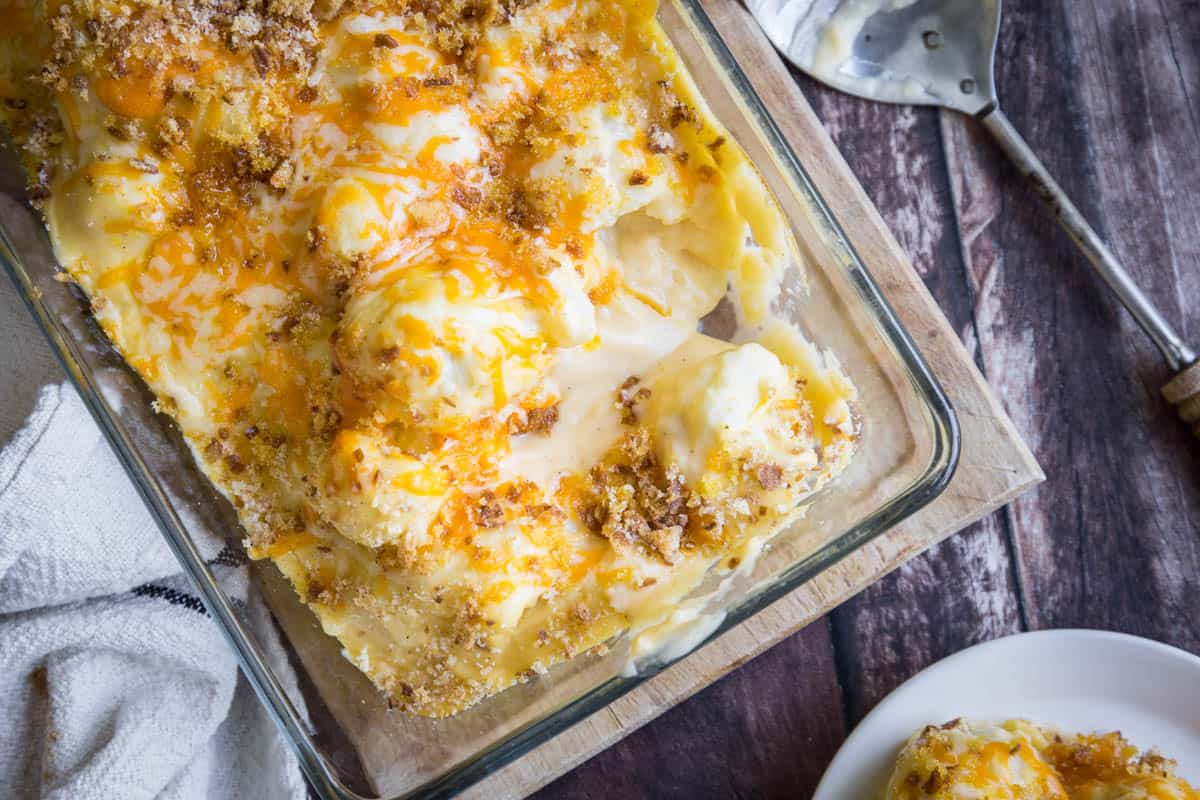
Cheese sauce using cornflour. This recipe for Cauliflower Cheese eschews making a roux for the simplicity of whisking cornflour into cold milk. As you warm it up in the saucepan the cornflour thickens the sauce then once it’s bubbling you can add the cheese.

A white sauce using cornflour is a quick and simple gluten-free answer to making a sauce base for a variety of different recipes like parsley sauce for fish or brandy sauce for Christmas pudding.
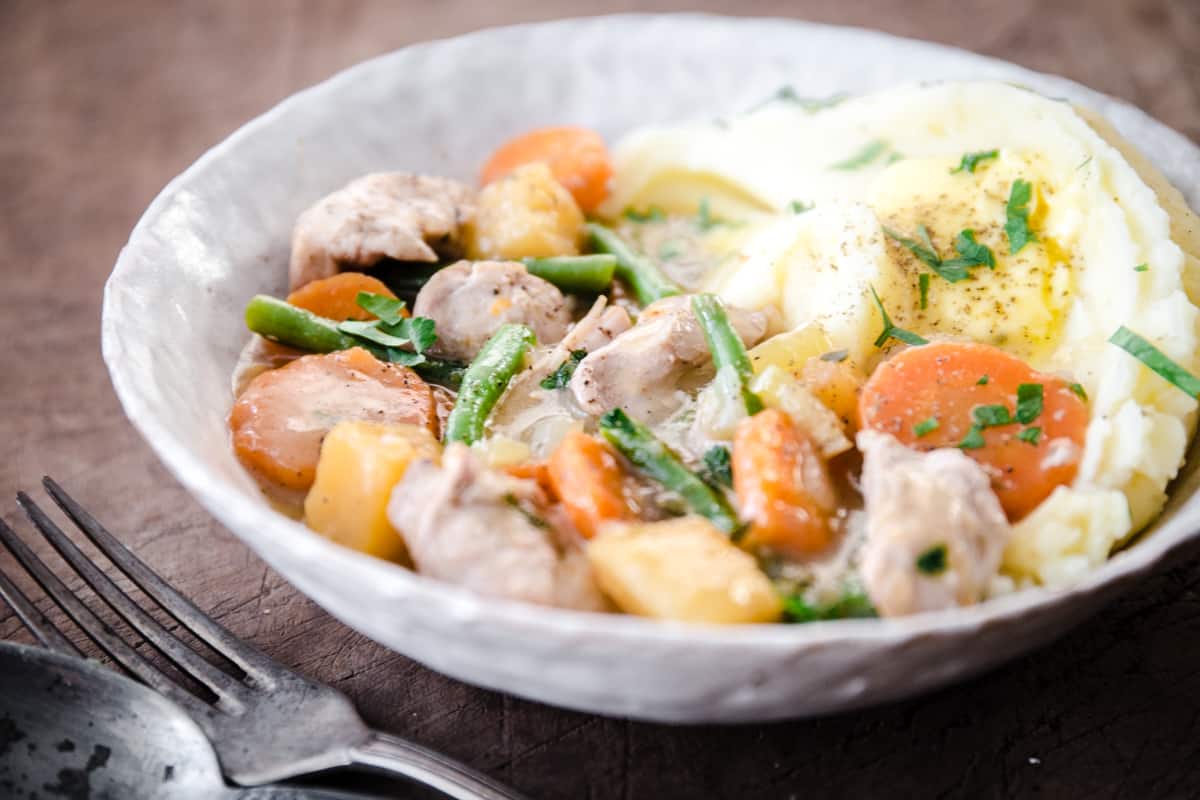
This Gluten-Free Chicken Casserole uses fresh chicken stock as a base for cooking the chicken and vegetables, then a cornflour slurry is whisked in at the end of cooking to thicken the gravy.
What Is a Cornflour Slurry?
This is the cornflour gloop that is created from mixing together cornflour with cold or room temperature water or milk or stock. This slurry is whisked into hot sauces, gravies or stews at the end of the cooking process to thicken the recipe.
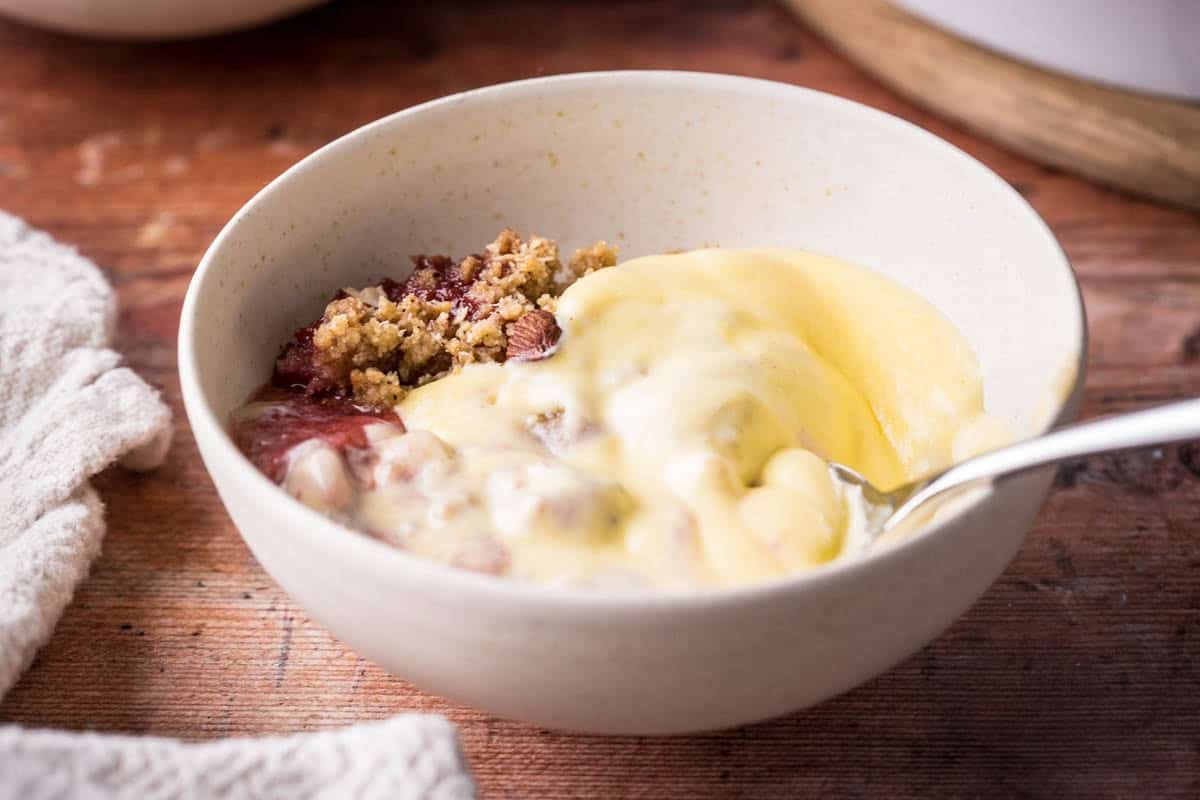
Custards. Cornflour is an excellent stabiliser. I use it in my custard recipes to thicken the custard alongside the eggs which helps create a smooth sauce and helps to avoid the eggs curdling. See Homemade Vanilla Custard, Chocolate Custard, Lemon Custard, Strawberry Custard.
Using Cornflour as a Coating
Cornflour is often used to coat dry meat when frying as it produces a light coating rather than using heavier breadcrumbs (or even all-purpose flour) as it crisps quickly.
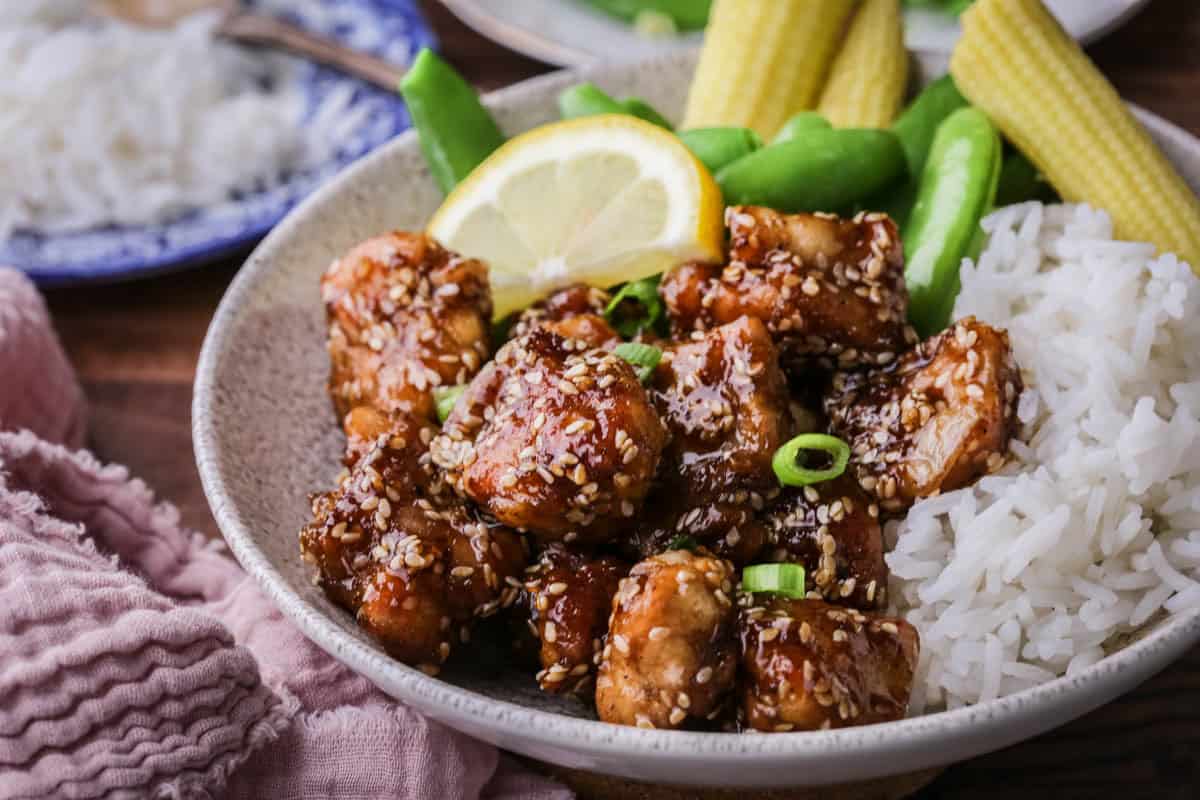
It’s a common technique used in stir fries, for example in my Lemon Honey Sesame Chicken or in my Stir Fry Seasoning Mix.
Using Cornflour in Cakes and Biscuits
Cake Flour. A small amount of cornflour is often used alongside regular all-purpose flour to produce a homemade version of ‘cake flour.’ The cornflour lowers the protein content to produce a softer more tender cake crumb.
Gluten-Free Flour Blends. Cornflour is regularly included in commercial gluten-free flour blends as it is an economical and widely available flour. It helps to bind the recipe together because of it starchy ‘gluey’ properties and promotes lift in the recipe due to its lightness.
Shortbread. Cornflour is often used alongside all-purpose flour in traditional shortbread recipes to create a soft and tender biscuit.
Common Mistakes When Using Cornflour
Mixing cornflour straight into the hot recipe. If cornflour is whisked into the recipe without making it into a slurry first or using hot liquid then there is a risk of the cornflour hydrating too quickly and clumping in the sauce.
Overheating cornflour. Cornflour can break down if overheated, which is why it’s added as a thickener at the end of recipes. If heated too long it can turn sauces thin or pasty.
Using too much cornflour. Cornflour should be used in moderation as it’s a very starchy flour so can create a gluey gummy texture if used in excess. This is true as both a thickener or in baked goods.
Not whisking / sifting cornflour well with other flours in baking recipes. To avoid uneven texture in your baked goods you should make sure you whisk, or even better, sift and then whisk, your cornflour with the other flours in your recipe.
Cornflour Alternative
Cornflour (cornstarch) is a starchy flour and can be substituted for other starchy flours depending on the recipe.
Thickening sauces. If you are thickening a sauce, stew or soup and need to use cornflour whisked into a slurry at the end of the recipe then you can swap for tapioca flour (tapioca starch) or arrowroot. You might need to use slightly less as the end result can be more gluey than cornflour. Try just ⅔ of the amount needed.
Coating. Instead of using cornflour as a coating for frying then you can substitute for rice flour (which will give a crunchy coating that’s slightly more grainy) or tapioca starch or potato starch.
Baking. If you are swapping out cornflour in a baking recipe then you can use tapioca flour (tapioca starch), cassava flour or potato starch. Each of these will produce the same soft texture.
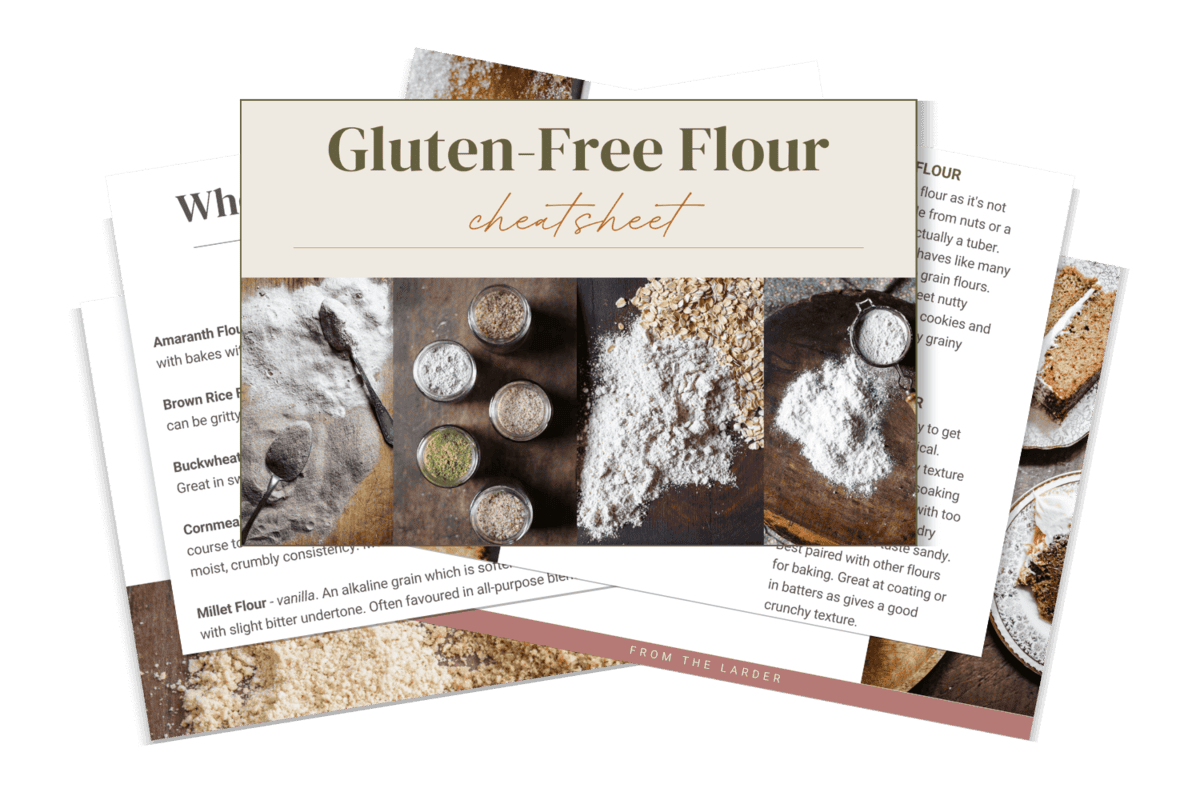
Gluten-Free Flour Cheatsheet
The Gluten-Free Flour Cheatsheet makes choosing the right flour easy, breaking down every option from sorghum to cassava into four simple categories. With nutritional info, flavour pairings, and a printable reference section, this guide cuts through the confusion so you can navigate gluten-free baking with clear flour choices.
Cornmeal and Polenta
What is Cornmeal?
Cornmeal is dried field corn which is different to the sweetcorn we can eat off the cob.
Most cornmeal products are milled from ‘dent’ corn. Named because of the indentation present in the kernel after the corn has been dried.
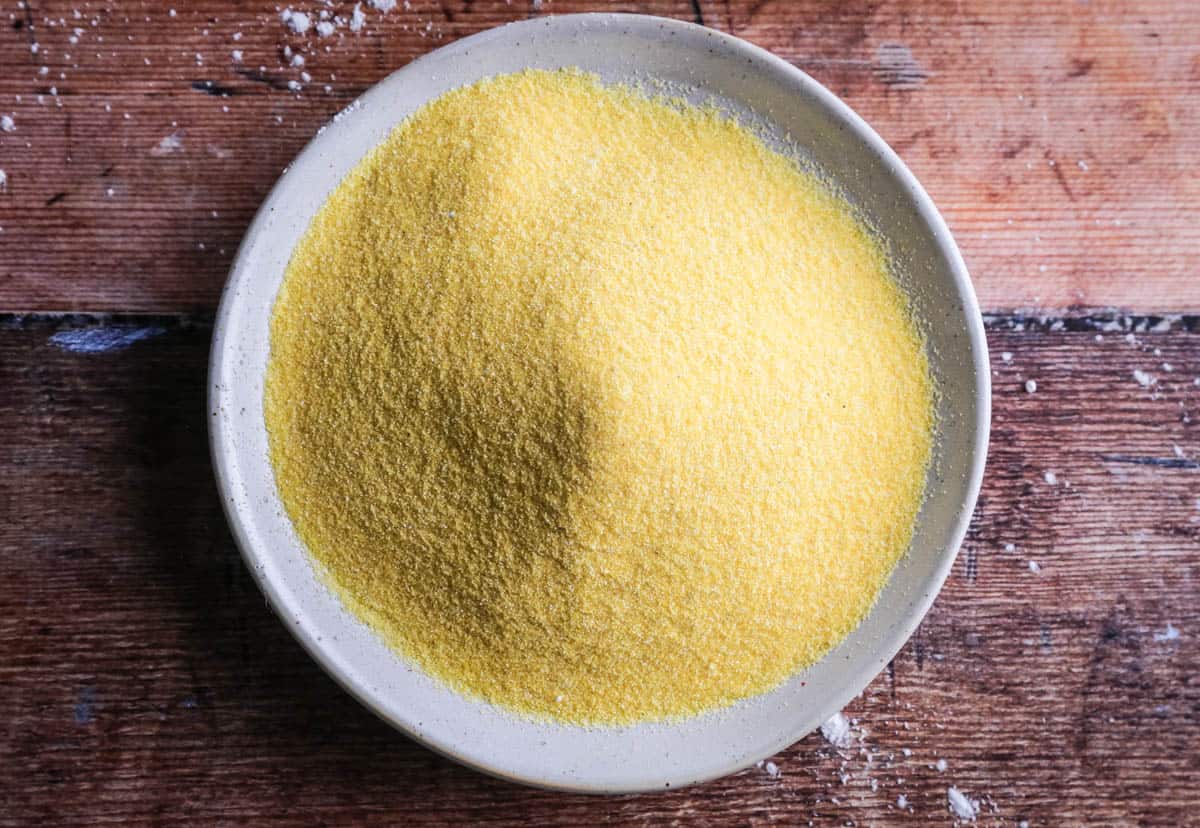
The corn is then dried and ground to produce cornmeal. You can get fine, medium or course ground cornmeal to suit all kinds of uses.
You can also get a variety of colours, yellow, white or even blue.
What is Polenta?
Polenta is a recipe from Northern Italy, not actually the name of an ingredient. The box labelled ‘polenta’ which you buy at the supermarket means that it is the right kind of cornmeal for making polenta. When a recipe includes ‘polenta’ in the ingredients list it basically means cornmeal. Which polenta you buy can also add to the confusion as there are different types which we’ll discuss below so you can make the right decision for your recipe.
Is Polenta Different from Cornmeal?
Polenta isn’t a different grain but a type of cornmeal which has been labelled specifically to be used to make polenta, a traditional Italian dish.
Cornmeal Grind Size: Fine vs Course
Cornmeal can come in a huge variety of grinds (course, medium or fine). Some brands will specify on the label whether the cornmeal is fine, medium or coarsely ground. Some brands will have windows so you can see the product inside the packet and you can judge for yourself. Get to know the different brands available to you so you can experiment in your recipes and decide which you prefer.
Course Cornmeal
This kind of cornmeal is best for traditional recipes and is the right choice for polenta or a rustic cornbread. For a rustic cornbread you might like the coarsely ground yellow cornmeal which produces a more granular result.
Even with course cornmeal you will find different brands have varying grinds, some may be courser than others.
Fine Cornmeal
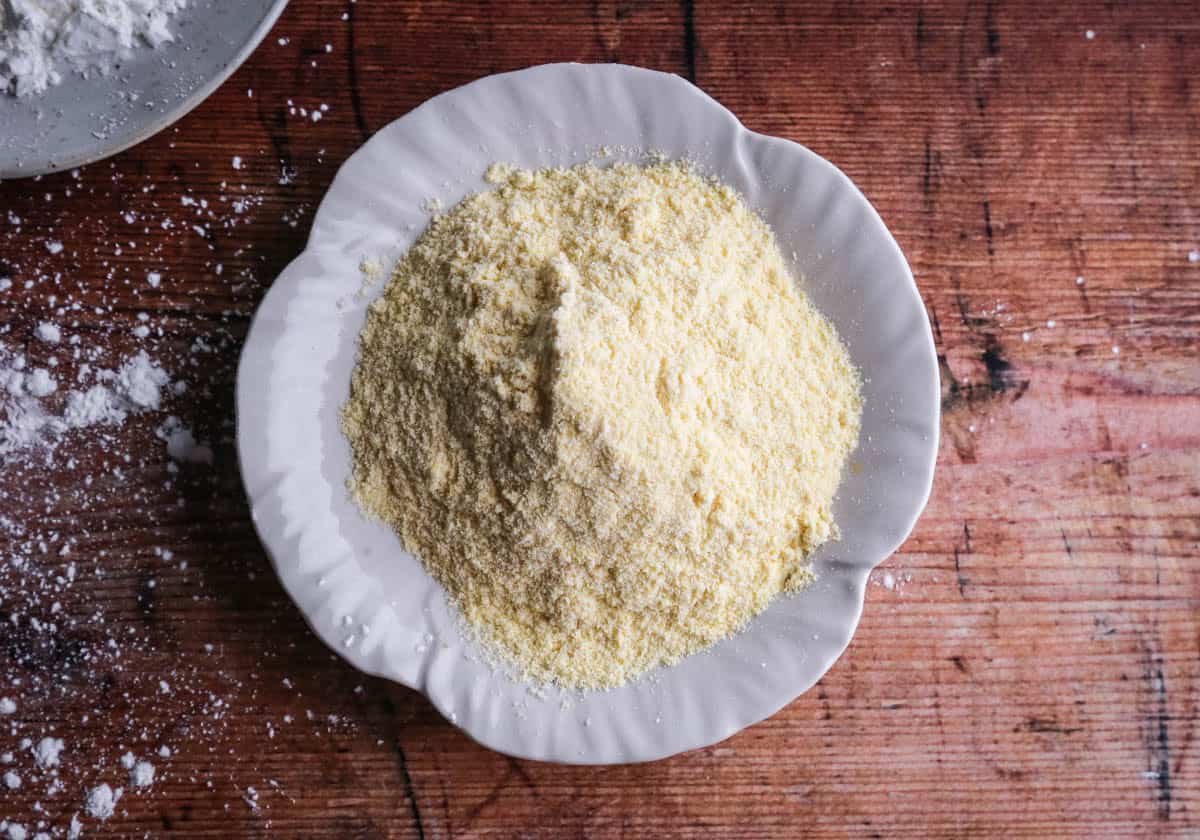
This will produce a softer result in your recipes and can be a preferred choice for baked goods if you want to avoid a grittier texture. If you are not used to the granular texture of cornmeal then you might like to choose a finer texture for your bake.
Choosing the Right Polenta for Your Recipe
Regular Polenta. Ultra-traditional polenta is made from flint corn which has a harder starch centre which gives it a distinctively course texture. Modern polentas may use a different maize variety but do check the back of your packet to ensure you are choosing the right polenta for your recipe. For a traditional polenta recipe it can take up to 30 minutes to cook it properly.
Pre-Cooked (Instant) Polenta. It is also common in UK supermarkets that the product just labelled as polenta on the front of the packet can actually be pre-cooked polenta. It will specify on the back of the packet if it is pre-cooked or ‘instant’ polenta. This is cornmeal which has been pre-cooked, dried and ground again to create a finer cornmeal which only takes about 3-5 minutes to cook.
Which Polenta Should You Use for Baking?
You can use either regular or instant polenta for baking, they will produce different textures:
Regular. This will provide a course texture to your baked goods as it does not soften as well as instant polenta.
Instant. This is the most common polenta available in most local British supermarkets which may only stock one variety and is the easiest to pick up. If you want truly accurate results then check with the recipe developer which polenta you should buy. The good news is that the recipe won’t fail if you use a different type; instant polenta will just produce a softer textured result.
How To Use Cornmeal and Polenta in Cooking and Baking
Cornbread. The texture of your cornbread will depend on which grind of cornmeal you choose. Traditional cornbread will use a course grind. However, if you are new to this texture and find it a little gritty then you can use a fine cornmeal which will yield a softer bread.
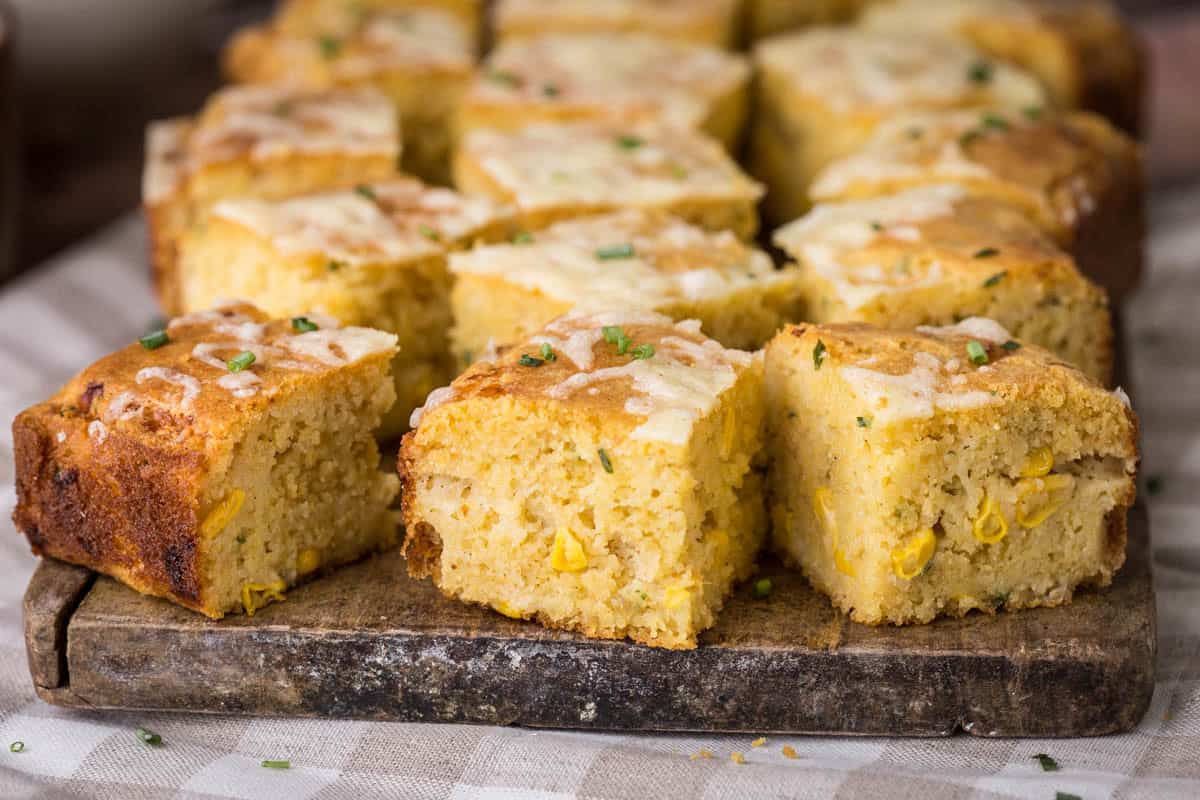
Baking. You can use cornmeal in all sorts of baking recipes. Polenta cakes are popular, especially in gluten-free baking, as they are usually made with polenta and almond flour. I specify to use fine cornmeal in my shortbread recipe and instant polenta in my Whole Orange Cake and my Plum and Nectarine Cobbler but any of these recipes can use cornmeal or the product labelled 'polenta.'

Dusting. That slightly gritty texture of cornmeal can also be used to dust the bottom of homemade pizza bases or English muffins. This can be instant polenta or uncooked cornmeal.
Cooking Polenta. Polenta is an Italian creamy side dish made by mixing the specific polenta cornmeal with milk or water and cooking over a low heat until. If you are using regular polenta cornmeal then this will take about 30-40 minutes. Quick cook or instant polenta will take between 3-5 minutes. You can also chill cooked seasoning polenta until it’s firm then slice into sticks or squares and deep fry it to make Fried Polenta Chips or Squares.
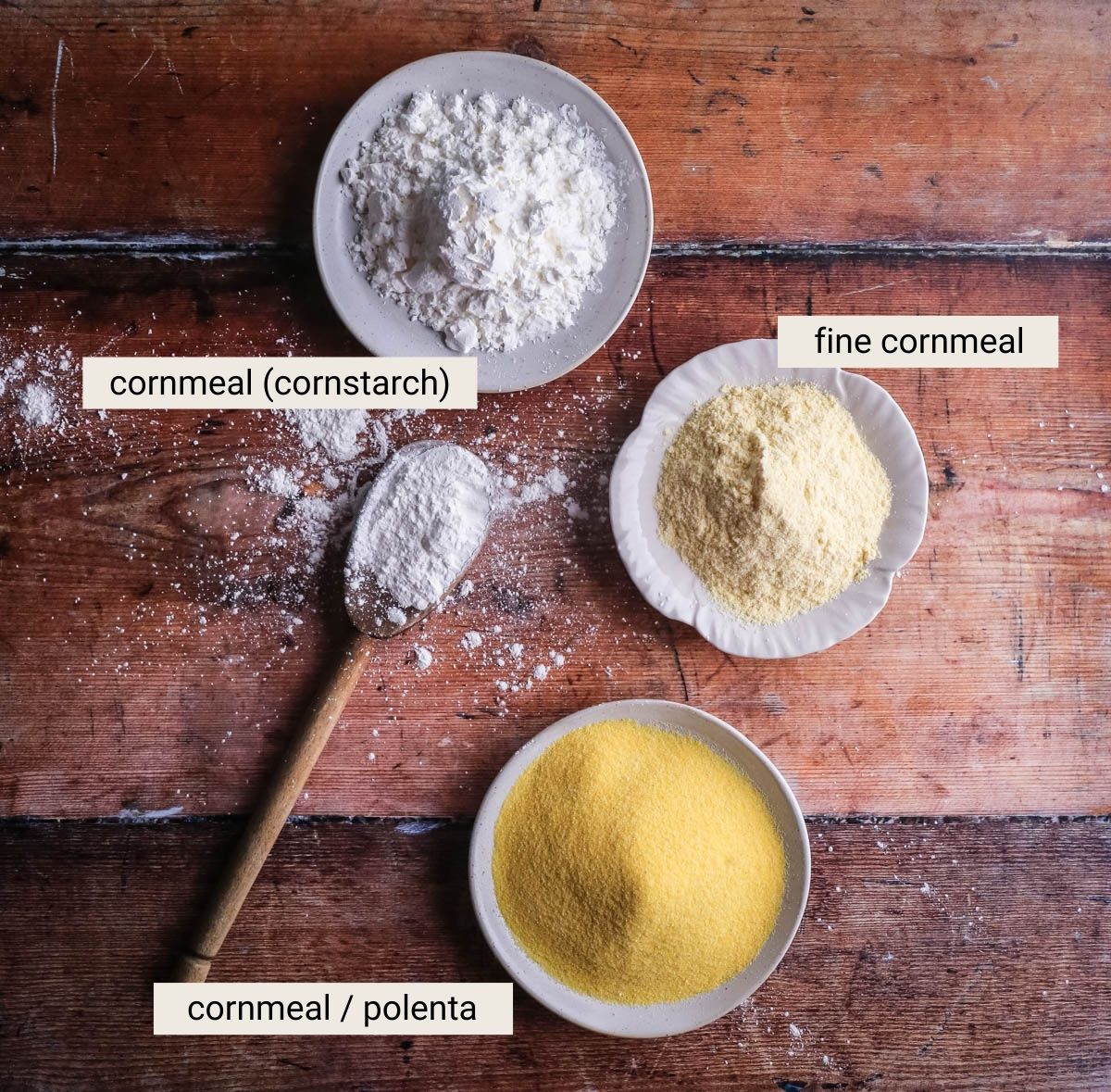
Cornflour vs Cornmeal vs Polenta
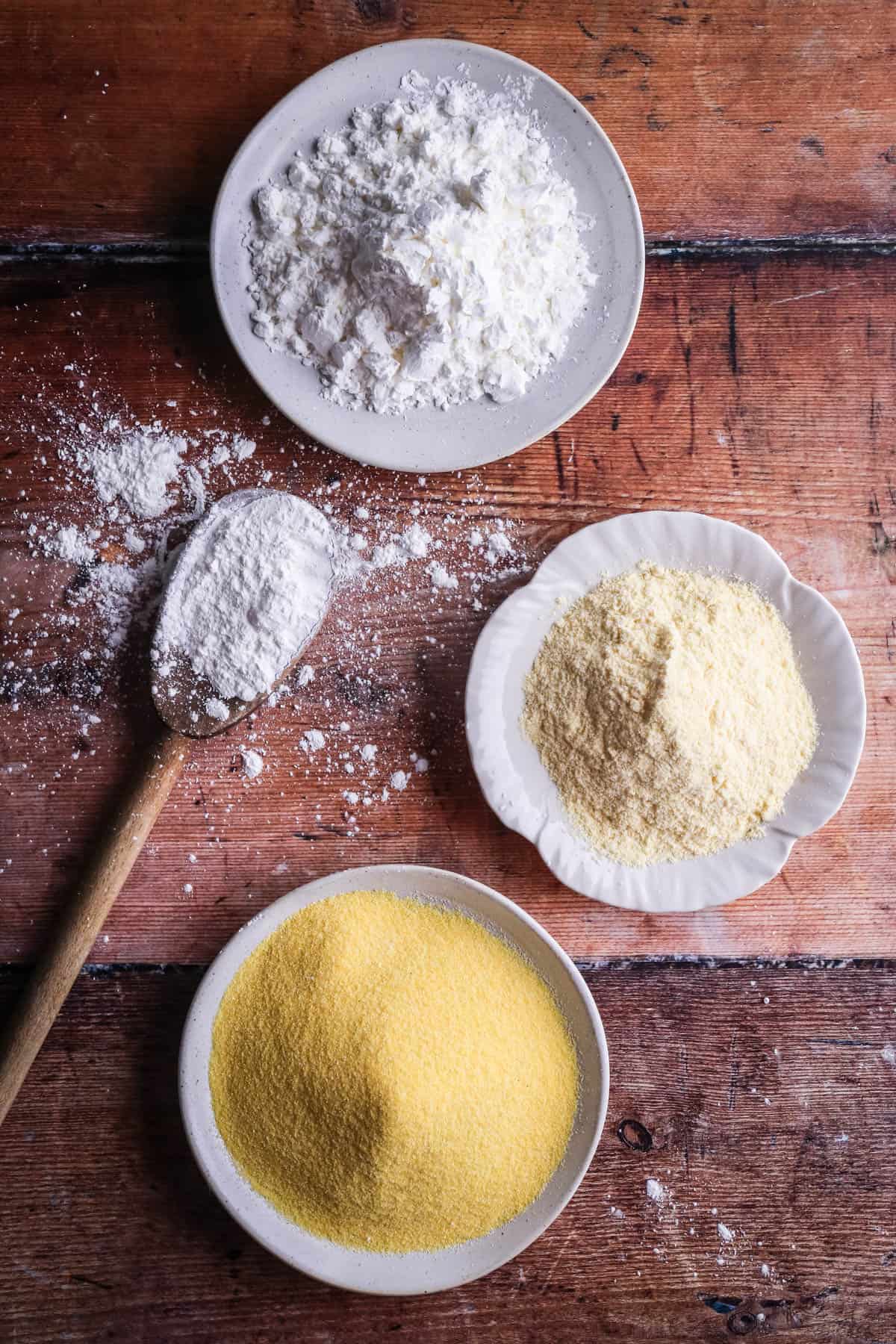
It can really get confusing as technically cornmeal and polenta are the same but let's review.
| Product | Cornflour (cornstarch) | Cornmeal | Polenta |
| What is it? | Starch extracted from the centre of the corn kernel | Dried field corn | It is cornmeal. |
| Texture and grind | Very fine, powdery, starchy | Varies, it can be course, medium or fine. | Traditionally it should be course but these days you can buy course or fine. Instant ‘pre-cooked’ polenta is much finer. |
| Colour | White | Mostly yellow but you can buy white or blue. | Yellow |
| Gluten-free? | Yes (check labelling for cross contamination) | Yes (check labelling for cross contamination) | Yes (check labelling for cross contamination) |
| Best uses | Thickening sauces or alongside other flours in baking blends | Cornbread, coatings, cooking polenta | For making polenta or for any recipe which asks for cornmeal |
| Can it be subbed? | Yes, for tapioca starch or arrowroot. | For baking purposes it can’t really be substituted if you want to achieve the same texture and structure as the original recipe | You can use products labelled ‘cornmeal’ if you need to use polenta. It can’t be substituted for another ingredient, for example a different flour, if you want to achieve the same result. |
FAQs
You cannot substitute cornflour for cornmeal or polenta. Cornmeal and polenta are the same ingredient and can be substituted for each other.
You will often treat wheat flour and cornflour differently in recipes, in particular when used as a thickener so I don’t recommend substituting for each other.
You can use cornflour as a thickener but it’s a different application to using plain flour so is not a straight swap in recipes. Plain flour you would typically add in at the beginning of recipes, whereas cornflour you would whisk into liquid to create a slurry and add in at the end of recipes.
It is possible to reheat sauces thickened with cornflour but be careful to heat slowly as cornflour can break down if overheated.
Sauces thickened with cornflour will often separate so it’s not something I recommend.
Yes you can. If you use course cornmeal the result will be quite granular, if you use fine cornmeal the result will be softer.
Yes you can. Most polenta you buy from UK supermarkets is instant or pre-cooked polenta, so check your packet. You can use it just fine it will just produce a softer result than using a traditional course cornmeal.
No, polenta is not cornflour. Polenta is dried field corn and cornflour is starch extracted from the corn kernel.
Other Corn-Based Products You Might See
Maize Flour
The term ‘maize flour’ is not used very frequently in British baking and you can often find it labelled as such in the world / international foods aisle in UK supermarkets or in specialist stores. It’s dried from the whole corn kernel in the same way as cornmeal and can be yellow or white. Technically maize flour should be finer grind than cornmeal but different brands will often interchangeably use ‘maize flour’ or ‘cornmeal.’ Often you can see how coarsely the product is ground through the bag so this is the best way to ascertain whether it’s the right texture for your recipe.
Hominy, Masa Harina and Grits
Hominy is corn processed in a very specific way called nixtamalization. This process can cause the corn to double or triple in size making it large and puffy. The flavour and texture changes too to make a more meaty and chewy kernel.
You can buy hominy dried or cooked and canned. These corn kernels are used in a variety of traditional Mexican recipes or they can be dried and ground into masa harina.
Masa Harina is a fine and powdery flour used in a multitude of traditional Mexican recipes like tortillas or tamales and in thickening soups.
To make the masa harina the hominy is dried out, the starch extracted from the centre of the kernel and ground to make masa harina. It’s less powdery than cornflour (cornstarch) and has a very different flavour. Neither should be substituted for the other.
Grits is a type of porridge made from boiled cornmeal. It’s a traditional Southern American dish which can be eaten at breakfast or as an accompaniment at any meal. Grits are often made from hominy (see above).