Classic Gluten-Free Béchamel Sauce
This post contains affiliate links. Please read my disclosures.
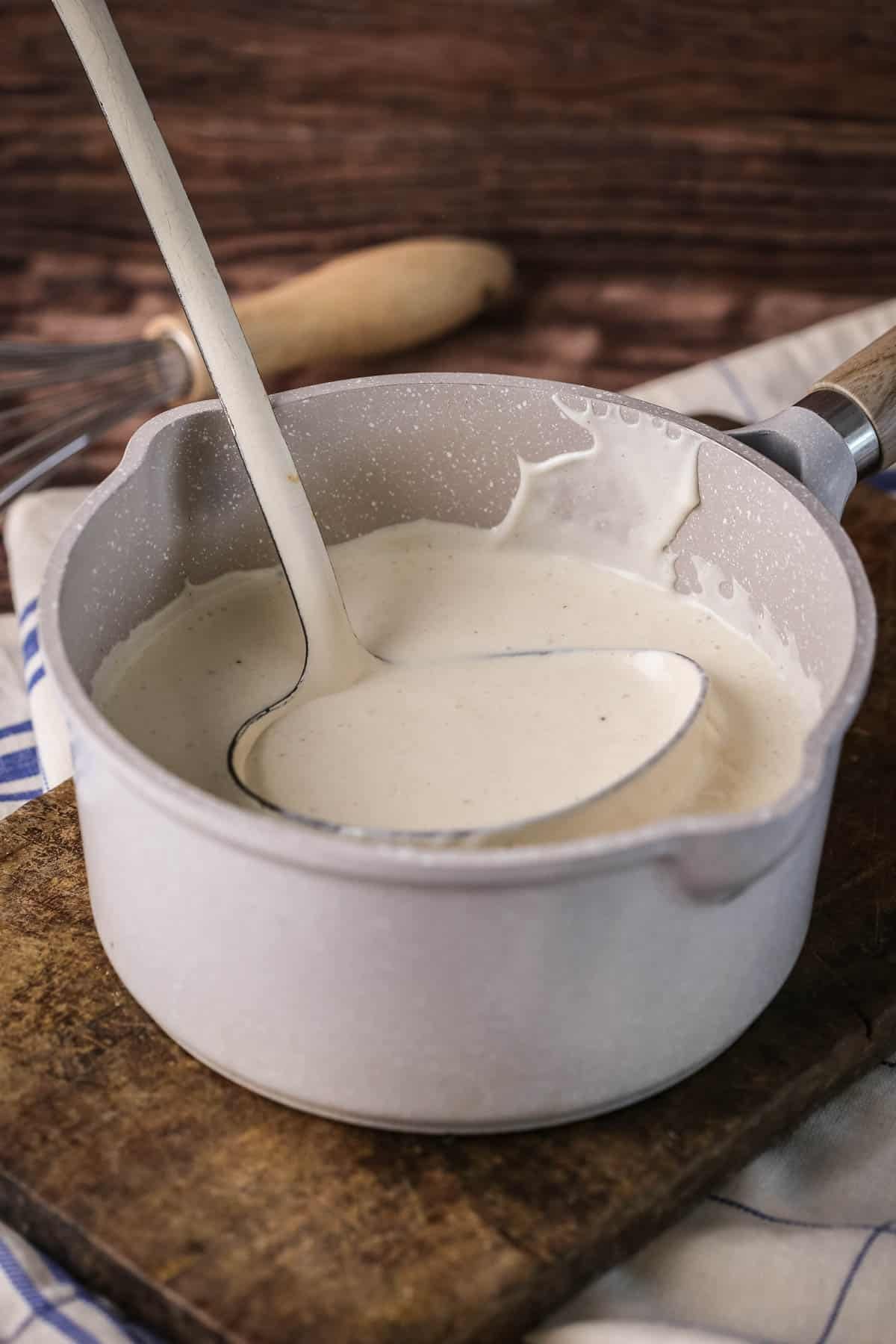
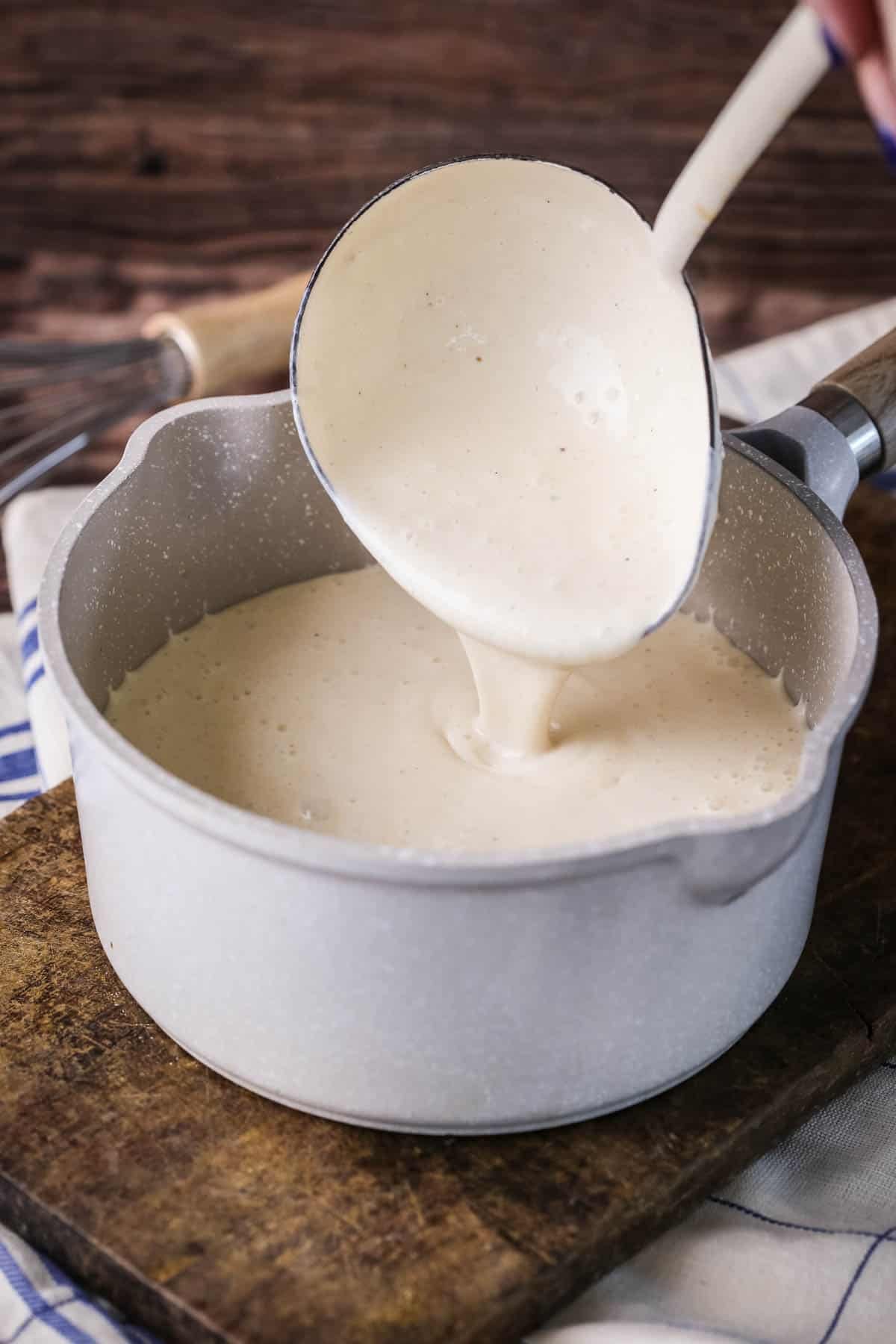
This gluten-free classic béchamel sauce uses cassava flour to create a rich velvety smooth sauce. Béchamel can be used as the basis for so many different sauces and recipes and is an integral recipe in your gluten-free kitchen toolkit.
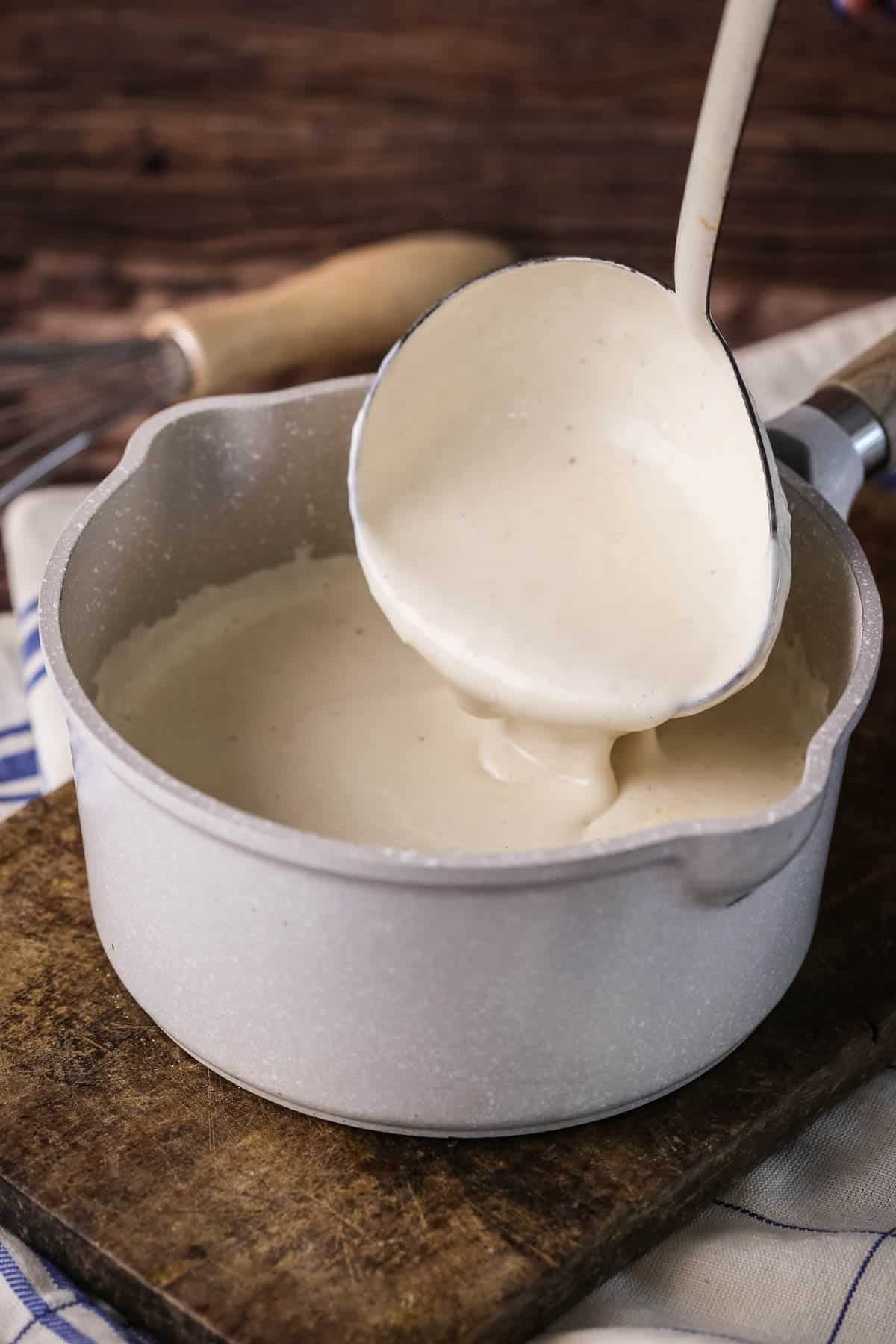
Béchamel is one of the key French mother sauces that can form the basis of a number of traditional recipes from lasagne to moussaka, to cauliflower cheese.
This is a very different sauce than my incredibly popular five-minute cornflour based sauce, even though they can be used interchangeably in most recipes. That’s because a traditional béchamel sauce has a deeper richer flavour; using butter thickened with flour to create a roux before adding in the milk to produce a luscious sauce.
Where I would use my easy peasy cornflour version if I’m pressed for time, this béchamel needs a bit longer to ensure the sauce has the perfect texture. It’s well worth the trouble to make this classic French sauce though. It has a well-rounded flavour on its own or can enrich any sauce or dish you might adapt it into, a cheese sauce or a parsley sauce for example.
The key to making a gluten-free béchamel is in your flour choice. You cannot use any all-purpose or random gluten-free flour or the sauce can turn out to be gritty (particularly in flour blends which use a high proportion of wholegrain flours). Instead you need to use a single origin starchy flour (not cornflour or tapioca flour which do not work in a roux and need to be added in using a slurry). I vary between choosing sweet rice flour or cassava flour as both will work. However, cassava flour will produce a more traditional texture as if you were using wheat flour.
We’ll go through the easy step-by-step method, all the tips to ensure your sauce is creamy and smooth, and what kinds of recipes you can use your béchamel in.
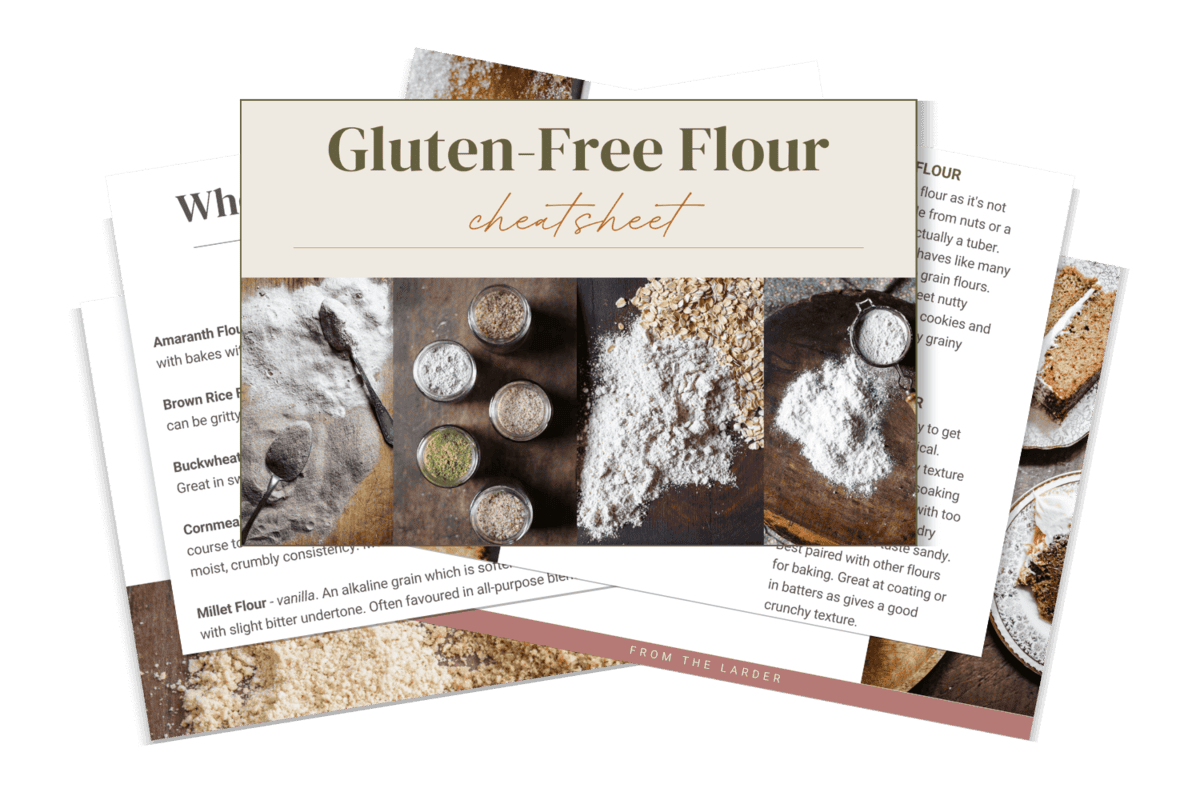
Gluten-Free Flour Cheatsheet
The Gluten-Free Flour Cheatsheet makes choosing the right flour easy, breaking down every option from sorghum to cassava into four simple categories. With nutritional info, flavour pairings, and a printable reference section, this guide cuts through the confusion so you can navigate gluten-free baking with clear flour choices.
Why You’ll Love This Gluten-Free Béchamel Sauce
- You only need one single origin gluten-free flour, you don’t need to rely on a specific brand.
- You make it exactly the same way you would a classic béchamel sauce.
- No lumps, no gritty texture, just rich, creamy, smooth and velvety every time.
- A great basis for so many different sauces and recipes.
Watch the Video
Sometimes it helps to see a visual of what I'm talking about. So watch the video to see what it looks like to make your Gluten-Free Béchamel Sauce.
Ingredients Needed
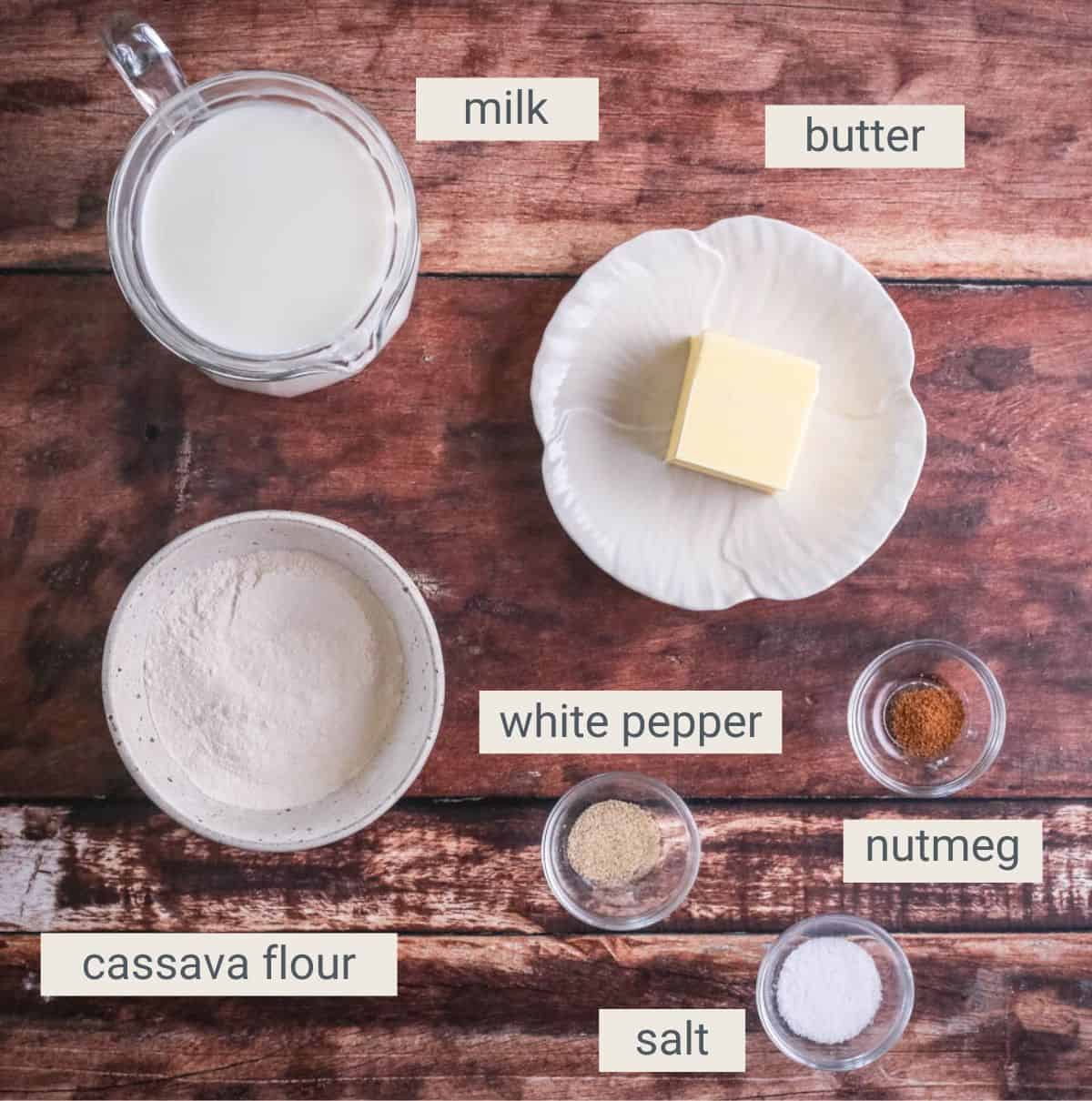
Unsalted butter. For a rich buttery sauce and choose unsalted so you can control the salt content. You can use a plant-based alternative if you are making a dairy-free version. I like Flora Unsalted Block Butter Alternative.
Cassava flour. This is my preferred choice for a gluten-free roux based sauce. It has a neutral flavour and gives a gorgeously smooth and creamy result, similar to that of regular wheat flour. Sweet rice flour can be used instead (not regular rice flour) but it can be a little gummy in excess.
Whole milk. If you are making this original dairy version then always choose whole milk over semi-skimmed. You need the richness to give the sauce body and flavour. If you are making a dairy-free version then I like oat milk or almond milk the best. Oat milk gives a richer result but obviously oats are not suitable for everyone so almond milk is a sound swap.
Ground white pepper. We use white pepper for the colour really so it blends suitably into the colour of the sauce. Black pepper can be swapped if necessary but it’s not as attractive.
Freshly ground nutmeg. If you have a whole nutmeg and can grate it straight into your sauce then that gives the best flavour. Ready-ground nutmeg is just fine though.
Salt. I always use kosher salt as that is simply what I keep in my kitchen (except for finishing sea salt). It gives a gentle flavour which isn’t as harsh as table salt. If you are using table salt then use less to taste.
How To Make Gluten-Free Béchamel Sauce
For full recipe instructions go to the recipe card at the end of this post.
First make the cassava flour roux by melting the butter and whisking in the cassava flour. Cook for 2-3 minutes to remove the raw flour flavour.
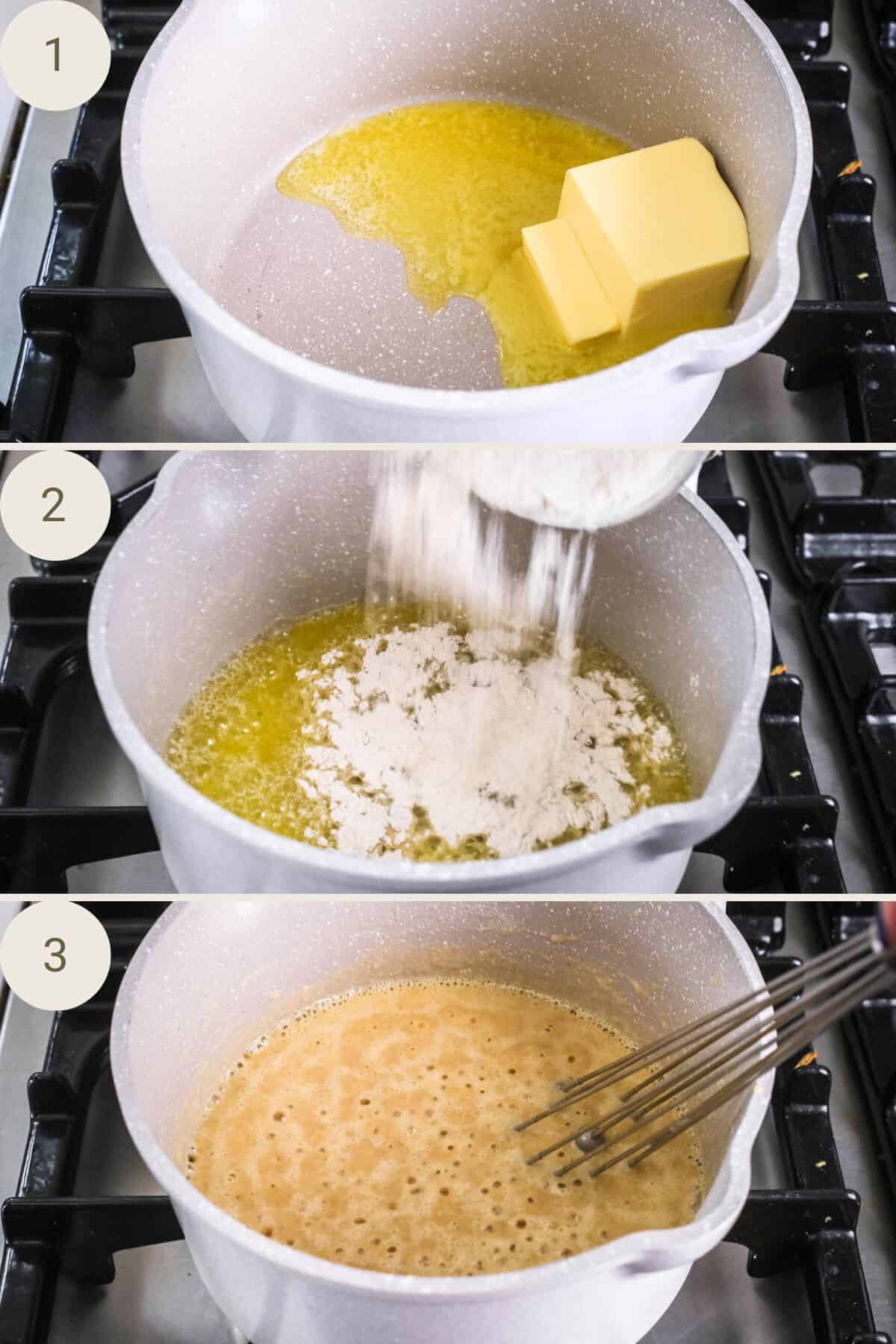
Gradually add the milk, whisking the mixture continuously.
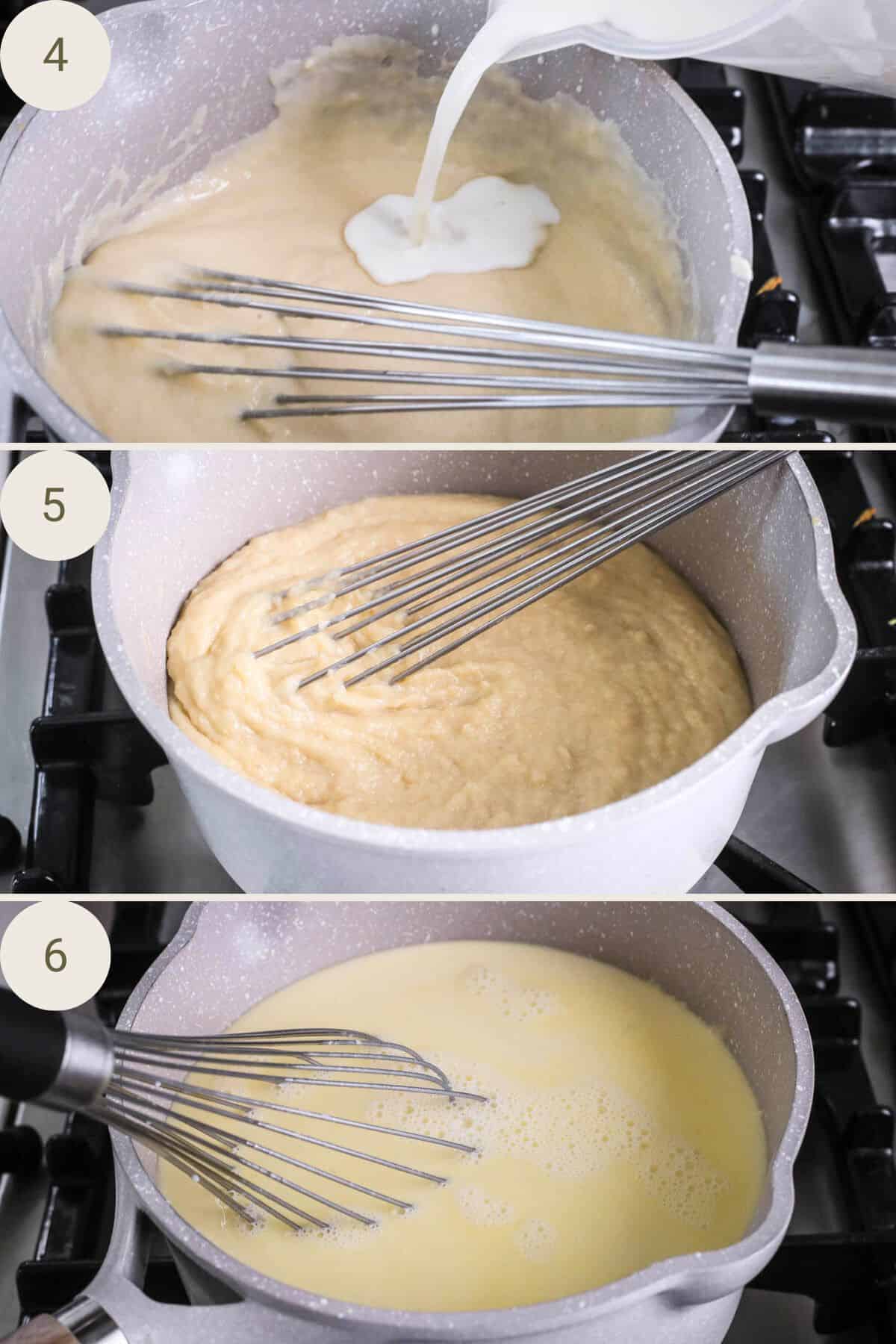
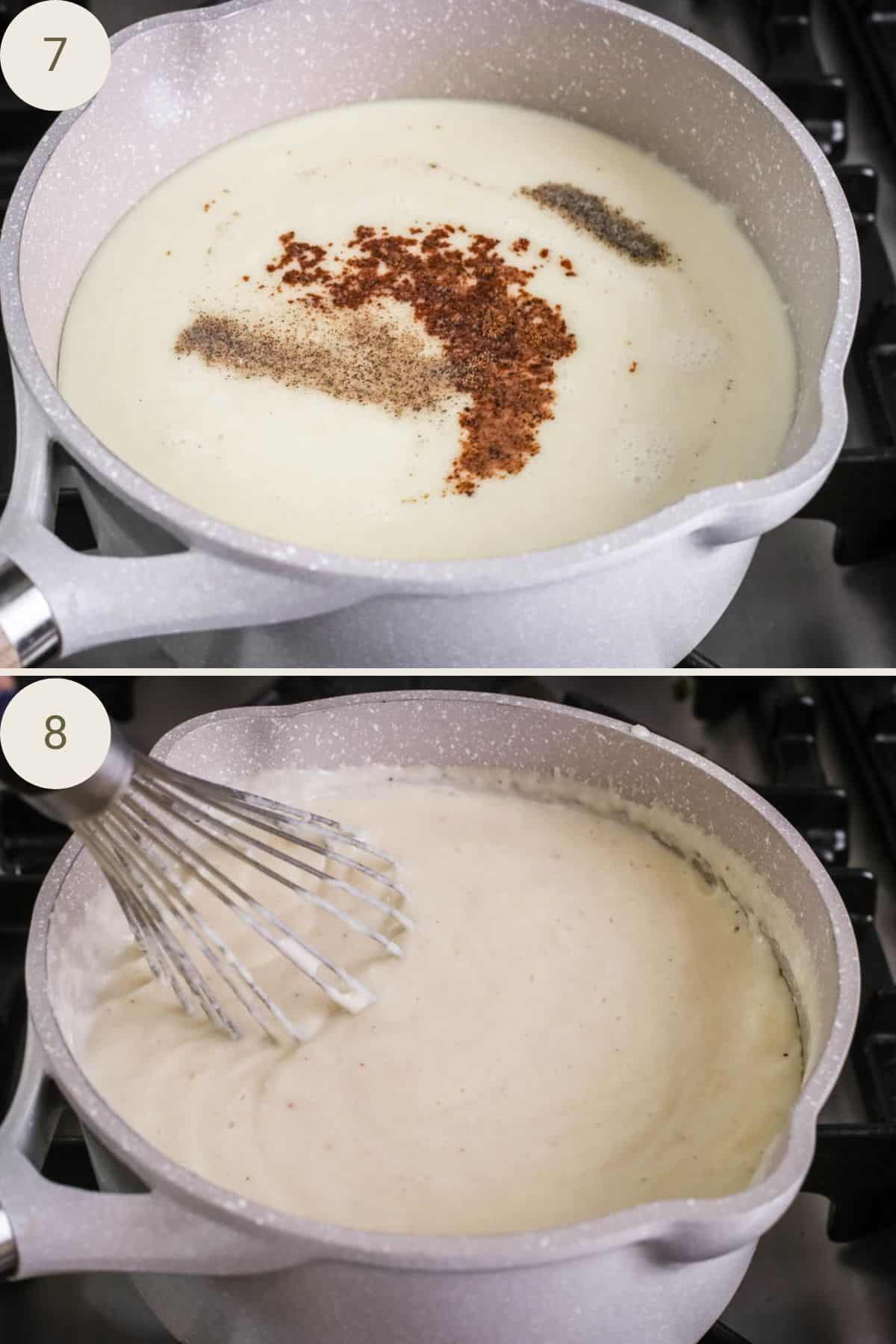
Simmer the sauce until thick and season with salt, pepper and nutmeg.
Tips and Troubleshooting
Cooking out the flour. There is no need to cook out the flour the way you would if you were using wheat flour. The initial butter and flour step cooks them together for just 2 minutes to ensure they are well combined.
Whisks. I use two different whisks to make this sauce, a ball whisk which has metal sticks jutting out of the handle and each one ending in a small metal ball which means the whisk can navigate the corners of the saucepan.
I also switch over to a medium sized balloon whisk once most of the liquid has been added as it can be more effective at smoothing out the lumps.
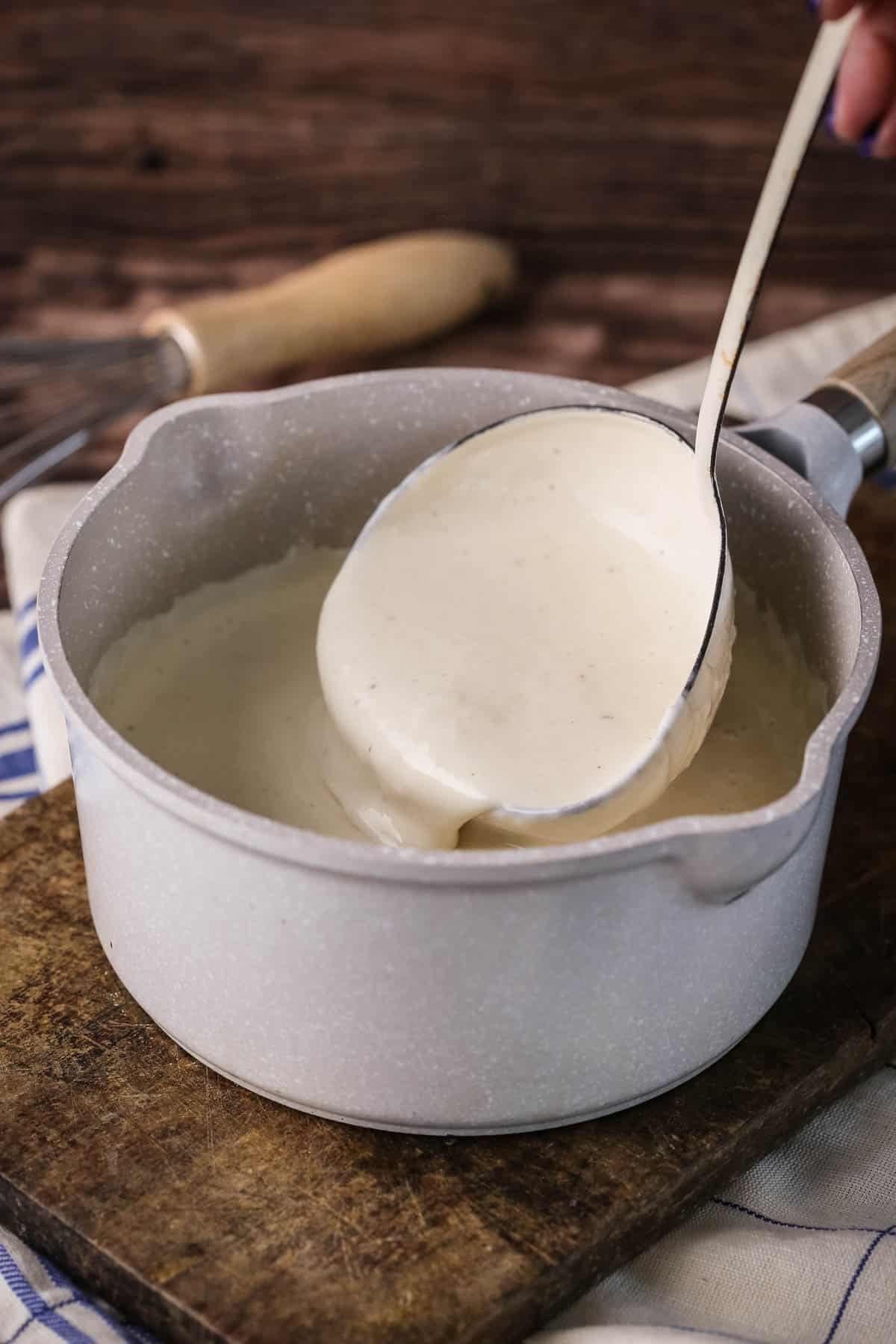
Readiness. The sauce is ready when it’s thick enough to coat the back of the spoon and has a silky texture with no lumps.
Ultra smooth sauce. You can use an immersion blender right at the very end of the sauce to achieve ultra smooth results. This will also loosen the sauce but the sauce will thicken up again once it is rested for 3-4 minutes.
Make Ahead
You can make your béchamel up to 2 days ahead of the time you need it. For example if you are making a lasagne, you can make the bechamel a couple of days before so on the day you make the lasagne you’ve already got your sauce prepared.
The sauce will thicken as it cools, but on re-heating it will loosen again. If you have heated the sauce and it still feels a little thick for your needs then you can pour in a tablespoon of whole milk to thin it out.
I recommend re-heating the sauce in a saucepan as you will need to whisk it as you are warming it to smooth it out.
Freezing
Cassava flour thickened sauces freeze very well. Pour the just-made béchamel sauce into an airtight container and press cling film or baking parchment to the surface to avoid a skin from forming. Allow the sauce to cool completely before fitting with the lid and placing in the freezer.
Freeze for up to 2 months, thaw overnight in the fridge before re-heating.
FAQs
This is an easy recipe to make dairy-free as the substitutions work well. Use a plant-based butter like Flora Unsalted Block Butter Alternative and use oat milk or almond milk instead of the whole milk.
This does create a lovely thick sauce. You can thin it down further if needed by gradually whisking in a little more milk.
The sauce will continue to thicken as it cooks so simmer for longer if you need a thicker sauce. If this still isn’t what you need then you can add more flour to the initial roux next time.
If your sauce is lumpy despite vigorous whisking then use an immersion blender to smooth it out.
Your sauce can be gluey if you use too much cassava flour (or if you are using sweet rice flour) or you have cooked it for a long period of time. Turn off the heat as soon as the milk has been added and has reached your desired consistency.
Ways To Use Gluten-Free Béchamel
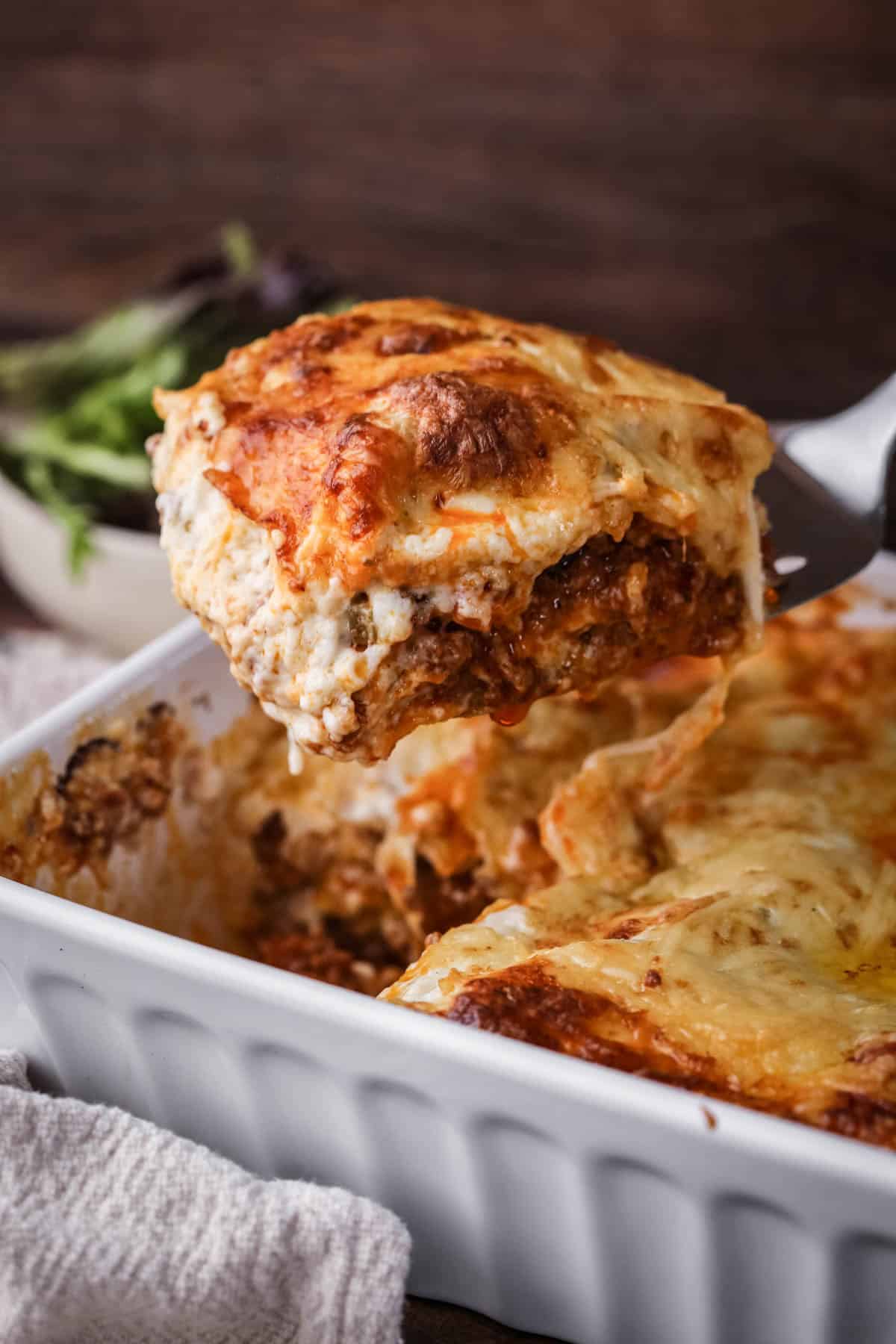
Lasagne. I use this very béchamel sauce for my homestyle family lasagne.
Cauliflower Cheese or another vegetable gratin.
Classic Fish Pie. The béchamel sauce gives the fish pie a gorgeous richness.
Creamy Pasta Bake like macaroni cheese. Or just served with pasta for a simple kid-friendly pasta sauce.
Mousska. A classic Greek dish of baked aubergine and lamb topped with béchamel.
Vol-au-Vents. This is very retro but my grandmother always used to fill her vol-au-vents with poached chicken in a simple béchamel, then topped with a little cheese. Suddenly I’m back in the eighties. Yum!
Mornay Sauce
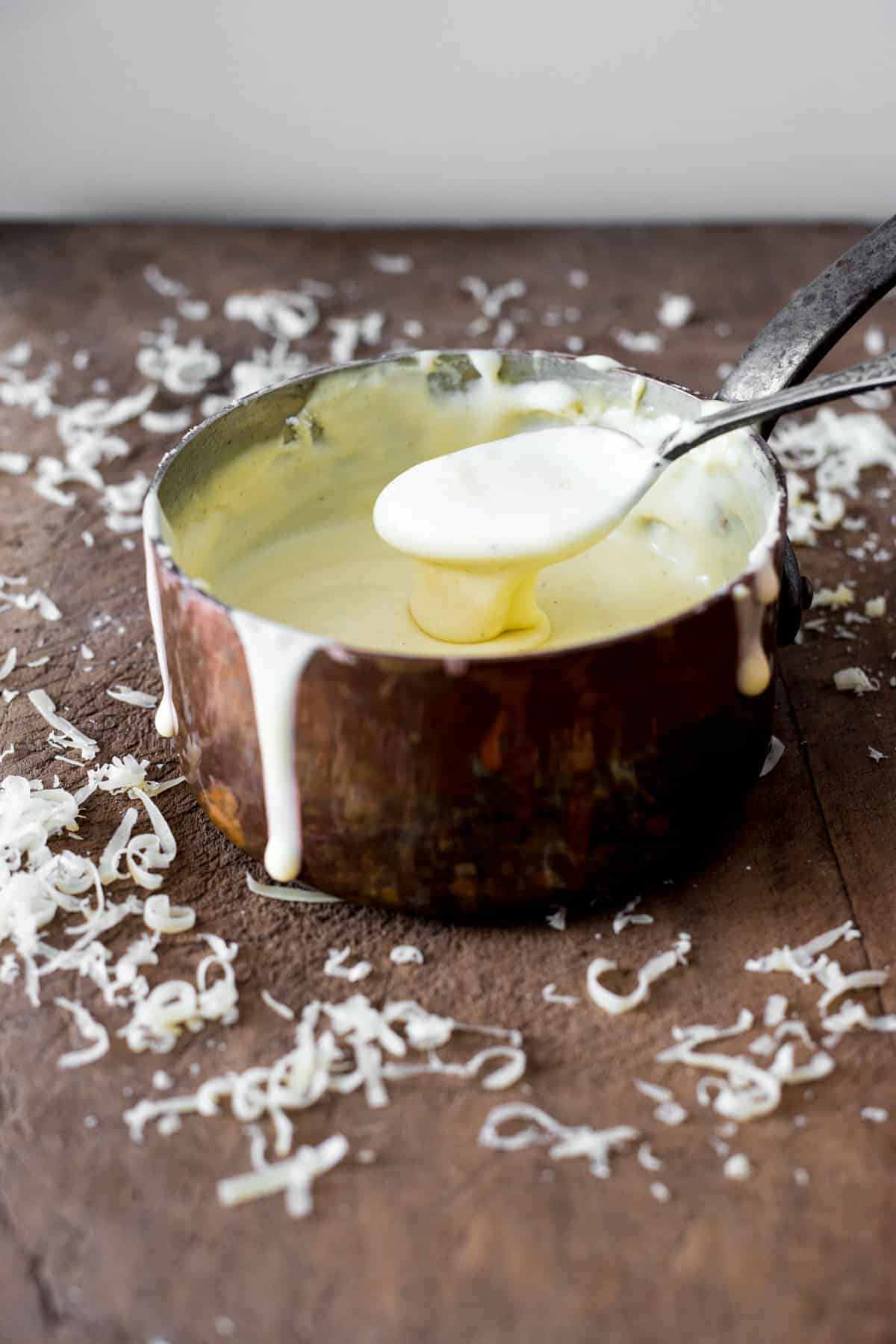
Or you can turn this béchamel into a mornay sauce by adding cheese. I recommend adding 200g gruyère or cheddar cheese to create a classic cheese sauce from this recipe. Or you can check out my Best Gluten-Free Cheese Sauce recipe which helps you season this sauce to perfection (I use sweet rice flour over there).
More Gluten-Free Classic Sauces You’ll Love
If you want a delicious tasting Gluten-Free White Sauce in a hurry then this recipe will become indispensable. It’s a quick and easy sauce which is ready in 5 minutes using only 5 ingredients and no roux making involved.
Gluten-Free Parsley Sauce is a lovely simple creamy sauce to accompany your favourite fish supper, baked ham, gammon, pork chops or even as the base for a fish pie.
This unbeatable Gluten-Free Gravy is velvety smooth and rich. For the best flavour make it with the drippings from your roasted meat, homemade stock and fresh herbs.
Enter your email below to get this recipe sent to your inbox plus get new recipes, baking tips, and updates.
Classic Gluten-Free Béchamel Sauce
Ingredients
- 100 g unsalted butter
- 50 g cassava flour
- 1000 g whole milk
- ¾ teaspoon salt
- ⅛ teaspoon ground white pepper
- ⅛ teaspoon freshly ground nutmeg
Instructions
- Melt the butter on a medium heat in a large saucepan.
- Once the butter has melted, turn the heat to low and add the flour. Using a ball whisk, whisk the flour into the butter on the low heat for 2-3 minutes to create a pale creamy roux, making sure to scrape out the corners so no flour gathers there.
- Pour about 100-200ml of the milk into the roux and whisk until the mixture is smooth. Gradually pour the rest of the milk in, stopping every so often to make sure the flour is incorporating evenly. As you pour in more milk you can turn up the heat a little and switch to a balloon whisk which is more effective at smoothing out the lumps as the sauce increases. Often I use a combination of both whisks so I’m getting into the corners of the pan and smoothing out the lumps effectively.
- Once all of the milk has been added then whisk in the salt, pepper and nutmeg. Continue mixing until the béchamel is smooth and creamy and switch off the heat.
- For a final step you can use an immersion blender to really ensure a velvety result. This will also loosen the sauce a little but as the sauce rests it will thicken up once more.
- Press cling film or baking parchment to the surface of the béchamel to stop a skin from forming on the top.
- Whisk the sauce thoroughly before using or serving.
Video
Notes
I also use a medium sized balloon whisk as it can be more effective at smoothing out the lumps.
I recommend using an immersion blender to get the sauce ultra smooth. Make Ahead. You can make your béchamel up to 2 days ahead of the time you need it and store in an airtight container in the refrigerator with cling film pressed to the surface. Freeze. This sauce freezes very well. Freeze for up to 2 months in an airtight container. Thaw overnight in the refrigerator before re-heating. Re-heating. Always re-heat in a saucepan, whisking all the time to avoid any lumps forming. If it’s too thick then add a little more milk to loosen. Ingredient measurements: Please note when you see ‘grams’ listed as opposed to ‘millilitres,’ or any other term of measurement, that is not incorrect. I weigh all of my ingredients, including liquids, for accuracy. US customary measurements: These US measurements for the ingredients provided are based on a conversion calculator. This recipe was tested with metric measurements and I recommend using a digital scale to weigh ingredients for the most accurate results. READ MORE >>> Why you should always weigh vs measuring with cups Nutrition information: Please note that the nutrition information provided below is an estimate based on an online nutrition calculator. It will vary based on the specific ingredients you use. Please seek a professional nutritionist’s advice for further clarification. The nutrition serving is for 1 serving of sauce if you are serving 8 people.