Gluten-Free Blueberry Streusel Muffins
This post contains affiliate links. Please read my disclosures.

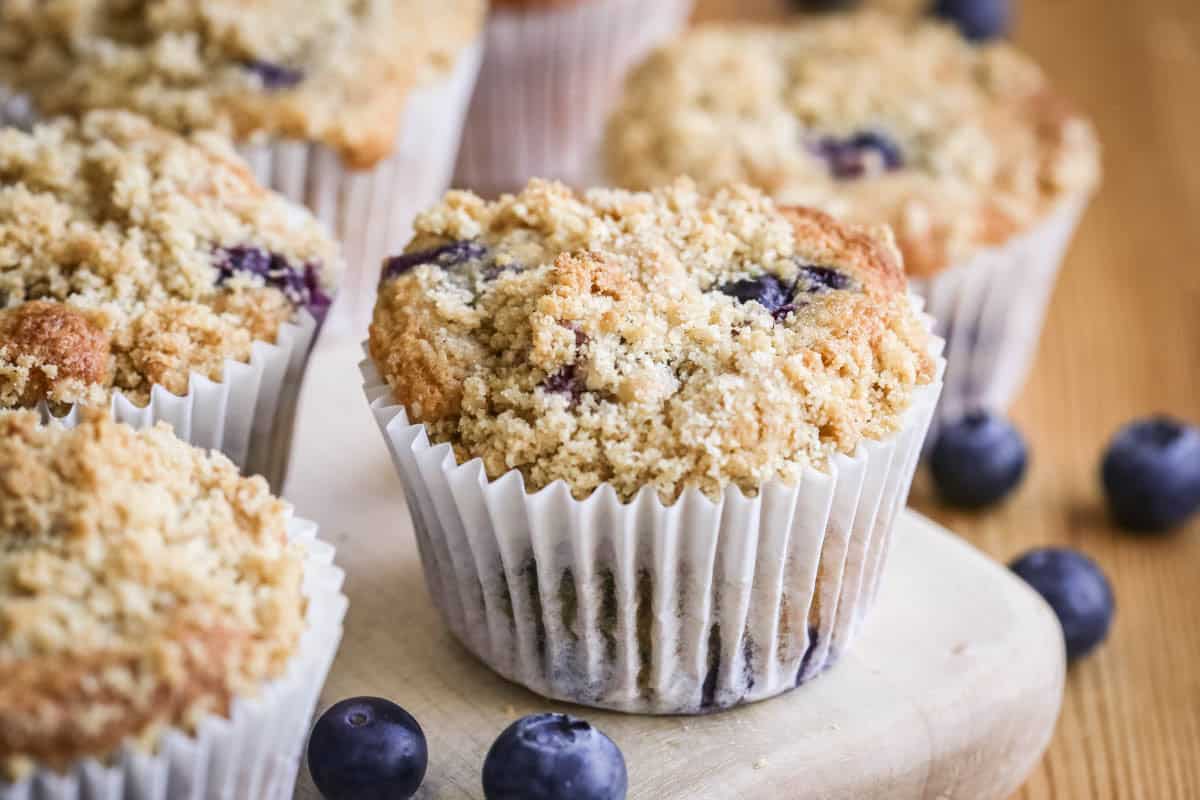
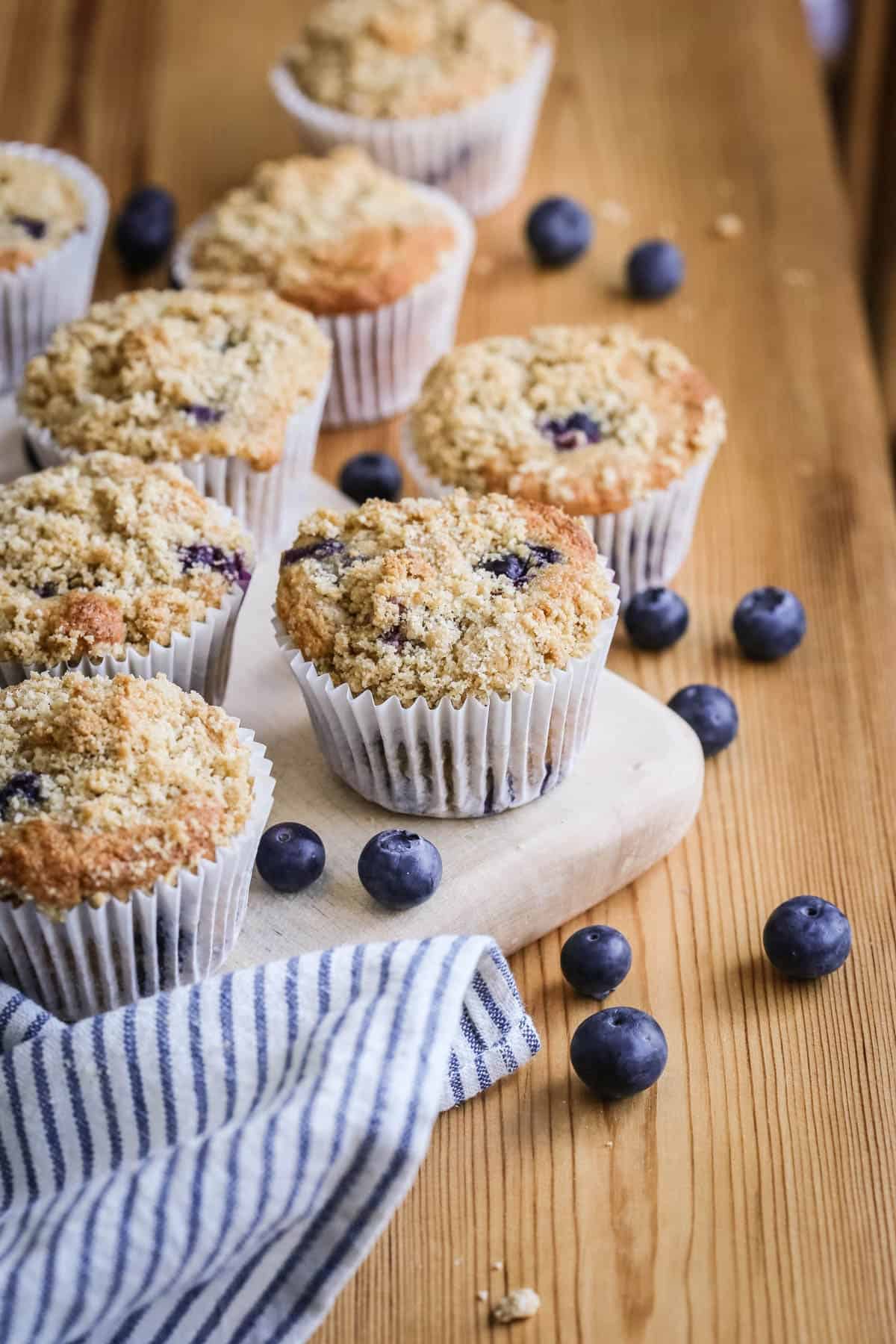
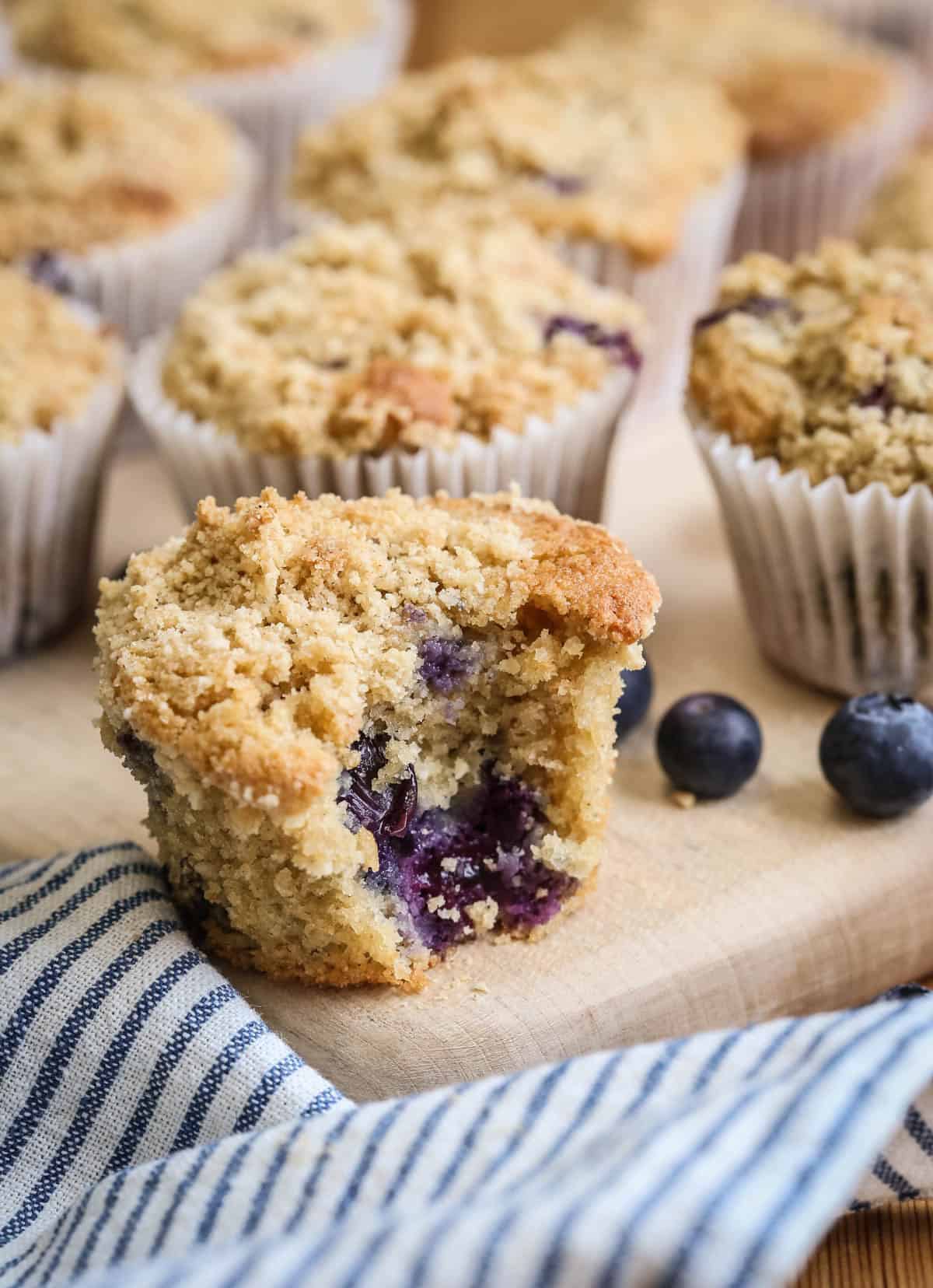
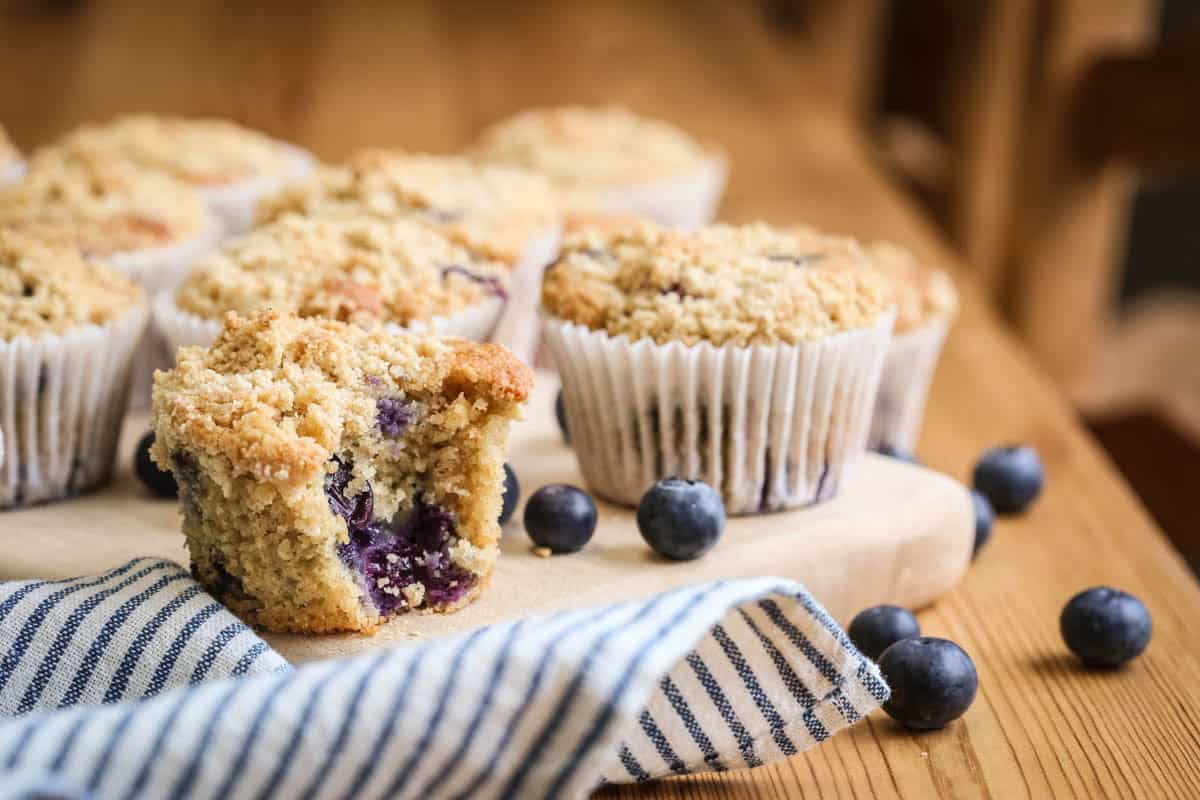
These Gluten-Free Blueberry Streusel Muffins are soft, fluffy and packed with juicy blueberries, finished with a buttery crisp crumb topping.
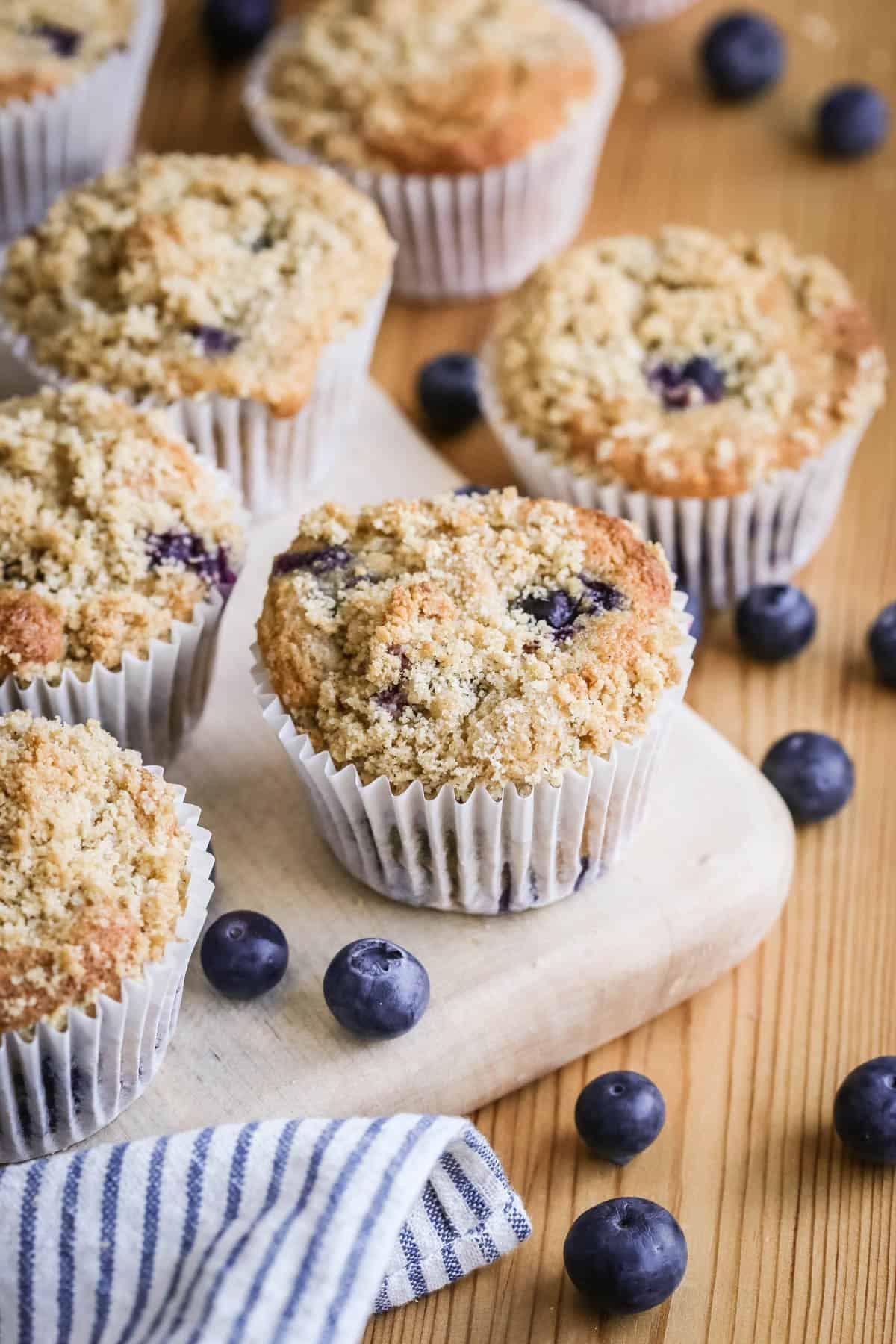
One of the common complaints of gluten-free baking is that it simply does not rise as high as gluten baking. This isn’t particularly a problem when making layer cakes, cookies or cupcakes. However, when making bakery-style muffins the lack of a towering muffin top can be disappointing.
We can get around this disappointment, firstly by baking the most deliciously soft and fluffy muffins anyone will have ever tasted (I’m not afraid to toot the horn of these lovely little cakes). But to really entice people to pick up your muffins in the first place you might need to cheat a bit to make them look the part as well.
For muffins I tend to opt for adding interest to the topping so you don’t notice the fact they are not monstrously large. Sprinkling over a streusel topping is a favourite hack of mine. Plus it gives a great texture contrast to the soft buttery crumb underneath. Win win.
We need to use a denser muffin batter for these blueberry muffins as gluten-free flours are lighter and blueberries tend to sink (which is why they are not as successful with my gluten-free flour blend or indeed any branded gluten-free flour). So the choice of flours here is important – sorghum flour, almond flour and cassava flour. They hold and suspend the blueberries in the batter so sinkage is minimal.
We've got a few more tricks up our sleeve to make these Blueberry Muffins quick, easy and a joy to bake. So let's get to it!
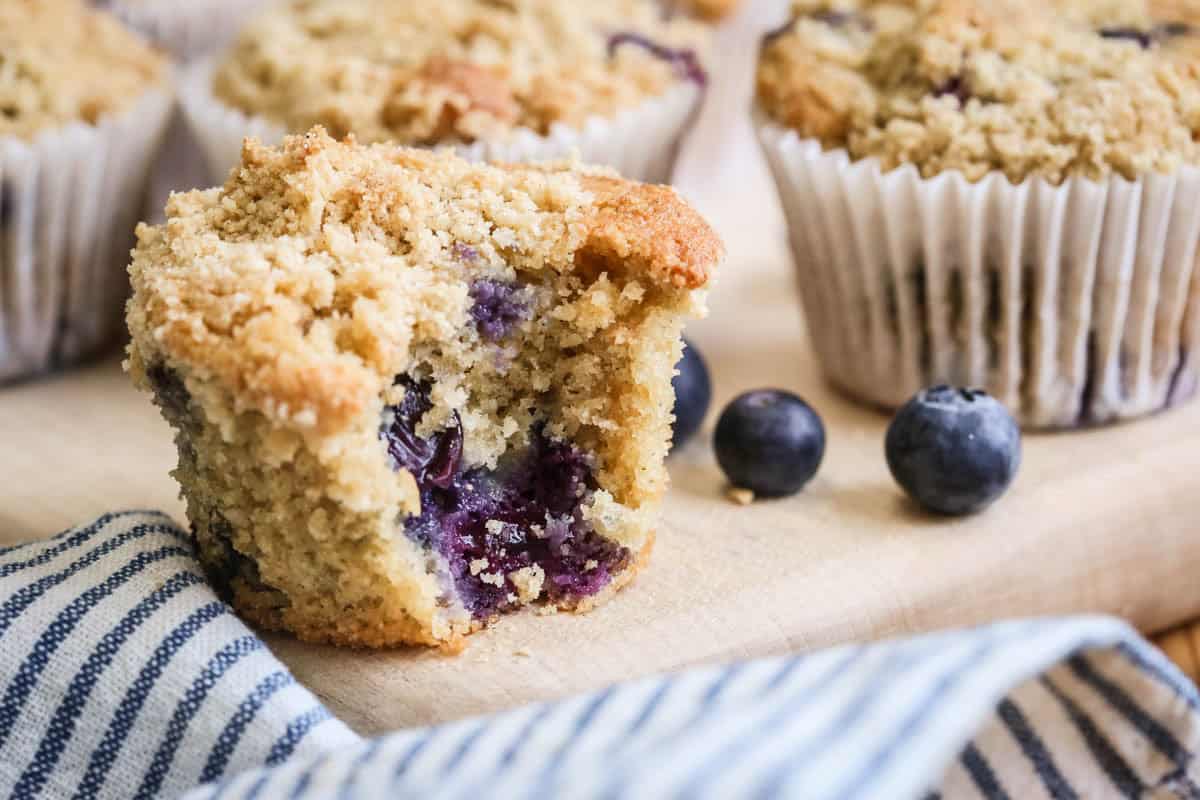
Why You’ll Love These Gluten-Free Blueberry Muffins
- Soft, fluffy crumb with rich buttery flavour.
- Juicy blueberries in every bite.
- Crisp streusel topping gives a great texture contrast to the soft muffin.
- Made with a combination of gluten-free flours which are not reliant on a single brand and don’t require any xanthan gum to make them work.
- Thick batter which avoids blueberry sinkage and also helps keeps the streusel from melting into the muffins.
- Works with fresh or frozen blueberries.
Watch the Video
Sometimes it helps to see a visual of what I'm talking about. So watch the video to see what it looks like to make your Gluten-Free Blueberry Muffins.
Ingredients Needed
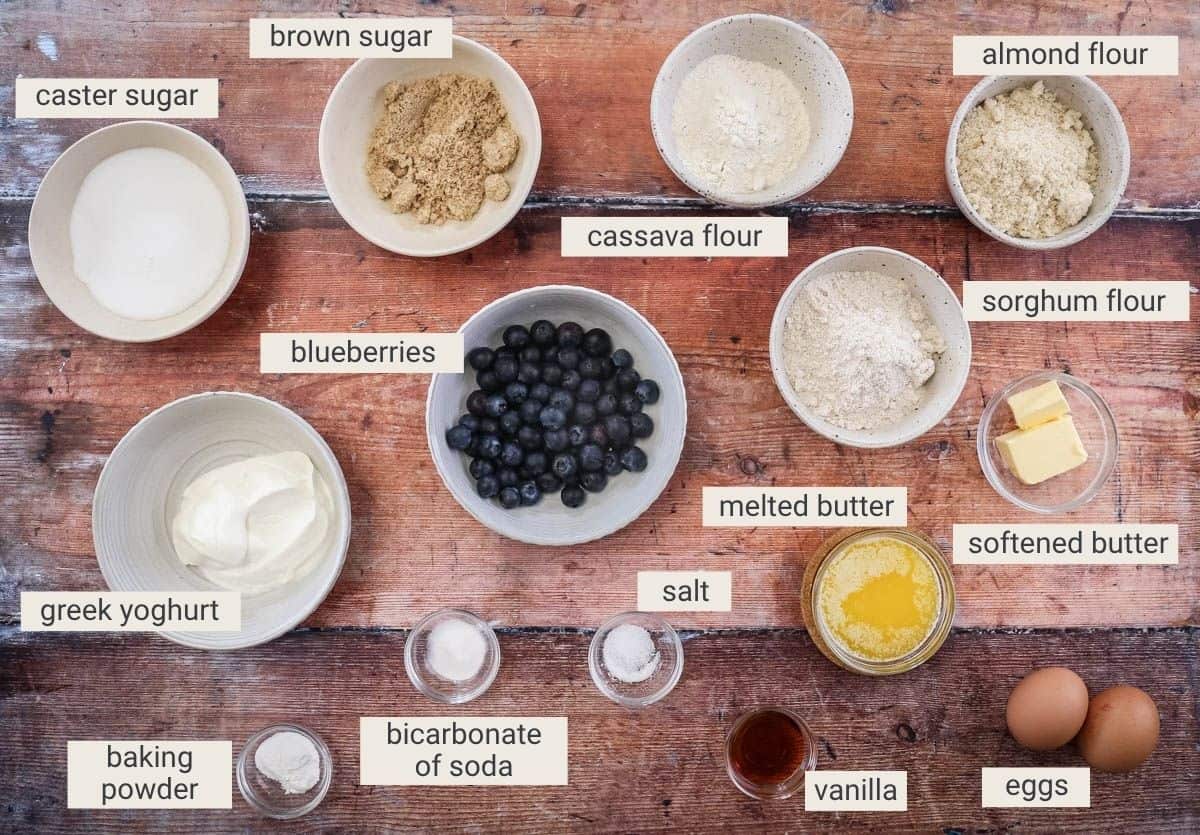
Blueberries. You can use either fresh or frozen blueberries. If you are going to use frozen then don’t thaw them but use them directly from the freezer. Fold the frozen blueberries carefully into the batter to avoid breaking them up which will prevent any colour bleeding and ultimately soggy muffins.
Sorghum flour. This whole grain flour is lovely in gluten-free baking recipes due to its mild, earthy sweet flavour and smooth texture. It blends well with other flours and sits well alongside a variety of flavours so is a versatile choice.
Almond flour. You are looking for blanched ground almonds. There is a bit of labelling confusion over almond flour which is sold as ‘ground almonds’ in most major UK supermarkets and found in the baking aisle. If you want to know what exactly you are looking for then check out this post >>> Is Almond Flour The Same As Ground Almonds.
Cassava flour. This starchy flour is great in gluten-free baking recipes because it helps to bind the muffin together. Plus, it's neutral in flavour, so it won't overpower the other ingredients.
Greek yoghurt. We’re using thick style Greek yoghurt here for its density. Unlike if we were using milk it creates a thick batter which helps suspend the blueberries. The lovely tang is a happy bonus too.
Unsalted butter. We need unsalted so we can control the salt content of the recipe. We need the butter to be melted for the muffins and the some at room temperature for the streusel topping.
Brown sugar. Gives lovely gentle molasses flavour and moisture.
Caster sugar. It’s a fine white baking sugar available in the UK. Regular white granulated sugar can be substituted. We use both white and brown sugar for the best texture and flavour.
Eggs. This recipe uses medium size, about 60g each with shell (50g each without shell). These are often classified as large eggs in the US. I recommend weighing your eggs to ensure the correct amount.
Vanilla extract. You don’t need to use the best quality vanilla extract here as there's already a lot going on with the flavours and it won't make a difference. A supermarket brand is just fine.
Baking powder. A leavening agent which causes the cake to rise and become light and fluffy. Do check your baking powder is gluten-free before use.
Bicarbonate of soda. Also known as baking soda, this is a white crystalline powder that is commonly used as a leavening agent in baking.
Salt. I like to use kosher salt in my baking as it has a round gentle flavour. Using salt in your baked goods lifts and sharpens all the other flavours.
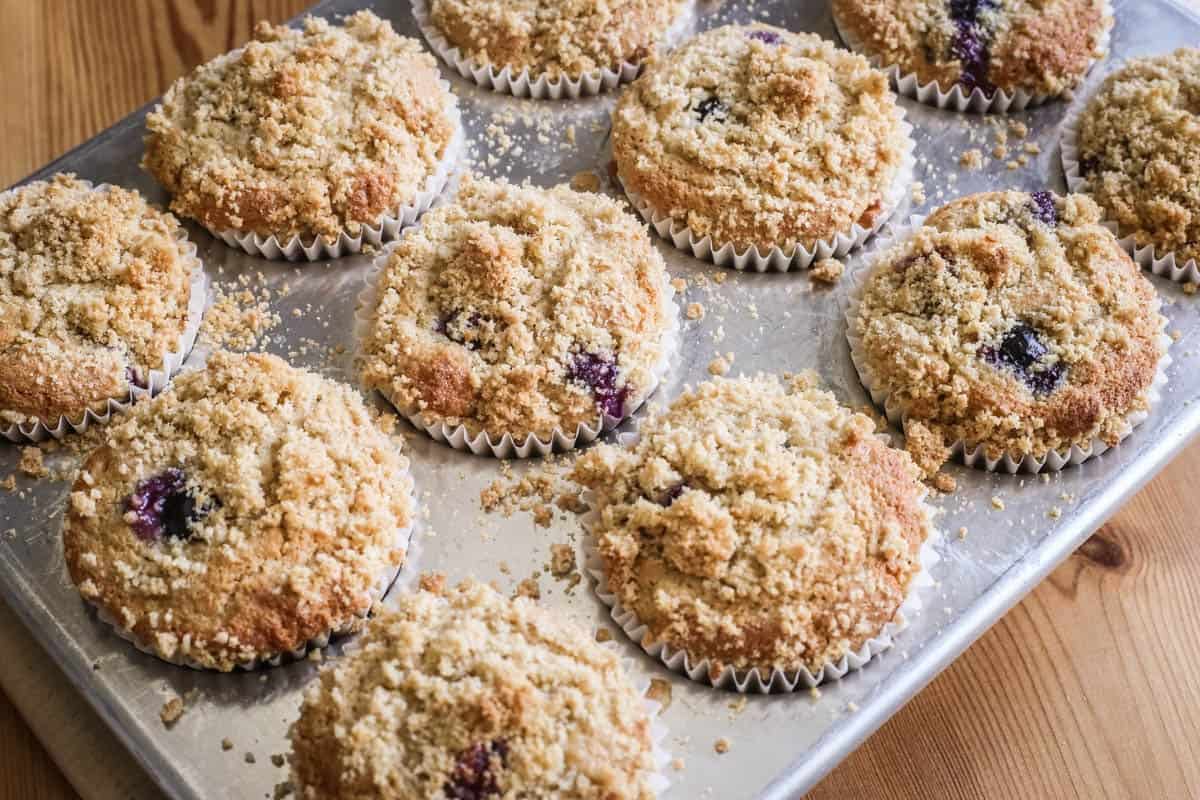
How To Make Gluten-Free Blueberry Muffins
The following gives a short concise method with step-by-step images. For full recipe instructions go to the recipe card at the end of this post.
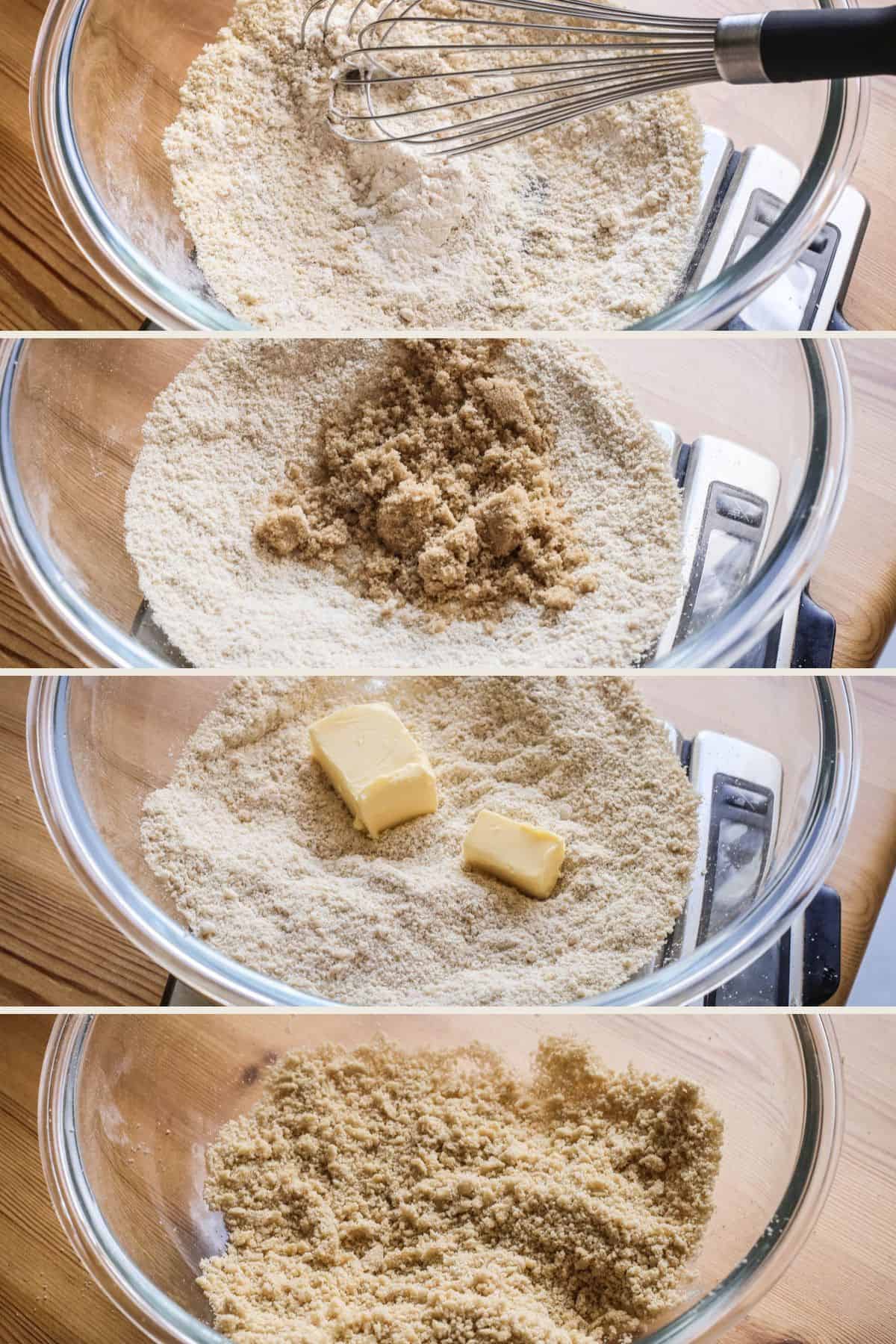
Prepare streusel topping first by whisking together the flours, sugar and salt in a bowl. Rub in the butter with your fingertips until you create a sandy texture.
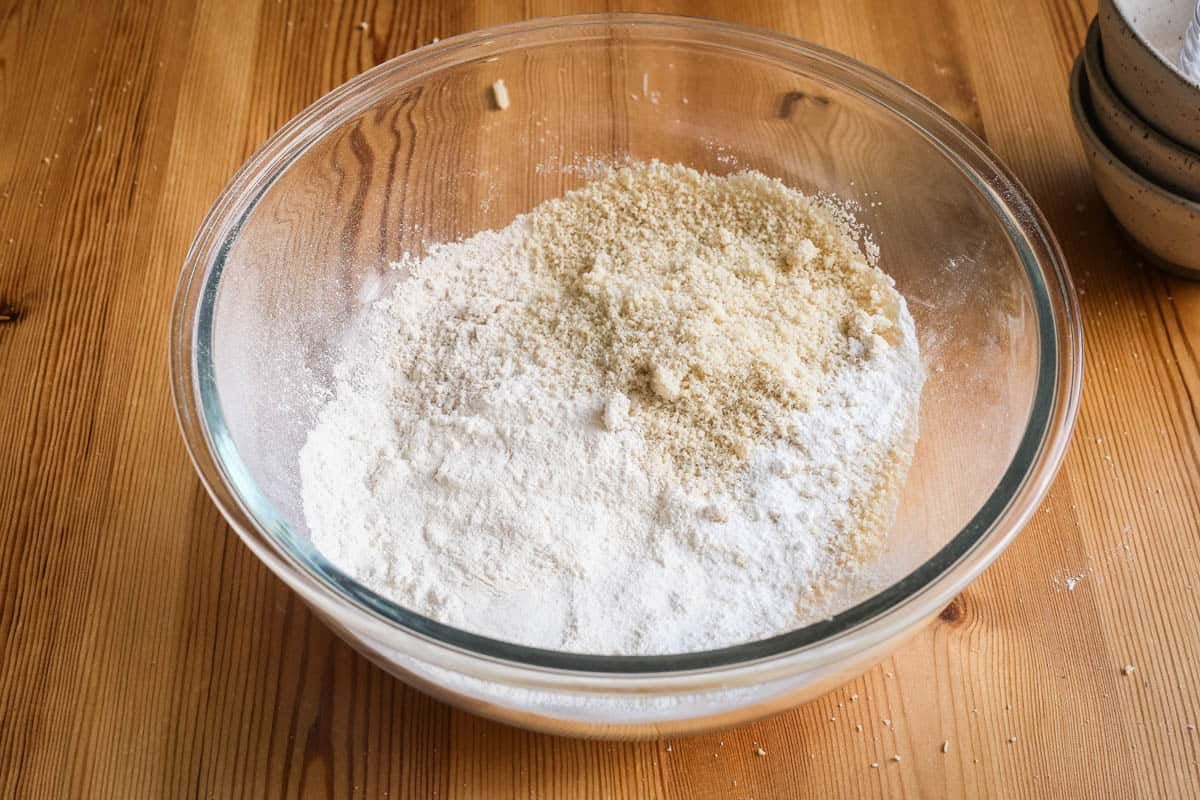
For the muffins, whisk together the flours, baking powder, bicarbonate of soda and salt.
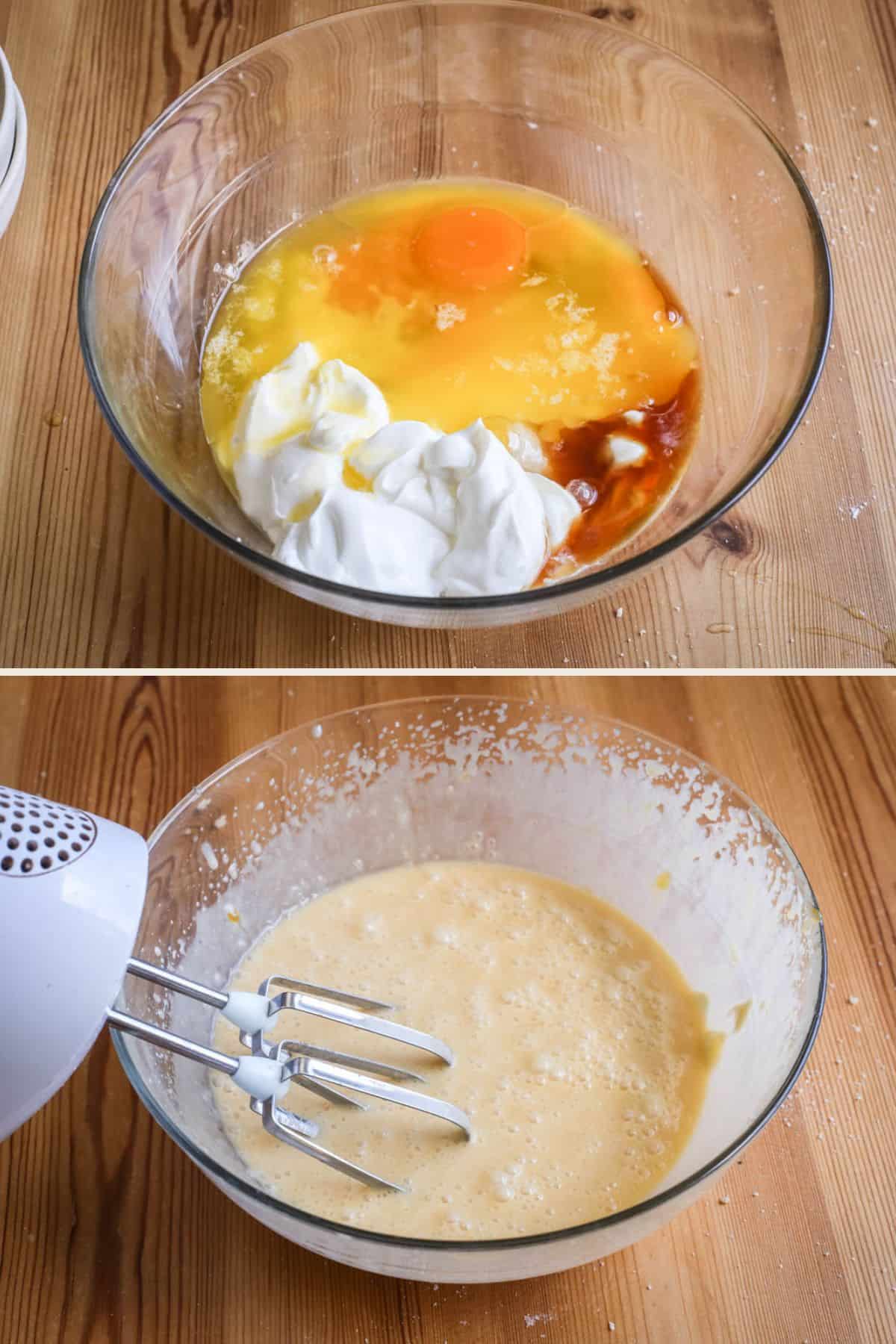
In a separate bowl, whisk together the sugars, eggs, Greek yoghurt, melted butter and vanilla extract.
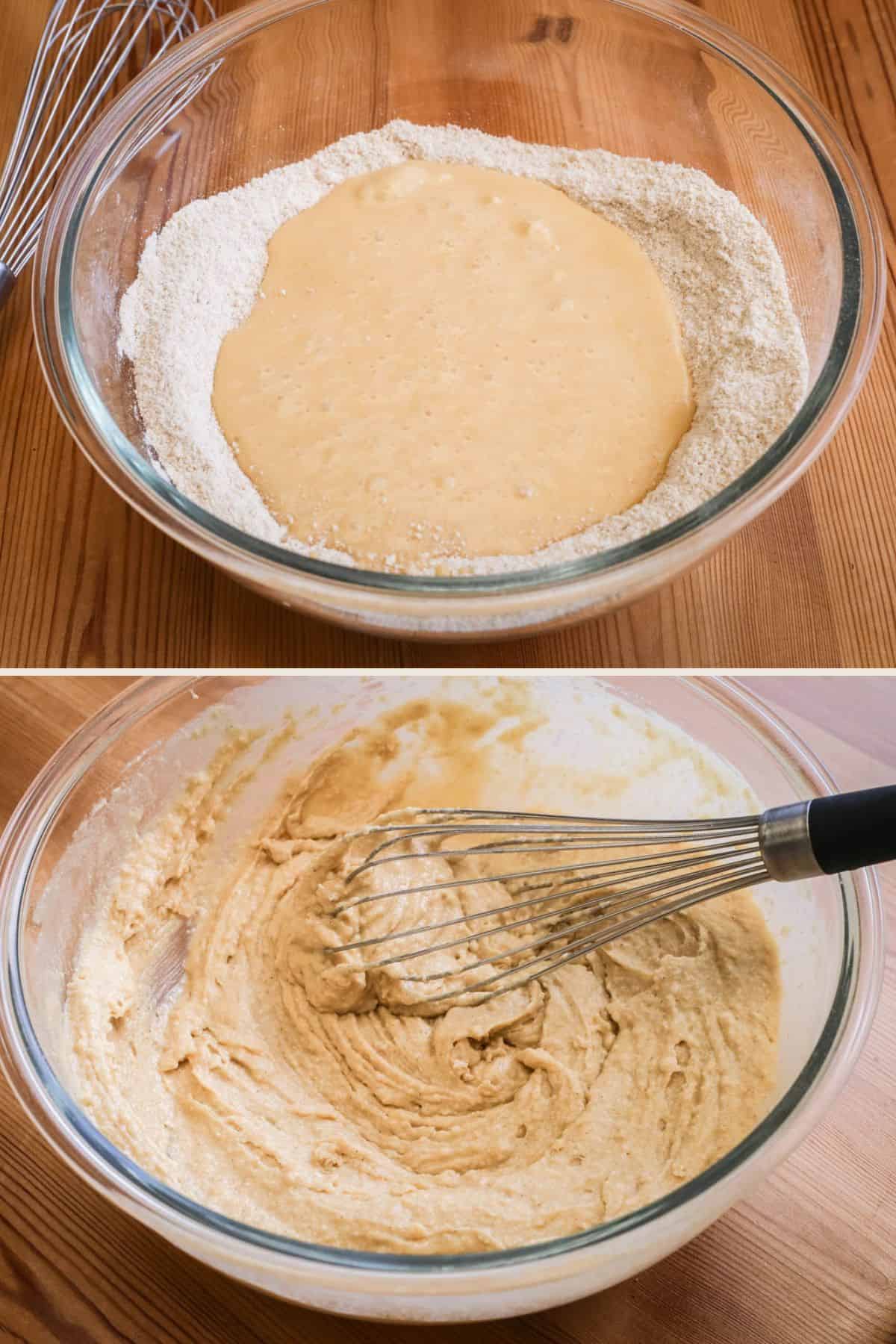
Pour the wet ingredients into the dry ingredients and stir to create a thick batter.
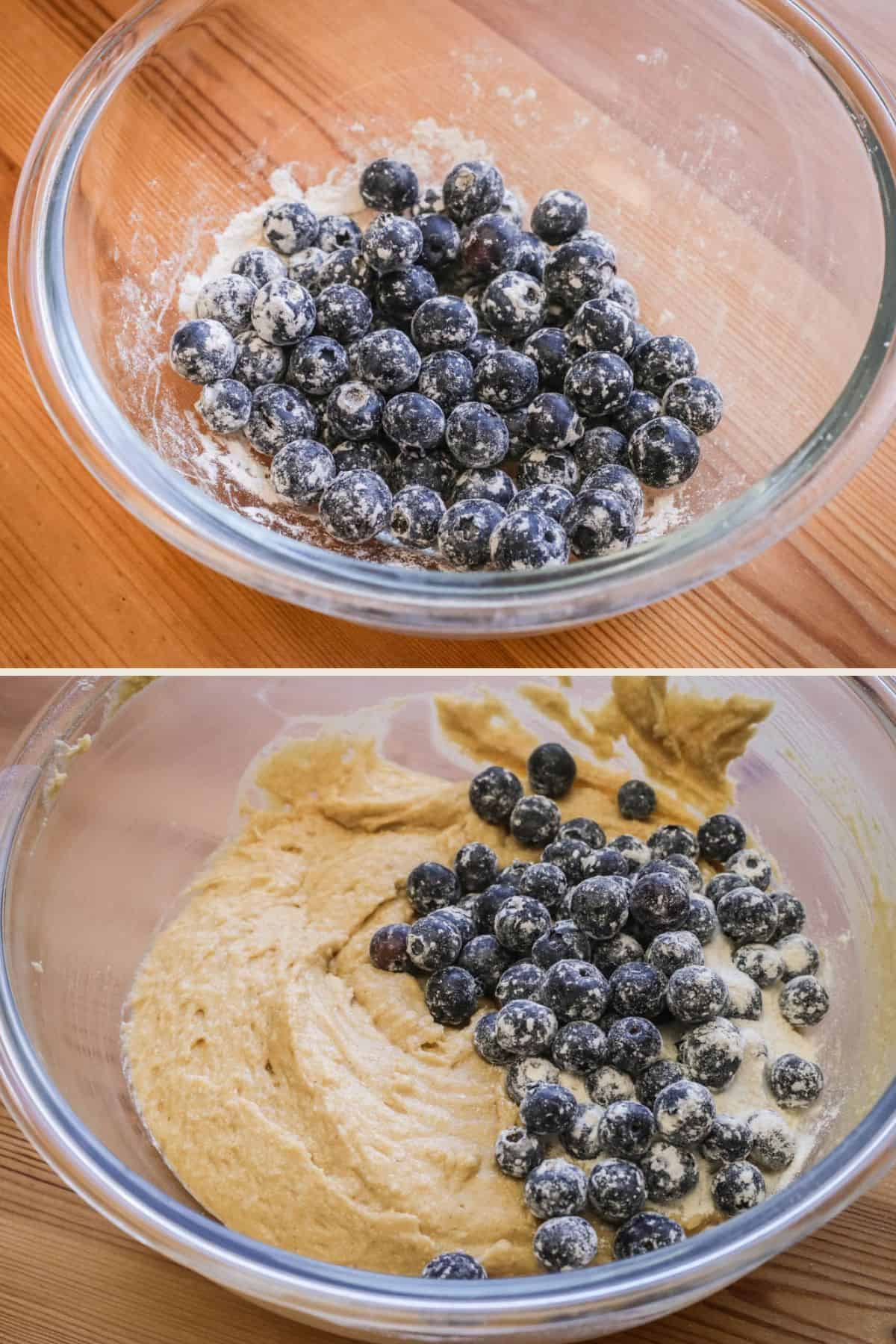
Toss the blueberries into some reserved flour then stir into the batter.
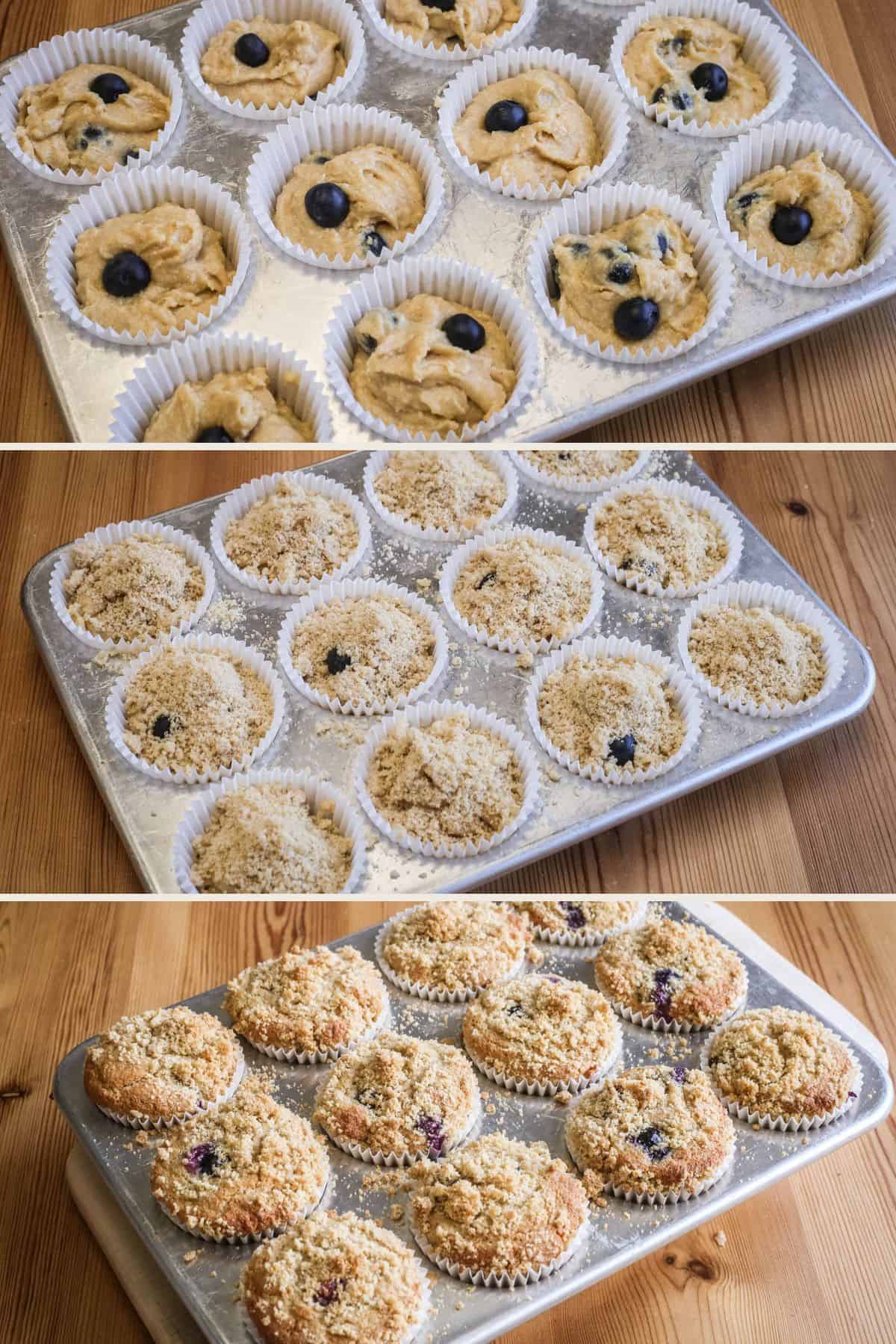
Divide the muffin batter evenly into the prepared muffin cases. Dot a few blueberries into the top of each muffin. Scatter over the streusel topping then bake for 5 minutes at a high temperature. turn the oven down and continue to bake for a further 20 minutes.
Tips & Troubleshooting
To ensure accuracy I measure my butter after melting as you do lose some butter in the saucepan as you are melting it.
Make sure the blueberries don’t sink in the batter by tossing in a little reserved flour which will help coats and hold the blueberries in place in the mixture.
Make sure the blueberries are completely dry before rolling in the flour.
If you are using frozen blueberries then do not thaw but use directly from the freezer and tossing in the flour
Placing the extra blueberries into the top of the muffins before adding the streusel topping means they poke through the streusel topping so after they are baked you can actually see the blueberries before biting into them.
Remove the muffins from the muffin tin as soon as they are baked.
Your muffins will be baked through when they are golden on top and an inserted skewer is removed from the muffin clean of any damp crumbs.
If you want extra crunchy streusel then you could place it in the freezer whilst you are preparing the muffin batter. This can help hold its shape and also help avoid it sinking into the muffin batter during baking.
FAQs
The blueberries will sink if the batter isn’t thick enough to hold the blueberries in place. This recipe uses a combination of a strong gluten-free flour blend and Greek yoghurt to create a thick batter.
The gluten-free flour you choose for blueberry muffins has to be strong enough to hold the blueberries throughout the batter so they don’t sink to the bottom. Many regular gluten-free flour blends have too much starch (including my own homemade gluten-free flour) which gives a lovely light crumb but is too soft to suspend the blueberries. Here we use almond flour in the mix which is a dense flour and creates a thick batter.
The thicker your batter is the less likely the streusel is to sink into the batter. If your butter is too soft (or you are substituting with oil) then the streusel also has a tendency to sink. By keeping the streusel flour heavy and the batter thick it should sit happily on top of the muffins. You could even try freezing the streusel topping for twenty minutes before adding it onto the muffins.
Your gluten-free muffins will bake up dry if they are overbaked, if they don’t have enough fat or if they have the wrong gluten-free flour. This recipe is perfectly balanced with the correct gluten-free flours to avoid dry muffins.
You can use frozen blueberries for this recipe, but use them directly from the freezer and add to the batter without thawing.
You can store the muffins in an airtight container (but preferably tin rather than plastic as it plastic will keep the muffins too moist). Then store them in a cool dark place for up to 5 days.
You can freeze the muffins successfully for up to 3 months. Place in a resealable freezer bag or airtight container. Don’t forget to label including the date. To enjoy, you can thaw them individually at room temperature for about 2 hours.
This recipe is for a standard sized cupcake and the liners measure 2 inches (5cm) at the base of the liner and are about 1.25 inches (4cm) tall.
Use a standard muffin tin or cupcake tin. I recommend using an aluminium baking tin which gives more even baking results.
Recipe Variations
Lemon Blueberry Steusel Muffins. You can add the zest of 2 lemons to your batter and finish the muffins with a lemon glaze (100g icing sugar + 1-2 tablespoons of fresh lemon juice whisked together until smooth) drizzled over each muffin.
Dairy-Free Gluten-Free Blueberry Muffins. You can swap the melted butter in the batter for 60g olive oil. You can also swap the room temperature butter in the streusel for 1 tablespoon olive oil. You can substitute the Greek yoghurt for plant-based yoghurt like The Coconut Collab Natural Coconut Yoghurt.
Mixed Berry Streusel Muffins. You can swap the blueberries for frozen mixed berries.
More Gluten-Free Muffin Recipes You’ll Love
Gluten-Free Apple Pie Muffins are soft and fluffy cinnamon spiked muffins, generously topped with a mound of sweet buttery cinnamon apple chunks and a crisp streusel topping.
These Gluten-Free Lemon Poppy Seed Muffins are light, bright and zesty. Moist, bouncy and incredibly moreish.
Gluten-Free Chocolate Chip Muffins are quick and easy to make in one bowl. No xanthan gum is needed and the results are light, fluffy, rich with vanilla and packed with chocolate.
Enter your email below to get this recipe sent to your inbox plus get new recipes, baking tips, and updates.

Gluten-Free Blueberry Streusel Muffins
Ingredients
Streusel topping
- 30 g sorghum flour
- 30 g almond flour - (called ground almonds in UK)
- 15 g cassava flour
- 35 g light soft brown sugar
- 30 g unsalted butter - softened
- ⅛ teaspoon salt
Muffins
- 100 g sorghum flour
- 100 g almond flour - (called ground almonds in UK)
- 50 g cassava flour
- 1 ½ teaspoons baking powder
- ½ teaspoon bicarbonate of soda
- ¼ teaspoon salt
- 100 g caster sugar
- 50 g light soft brown sugar
- 60 g unsalted butter - melted
- 2 eggs
- 2 teaspoons vanilla extract
- 160 g Greek yoghurt
- 175 g blueberries
Instructions
- Pre-heat oven to 220°C / 200°C fan assisted / gas mark 7 / 425°F. Line a 12 hole regular sized muffin tin with muffin cases.
- Prepare streusel topping first by whisking together the sorghum flour, almond flour, cassava flour, brown sugar and salt in a bowl.
- Add the softened butter in and rub together with your fingertips until you create a sandy texture. Set aside whilst you prepare the main muffin mixture.
- In a large mixing bowl, whisk together the sorghum flour, almond flour, cassava flour, baking powder, bicarbonate of soda and salt. Reserve 2 teaspoons for mixing with the blueberries.
- In a separate bowl, whisk together the sugars, eggs, Greek yoghurt, melted butter and vanilla extract.
- Pour the wet ingredients into the dry ingredients and stir until well combined.
- Pour the blueberries into a smaller mixing bowl and remove a small handful for dotting on the top of the muffins.
- Sprinkle in the 2 teaspoons of reserved flour mix and toss together so the blueberries are coated in flour.
- Stir the rest of the blueberries into the batter.
- Divide the muffin batter evenly into the prepared muffin cases.
- Dot in the remaining blueberries so there’s 1-2 in the top of each muffin.
- Scatter the streusel topping equally over the top of each muffin.
- Place the muffins in the oven and bake at the high temperature for 5 minutes. Turn oven down to 180°C / 160°C fan assisted / gas mark 4 / 350°F and bake for a further 20 minutes.
- Once baked, immediately remove the muffins from the tin and allow to cool on a wire rack completely.