Gluten-Free Coconut Cake
This post contains affiliate links. Please read my disclosures.
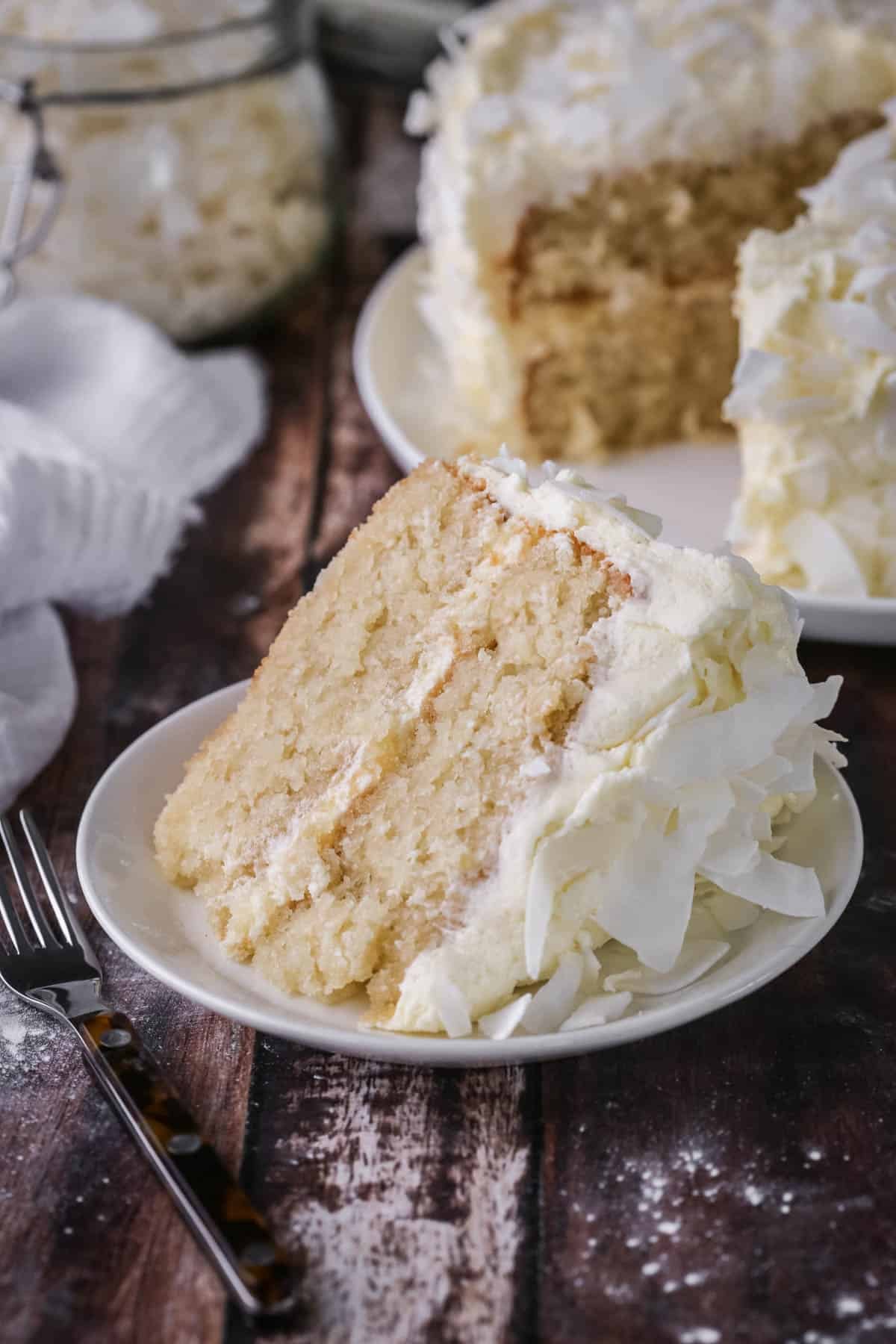
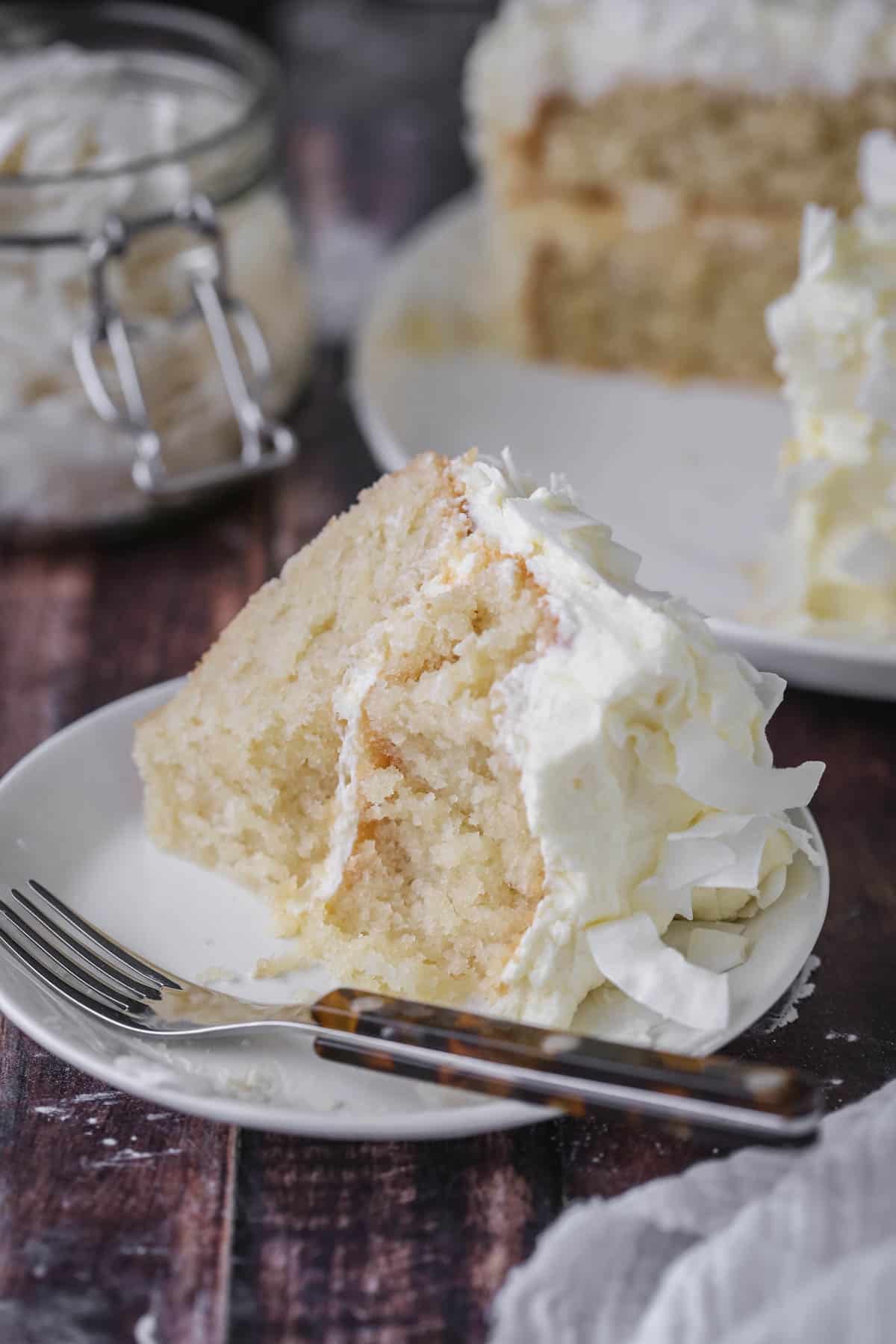
A soft moist and easy Gluten-Free Coconut Cake. Made with a homemade gluten-free flour blend and no xanthan gum. Filled and covered with a light fluffy coconut buttercream. This cake is packed with layers of coconut flavour in every bite.
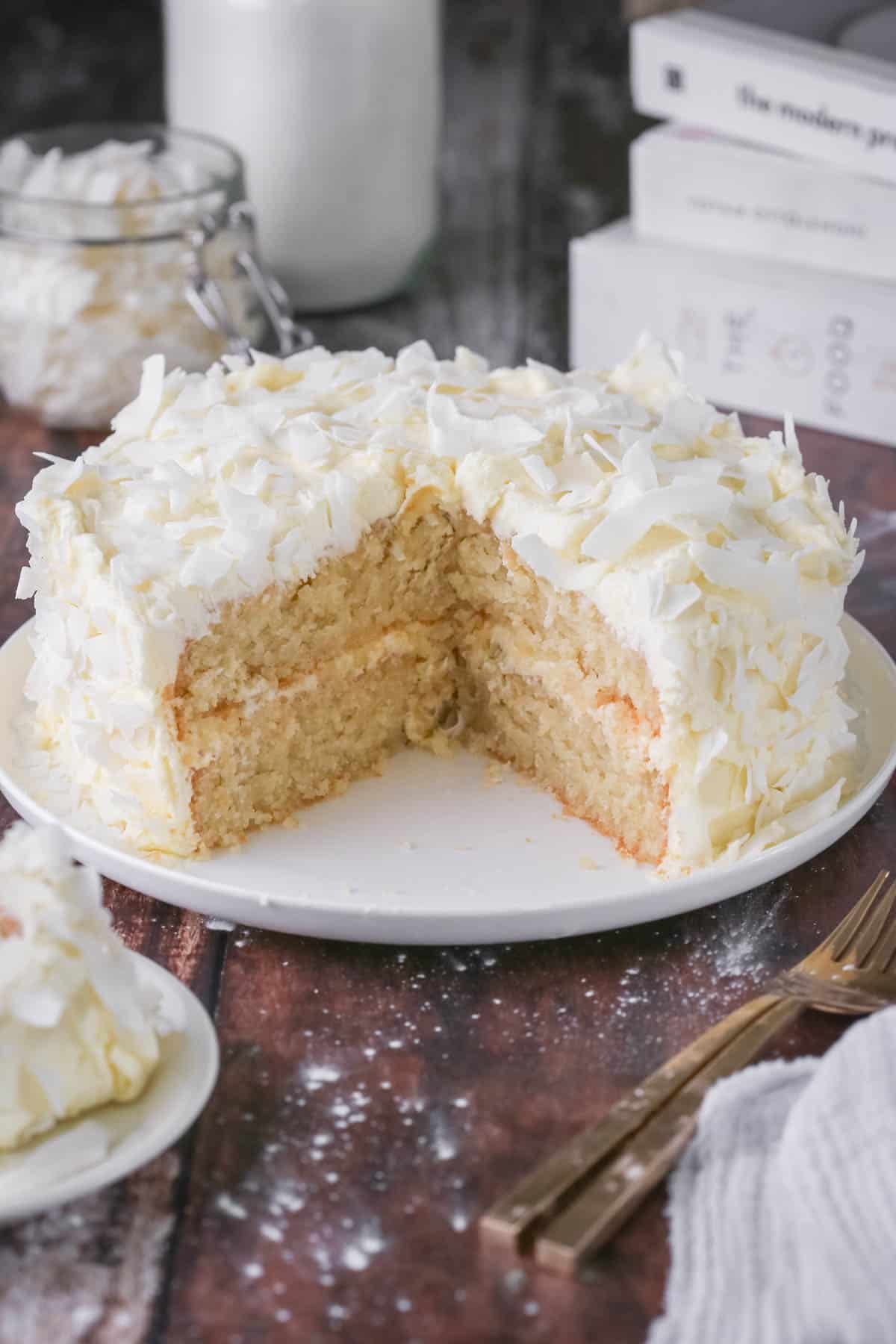
This is Luke’s birthday cake of choice which I bake for him every year. It’s soft, moist and crams so much coconut flavour into the cake layers and the ultra light and creamy buttercream.
We are working with creamed coconut, desiccated coconut, coconut flour, coconut oil and coconut flakes. So yes, we’re going all in.
Coconut flour can be a bit of a tricky customer as it’s a highly hygroscopic flour which means it absorbs and holds onto a lot of moisture. This can sometimes mean your coconut flour bakes are dry and dense but don’t worry there’s absolutely no issue with that here. That’s because we team the coconut flour (for the flavour) with almond flour which is a very moisture driven flour. The two flours balance each other out in texture and also flavour so your cake holds together, doesn’t crumble and keeps soft and moist for days! Plus no need for xanthan gum.
We’ll go through how quick and easy it is to assemble this cake so you prepare a foolproof and stress-free gluten-free cake for the coconut lovers in your life.
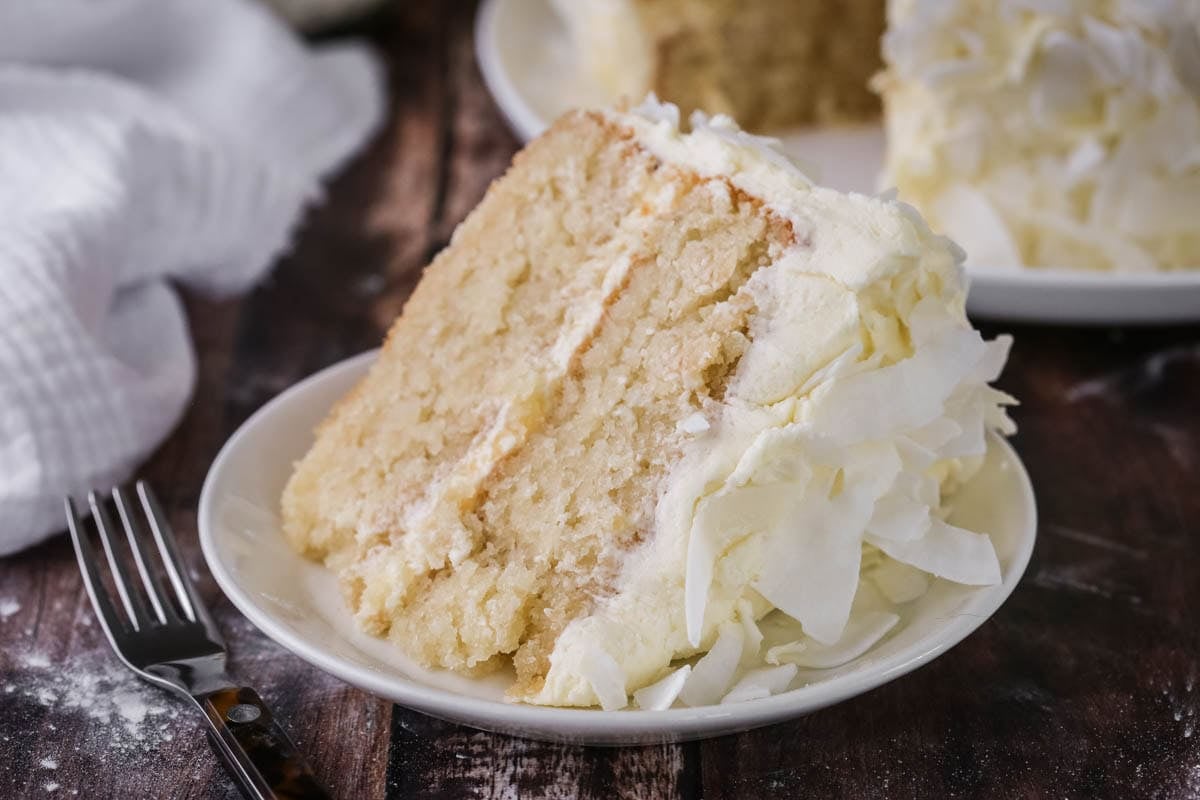
Why You’ll Love This Gluten-Free Coconut Cake
- Plenty of coconut flavour as we are using it in every layer of this cake from the flour to the fat to the buttercream.
- Really fast and simple to put together, no complicated method.
- Keeps well for a few days at room temperature (depending on your climate).
- No xanthan gum as we have a cake mixture which is high in eggs and has a perfect flour balance for structure.
Watch the Video
Sometimes it helps to see a visual of what I'm talking about. So watch the video to see what it looks like to make your Coconut Cake.
Ingredients Needed
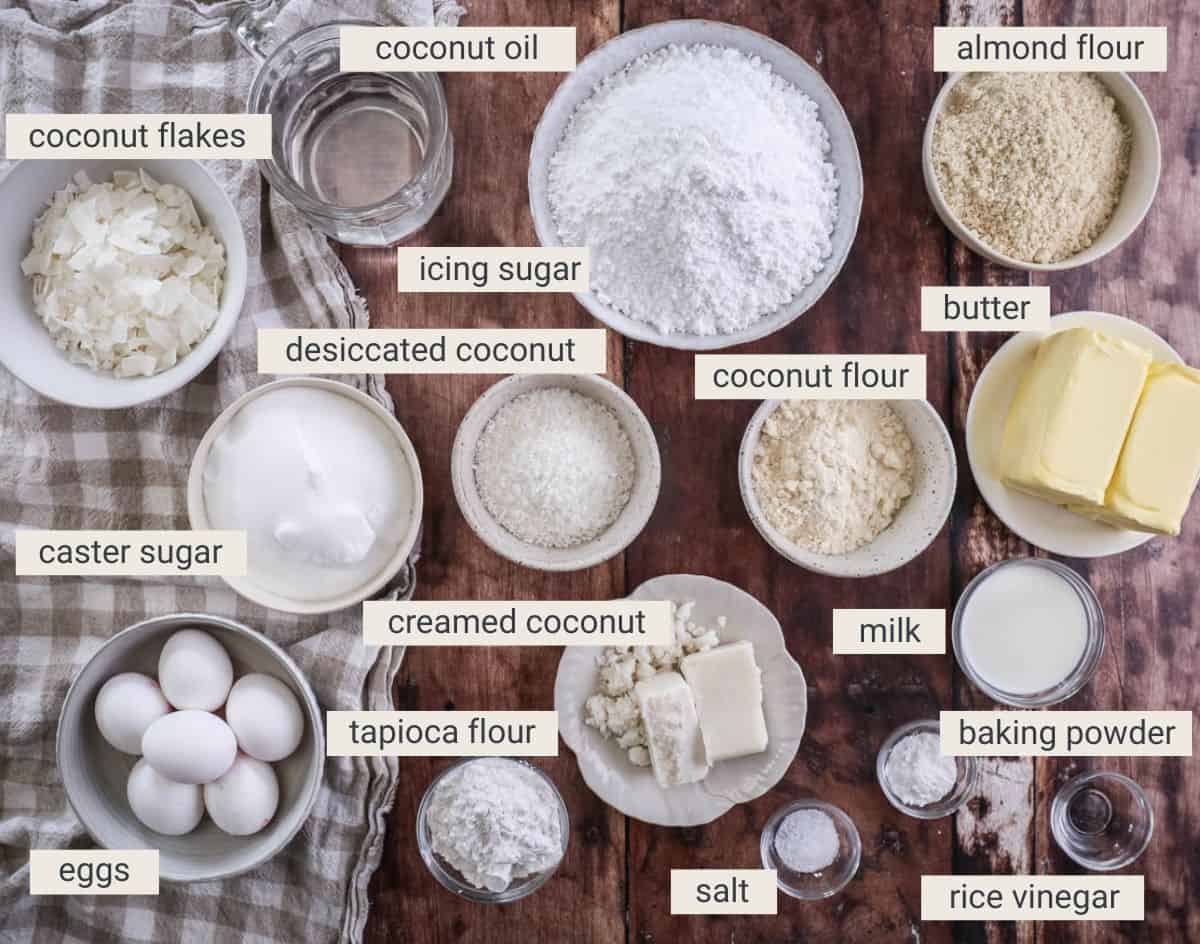
Creamed coconut. This is sold as a solid white block and is made from pure ground coconut flesh and contains the whole coconut meat, including the natural oils and fibre. It’s different from coconut cream which is often sold in a tin (or skimmed off the top of your tin of coconut milk). To use creamed coconut in the cake and the buttercream you need to hydrate it by dissolving in warm liquid to create a smooth paste. It’s easy to buy from most high street supermarkets and can be found in the World Foods / International Foods aisle and is often stocked alongside the coconut milk. You can use any but my favourite brand to use is Blue Dragon as it doesn’t have any added ingredients or stabilisers – it’s just pure coconut meat.
Desiccated coconut. We’re using this kind of coconut for flavour and texture rather than anything structural as it doesn’t have the same kind of moisture absorption as the coconut flour. We soak it in the hydrated creamed coconut to soften before adding it into our cake batter.
Caster sugar. It’s a fine white baking sugar available in the UK. Regular white granulated sugar can be substituted.
Coconut oil. Anything to achieve more coconut flavour. It can be cost prohibitive though, depending on where you are buying it from so you can substitute for a light olive oil or vegetable oil.
Eggs. This recipe uses medium size, about 60g each with shell (50g each without shell). These are often classified as large eggs in the US. I recommend weighing your eggs to ensure the correct amount.
Almond flour. You are looking for blanched ground almonds. There is a bit of labelling confusion over almond flour which is sold as ‘ground almonds’ in most major UK supermarkets and found in the baking aisle. If you want to know what exactly you are looking for then check out this post >>> Is Almond Flour The Same As Ground Almonds.
Coconut flour. I stayed away from coconut flour for years as it’s so tricky to work with. It absorbs so much moisture that you have to make sure your bake has a high liquid content to counteract. However, if you experiment with blending it with the right gluten-free flours you will achieve more success and coconut flour gives a really good flavour and texture.
Tapioca flour. To balance out our flour trio we blend in tapioca flour which helps bind the batter and also lighten it, otherwise the almond flour and coconut flour together can be a little dense.
Baking powder. A leavening agent which causes the cake to rise and become light and fluffy. Do check your baking powder is gluten-free before use.
Unsalted butter. We need unsalted so we can control the salt content of the buttercream. Make sure it is softened which is slightly more soft than room temperature. You will be whipping it as well before adding the icing sugar as it needs to be ultra creamy.
Icing sugar (powdered sugar). I prefer to use icing sugar rather than caster sugar in buttercreams as it dissolves more easily which means an easy to achieve smooth texture which can whip up like a dream.
Milk. This is for the creamed coconut to be mixed into to create a thick coconut paste for flavouring your buttercream. Use whole milk for a fuller flavour.
Salt. I like to use kosher salt in my baking as it has a round gentle flavour. Using salt in your baked goods lifts and sharpens all the other flavours. It should absolutely not be skipped in our buttercream.
Rice vinegar. Once you start adding vinegar to your classic buttercream there will be no turning back. It is not noticeable at all but really helps soften the sweetness. In a blind taste test the version with added vinegar is always preferred.
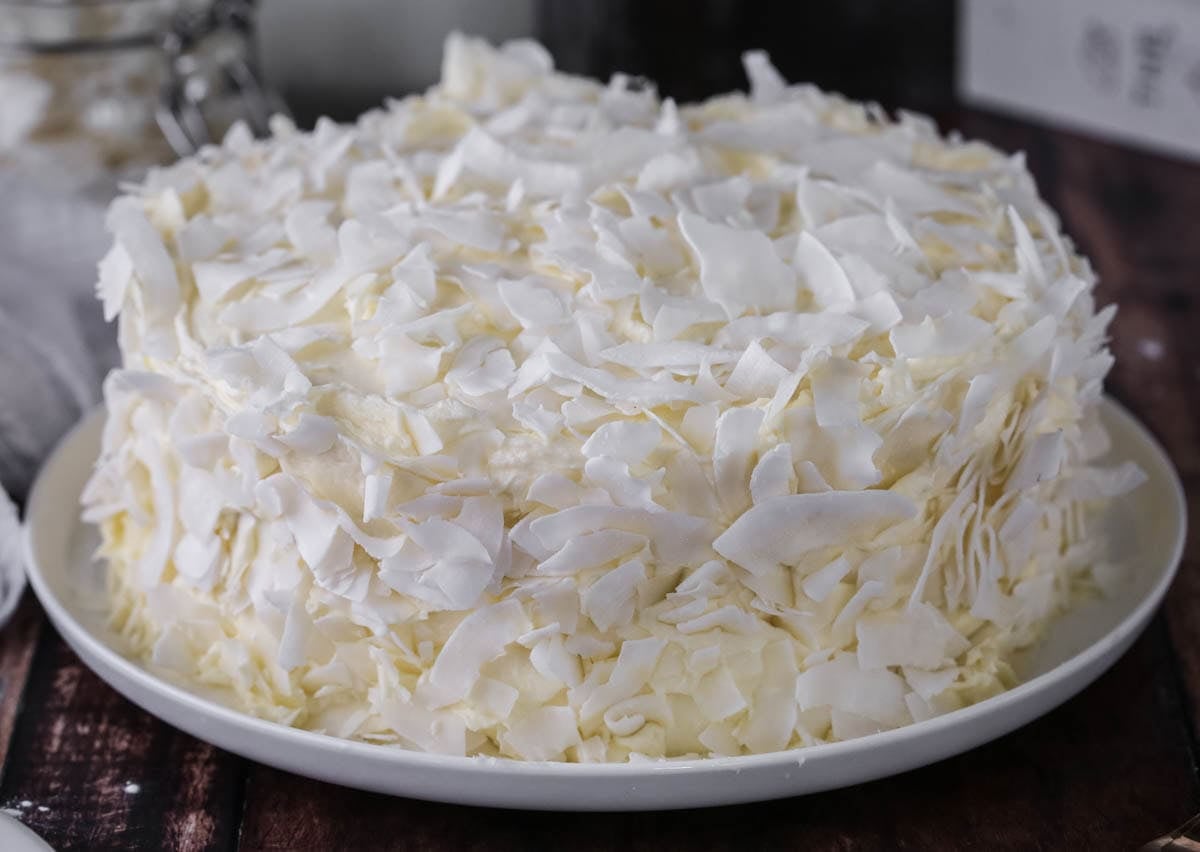
How To Make Gluten-Free Coconut Cake
For full recipe instructions go to the recipe card at the end of this post.
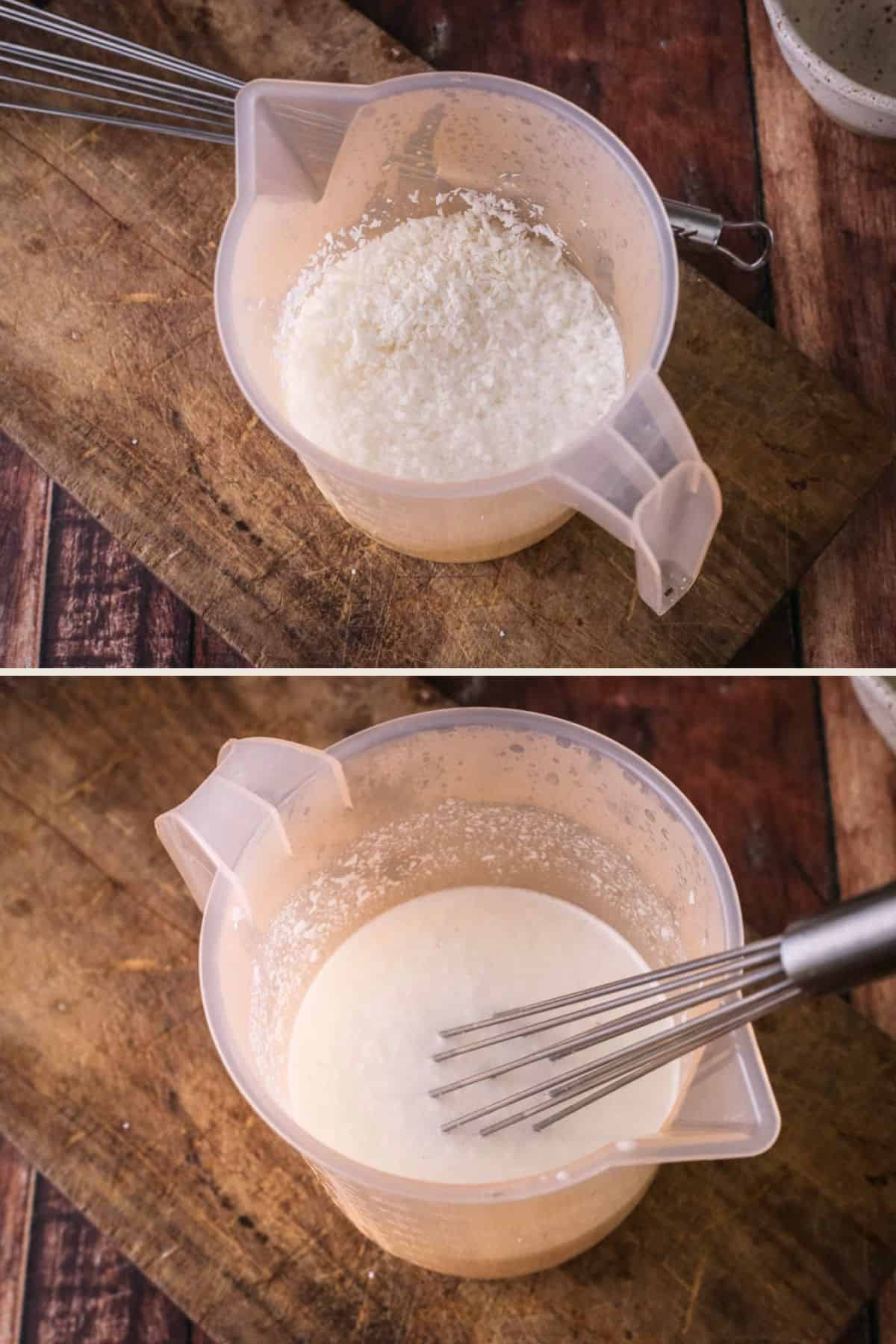
Whisk creamed coconut and desiccated coconut into just boiled water until the creamed coconut has dissolved.
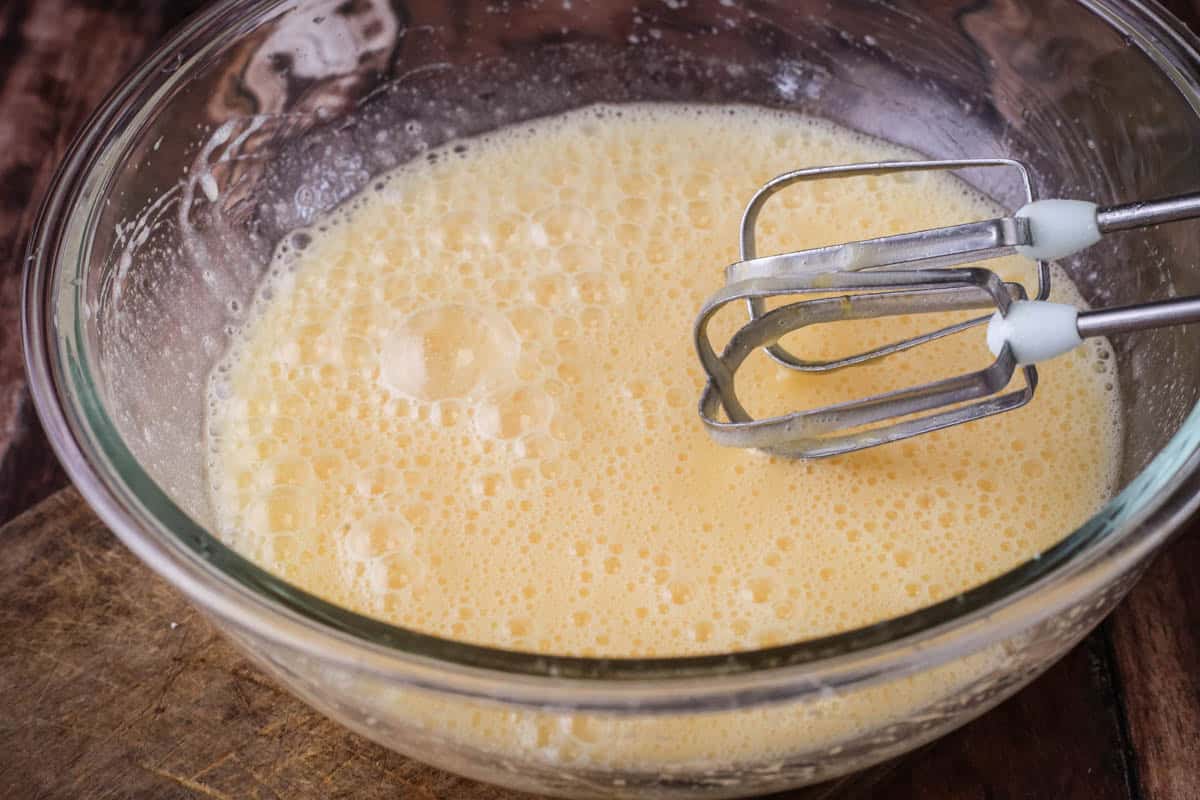
Whisk together the sugar, coconut oil and eggs in a large mixing bowl until completely combined.
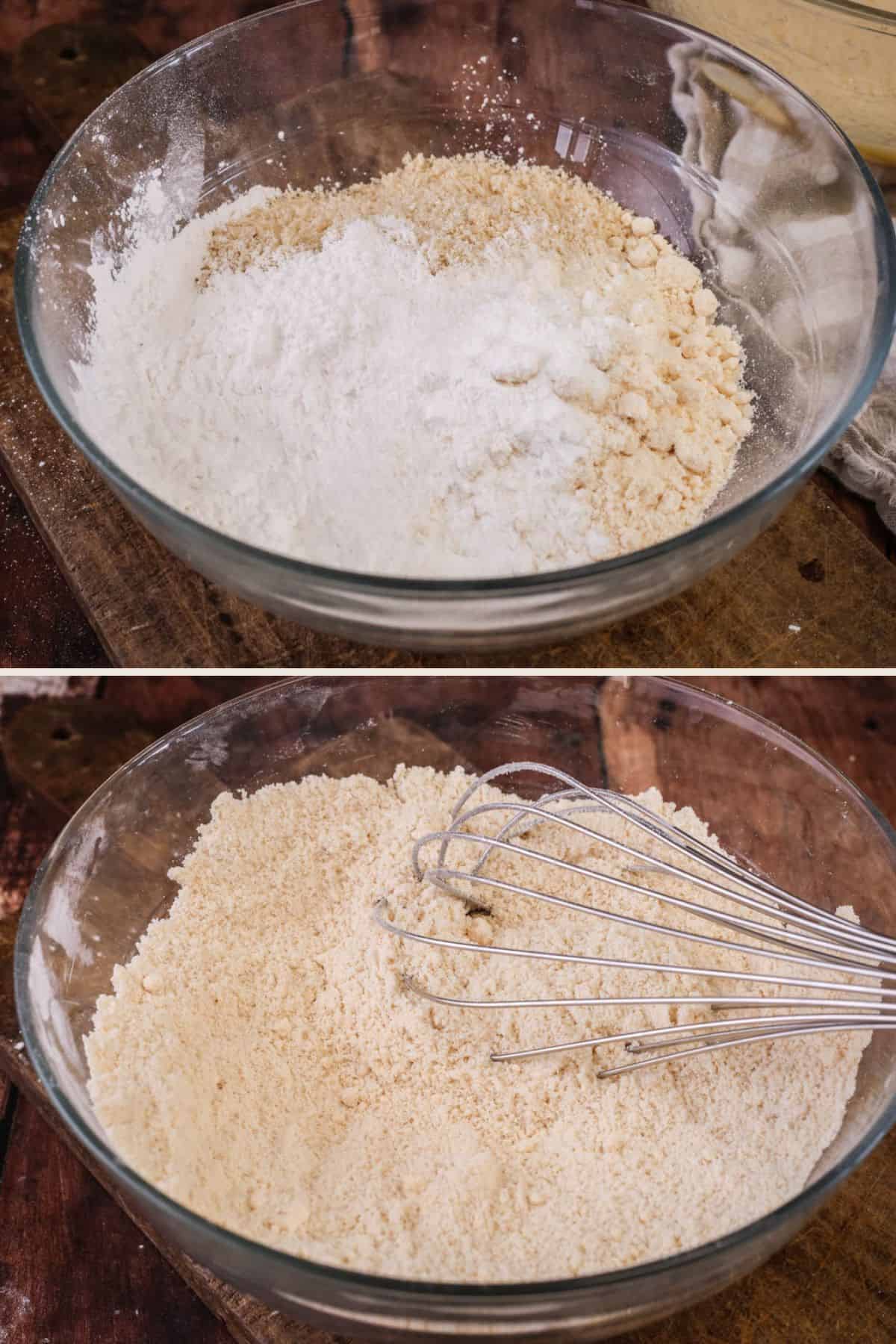
Whisk the flours, baking powder and salt together in a separate mixing bowl.
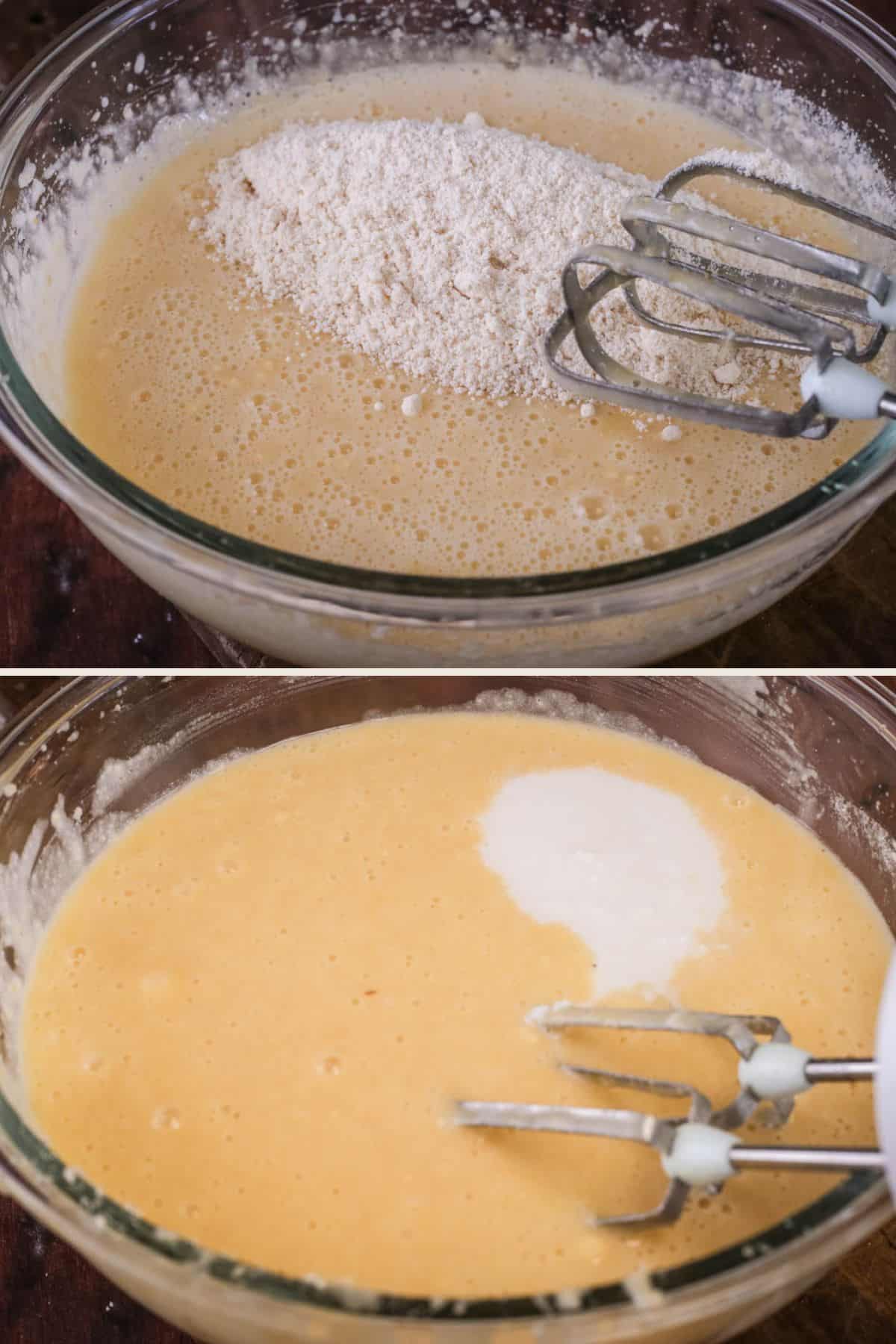
Add the flour and coconut mixture alternately, mixing in two additions.
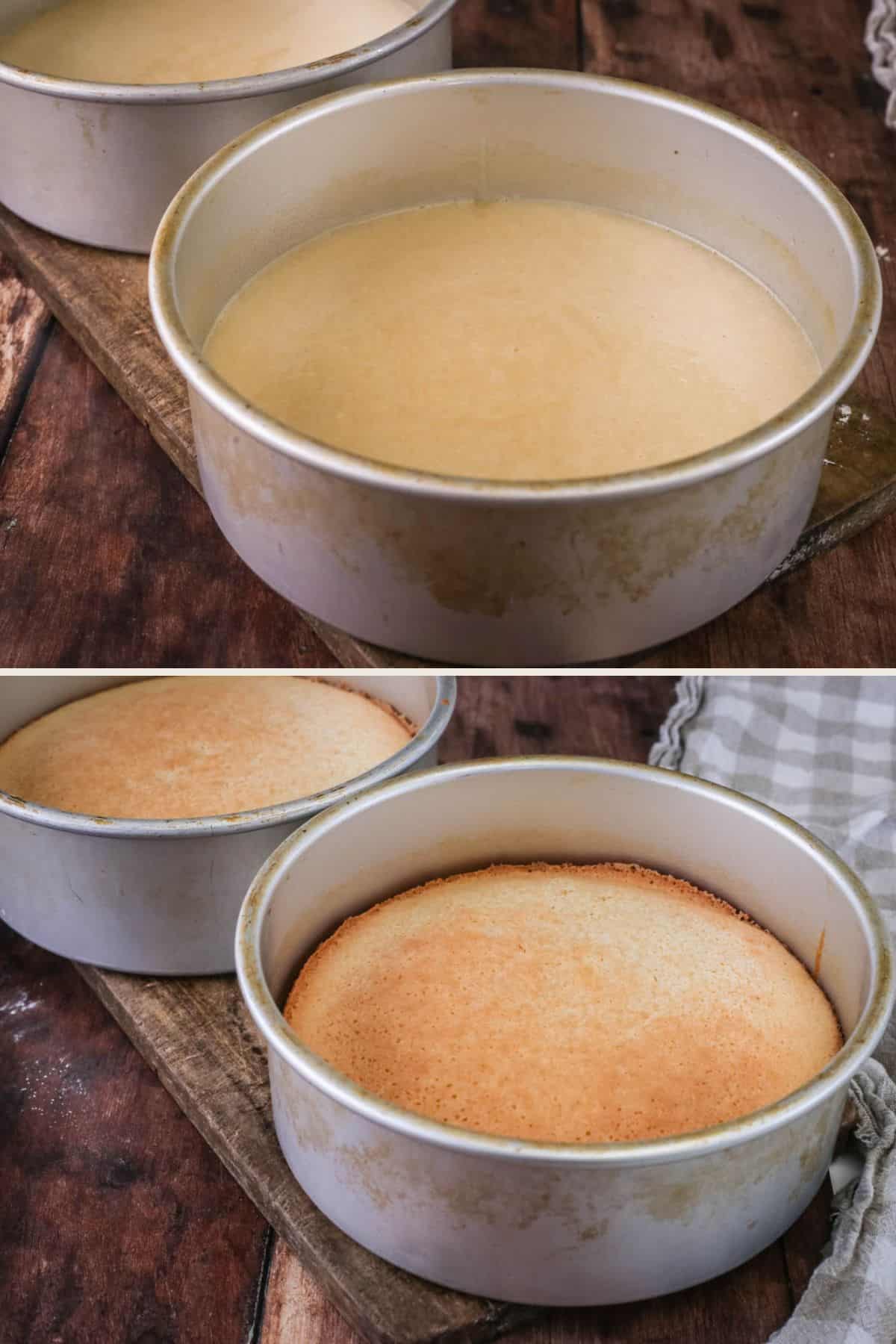
Divide the cake batter between the two cake tins and bake for 35 minutes. Remover from the tins and allow to cool.
Buttercream
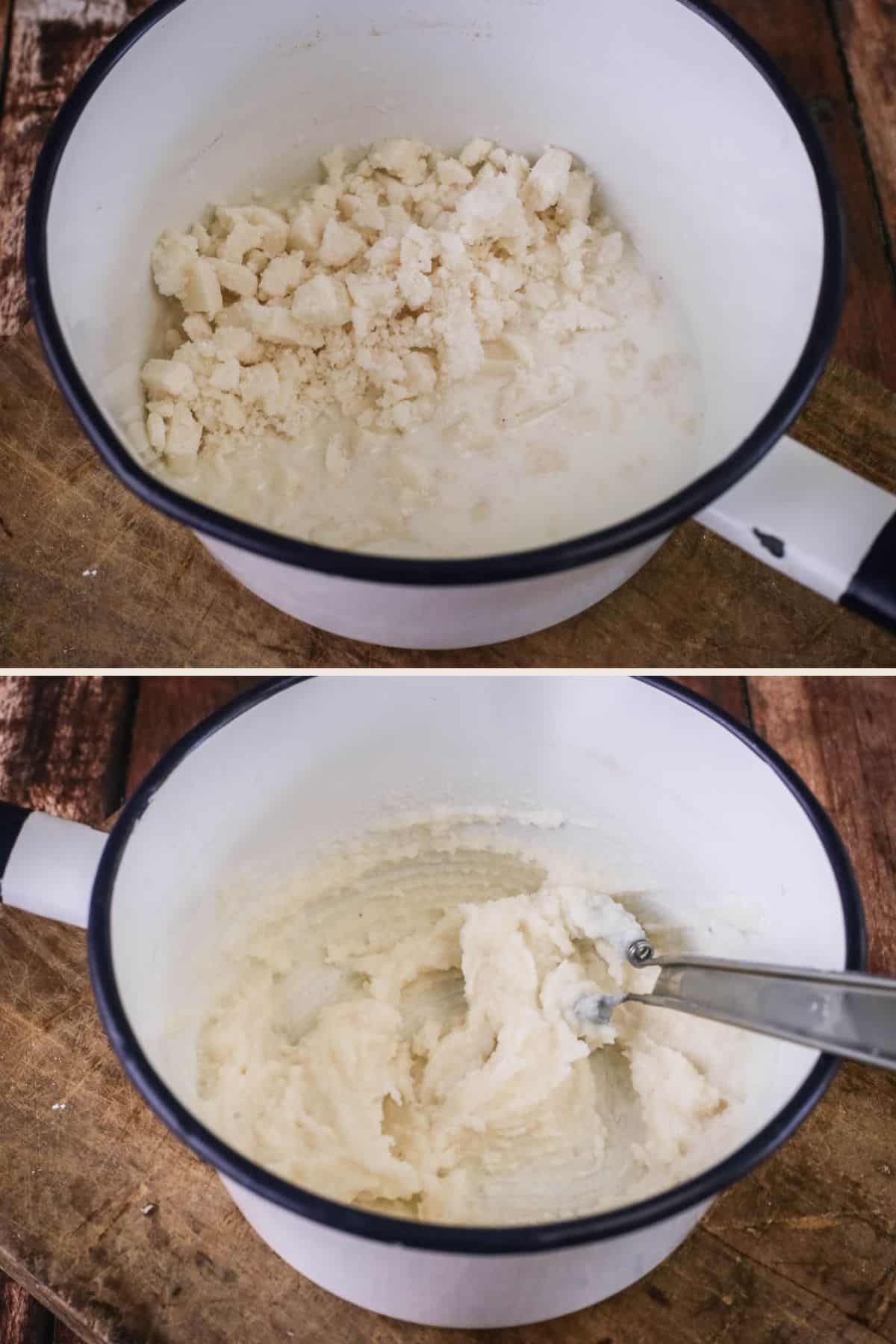
Whisk creamed coconut into warmed milk to create a smooth thick paste.
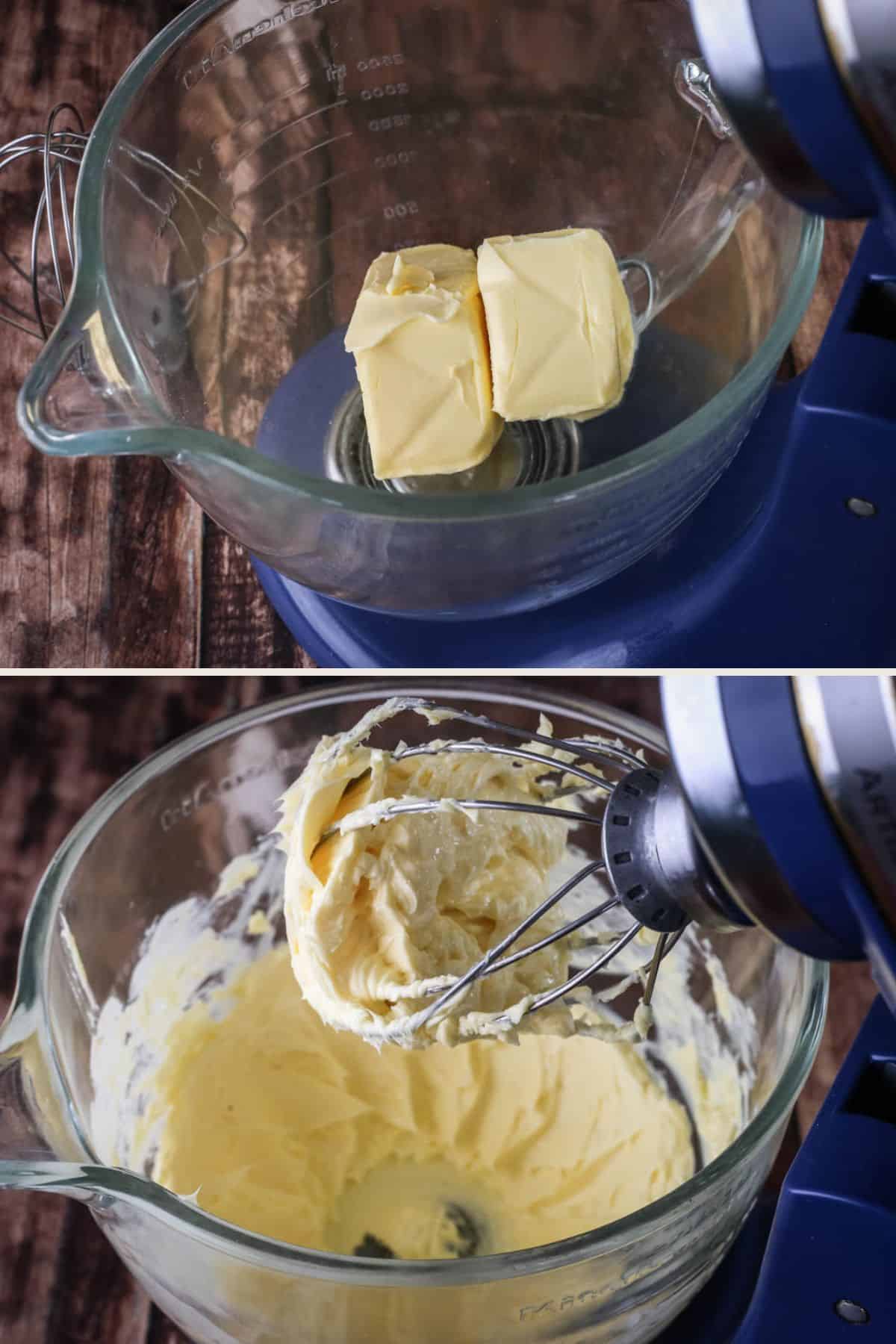
Place softened butter in the bowl of a stand mixer (food mixer) and whip until ultra creamy.
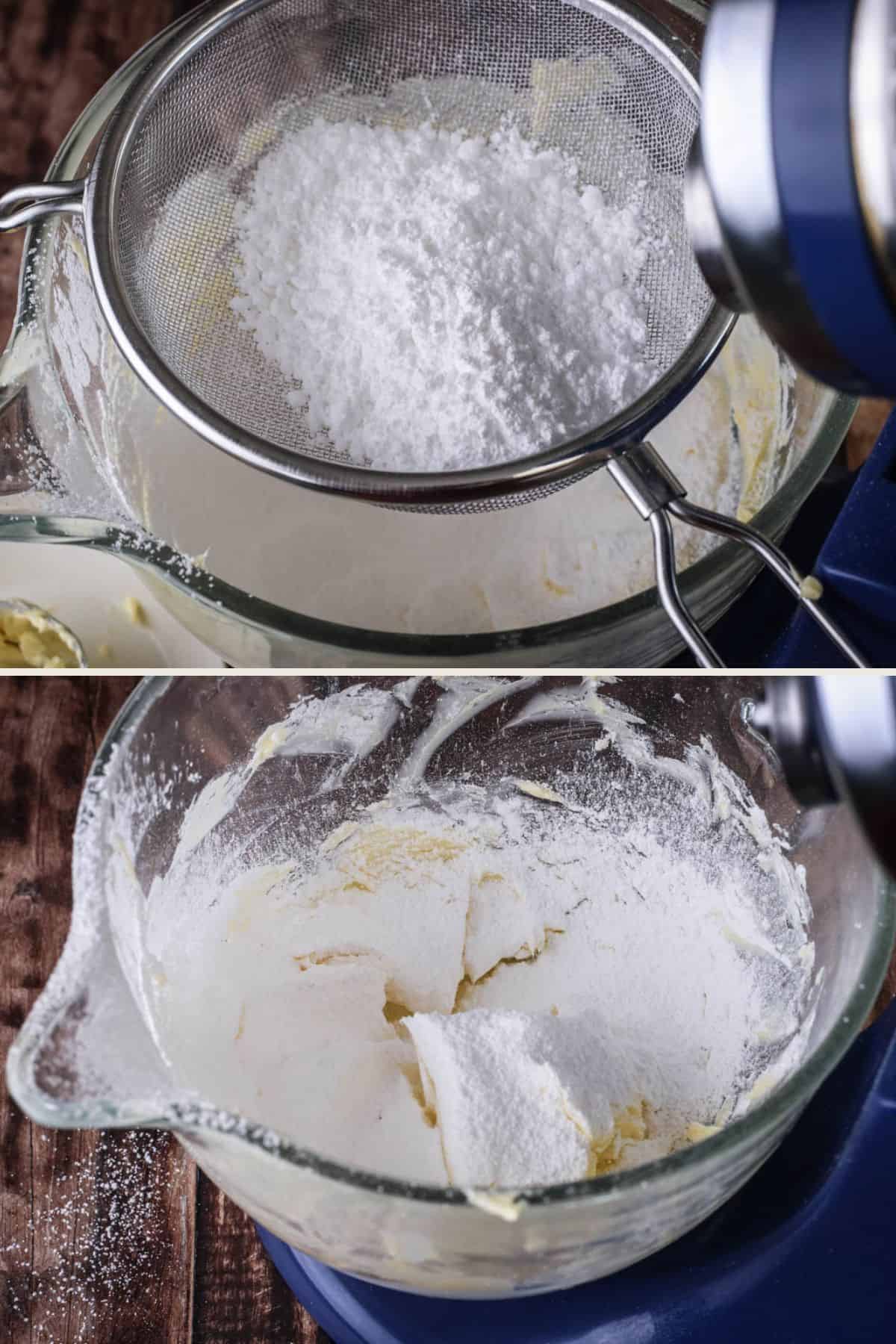
Sift in the icing sugar 1 cup at a time. Stop the mixer each time to bring the bowl out, scrape down and then sift in the icing sugar and whip it into the butter on the lowest speed of the mixer.
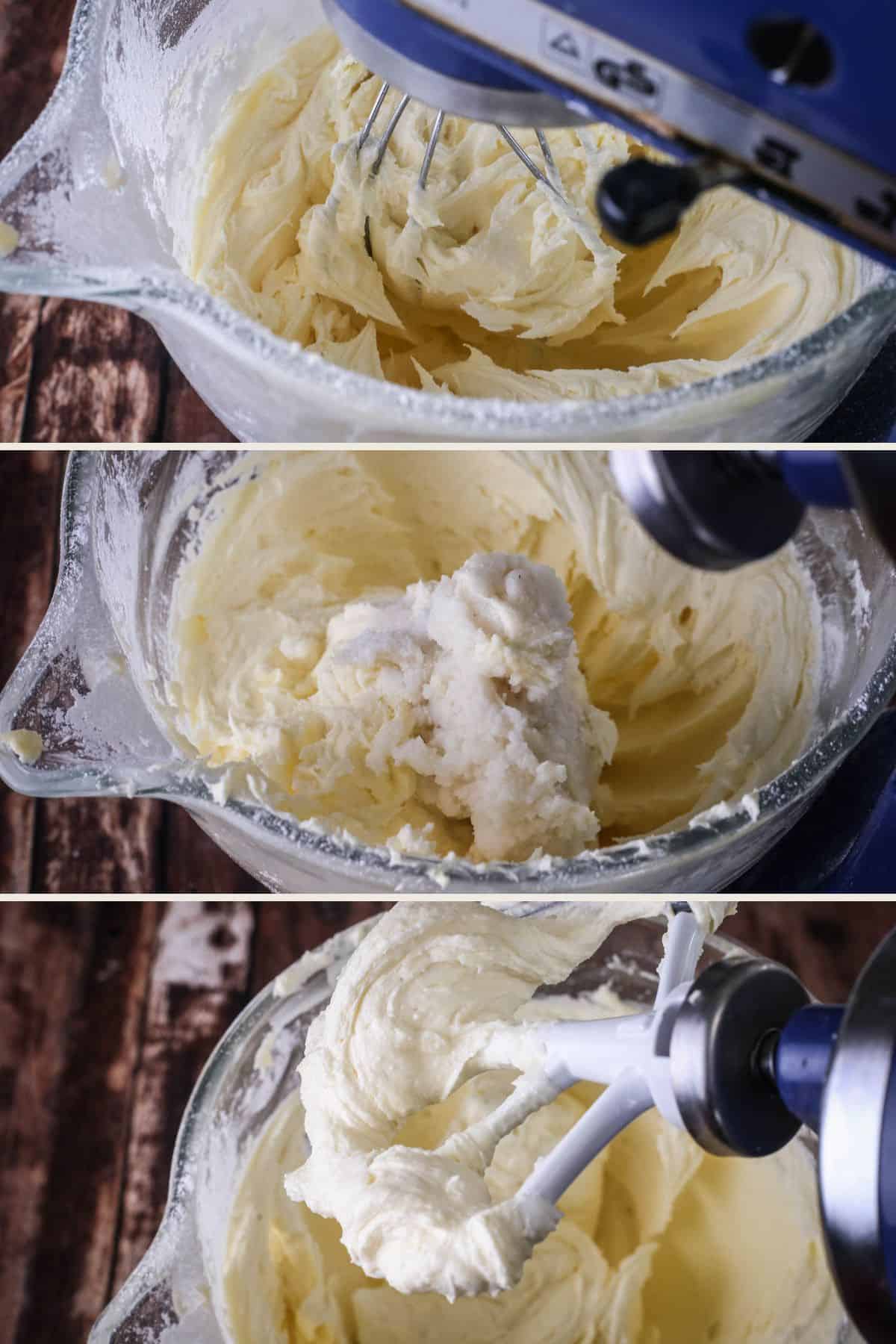
Once all the icing sugar has been added, then continue to mix the icing sugar and butter on the lowest setting for 6-7 minutes. Add the creamed coconut mixture, salt and rice vinegar and mix for a final 2 minutes.
Assembly
Place one of the sponge layers on a 20cm (8 inch) cake board, or just directly onto a serving plate (preferably on a cake turntable if you have one), and spread ¼ of the total amount of buttercream over the surface of the sponge,
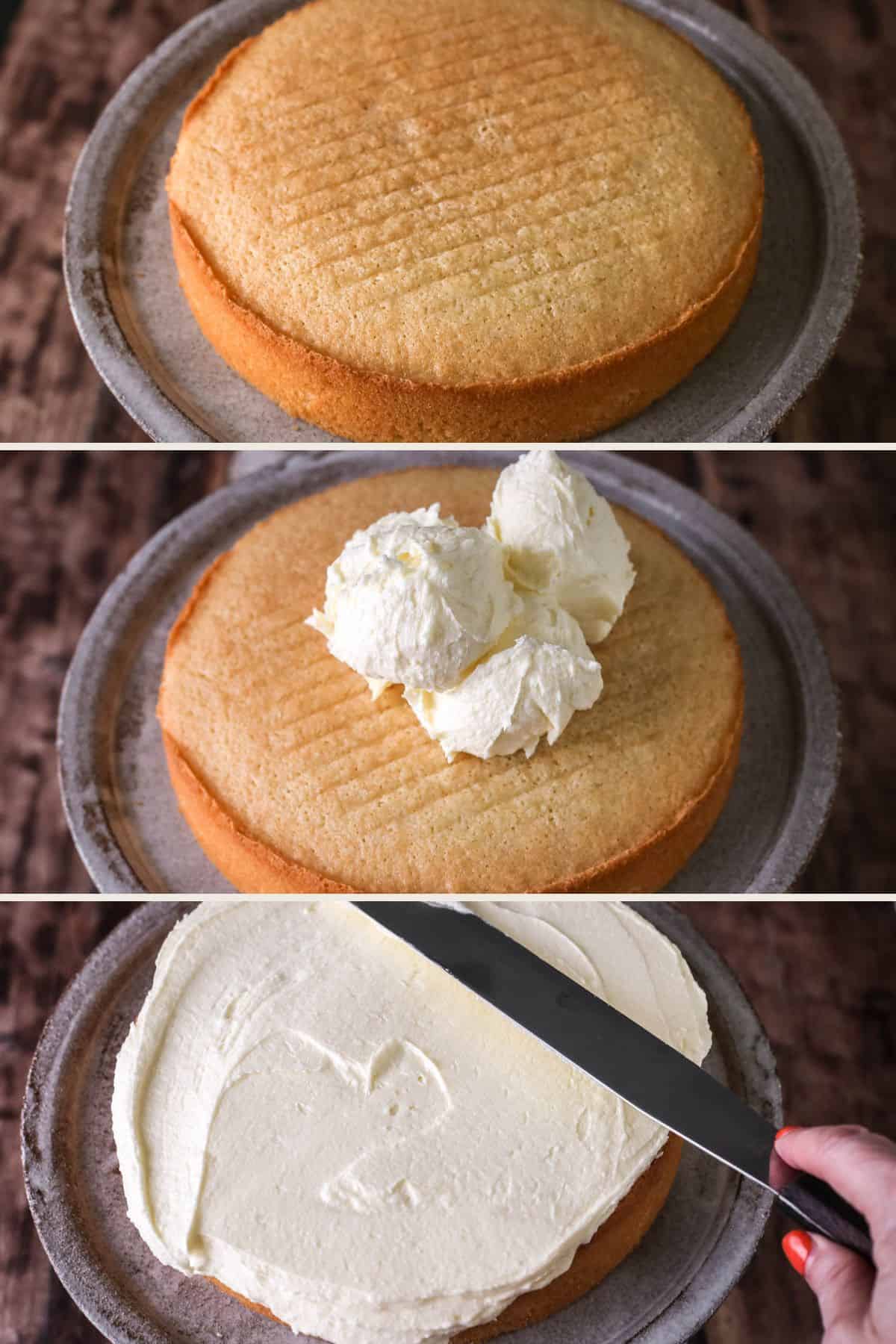
Place the second sponge layer on top and smooth buttercream over the top of the cake.
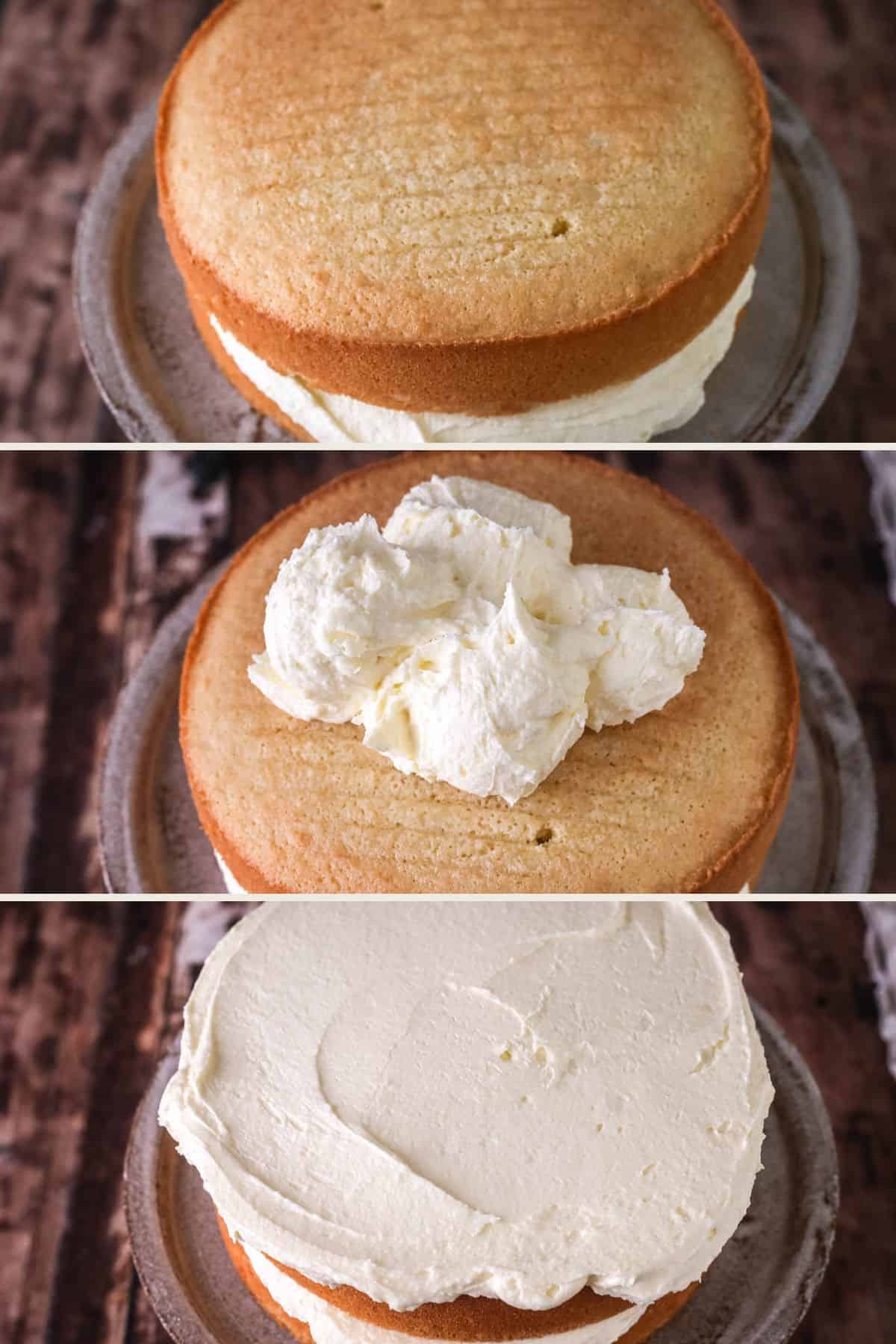
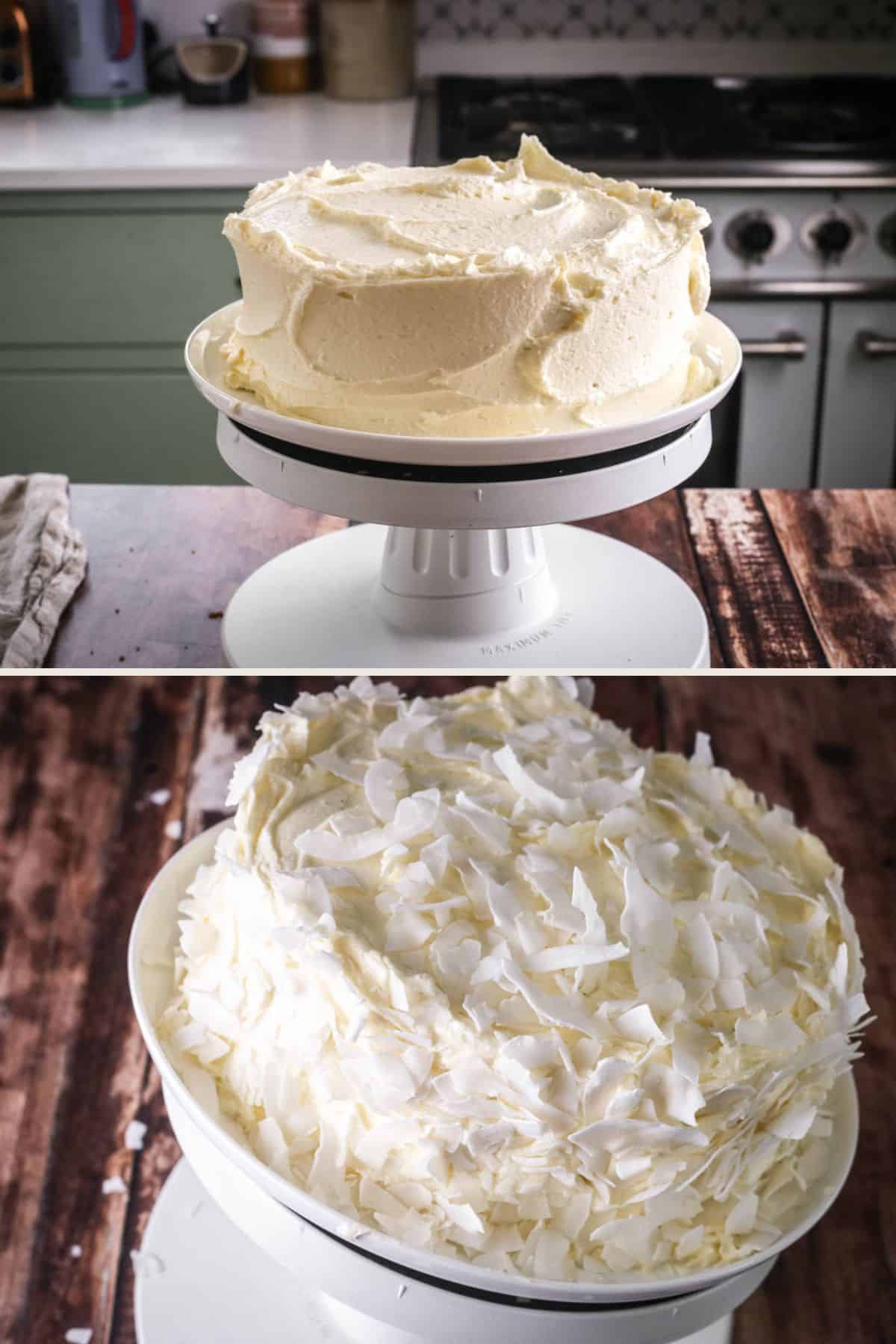
Finish covering the cake sides with the rest of the buttercream. Decorate the whole of the cake with coconut flakes. If you are using a cake turntable you may find it easier to tilt it to press the flakes onto the side of the cake.
Tips & Troubleshooting
A 5-10 minute resting time before you pour the cake batter into the cake tins will help your coconut flour to hydrate properly before baking. After the resting time, give the batter a quick stir before pouring into the cake tins and baking as per the recipe.
When it’s ready the cake should look golden and the sponges pulling slightly away from the sides of the tin.
To test the cake for doneness place a skewer in the centre of the cake. Once its pulled out it should be clean of any wet crumbs. If not, then place back in the oven for a further 5 minutes.
This cake holds a lot of moisture, allow to cool completely before serving, which will avoid any gummy texture.
It’s easiest to decorate the cake with the coconut flakes if you put the cake on a cake turntable which tilts. Make sure the cake is firm on the table then tilt the table and press the flakes onto the higher sides (you can see me demonstrate this in the video).
Make Ahead
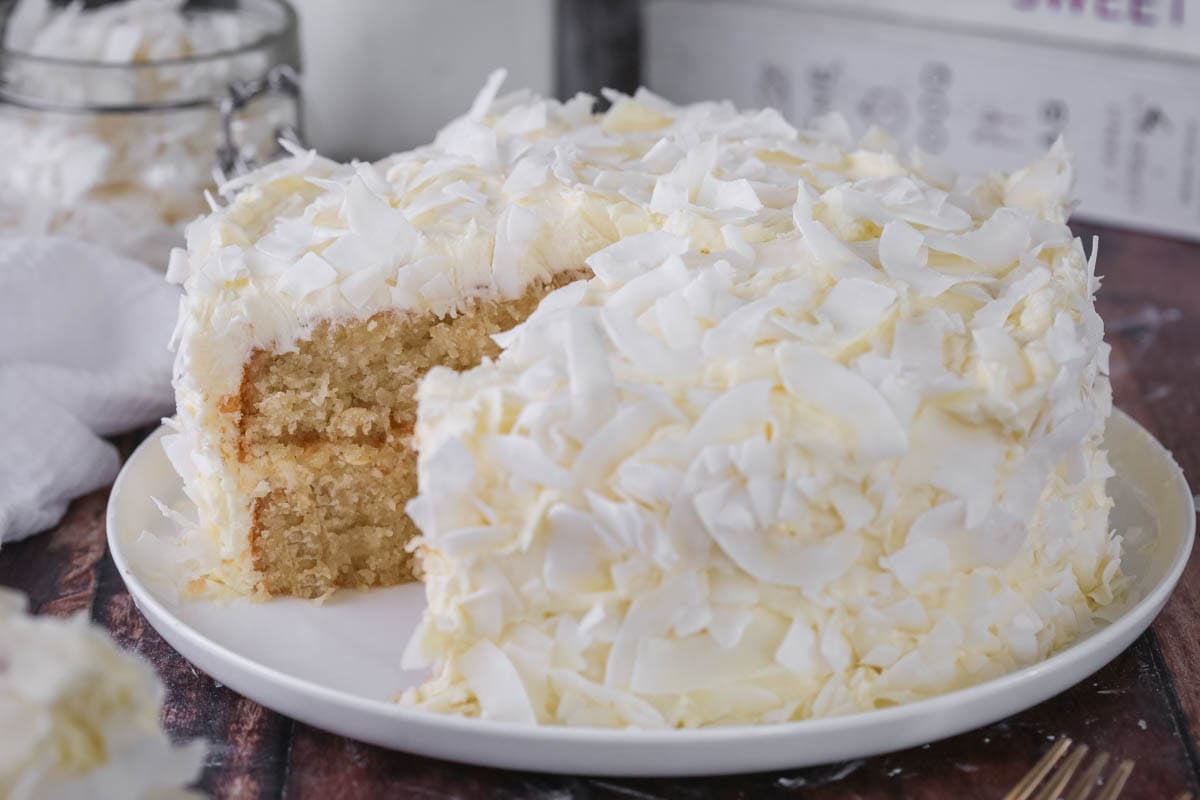
This cake can be stored in an airtight container in a cool dark place at room temperature (as long as it’s not too warm – in which case it will need to be refrigerated) for up to 3 days. If you have refrigerated it then remove from the fridge for at least an hour to come to room temperature before serving.
Freezing
If you do want to make the cake ahead and freeze then I recommend just freezing the sponge cakes and filling and covering with the buttercream on the day of serving.
Sponge Cakes. You can freeze the sponge cakes successfully for up to 3 months before decorating. First wrap the cooled sponges tightly in cling film (plastic wrap) and then double wrap in aluminium foil. Don’t forget to label including the date. To enjoy, thaw at room temperature overnight, unwrap once thawed and fill and decorate with the buttercream icing.
Individual Slices. You can also freeze leftover slices of the whole cake. It needs a little more care when freezing:
- Place the leftover cake slices on a tray and flash freeze for 6-8 hours, before wrapping each slice up individually in cling film (plastic wrap) and placing in an airtight container.
- To thaw, remove the cake slices individually, unwrap whilst frozen so not to disturb the glaze. They should take about 1-2 hour to fully thaw.
Freezing gluten-free coconut cake with icing
You can also freeze the whole cake after you have added the buttercream icing but before you have decorated with the coconut flakes. Chill the cake in the fridge to allow the buttercream to firm before double wrapping in cling film and aluminium (tin) foil. You can freeze for up to two months. Unwrap the cake before defrosting completely in the refrigerator. Bring out of the fridge for an hour or two for the buttercream to soften then add your coconut flakes and serve.
FAQs
You can make this cake without coconut flour, instead substitute the full amount of coconut flour, almond flour and tapioca flour for my Homemade Gluten-Free Flour Blend.
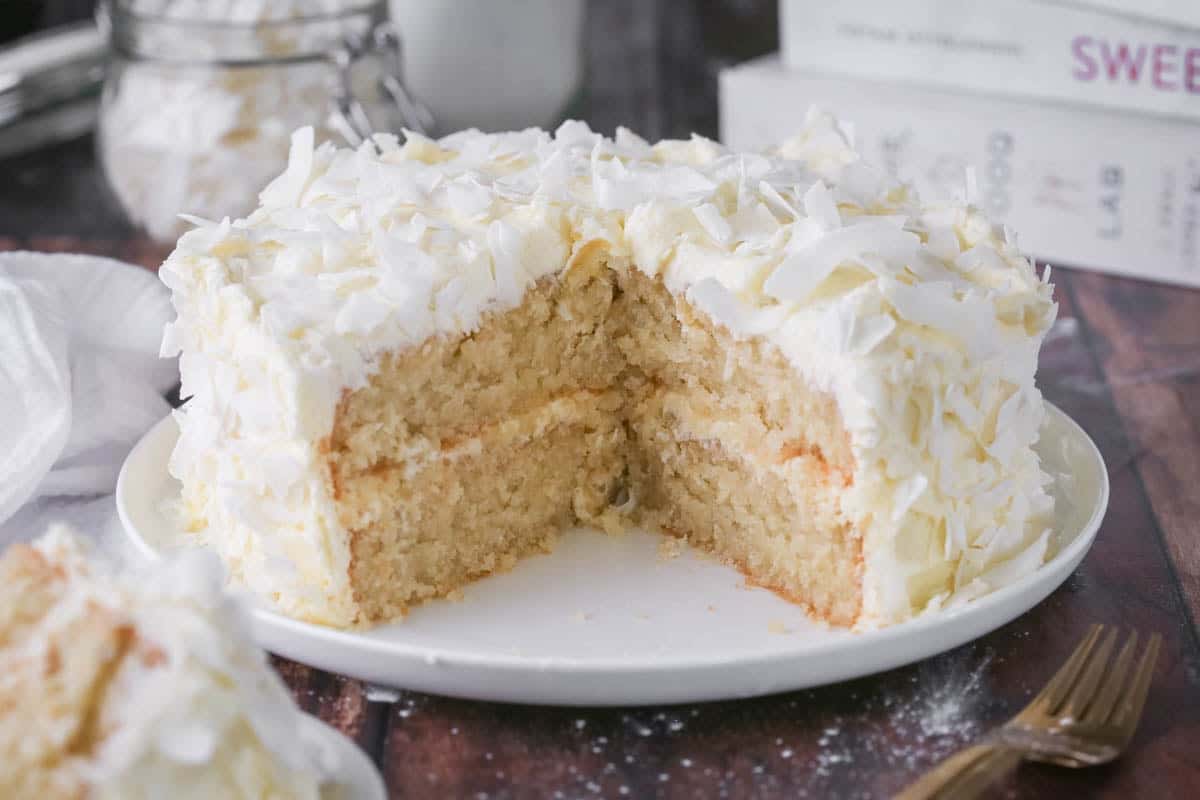
Coconut flour is a hygroscopic flour which means it absorbs and holds onto a large amount of moisture. It needs to be used in moderation and blended with the right gluten-free flours so it’s not overwhelming the cake. In this recipe we team it with almond flour and tapioca flour so we get the benefit of the taste and texture of coconut flour without leading to a dense dry structure.
The coconut cake itself is naturally dairy free but the buttercream here is not. You can substitute the butter in the buttercream for a plant-based butter but do expect it to be looser as plant based butter doesn’t hold it’s structure as well as regular butter. I like the Flora Unsalted Block Butter Alternative. You can also swap the whole milk, used for hydrating the creamed coconut, for any plant based milk.
More Gluten-Free Cake Recipes You’ll Love
Gluten-Free Lime & Coconut Loaf Cake is a beautifully moist and zesty drizzle cake with a crunchy frosted coconut adornment.
Chocolate Coconut Banana Bread is a glorious gluten-free cake, intense with chocolate, chewy with coconut and beautifully moist from the banana. Covered with glossy chocolate and snowy with coconut flakes.
This Gluten-Free Carrot Cake is absolutely stunning. A beautifully spiced moist and fluffy sponge crammed with shredded carrots. Filled and decorated with the dreamiest cream cheese buttercream and sprinkled with candied carrots.
Enter your email below to get this recipe sent to your inbox plus get new recipes, baking tips, and updates.
Gluten-Free Coconut Cake
Ingredients
- 60 g creamed coconut
- 250 g water
- 60 g desiccated coconut
- 300 g caster sugar
- 240 g coconut oil
- 6 eggs - medium
- 160 g almond flour - ground almonds in UK
- 80 g coconut flour
- 60 g tapioca flour
- 2 teaspoons baking powder
- ½ teaspoon salt
Coconut Buttercream
- 800 g icing sugar
- 500 g unsalted butter - softened
- 60 g whole milk
- 100 g creamed coconut
- ½ teaspoon kosher salt
- 2 teaspoons rice vinegar - to make the icing less sweet
- 90 g coconut flakes - (raw coconut slices)
Instructions
- Pre-heat the oven to 180°C / 160°C fan assisted / gas mark 4 / 350°F.
- Line and grease 2 x 20cm (8 inch) round cake tins.
- Pour 250g just boiled water into a measuring jug and whisk in the creamed coconut and desiccated coconut until the creamed coconut has dissolved. Allow to rest whilst you prepare the rest of the cake.
- Whisk together the sugar, coconut oil and eggs in a large mixing bowl until completely combined.
- Whisk the flours, baking powder and salt together in a separate mixing bowl.
- Add the flour and coconut mixture alternately, mixing in two additions.
- Divide the cake batter between the two cake tins and bake for 35 minutes. The finished sponges should look golden and just starting to pull away from the sides of the tin. To test to see if it’s baked an inserted cocktail stick should be clean of any wet crumb once removed.
- Allow the cakes to rest in their tins for 5 minutes before carefully removing and cooling completely on cake racks.
Coconut Buttercream
- Warm the milk until just under a boil then whisk in the creamed coconut to create a smooth thick paste. Set aside whilst you prepare the buttercream.
- Place softened butter in the bowl of a stand mixer (food mixer) and whip until ultra creamy and soft for about 5-6 minutes on a medium speed, scraping down the bowl every so often.
- Sift in the icing sugar 1 cup at a time. Stop the mixer each time to bring the bowl out, scrape down and then sift in the icing sugar and whip it into the butter on the lowest speed of the mixer.
- Once all the icing sugar has been added and you’ve scraped the bowl down again so it’s all nicely mixed together, then continue to mix the icing sugar and butter on the lowest setting for 6-7 minutes.
- Add the creamed coconut mixture, salt and rice vinegar and mix for a final 2 minutes to finish.
Assembly
- Place one of the sponge layers on a 20cm (8 inch) cake board, or just directly onto a serving plate (preferably on a cake turntable if you have one), and spread ¼ of the total amount of buttercream over the surface of the sponge,
- Place the second sponge layer on top and cover the top and the sides of the cake with the rest of the buttercream.
- Sprinkle coconut flakes over the top of the surface of the cake.
- Tilt the cake turntable (if you are using one) and press the coconut flakes onto the higher side of the cake sides evenly so the cake is completely covered.