Stir Fried Vegetables (easy side dish)
This post contains affiliate links. Please read my disclosures.

These Stir-Fried Vegetables are a deliciously easy and versatile side dish. They are perfect for midweek dinners and can be paired with anything from salmon, chicken, tofu, beef dishes to rice or noodles. Gluten-free.
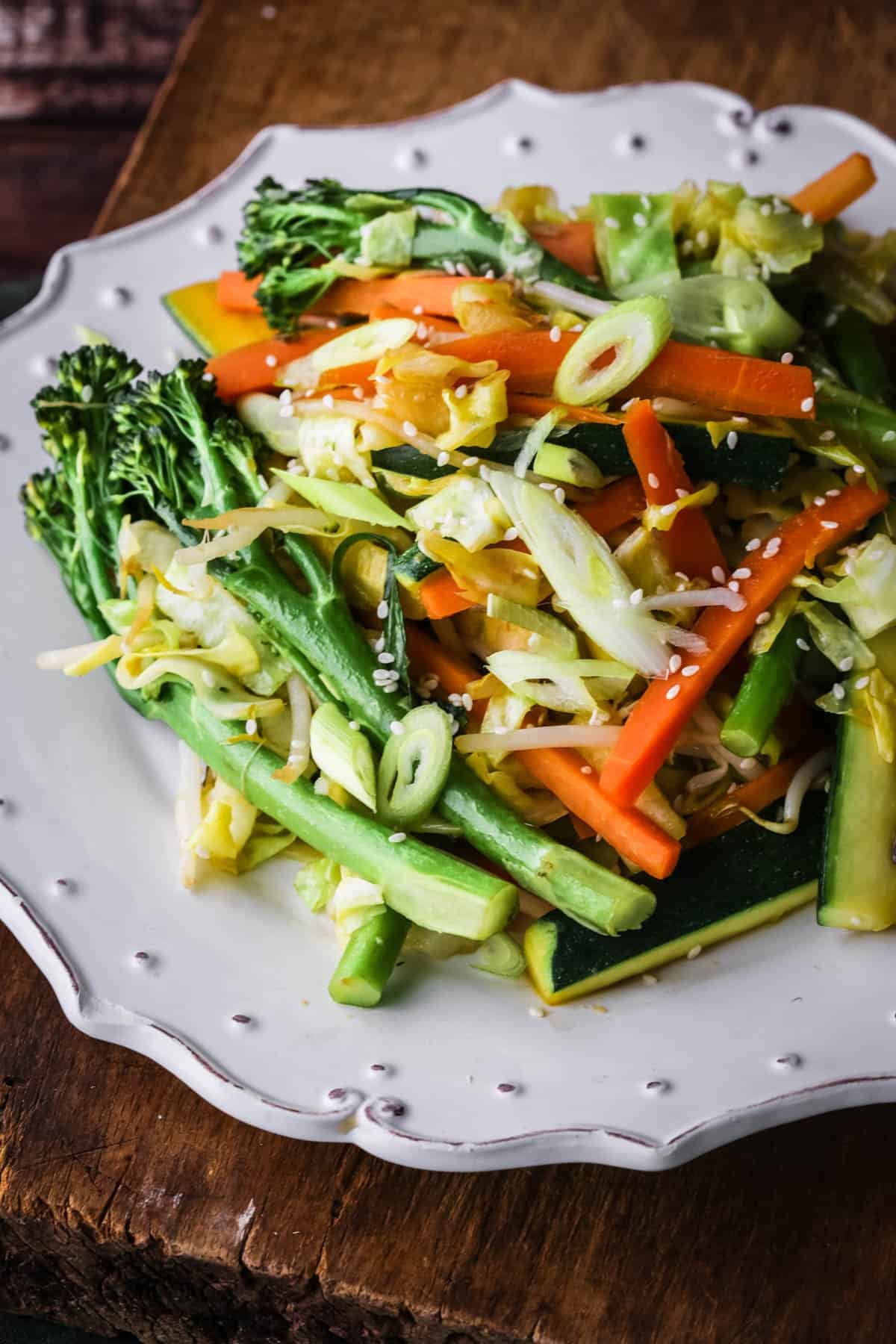
I make these Stir-Fried Vegetables so often as part of our quick weeknight meals as they are so versatile and can be paired with so many Asian inspired dishes.
I was fed up of reaching for those large bags of prepared stir fry vegetables in the supermarket. The peppers were always a bit slimy, the onions cut way too thick and the broccoli browning that I found I was picking through them so significantly that it was undoing all the shortcut that the bag provided.
Yes, cutting up your own vegetables will take 10 minutes more time but you can customise the vegetables with whatever you have in your fridge and I can guarantee they won’t give you unappetisingly soggy results.
I have erred on under flavouring these vegetables as they are supposed to be a milder side dish to accompany a more flavourful protein element. So, although you can, by all means, toss in some noodles or rice at the end of cooking for a quick vegetable stir fry or even add a little protein seasoned with stir-fry seasoning. But really this easy veg dish is meant as a tasty sidekick for the main event.
Why You’ll Love These Stir Fried Vegetables
- Fresh, crunchy and colourful veg.
- Quick and easy to make.
- Versatile and can be paired with your favourite protein, rice or noodles.
- Gluten-free and dairy-free.
Ingredients Needed
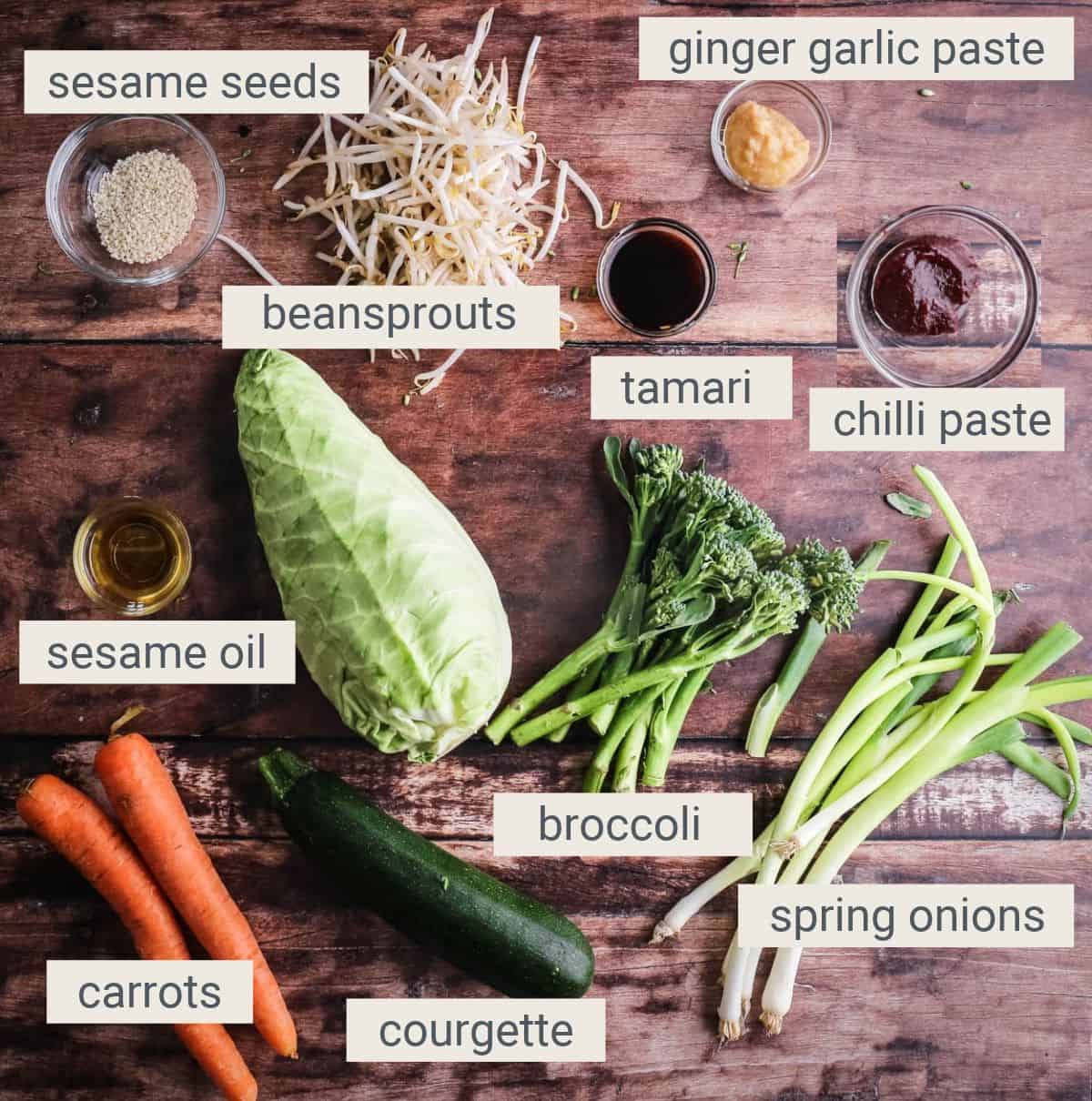
Vegetables. I like a good variety of vegetables in my stir fry. To get a good balance of textures I like to include three layers of vegetables with hard and slow cooking veg added to the pan first, followed by medium-firm veg a minute or so later and then finally finishing of with the soft and quick cooking veg right at the end. This end layer of veg often needs mere seconds or up to a minute to cook. For this particular recipe I’ve chosen my favourites I can’t lie.
Harder slower cooking veg. I like to use carrots and broccoli (here I used Tenderstem). You can switch out for cauliflower or fine green beans.
Medium-firm veg. I like to use springleaf cabbage (sometimes called sweetheart cabbage) and courgettes. You can switch those out for sugar snap peas, baby sweetcorn or bell peppers.
Soft quick-cooking veg. I used beansprouts and spring onions here but you could use mushrooms, pak choi or spinach.
Flavour. The seasoning for these stir fried vegetables are minimal, as I want them to be more of a bolster to whatever your main dish is and for them to taste of the vegetables – not whatever sauce I’m coating them in. However, that doesn’t mean we are leaving them bland. We are seasoning them with ginger garlic paste (you can use fresh), tamari and sesame oil.
Chilli paste. You don’t need to use chilli paste but you can add sriracha, gluten-free gochujang or a supermarket own brand chilli paste to amp up the heat.
How To Make Stir-Fried Vegetables
Full recipe at the bottom of the post here.
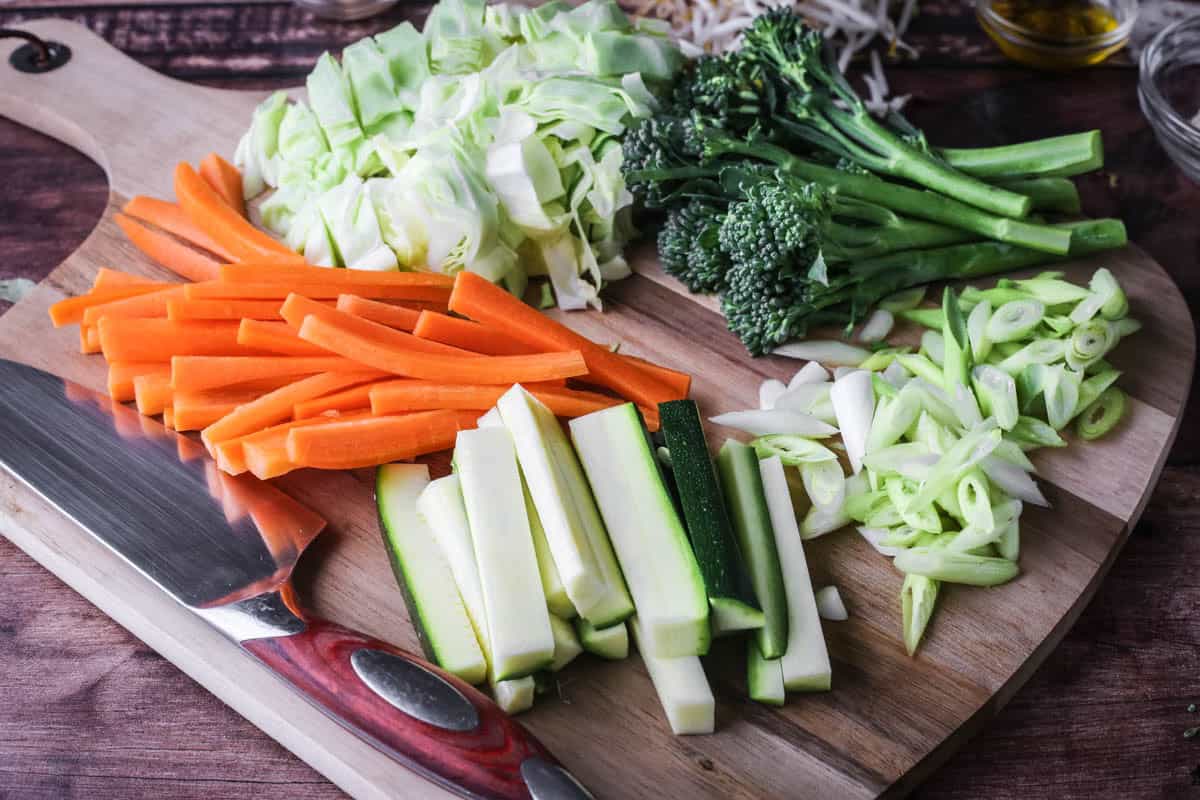
Prepare all the vegetables by washing and peeling and chopping into uniform sizes.
Heat the oil then add the harder vegetables (here carrots and the Tenderstem broccoli) along with the ginger garlic paste, and stir-fry for 2 minutes.
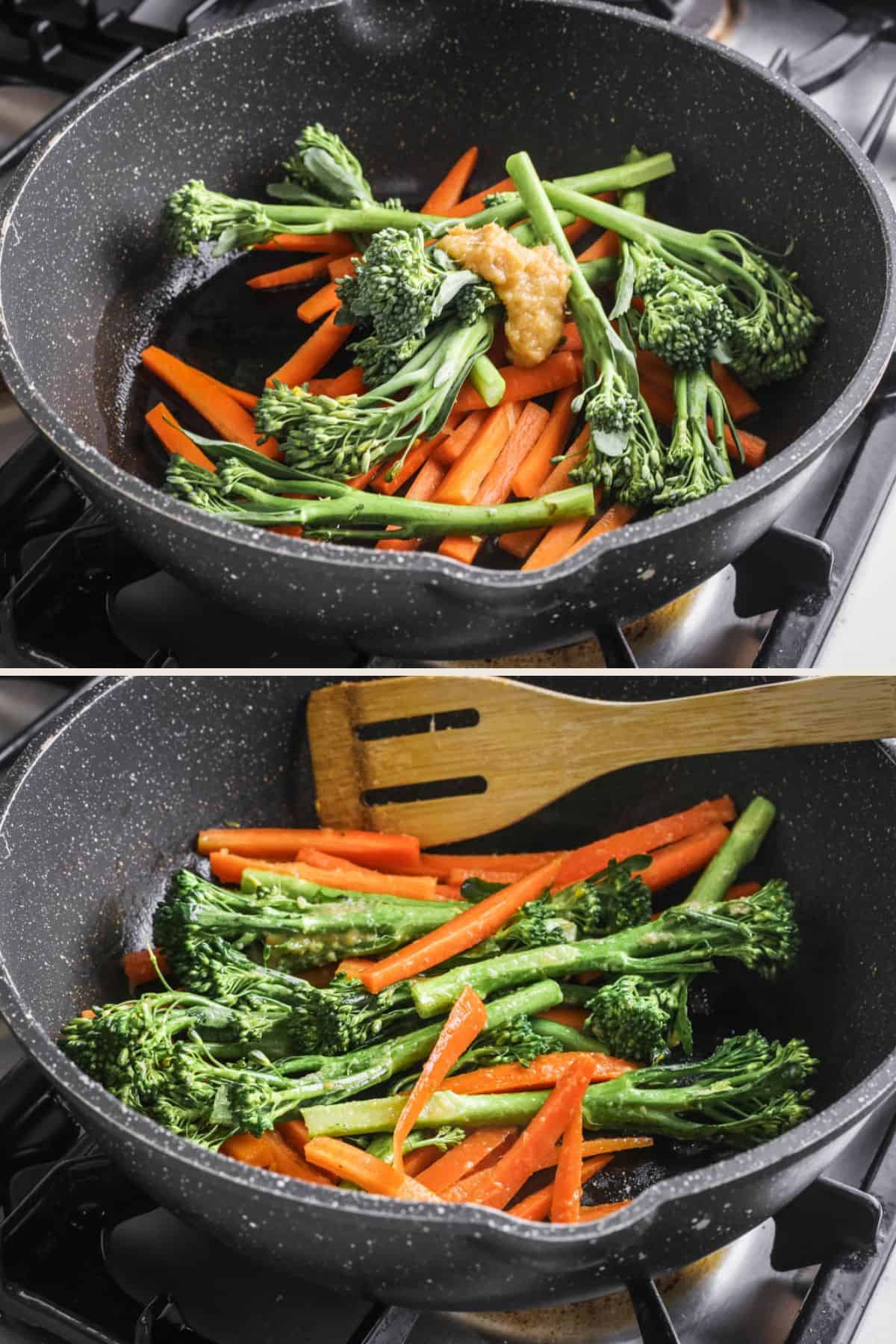
Add the medium hard vegetables (here courgette and springleaf cabbage) and toss together for another 2 minutes.
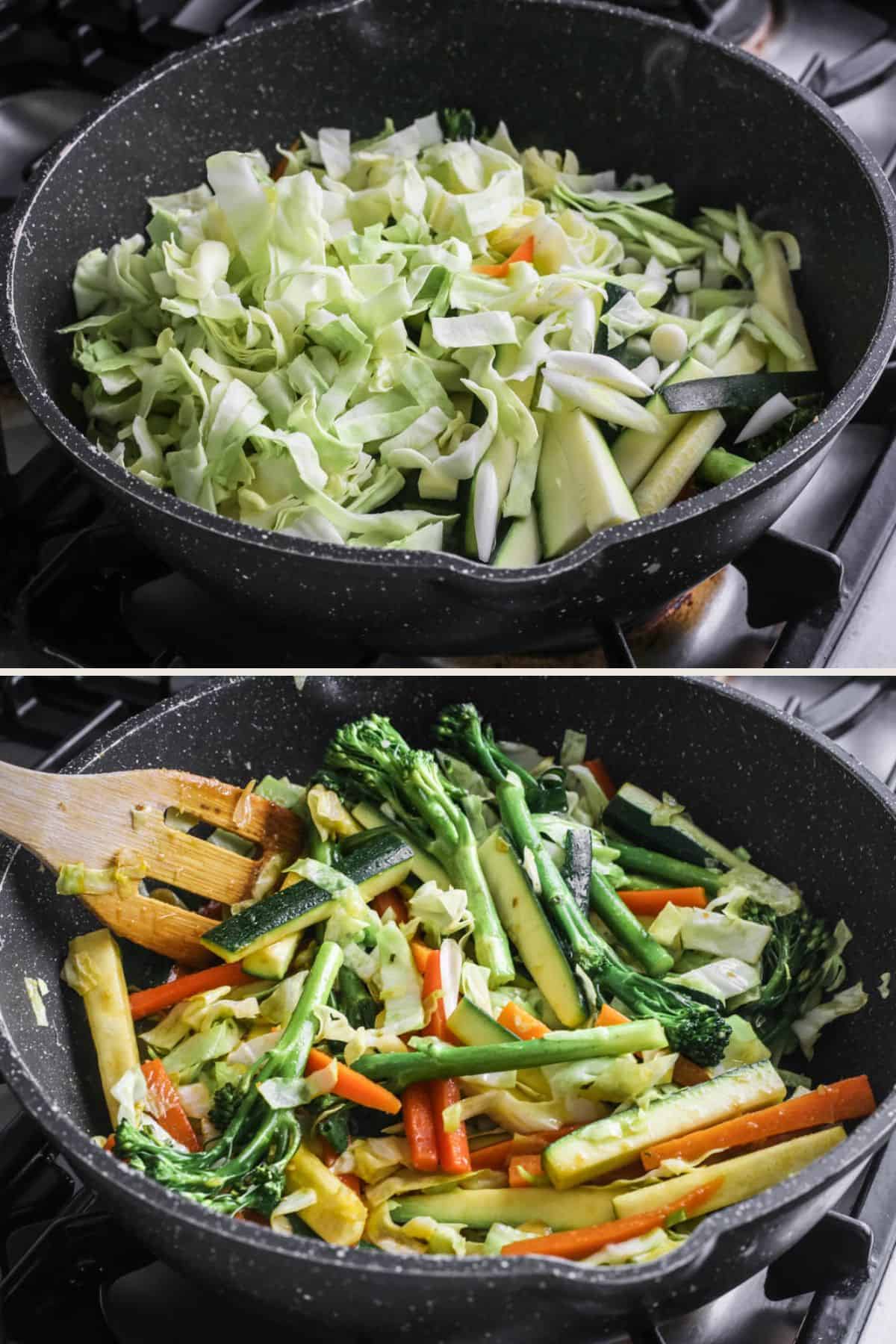
Stir in the tamari, sesame oil and chilli paste (if using). Finally add in the softer vegetables (here spring onions and beansprouts).
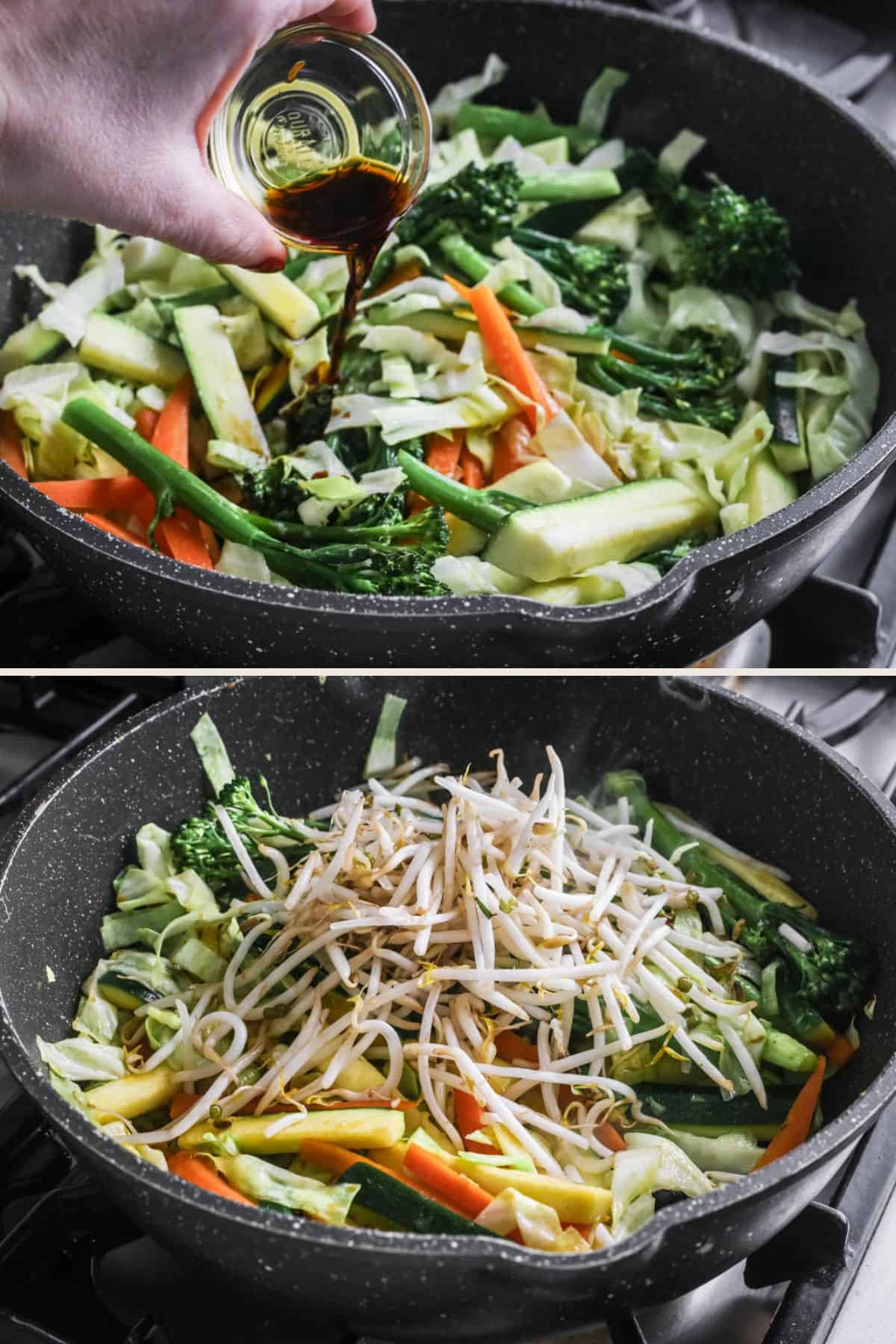
Stir-fry for a further minute or so until all the vegetables are warmed through and still crunchy.
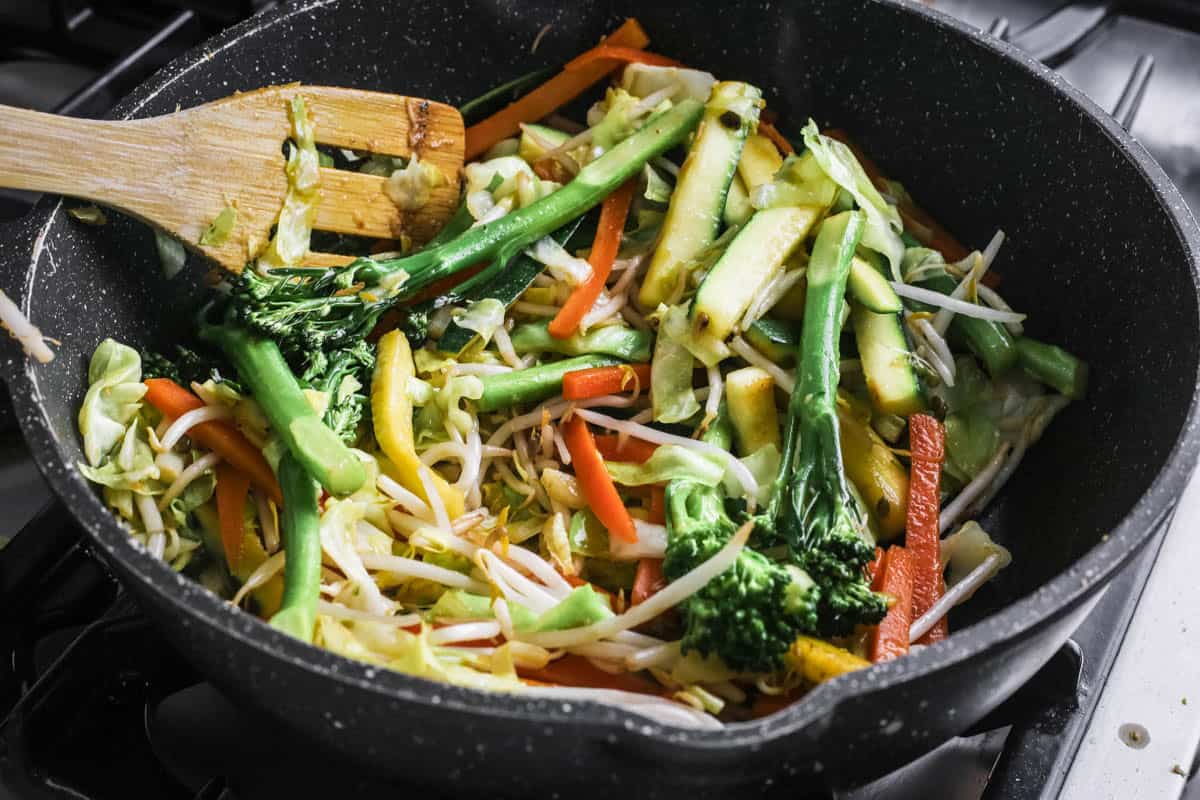
Tips & Troubleshooting
The key to perfectly cooked stir-fried vegetables is to cook them in layers. Each vegetable will take different times to cook. So start with the crunchier vegetables which will take longer to soften like carrots or broccoli (I like to use Tenderstem), a minute later add the next level – so here it’s the cabbage and courgette and then finally add the vegetables that just really need to be warmed up – like the beansprouts. That way you won’t end up with wet vegetables that have been overcooked.
Keep the heat quite high during the cooking of this stir-fry. You don’t want soggy vegetables so try to avoid overcooking. They are better with a good crunch but you don’t want them to taste raw.
The pan will be full but the more it’s crowded with vegetables they will start to steam rather than stir-fry which you don’t want.
FAQs
Yes, you can but bear in mind that they will be less crunchy on a re-heat. My best advice is to undercook them the first time around and then re-heat in a large pan (rather than the microwave).
The best advice if you want to shave some time on the night of cooking is to wash, peel and cut all the vegetables ahead of time. Store in the fridge for up to 24 hours before you cook. You will need to keep them separate in their cooking time layers though.
The key tricks to avoid soggy stir fry vegetables are to cook the veg in layers, starting with the harder vegetables that take a bit longer, then toss in the medium hard vegetables a minute later and finish off with the softer vegetables right at the end. Try to use a good large pan or wok and avoid overcrowding the pan. Remove from the heat as soon as they are ready. All the vegetables should still have a good bite to them.
These stir-fried vegetables are gluten-free, dairy-free and vegan and nut-free. However, the dish does contain sesame seed oil which you can switch out for olive oil if you need.
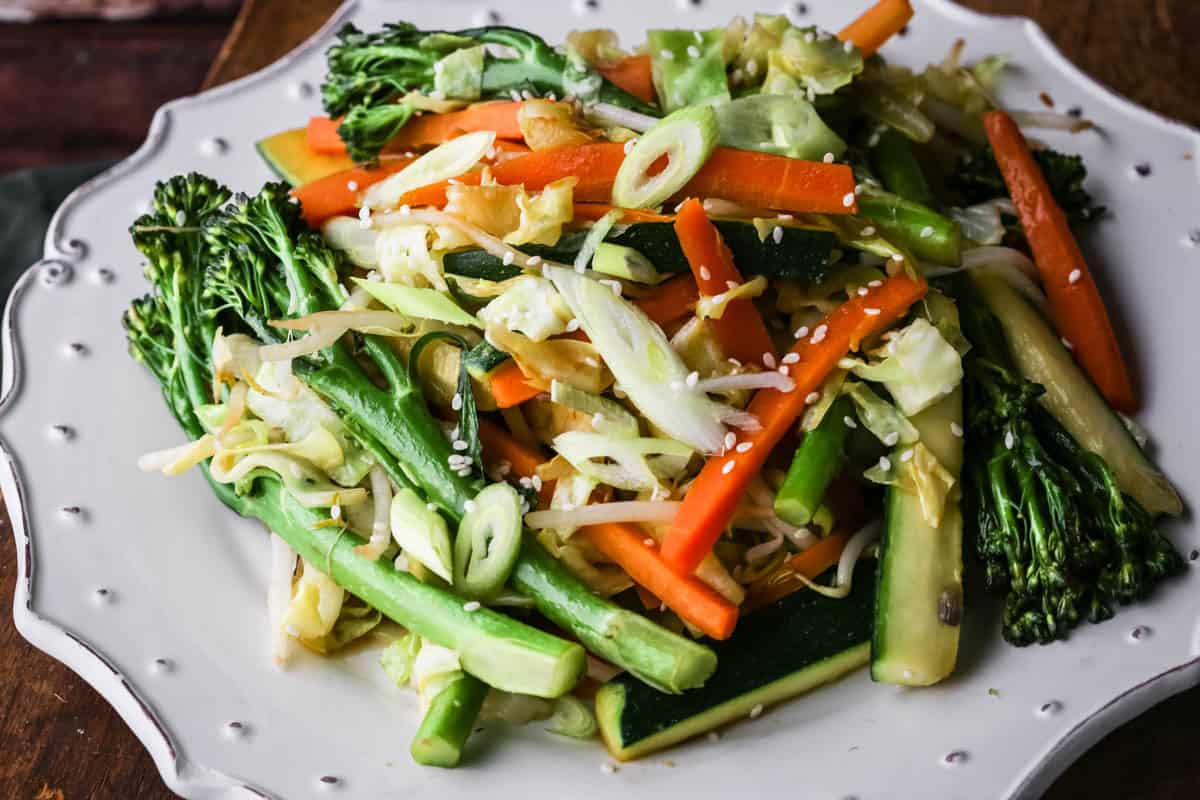
How to Serve Stir-Fried Vegetables
These vegetables make a delicious side dish to any Asian main meal.
Try it with these website favourites:
You could even toss through with rice noodles for a simple vegetarian gluten-free main meal. Top with a good drizzle of crispy chilli oil or sriracha as well if you would like.
Add some chicken or tofu (coated and cooked off with stir-fry seasoning) or prawns for a quick main meal.
Enter your email below to get this recipe sent to your inbox plus get new recipes, baking tips, and updates.
Easy Stir-Fried Vegetables
Ingredients
- 2 teaspoons groundnut - peanut oil (you can use coconut oil)
- 2 teaspoons ginger garlic paste
- 2 carrots
- 100 g Tenderstem broccoli - small handful
- 1 courgette
- ½ head springleaf cabbage
- 2 teaspoons tamari
- 2 teaspoons sesame oil
- 2 teaspoons chilli paste - optional
- 100 g spring onions
- large handful beansprouts
- 2 teaspoons sesame seeds
- 1 red chilli - optional garnish
Instructions
- Prepare all the vegetables by washing and peeling and where necessary. Cut the carrots and the courgettes into thin batons, trim the Tenderstem broccoli and thinly slice the springleaf cabbage and spring onions (reserving a few to garnish).
- Heat the oil in a large wok or frying pan over a medium-high heat.
- Add the carrots and the Tenderstem broccoli, along with the ginger garlic paste, and stir-fry for 2 minutes, stirring frequently to prevent the garlic from burning.
- Add the courgette and springleaf cabbage and toss together with the rest of the ingredients in the pan. Stir-fry for another 2 minutes until the vegetables are starting to soften but still retain a good crunch.
- Stir in the tamari, sesame oil and chilli paste (if using). Toss everything together so the vegetables are evenly coated.
- Finally add in the spring onions and beansprouts and again, toss together. Stir-fry for a further minute or so until the beansprouts are warmed through.
- Transfer to a serving dish and sprinkle with sesame seeds, the reserved spring onions and the sliced red chilli (if using).
Notes
- Cook in a large pan or wok, cut the vegetables into similar sizes and avoid overcrowding to keep the vegetables lovely and crunchy.
- I don’t recommend making this dish to completion ahead of time as they will get a bit soggy on the re-heat.
- You can cut all your vegetables up 24 hours in advance to shave off some time. Keep them separate or in their three cooking layers (harder veg, medium veg and softer veg) so you can keep to the correct cooking time.