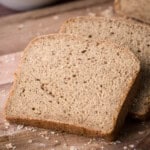
Perfect Gluten-Free Brown Bread (Wholemeal Style)
Soft, hearty gluten-free brown bread made with wholegrain flours. Naturally high in fibre, perfect for slicing and toasting. Dairy-free and egg-free.
Servings: 12 slices
Calories: 254kcal
Ingredients
- 7 g active dried yeast
- 180 g water
- 1 teaspoon light brown sugar
- 25 g black treacle
- 30 g psyllium husk not ground
- 40 g ground flaxseed
- 320 g water
- 1 tablespoon apple cider vinegar
- 120 g buckwheat flour
- 120 g teff flour
- 120 g chickpea flour gram flour
- 220 g tapioca flour + a little extra for dusting
- 1 teaspoon kosher salt
- 65 g olive oil + 1 tablespoon extra for brushing over the top
- 1 tablespoon buckwheat flakes optional
Instructions
- Heat 180g water to between 38-46°C (100-115°F) in a small saucepan.
- Pour the warm water into a small-sized glass bowl. Stir in the yeast and brown sugar. Let the mixture rest for 10-20 minutes until the surface becomes thick and bubbly.
- Whisk the psyllium husk and flaxseed together in a medium sized bowl. Stir in 320g of water (straight from the tap is fine), then allow the mixture to stand for 5 minutes until a thick gel forms.
- In a large mixing bowl or the bowl of a stand mixer, whisk together the buckwheat flour, teff flour, chickpea flour, tapioca starch, and salt.
- Add the yeast mixture, psyllium and flaxseed gel, black treacle, apple cider vinegar and olive oil to the flour mix.
- Mix all these ingredients together for about 5 minutes until the dough is well combined but still slightly sticky to the touch.
- Dust your hands with extra tapioca starch and scrape the dough out of the mixer and place it on a clean work surface. Roll and shape the dough into a smooth log shape.
- Carefully place the shaped dough into a lightly greased 3lb loaf tin, making sure the surface is nice and smooth and has an even shape in the tin. Cover the tin with cling film (plastic wrap) or a clean cloth.
- Place the tin somewhere warm and damp to prove for 1 hour (see notes on proving).
- After 50 minutes of proving, preheat the oven to 200°C / 180°C fan assisted / gas mark 6 / 400°F.
- Once the dough has been proving for an hour and has risen by about ⅓ (just reaching the top of the tin) then it’s ready to bake.
- Before placing in the oven, brush the top of the loaf with the olive oil and scatter with buckwheat flakes, pressing them slightly as otherwise they don’t stick.
- Place the loaf on the centre shelf of the oven and bake for 15 minutes at 200°C / 180°C fan assisted / gas mark 6 / 400°F.
- After 15 minutes turn the temperature down to 180°C / 160°C fan assisted / gas mark 4 / 350°F and bake for 45 minutes.
- Take the bread out of the oven and immediately remove it from the tin. Turn it out onto a wire rack to cool completely before cutting.
Video
Notes
Bread machine. This brown bread recipe has not been tested in a bread machine. Don’t worry, I’m working on a specific bread machine recipe and once I’ve conquered that then I will be able to give specific advice on adapting this recipe too.
Ingredient Substitutions
Tapioca starch. I don’t recommend swapping the tapioca starch on this occasion as it would significantly alter the final result since this recipe uses such a large amount.
Chickpea flour. You can substitute for defatted almond flour (not regular almond flour).
Buckwheat and teff flour. I also liked this flavour balance of this particular recipe. When I swapped around the buckwheat and the teff I didn’t find the flavour as nice. But if you have to, you could swap either with another wholegrain flour – brown rice flour, oat flour or millet flour do work.
Psyllium husk / ground flaxseed. This recipe has not been tested with any alternative binders. Baking Tips & Troubleshooting Yeast. If your yeast does not look frothy or bubbly after its 10 minute activation time then check the expiry date. It is best to use a freshly opened packet of yeast, it can have perished even if it is within expiry. Make sure your water is not too cool or not too hot – between 100-115 F / 38-46C. Shaping the loaf. Make sure the surface of the dough is lovely and smooth as you place it in the tin with any seams underneath. Any lumps, bumps or cracks on the top of the dough will show up in the baked bread. Now is the time to make it look good. Proving the bread. Place your bread somewhere warm and slightly damp for the prove. An excellent place is in a switched off oven on the middle shelf. Place a roasting tray of just boiled water on the bottom of the oven and shut the door. This warm and steamy environment is perfect for a good bread rise. Cooling. Turn the bread out of the tin straight after the bake and allow to cool completely on a wire rack before cutting. Otherwise the bread might be a little gummy. How to store This bread is really best eaten within 48 hours and should be stored in a cool dark place at room temperature. You can store in a bread bin with the cut side of the loaf face down. Or keep in an airtight tin. You could store this bread in the fridge for up to 5 days but then it’s best used for toast. How to freeze Allow the bread to cool completely. You can freeze the bread whole but I prefer to freeze in slices. Double wrap well in cling film and aluminium foil to avoid freezer burn. You can use the frozen slices straight from the freezer into the toaster, or you can leave to defrost overnight on the kitchen counter. Ingredient measurements: Please note when you see ‘grams’ listed as opposed to ‘millilitres,’ or any other term of measurement, that is not incorrect. I weigh all of my ingredients, including liquids, for accuracy. US customary measurements: These US measurements for the ingredients provided are based on a conversion calculator. This recipe was tested with metric measurements and I recommend using a digital scale to weigh ingredients for the most accurate results. READ MORE >>> Why you should always weigh vs measuring with cups Nutrition information: Please note that the nutrition information provided below is an estimate based on an online nutrition calculator. It will vary based on the specific ingredients you use. Please seek a professional nutritionist’s advice for further clarification. The nutrition serving is for 1 slice of bread.
Chickpea flour. You can substitute for defatted almond flour (not regular almond flour).
Buckwheat and teff flour. I also liked this flavour balance of this particular recipe. When I swapped around the buckwheat and the teff I didn’t find the flavour as nice. But if you have to, you could swap either with another wholegrain flour – brown rice flour, oat flour or millet flour do work.
Psyllium husk / ground flaxseed. This recipe has not been tested with any alternative binders. Baking Tips & Troubleshooting Yeast. If your yeast does not look frothy or bubbly after its 10 minute activation time then check the expiry date. It is best to use a freshly opened packet of yeast, it can have perished even if it is within expiry. Make sure your water is not too cool or not too hot – between 100-115 F / 38-46C. Shaping the loaf. Make sure the surface of the dough is lovely and smooth as you place it in the tin with any seams underneath. Any lumps, bumps or cracks on the top of the dough will show up in the baked bread. Now is the time to make it look good. Proving the bread. Place your bread somewhere warm and slightly damp for the prove. An excellent place is in a switched off oven on the middle shelf. Place a roasting tray of just boiled water on the bottom of the oven and shut the door. This warm and steamy environment is perfect for a good bread rise. Cooling. Turn the bread out of the tin straight after the bake and allow to cool completely on a wire rack before cutting. Otherwise the bread might be a little gummy. How to store This bread is really best eaten within 48 hours and should be stored in a cool dark place at room temperature. You can store in a bread bin with the cut side of the loaf face down. Or keep in an airtight tin. You could store this bread in the fridge for up to 5 days but then it’s best used for toast. How to freeze Allow the bread to cool completely. You can freeze the bread whole but I prefer to freeze in slices. Double wrap well in cling film and aluminium foil to avoid freezer burn. You can use the frozen slices straight from the freezer into the toaster, or you can leave to defrost overnight on the kitchen counter. Ingredient measurements: Please note when you see ‘grams’ listed as opposed to ‘millilitres,’ or any other term of measurement, that is not incorrect. I weigh all of my ingredients, including liquids, for accuracy. US customary measurements: These US measurements for the ingredients provided are based on a conversion calculator. This recipe was tested with metric measurements and I recommend using a digital scale to weigh ingredients for the most accurate results. READ MORE >>> Why you should always weigh vs measuring with cups Nutrition information: Please note that the nutrition information provided below is an estimate based on an online nutrition calculator. It will vary based on the specific ingredients you use. Please seek a professional nutritionist’s advice for further clarification. The nutrition serving is for 1 slice of bread.
Nutrition
Calories: 254kcal | Carbohydrates: 41g | Protein: 6g | Fat: 8g | Saturated Fat: 1g | Polyunsaturated Fat: 2g | Monounsaturated Fat: 4g | Sodium: 207mg | Potassium: 211mg | Fiber: 6g | Sugar: 3g | Vitamin A: 4IU | Vitamin C: 0.02mg | Calcium: 53mg | Iron: 2mg